
Finding a first edition book in a thrift store is like uncovering buried treasure—rare, valuable, and deeply satisfying. For book lovers and collectors, the thrill lies not just in ownership, but in the detective work required to spot one among thousands of mass-market reprints. While some first editions are worth hundreds or even thousands of dollars, most go unnoticed, priced at a dollar or two. The key to unlocking this hidden value is knowing what to look for—and where to look.
This guide equips thrift store hunters with the tools, knowledge, and confidence to identify genuine first editions. From understanding publisher codes to recognizing subtle printing clues, you’ll learn how to separate the ordinary from the exceptional—all without needing a rare book degree.
Why First Editions Matter
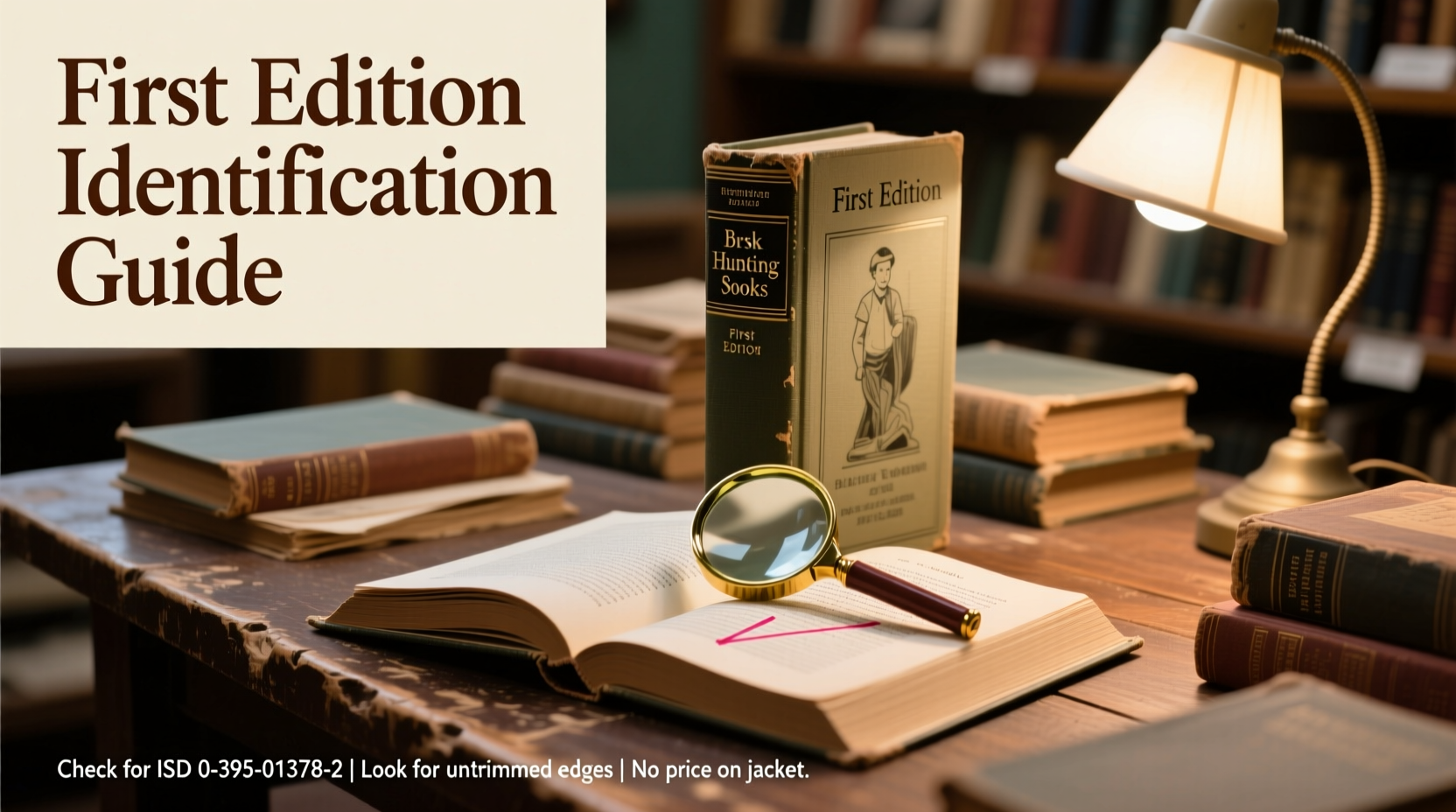
A “first edition” refers to the initial print run of a book. In collecting circles, it’s often synonymous with rarity and historical significance. While not every first edition is valuable, certain titles—especially those by iconic authors like Hemingway, Fitzgerald, or Toni Morrison—can command high prices when found in good condition and with correct identification.
Thrift stores, estate sales, and used bookshops are prime hunting grounds because many donors and sellers don’t realize what they’re discarding. A well-informed collector can walk away with a $500 book for under $5—provided they know how to verify its status.
“Most people think first editions are only found in auctions or specialty shops. The truth is, they’re hiding in plain sight—in donated boxes and dusty shelves.” — Daniel Reeves, Rare Book Dealer & Appraiser
How Publishers Indicate First Editions
Publishers use various methods to denote printings, and these have evolved over time and vary by house. There is no universal standard, so familiarity with common practices is essential.
The most reliable indicator of a first edition is typically found on the copyright page—the page behind the title that lists publication details. Look closely: sometimes the clue is as subtle as a single word or number sequence.
Key Clues on the Copyright Page
- “First Edition” statement: Some publishers explicitly state “First Edition” or “First Printing.” This is common with modern hardcovers from presses like Knopf or Scribner.
- Number line: Many publishers use a descending number line (e.g., 1 2 3 4 5 6 7 8 9 10). If the number “1” appears, it’s likely a first edition. If the line starts with “2,” it’s a second printing.
- Year-only indication: Older books (pre-1960s) may only list the year. Without a number line or explicit statement, further research is needed.
- Printer’s key variations: Some publishers use letters (A B C), symbols, or unique codes. For example, St. Martin’s Press once used a code like “First Edition: April 1998” followed by a letter code.
Publisher-Specific Practices
Different publishers follow different rules. Here’s a quick reference table for major U.S. publishers:
| Publisher | First Edition Indicator | Notes |
|---|---|---|
| Scribner | “First Edition” + number line ending in 1 | Consistent since the 1970s |
| Knopf | Explicit “First Edition” statement | No number line needed if stated |
| Vintage/Random House | Number line including “1” | Look for “1” in sequence like 10 9 8 7 6 5 4 3 2 1 |
| Penguin (Modern Classics) | Rarely first editions; usually reprints | Focus on older Penguin Collectors Society editions |
| Harper & Row | “First Edition” or number line with “1” | Common in 1980s–90s hardcovers |
Step-by-Step Guide to Identifying a First Edition
Follow this systematic approach every time you inspect a potential find. Speed comes with practice, but accuracy is more important than speed.
- Check the publication date. Is it close to the original release? A 1952 copy of The Old Man and the Sea is more promising than a 1985 reprint.
- Flip to the copyright page. Do not assume based on cover art or condition. The data is here.
- Look for a number line. Find the lowest number. If “1” is present, it’s likely a first printing.
- Read all lines carefully. Watch for phrases like “First Edition,” “First Printing,” or “Published simultaneously in Canada.”
- Note the binding. True first editions are almost always hardcover. Paperbacks are rarely first editions unless specified (e.g., Penguin Modern Classics).
- Cross-reference with a trusted guide. Use resources like Edward Wenley’s A Comprehensive Identification Guide to Modern First Editions or online databases such as Biblio.com’s first edition FAQ.
- Assess condition. Dust jacket presence, spine integrity, and page yellowing affect value significantly—even if it’s a true first edition.
Red Flags and Common Misconceptions
Many thrift store shoppers mistake reprints for first editions due to misleading clues. Avoid these pitfalls:
- “First published in [year]” does not mean first edition. This refers to the original publication date, not your copy’s printing.
- Book club editions are not first editions. These are reprints made for subscribers. They often lack ISBNs, have smaller trim sizes, or include “Book Club Edition” on the back flap or inside cover.
- Reissues with new introductions aren’t firsts. A 2003 edition of To Kill a Mockingbird with a foreword by Oprah is not collectible as a first edition.
- Price-clipped dust jackets reduce value. If the price is cut or taped over, it suggests the book was resold or circulated, lowering collector appeal.
Do’s and Don’ts at a Glance
| Do | Don’t |
|---|---|
| Examine the copyright page on every candidate | Assume a hardcover is automatically a first edition |
| Use a number line to confirm first printing | Trust the bookstore’s label (“Rare!” or “Vintage!”) |
| Check for a dust jacket in good condition | Buy a book club edition thinking it’s valuable |
| Carry a reference app or printed guide | Rely solely on memory or guesswork |
Real-World Example: The Hidden Hemingway
In 2021, a regular thrift shopper in Madison, Wisconsin, picked up a worn-looking copy of For Whom the Bell Tolls for $1.99. The cover was faded, and the dust jacket was partially torn—but something about the copyright page caught her eye.
The number line read: 10 9 8 7 6 5 4 3 2 1. No mention of “first edition,” but the presence of “1” suggested a first printing. She took a photo and uploaded it to a rare book forum that night. Within hours, a moderator confirmed it was a true first edition, published by Scribner in 1940.
After professional appraisal, the book sold at auction for $420. The lesson? Condition matters, but so does persistence. That $1.99 find paid for an entire month of thrift store visits.
“Amateurs look at covers. Professionals look at copyright pages.” — Clara Mendez, Owner of Mendez Rare Books
Essential Checklist for Thrift Store Hunters
Print this or save it on your phone. Use it every time you browse:
- ✅ Focus on hardcover books published between 1900–1990 (peak first edition era)
- ✅ Flip immediately to the copyright page
- ✅ Confirm presence of “1” in number line or explicit “First Edition” text
- ✅ Rule out book club editions (check for markings, size, paper quality)
- ✅ Look for intact dust jackets with original price visible
- ✅ Prioritize works by Nobel laureates, Pulitzer winners, or literary icons
- ✅ Cross-check against a reliable database before purchasing
- ✅ Note any damage: water stains, mold, writing, or missing pages
Frequently Asked Questions
Is a first printing the same as a first edition?
Yes, in modern usage, “first edition” and “first printing” are generally synonymous. A true first edition is the first batch of copies ever produced. Later printings are not considered first editions, even if published in the same year.
Can a paperback be a first edition?
Rarely, but yes. Some publishers release paperback originals as first editions, especially in genres like science fiction or mystery. However, most classic literary first editions were issued in hardcover first. Always verify with a trusted source.
What if the number line is missing?
If there’s no number line and no statement about edition, research is required. Compare your copy to known first editions using bibliographies or collector websites. Libraries or university archives may also help verify details.
Building Your Knowledge Over Time
Becoming proficient at identifying first editions isn’t instantaneous. Start by mastering a few key authors or publishers. For example, focus on:
- F. Scott Fitzgerald (Scribner editions of The Great Gatsby)
- Ernest Hemingway (Charles Scribner’s Sons)
- Toni Morrison (Sula, Song of Solomon – Knopf first editions)
- J.D. Salinger (The Catcher in the Rye – Little, Brown)
- Ray Bradbury (Fahrenheit 451 – Ballantine with specific cover art)
As you build familiarity, expand your scope. Keep a notebook or digital log of books you’ve examined, noting findings and outcomes. Over time, you’ll develop an instinct for spotting anomalies and authentic first printings.
Tip: Join online communities like Reddit’s r/firsteditions or Facebook groups dedicated to book collecting. Members often share ID tips and recent finds.Conclusion: Start Hunting With Confidence
Finding a first edition in a thrift store isn’t just luck—it’s preparation meeting opportunity. With the right knowledge, anyone can turn a casual browsing habit into a rewarding pursuit. You don’t need expensive tools or formal training. Just a sharp eye, a bit of patience, and the willingness to learn.
Every shelf holds the possibility of discovery. Whether you're after financial gain, personal satisfaction, or the joy of preserving literary history, the hunt itself is part of the reward. Armed with this guide, you’re ready to start identifying first edition books with confidence and precision.
💬 Found a first edition recently? Share your story in the comments or with fellow collectors. Your experience could inspire the next great thrift store discovery.








