Selecting the right fishing rod is more than a matter of personal preference—it directly affects your ability to detect bites, set hooks, control fish, and cast effectively. For bass anglers, rod length plays a pivotal role in determining success on the water. Whether you're navigating thick cover, casting long distances across open water, or finesse-fishing delicate structures, matching your rod length to the situation can dramatically increase your catch rate. Understanding how rod length influences performance allows you to make informed decisions tailored to specific conditions, techniques, and target zones.
How Rod Length Influences Bass Fishing Performance
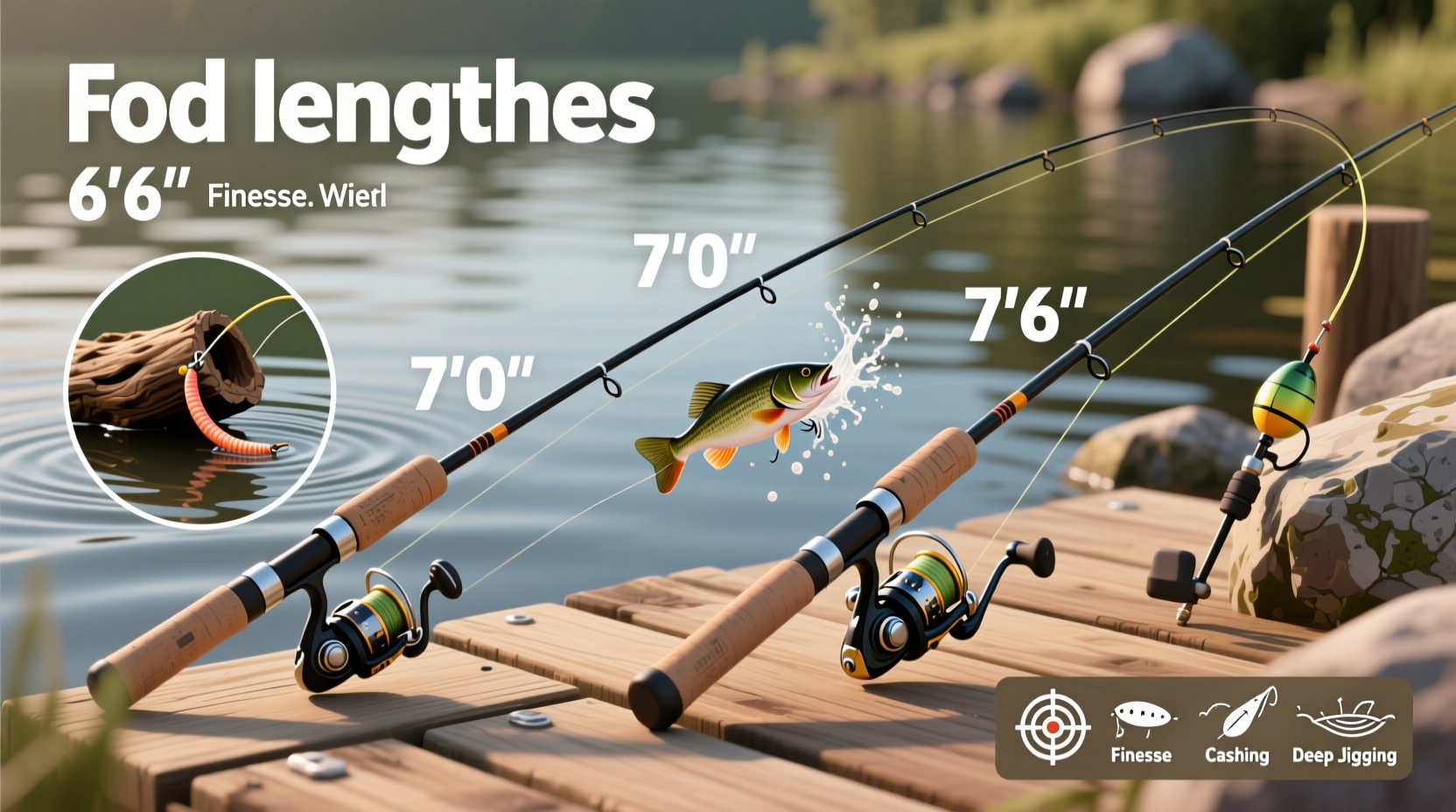
Rod length affects several key aspects of angling: casting distance, accuracy, hook-setting power, line control, and maneuverability. Longer rods—typically 7 to 8 feet—generate greater casting momentum, making them ideal for reaching distant targets like offshore humps, laydowns, or weed lines. They also provide increased leverage when setting the hook or pulling fish from heavy cover. However, longer rods can be cumbersome in tight spaces such as dense brush, small boats, or heavily wooded shorelines.
Shorter rods, ranging from 6 to 6'6\", offer superior precision and control in close quarters. They excel in flipping, pitching, and working around docks where pinpoint accuracy matters more than distance. These rods are easier to handle in confined areas and allow for quicker reaction times when detecting subtle bites. The trade-off is reduced casting range and less mechanical advantage during hook sets.
The optimal rod length balances these factors based on technique, environment, and targeted structure. No single rod fits every scenario, which is why many serious bass fishermen maintain a quiver of rods with varying lengths.
Tip: Match your rod length to the primary technique you're using—not just the body of water.Recommended Rod Lengths by Technique
Different bass fishing methods demand different rod characteristics. Here’s a breakdown of common techniques and the ideal rod lengths for each:
- Flipping and Pitching: 6' to 7' – Shorter rods offer better control and improved sensitivity when working jigs or soft plastics into tight spots like undercut banks or dock pilings.
- Cranking (Crankbaits): 6'6\" to 7'6\" – A medium-length rod provides enough backbone to drive hooks into a bass’s mouth while absorbing the stress of deep-diving lures hitting cover.
- Finesse Fishing (Drop Shot, Ned Rig): 6'6\" to 7' – Slightly longer rods enhance feel and allow for delicate presentations, helping detect light bites and maintain bottom contact.
- Topwater Lures: 7' to 7'6\" – Longer rods help achieve longer casts and give extra lift when walking baits or popping frogs, improving hook penetration.
- Heavy Cover (Jerkbaits, Swimbaits): 7' to 8' – Extended length increases leverage for extracting fish from thick vegetation or submerged timber.
“Rod length isn’t about comfort alone—it’s about energy transfer. The right length maximizes your ability to transmit power from reel to lure to fish.” — Mark Daniels Jr., Professional Bass Guide and Tournament Angler
Matching Rod Length to Environment
Your surroundings dictate how much space you have to work with—and therefore, what rod length makes sense. Consider these real-world scenarios:
| Environment | Ideal Rod Length | Why It Works |
|---|---|---|
| Lakes with Open Shorelines | 7' to 7'6\" | Longer casts reach offshore structure; wind resistance is manageable. |
| Rivers & Current-Fed Areas | 6'6\" to 7' | Better control for upstream casting and managing drag in moving water. |
| Heavily Wooded Banks | 6' to 6'6\" | Maneuverability trumps distance; easy to pitch under overhanging trees. |
| Large Reservoirs | 7' to 8' | Maximizes casting range to hit deep points, ledges, and submerged roadbeds. |
| Ponds & Small Lakes | 6'6\" to 7' | Balances casting ease with sufficient power for varied cover types. |
Mini Case Study: Flipping in Southern Swamps
In Louisiana’s oxbow lakes, where cypress knees and root mats dominate, veteran angler Darrell Robertson relies on a 6'4\" heavy-power flipping stick. “I’m not trying to cast far,” he explains. “I need to drop a jig within inches of a stump without spooking fish. With a shorter rod, I can feel every vibration through the line and react instantly when a bass inhales the bait.” His success rate improved by nearly 40% after switching from a 7'6\" rod to a compact model better suited to the terrain.
Step-by-Step Guide to Choosing Your Ideal Rod Length
Follow this process to determine the best rod length for your next setup:
- Assess Your Primary Fishing Style: Are you mainly casting topwaters, working crankbaits, or flipping heavy cover? Identify your go-to method.
- Evaluate Common Locations: Visit your usual spots and note obstacles, water depth, and available casting room.
- Test Cast Different Lengths: Borrow or demo rods between 6' and 8'. Try pitching, casting, and setting hooks to compare handling.
- Consider Reel Compatibility: Ensure your reel matches the rod’s line weight and action—especially important with longer blanks that may require higher gear ratios.
- Build a Quiver: Instead of relying on one all-purpose rod, invest in two or three rods optimized for different situations.
Frequently Asked Questions
Can I use a long rod for finesse techniques?
Yes, but only if it has a sensitive tip and moderate action. A 7' to 7'3\" ultra-light or medium-light rod enhances feel and casting accuracy for drop shots and shaky heads. Just ensure the blank isn’t too stiff, or you’ll lose the subtlety finesse fishing requires.
Does rod material affect ideal length?
Indirectly. Graphite rods tend to be lighter and more sensitive, making longer models easier to wield without fatigue. Fiberglass or composite rods may feel heavier at extended lengths, so anglers often prefer shorter versions for comfort during full-day outings.
Is an 8-foot rod too long for most bass fishing?
For general use, yes—but there are exceptions. Eight-foot rods shine in specialized applications like frog fishing over thick mats or long-distance Carolina rigging. In crowded or technical settings, they become unwieldy. Reserve them for situations where reach and leverage outweigh portability.
Checklist: Selecting the Right Rod Length
- ☑ Determine your dominant fishing technique
- ☑ Analyze typical fishing environments (open water vs. tight cover)
- ☑ Choose rod length based on casting needs and space constraints
- ☑ Verify compatibility with your preferred line type and lure weight
- ☑ Test multiple lengths before purchasing
- ☑ Maintain at least two rods: one short (6'–6'6\"), one long (7'–7'6\")
Final Thoughts: Optimize Your Setup for Real Results
The pursuit of bigger catches starts with thoughtful gear selection. While rod length might seem like a minor detail, its impact on casting efficiency, hook-set effectiveness, and overall control cannot be overstated. By aligning your rod length with your fishing style and environment, you gain a tangible edge—one that translates into more bites, fewer missed strikes, and greater confidence on the water.
Don’t assume one size fits all. Take the time to evaluate your habits, experiment with different options, and build a balanced rod collection. Whether you’re targeting trophy largemouth in reservoirs or sneaking smallmouth out of rocky crevices, the right length puts you in command.
🚀 Ready to upgrade your bass game? Pick one new rod length this season and test it in your toughest conditions. Share your results in the comments below!








