
Dogs bark. It’s part of their nature. But when that barking becomes a daily outburst every time a delivery driver pulls up to the curb, it’s more than just noise—it’s stress for you, annoyance for neighbors, and potentially a sign of underlying anxiety in your dog. The good news? This behavior is not permanent. With structured training, patience, and consistency, you can teach your dog to remain calm when someone approaches the door or walks near your property.
Barking at delivery personnel is common but fixable. Unlike general territorial barking, this behavior often stems from a combination of alertness, fear, and lack of exposure. The key isn’t to suppress barking entirely—your dog should still be able to communicate—but to redirect it into appropriate responses. This guide breaks down the science behind the behavior and offers actionable strategies that work in real homes.
Understanding Why Dogs Bark at Delivery Drivers
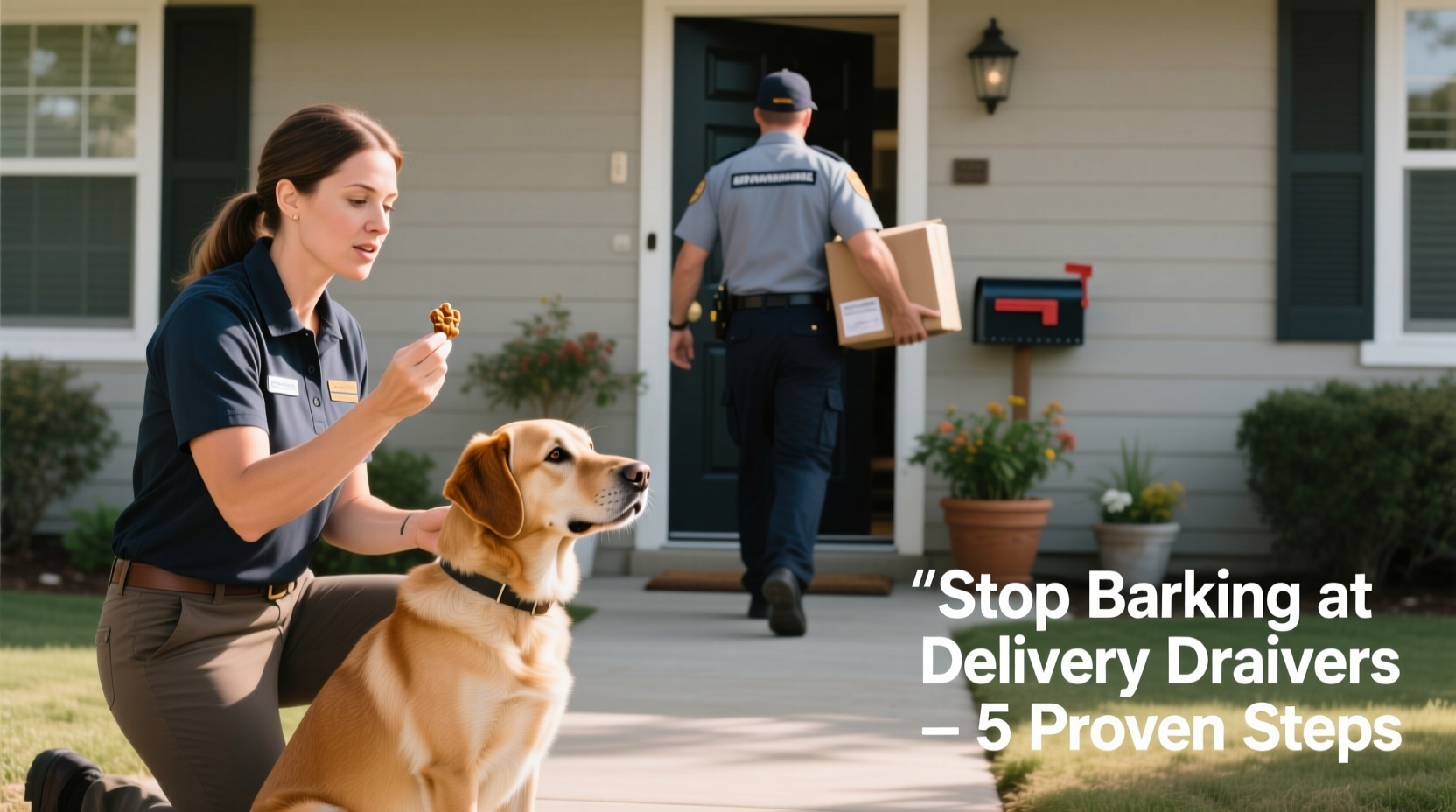
Dogs are naturally protective. Their acute hearing picks up footsteps, vehicle engines, and unfamiliar voices long before humans do. When a delivery driver appears, your dog interprets them as an intruder entering their territory. This triggers a primal defense mechanism: bark to warn, deter, or protect.
Some breeds—like German Shepherds, Terriers, and Shih Tzus—are more prone to vocalizing due to genetics or historical roles (e.g., guarding or alerting). However, even quiet breeds can develop persistent barking habits if the behavior is unintentionally reinforced.
Common reasons include:
- Lack of socialization: Dogs not exposed to frequent visitors may perceive all strangers as threats.
- Reinforcement through attention: Even scolding can reinforce barking if it gives the dog attention.
- Environmental triggers: A front-facing window or doorbell chime can become conditioned stimuli.
- Anxiety or overarousal: Some dogs escalate quickly from alert to full bark mode due to poor impulse control.
A Step-by-Step Training Plan That Works
Effective training doesn’t rely on one-off tricks. It combines desensitization, counter-conditioning, and positive reinforcement. Follow this timeline to reshape your dog’s response:
- Week 1–2: Identify Triggers and Create Distance
Begin by observing exactly what sets off your dog. Is it the sight of uniforms, the sound of footsteps, or the knock? Use video recordings or have a friend simulate deliveries at a safe distance (e.g., across the street). The goal is to find the threshold where your dog notices but does not react. - Week 3–4: Desensitize with Controlled Exposure
Start exposing your dog to the trigger at sub-threshold levels. For example, play recorded sounds of doorbells or delivery vehicles at low volume while offering treats. Gradually increase volume only when your dog remains calm. Repeat daily for 10–15 minutes. - Week 5–6: Introduce Real-Life Scenarios Safely
Ask a friend (or use a local volunteer) to walk past your home wearing a delivery vest. Start at 50 feet away. When your dog sees them but stays quiet, mark the behavior with a “yes” or clicker and reward with high-value treats like chicken or cheese. Never push past reactivity. - Week 7–8: Practice Inside with Visual Barriers
Close blinds or use opaque window film to block direct line of sight. Train an alternative behavior like “go to mat” or “sit and focus.” Reward heavily when your dog chooses calmness over barking, even if a delivery occurs. - Ongoing: Maintain and Generalize
Once progress is made, continue random practice sessions. Reinforce calm behavior during real deliveries. Over time, your dog will associate delivery drivers with treats and peace—not alarm.
Do’s and Don’ts: What Actually Helps (and What Makes It Worse)
| Do | Don't |
|---|---|
| Use high-value treats during training sessions | Yell at or punish your dog for barking |
| Train when your dog is calm, not mid-bark | Allow barking to continue unchecked, even “just this once” |
| Block visual access with curtains or barriers | Let your dog practice the unwanted behavior repeatedly |
| Practice “look at me” or “settle” commands daily | Ignore the issue hoping it will fade on its own |
| Work with a certified trainer if progress stalls | Use shock collars or aversive tools |
“Dogs don’t misbehave out of defiance—they respond to what they’ve learned works. If barking makes the stranger go away, the dog thinks they did their job.” — Dr. Karen Becker, Veterinary Behaviorist
Real Example: How Max the Beagle Learned to Stay Calm
Max, a 3-year-old Beagle in suburban Ohio, used to bark nonstop whenever a UPS truck turned onto his street. His owner, Sarah, initially tried shushing him, then yelling, and eventually shut him in another room. But the behavior worsened—Max began pacing and whining hours before usual delivery times.
She consulted a certified dog trainer who recommended a structured plan. They started by playing YouTube videos of delivery trucks at low volume while giving Max frozen peanut butter Kongs. After two weeks, Max associated the sound with relaxation. Next, a neighbor dressed as a FedEx driver walked slowly past the house at increasing proximity. Each time Max stayed quiet, he got a piece of roast beef.
Within six weeks, Max no longer barked. Now, when the doorbell rings, he looks at Sarah, sits, and waits for his treat. The transformation didn’t require gadgets or force—just consistency and understanding.
Essential Tools and Techniques for Long-Term Success
While training is behavioral, certain tools can support progress:
- White noise machines or calming music: Help mask outdoor sounds that trigger alertness.
- Window film or privacy screens: Prevent visual stimulation without blocking all light.
- Automatic treat dispensers: Devices like PetSafe or Furbo can reward calm behavior remotely.
- Calming vests (e.g., Thundershirt): Apply gentle pressure to reduce anxiety in sensitive dogs.
However, tools alone won’t solve the problem. They must be paired with active training. For instance, using a camera-enabled treat dispenser allows you to reward your dog the moment a delivery person appears—turning a trigger into a positive event.
Tip: Always pair new tools with positive reinforcement. A Thundershirt shouldn’t be put on only during storms or deliveries—let your dog wear it during fun activities so it doesn’t become a signal of stress.Checklist: Your 8-Week Action Plan
Follow this checklist weekly to stay on track:
- ☐ Identify your dog’s specific trigger (sound, sight, motion)
- ☐ Record baseline data: how many times per week does barking occur?
- ☐ Remove visual access to the front yard/street temporarily
- ☐ Choose a high-value treat not used for regular training
- ☐ Begin sound desensitization at low volume with treats
- ☐ Teach or reinforce a “settle” or “go to place” command
- ☐ Conduct controlled exposure sessions 3–4 times per week
- ☐ Monitor progress: note reduced latency to calm down, fewer barks
- ☐ Enlist a helper for real-world simulation exercises
- ☐ Transition to intermittent rewards as behavior stabilizes
Frequently Asked Questions
Can older dogs learn to stop barking at delivery people?
Yes. Age doesn’t prevent learning. Older dogs may take longer due to established habits, but with consistent training, even 10-year-old dogs can change their responses. The key is patience and avoiding punishment, which increases fear-based reactivity.
What if my dog barks at every stranger, not just delivery drivers?
This suggests broader social anxiety or lack of exposure. In such cases, broaden training to include various uniformed individuals (mail carriers, joggers, cyclists). Consider working with a veterinary behaviorist if fear seems extreme or generalized.
Are bark collars effective for this problem?
No. While shock, spray, or ultrasonic collars may suppress barking temporarily, they don’t address the root cause and can increase fear or aggression. Studies show dogs trained with aversive tools exhibit higher cortisol levels and more stress behaviors. Positive reinforcement yields safer, longer-lasting results.
Conclusion: Calm Isn’t Just Quiet—It’s Learned
Your dog doesn’t need to bark at every knock or ring. With a clear plan, empathy, and daily effort, you can replace reactivity with calm confidence. The goal isn’t silence—it’s teaching your dog that delivery drivers pose no threat and that staying relaxed earns better rewards than barking ever did.
Start today. Block the view, gather some treats, and begin pairing the sound of footsteps with something delicious. Progress may be slow at first, but each small success builds toward lasting change. Your dog isn’t being “bad”—they’re trying to protect you. Now, you can teach them a better way.
💬 Have a success story or challenge with delivery-related barking? Share your experience in the comments—your insight could help another dog owner find peace at home.








