Dogs bark for many reasons—territorial instincts, excitement, fear, or alerting their humans. While barking at strangers can be natural, it becomes problematic when it turns into a daily outburst every time a delivery driver approaches the door. Not only is this stressful for you and your neighbors, but it can also escalate your dog’s anxiety over time. The good news: with consistent training, patience, and the right techniques, you can teach your dog to remain calm when someone arrives at your doorstep—even if they’re carrying a package.
This guide breaks down a structured, humane approach to modifying your dog’s behavior. It combines foundational obedience, environmental management, desensitization, and positive reinforcement strategies used by certified canine behaviorists. Whether your dog lunges at the door or just barks persistently, these methods are scalable and effective for most breeds and temperaments.
Understanding Why Dogs Bark at Delivery Drivers
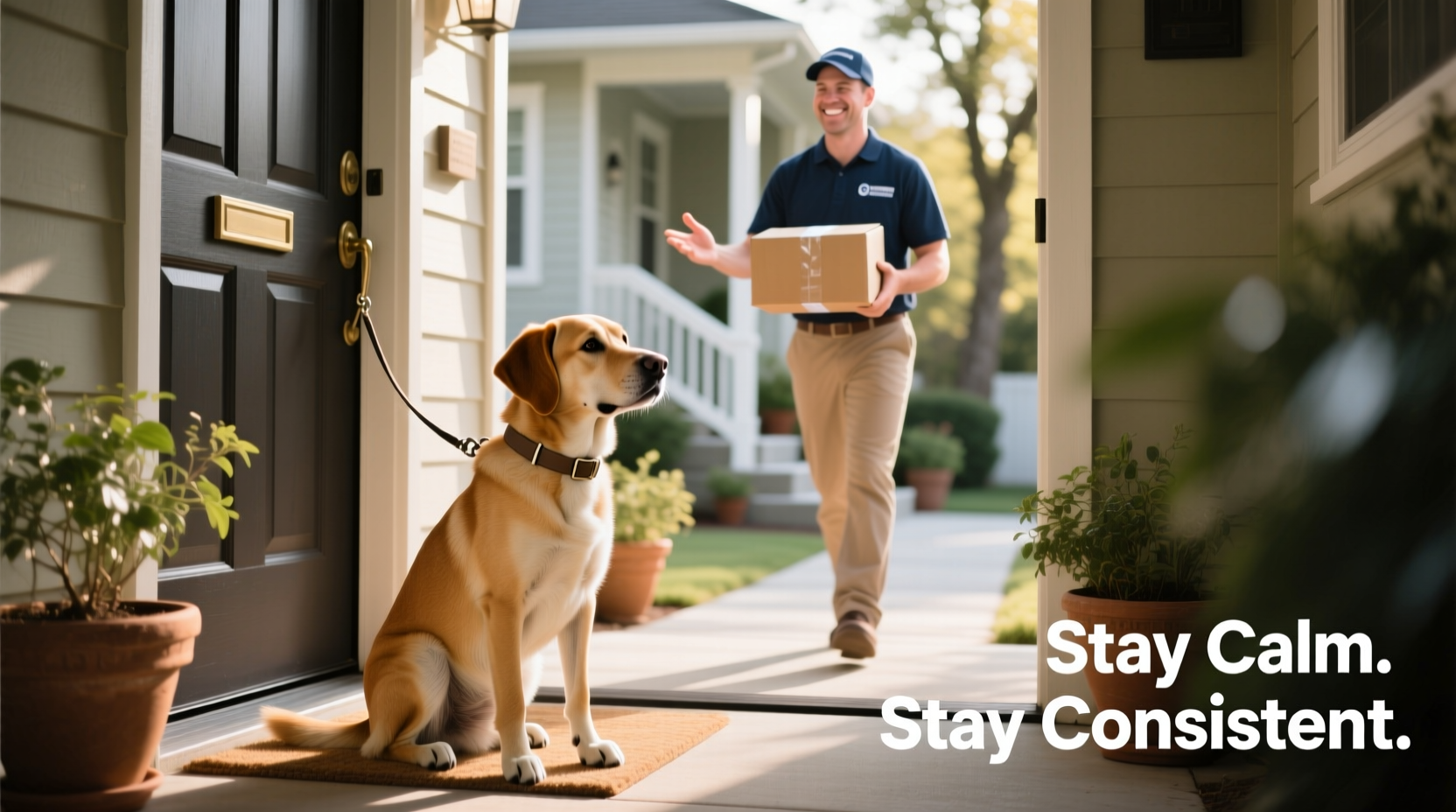
Barking at delivery personnel isn’t personal—it’s instinctual. Dogs are naturally territorial animals. Your home is their domain, and anyone approaching the front door, especially without invitation, triggers a protective response. Add in the sudden movement, unfamiliar uniforms, and brief presence of delivery drivers, and you have a perfect storm for reactive behavior.
Some dogs bark out of excitement—they associate the doorbell with activity. Others react from fear or uncertainty. Puppies and younger dogs may not yet have learned appropriate responses. Regardless of motivation, repeated unchecked barking reinforces the behavior, making it harder to correct over time.
The key is not to suppress barking entirely—that’s neither realistic nor fair—but to redirect it into a calmer, more manageable response. This means teaching your dog that delivery visits don’t require alarm and that staying quiet earns better rewards than noise.
“Barking at visitors is one of the most common behavioral issues we see, but it’s also one of the most fixable with consistency.” — Dr. Laura Silverman, Certified Applied Animal Behaviorist
A Step-by-Step Training Plan
Effective training doesn’t happen overnight. It requires repetition, timing, and a clear communication system between you and your dog. Follow this phased approach to build lasting change.
Phase 1: Build Basic Obedience Skills
Before tackling real-world scenarios, ensure your dog reliably responds to core commands like “sit,” “stay,” and “quiet” in low-distraction environments. These form the foundation for managing reactivity.
- Practice “sit” and “stay” daily for 5–10 minutes in a quiet room.
- Introduce the “quiet” command: Wait for your dog to bark (you can prompt it gently), then say “quiet” in a calm, firm tone. When they stop barking—even briefly—immediately reward with a treat and praise.
- Gradually increase the duration of silence required before rewarding.
- Use high-value treats (like small pieces of chicken or cheese) to boost motivation.
Phase 2: Desensitize to Door-Related Triggers
Many dogs react not just to people, but to associated sounds: the doorbell, knocking, footsteps, or even the sight of a uniform. Begin by simulating these stimuli at low intensity.
- Play recorded doorbell sounds at a low volume. Reward calm behavior.
- Gradually increase volume over several sessions as your dog remains relaxed.
- Have a friend knock lightly on the door while you practice “sit” and “stay” nearby.
- Never force exposure—end the session if your dog becomes overly agitated.
The goal is to break the association between the trigger and the need to bark. Over time, your dog learns that the sound does not lead to danger or require a vocal response.
Phase 3: Simulate Delivery Scenarios
Now that your dog handles isolated sounds, introduce full mock deliveries.
- Ask a friend or family member to approach your front door wearing neutral clothing.
- Have them ring the bell or knock once, then leave immediately.
- During the event, cue your dog to “sit” and offer a treat for compliance.
- If your dog barks, avoid scolding. Instead, wait for a pause, say “quiet,” and reward silence.
- Repeat 3–5 times per session, keeping each interaction brief.
After several successful sessions, gradually increase realism: have the person stay longer, carry a box, or wear a delivery uniform. Always maintain control and end on a positive note.
Phase 4: Real-World Application
Once your dog consistently stays calm during simulations, transition to real deliveries. You’ll likely need to manage the environment initially.
- Keep your dog on a leash or behind a baby gate during actual deliveries.
- Position them in a separate room with a view-blocking barrier if needed.
- Use a favorite chew toy or stuffed Kong to create a positive distraction.
- Immediately reward calm behavior after the driver leaves.
Progress may be slow, especially with frequent deliveries. Be patient. Consistency over weeks will yield far better results than intensity over days.
Environmental Management and Prevention Strategies
Training works best when combined with smart environmental adjustments. Even the best-trained dog can regress if constantly exposed to unmanaged triggers.
| Do | Don't |
|---|---|
| Block your dog’s view of the front door with curtains or gates. | Allow unrestricted access to windows where drivers are visible. |
| Use white noise or calming music to mask outdoor sounds. | Leave your dog alone near the door during deliveries. |
| Provide puzzle toys or chews during expected delivery windows. | Yell “no” or punish barking—this increases arousal. |
| Install a doorbell camera to anticipate arrivals and prepare your dog. | Rely solely on electronic bark collars or aversive tools. |
Managing the environment reduces rehearsal of unwanted behavior. Every time your dog barks uncontrollably, the habit deepens. Prevention gives training a better chance to take root.
Checklist: Key Actions to Stop Door Barking
Use this checklist to track your progress and ensure you’re covering all bases:
- ✅ Teach and reinforce basic commands (“sit,” “stay,” “quiet”) in distraction-free settings.
- ✅ Identify specific triggers (doorbell, knocking, uniforms) and simulate them safely.
- ✅ Conduct daily short training sessions focused on calm responses.
- ✅ Use high-value treats to reward silence and alternative behaviors.
- ✅ Block visual access to the front door or yard during deliveries.
- ✅ Practice mock deliveries with friends or family members.
- ✅ Monitor real deliveries closely and intervene calmly when needed.
- ✅ Maintain consistency—everyone in the household must follow the same rules.
- ✅ Track progress weekly and adjust difficulty as your dog improves.
- ✅ Consult a professional trainer if progress stalls or aggression appears.
Real Example: Transforming Max, the Reactive Terrier
Max, a 3-year-old Jack Russell Terrier, barked wildly every time a delivery arrived—sometimes for minutes after the driver left. His owner, Sarah, felt embarrassed and overwhelmed. She tried yelling “quiet” and even used a spray bottle, but Max only became more frantic.
Working with a certified trainer, Sarah began a structured plan. First, she taught Max to sit and stay on a mat in the living room. She played recorded doorbell sounds at low volume, rewarding calmness. After two weeks, Max stayed seated through the audio cues.
Next, her brother simulated deliveries. At first, Max barked, but Sarah waited for a pause, said “quiet,” and rewarded him. Over time, he began sitting automatically when he heard the bell.
Sarah also installed blackout curtains and started giving Max a peanut butter-stuffed Kong during expected delivery times. Within six weeks, Max remained quiet during real deliveries, often lying on his mat while the driver dropped off packages.
“It wasn’t fast,” Sarah said, “but it was worth it. Now I don’t dread the UPS truck coming.”
Frequently Asked Questions
How long does it take to stop a dog from barking at delivery drivers?
Most dogs show improvement within 3–6 weeks of consistent training. However, complete behavior change can take 2–3 months, especially for highly reactive dogs. Daily short sessions (5–10 minutes) are more effective than infrequent long ones.
Can I use a bark collar to solve this faster?
Veterinary behaviorists generally discourage shock or spray collars for this issue. These tools suppress symptoms without addressing the underlying cause and can increase fear or anxiety. Positive reinforcement and desensitization are safer, more effective long-term solutions.
What if my dog is aggressive toward delivery personnel?
If your dog shows signs of aggression—lunging, growling, or snapping—seek help from a certified dog behavior consultant immediately. Safety is paramount. Never allow unsupervised interactions, and consider temporary measures like indoor-only access during deliveries.
Expert Insight: The Role of Predictability
Dogs thrive on routine and predictability. When deliveries happen randomly and trigger chaos, your dog learns to stay on high alert. Structured training replaces unpredictability with reliable outcomes.
“When a dog learns that ‘doorbell = sit and get a treat’ instead of ‘doorbell = panic and bark,’ the emotional response shifts from fear to anticipation. That’s the power of consistent conditioning.” — Karen Patel, CPDT-KA, Canine Training Specialist
By pairing the trigger with positive experiences, you’re not just stopping barking—you’re changing how your dog feels about the situation.
Conclusion: Calm Is a Learned Behavior
Your dog doesn’t bark at delivery drivers to annoy you—they’re trying to protect their territory or respond to what they perceive as a threat. With compassionate, consistent training, you can teach them a new response: calmness.
Start today. Pick one step—teach “quiet,” block the window view, or run a mock delivery. Small actions compound into big changes. Celebrate progress, stay patient, and remember that every dog can learn to coexist peacefully with modern life’s constant comings and goings.
💬 Have success stories or challenges with dog barking? Share your experience below—your insight could help another pet owner find peace at the front door.








