Hosting a BYOB (Bring Your Own Bottle) party is a smart, budget-conscious choice—but it’s also one of the most socially delicate hosting decisions you’ll make. Done poorly, it can read as cheap, thoughtless, or even exclusionary. Done well, it fosters generosity, lowers financial pressure, and creates a relaxed, collaborative atmosphere where guests feel like co-creators of the evening—not just attendees. The key isn’t just shifting cost; it’s preserving warmth, clarity, and hospitality while removing the burden of full beverage provisioning. This guide distills real-world experience—from seasoned hosts, bartending professionals, and etiquette consultants—into actionable steps that prevent missteps, minimize stress, and maximize enjoyment.
Why “BYOB” Needs Intentional Framing (Not Just an Acronym)
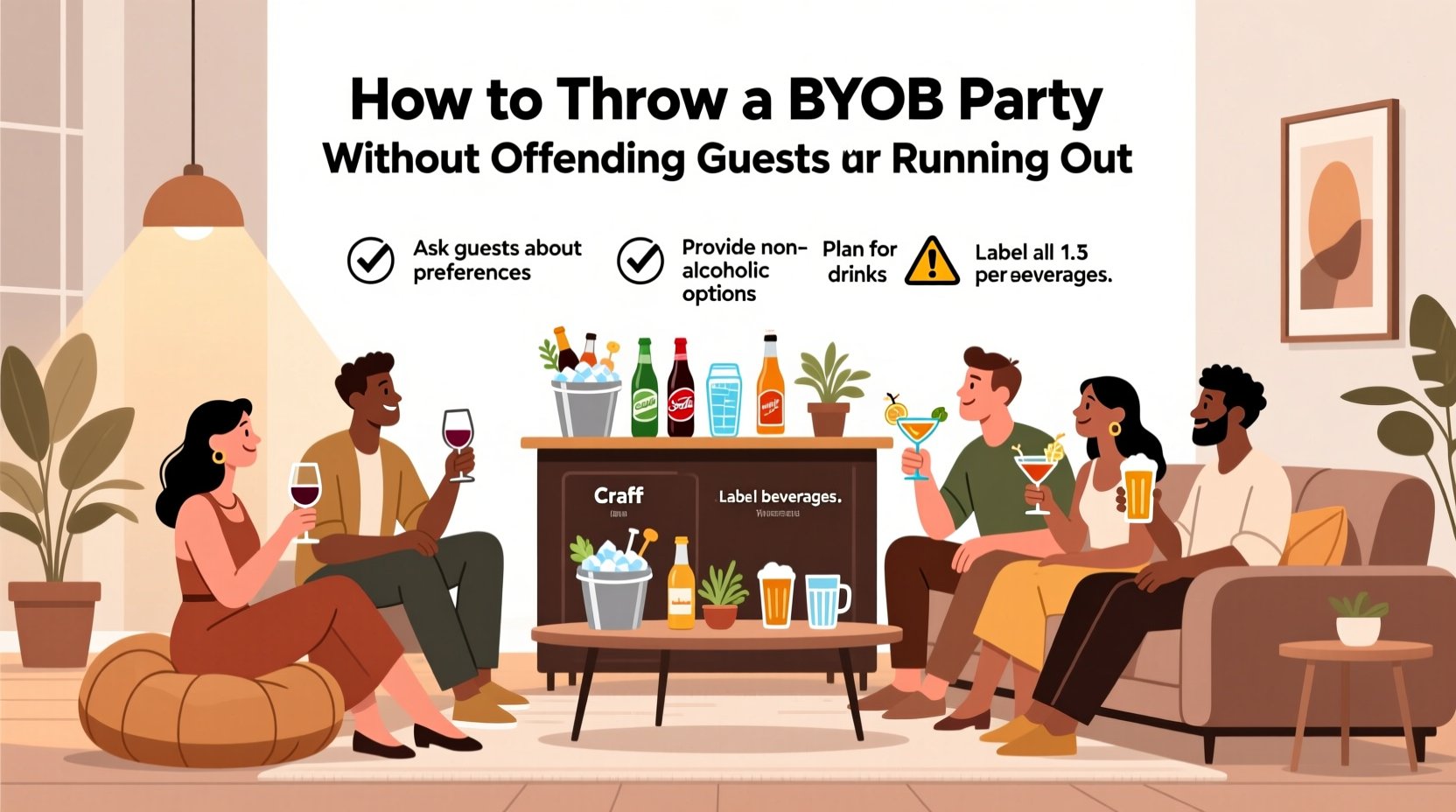
The phrase “BYOB” carries baggage. In casual texts or vague Facebook event titles, it often lands with zero context: no tone, no expectations, no guidance. Guests may wonder: *Am I expected to bring enough for everyone? Do I need to coordinate with others? What if I forget—or show up with only two beers?* Ambiguity breeds anxiety, not goodwill. A thoughtful BYOB party begins not with logistics, but with narrative: a clear, warm, and inclusive story about why this format makes sense *for this gathering*.
It’s rarely about cutting corners—it’s about shared investment. Maybe you’re launching a new apartment and want to celebrate without draining your moving budget. Perhaps you’re hosting 25 people in a space without a full bar setup. Or you’re curating a themed tasting night where guests contribute favorite bottles to explore together. Each reason deserves naming. When guests understand the “why,” they engage more generously—and forgive small hiccups.
Tip: Never use “BYOB” as a standalone phrase in your invitation. Always pair it with purpose: e.g., “Let’s keep it light and lively—bring your favorite bottle to share! We’ll provide mixers, glassware, ice, and non-alcoholic options.”A Realistic Drink Estimation Framework (No Guesswork)
Running out of drinks is the fastest way to derail a BYOB party. But overestimating leads to waste—and awkwardly asking guests to take home half-empty bottles. The solution isn’t rigid math; it’s layered estimation grounded in timing, guest profile, and flow.
Start with the 3-2-1 Rule, refined by beverage managers who regularly staff private events:
- First hour: Guests consume ~3 standard drinks (e.g., 12 oz beer, 5 oz wine, 1.5 oz spirit)
- Second hour: ~2 drinks (pace slows, conversation deepens)
- Third+ hour: ~1 drink per hour (or less—many switch to water, soda, or stop altogether)
Then adjust for your group:
| Factor | Adjustment | Rationale |
|---|---|---|
| Group age (avg. under 30) | +0.5 drink/hour first two hours | Higher baseline consumption; more likely to bring spirits or craft beer |
| Group includes designated drivers or non-drinkers | −20% total estimate | Account for 1–2 people per 5 guests who won’t consume alcohol |
| Event is dinner-focused (3+ hours) | −1 drink overall per person | Food slows absorption; guests sip more deliberately |
| It’s a summer afternoon event | +0.75 drink/hour first two hours | Heat increases thirst; lighter drinks (spritzes, cider, rosé) go faster |
Example: For 12 guests (avg. age 34), 4-hour dinner party starting at 6 p.m.: Base estimate = 12 × (3 + 2 + 1 + 1) = 84 drinks Adjust for dinner focus: −12 = 72 drinks Convert to volume: 72 × 14 g ethanol ≈ 1,000 mL pure alcohol �� roughly 12–14 standard 750mL bottles (wine/spirits) + 24–30 beers/ciders. But—and this is critical—you’re not providing all of this. You’re estimating *what guests should collectively bring*, then filling gaps strategically.
The BYOB Communication Protocol: Clarity Without Coldness
How you ask matters more than what you ask for. A poorly worded invite triggers defensiveness (“Why am I paying for their party?”). A well-crafted one sparks enthusiasm (“I get to bring my favorite bourbon!”). Follow this sequence:
- Lead with warmth and intention — “We’re so excited to celebrate with you at our new place!”
- Explain the format simply and positively — “To keep things relaxed and affordable, we’re doing a BYOB-style gathering…”
- Specify exactly what guests bring (and what you provide) — Be granular: “Please bring your favorite bottle of wine, beer, cider, or spirits. We’ll supply mixers (tonic, soda, ginger beer), fresh garnishes (lemons, limes, mint), ice, glassware, non-alcoholic drinks (sparkling water, juice, iced tea), and all food.”
- Offer flexibility and reduce friction — “If bringing alcohol isn’t possible for you, just let us know—we’re happy to arrange something low-key (a nice sparkling water, local kombucha, etc.). No explanation needed.”
- Include a gentle nudge toward coordination — “To help balance variety, feel free to reply-all with what you’re thinking of bringing—we’ll keep a quick list so we don’t end up with seven bottles of Cabernet!”
This approach removes shame, invites participation, and subtly encourages diversity in offerings—so you don’t get stuck with six IPAs and no white wine.
Mini Case Study: Maya’s “Neighborhood Mixer” Party Gone Right
Maya hosted a BYOB “neighborhood mixer” for 18 people in her Brooklyn walk-up. Her space had limited counter space, no dishwasher, and she was on a tight post-rent budget. She sent invites 12 days ahead via email and WhatsApp, using the communication protocol above. She added a Google Sheet titled “What’s Coming?” visible to all guests—columns for Name, Drink Type, Bottle Name/Brand, and Notes (“Chilled, please” or “Gluten-free”). Three guests noted they’d bring non-alcoholic options. Two coordinated to bring vermouth and Campari for a DIY Negroni station. One brought a large-format bottle of sparkling rosé—perfect for toasting.
Maya prepared three things: (1) a 20-lb bag of ice (pre-frozen in trays for clarity), (2) a “mixer bar” with labeled pitchers (ginger beer, tonic, club soda, house-made simple syrup), and (3) a “non-alc lounge” corner with infused waters, cold-brew coffee, and fancy sodas. She didn’t buy a single alcoholic beverage. At 9 p.m., someone opened the last bottle of wine—just as Maya pulled out the chilled backup she’d quietly stocked (a $14 Pinot Grigio, unbranded, placed discreetly behind the citrus). No one noticed. The party ended at midnight with laughter, empty glasses, and zero awkward refusals or shortages.
Her secret? She treated BYOB not as delegation, but as curation. She set the stage, invited contribution, and held gentle stewardship over the experience.
What You *Must* Provide (The Non-Negotiables)
“BYOB” does not mean “you’re on your own.” Guests bring the alcohol—but you are responsible for enabling its safe, enjoyable, and dignified service. Skimp here, and the party feels transactional, not celebratory. These five elements are mandatory:
- Ice—abundant and high-quality: Use filtered water and large cubes (they melt slower). Plan for 1.5 lbs per guest. Store in coolers—not the freezer door—to prevent temperature swings.
- Mixers and modifiers: Tonic, soda water, ginger beer, cola, and at least two fresh juices (orange and lime minimum). Include house-made options if possible (e.g., basil-infused simple syrup) to elevate the experience.
- Glassware—clean, varied, and sufficient: Minimum of 2 glasses per guest (one for primary drink, one for water). Include wine glasses, rocks glasses, highballs, and champagne flutes if relevant. Wash them *before* guests arrive—no mid-party dishwashing.
- Non-alcoholic options that feel intentional: Not just tap water in a pitcher. Offer sparkling water with citrus wheels, cold-brew coffee with oat milk, house-made shrubs, or premium sodas. Label them beautifully.
- A quiet contingency plan: One or two unobtrusive backup bottles (e.g., a crisp Sauvignon Blanc, a clean vodka, a session IPA) stored in the fridge or cooler. Use them only if a guest arrives empty-handed *or* if a category runs critically low. Never announce them—just pour.
“The biggest mistake hosts make with BYOB is forgetting that hospitality lives in the details—the chill of the glass, the zest of the lime, the ease of pouring. Alcohol is the spark, but the environment is the flame.” — Lena Torres, Beverage Director & Private Event Consultant, New York City
Step-by-Step: Your BYOB Party Timeline (From 10 Days Out to Last Guest)
Timing transforms anxiety into control. Here’s how to pace your prep:
- 10 days before: Send invitations with clear BYOB framing, link to shared drink list, and RSVP deadline (7 days out).
- 7 days before: Review RSVPs and drink list. Message 2–3 guests gently: “Hey, we’ve got great reds coming—would you consider bringing a white or rosé to round things out?”
- 3 days before: Buy ice (in bulk), prep garnishes (slice lemons/limes, wash mint), stock non-alc drinks, and chill backup bottles.
- 1 day before: Wash and dry all glassware. Set up mixer station with labeled pitchers and spoons. Pre-chill wine/beer fridge zones. Freeze extra ice trays.
- Day of (4 hours before): Set tables, place coasters, fill ice bins, arrange garnishes. Do a final sweep: trash bags ready? Cooler near bar? Water pitcher filled?
- 30 minutes before doors open: Light candles, dim lights slightly, play soft background music, pour yourself one small drink—and breathe.
- During the party: Refill ice every 90 minutes. Rotate empty bottles discreetly. Check in with non-drinkers (“Can I top up your ginger beer?”). Never hover—be present, not project-managing.
- Last 30 minutes: Start offering coffee or digestifs. Gently signal wind-down with softer music or turning up lights slightly.
FAQ: Addressing Real Guest Concerns
What if someone brings something really expensive—and I serve it alongside cheaper options?
Don’t overthink the hierarchy. Treat every bottle with equal respect: open it thoughtfully, pour it properly, and acknowledge it warmly (“This Chablis looks amazing—thanks for sharing!”). Guests care far more about being seen than about perceived status. If you’re worried, offer to decant or serve it during a natural pause—like after dessert—so it feels intentional, not incidental.
Is it okay to ask guests to bring specific things, like “a bottle of gin”?
Yes—if done collaboratively. Instead of demanding, frame it as collective curation: “We’re building a mini gin bar! If you love gin, bring your favorite bottle—we’ll have tonics and botanicals to match.” Then follow up privately with 2–3 guests who enjoy spirits. Specificity works when it’s framed as shared creativity, not assignment.
How do I handle a guest who shows up without anything—and seems embarrassed?
Disarm immediately with warmth and zero judgment: “So glad you’re here! We’ve got plenty—grab a glass and join the fun.” Then hand them a drink you’ve already poured (e.g., sparkling water with lime, or a pre-mixed Aperol spritz). Later, quietly add their name to your mental “thank you” list for future gatherings—no mention of the oversight. Hospitality is measured in grace, not ledger books.
Conclusion: Hosting Is About Holding Space, Not Stocking Shelves
A successful BYOB party isn’t defined by how many bottles were consumed, but by how deeply guests felt welcomed, trusted, and included. It’s the moment someone opens a bottle they’ve carried across town with pride—not obligation. It’s the shared laugh when three people bring mezcal and you suddenly have an impromptu tasting flight. It’s the quiet relief of knowing your budget stayed intact *without* sacrificing joy or generosity.
You don’t need a liquor license, a walk-in cooler, or a sommelier’s palate. You need clarity, preparation, and the quiet confidence that thoughtful hosting isn’t about perfection—it’s about presence. So choose your date, draft your warm, specific invite, and start that shared drink list. Then step back, pour yourself a glass of whatever’s flowing, and remember: the best parties aren’t supplied. They’re shared.
💬 Have you hosted a BYOB party that surprised you—in a good way? Share your one best tip or most joyful moment in the comments. Let’s build a smarter, kinder playbook—together.








