
Iron is one of the most common minerals found in groundwater, especially in homes relying on private wells or older municipal systems. While small amounts are harmless—and even beneficial—excessive iron can stain fixtures, damage plumbing, and alter the taste and odor of your water. Unlike chemical contaminants such as lead or nitrates, iron isn’t typically a health hazard at moderate levels, but its presence can signal other underlying water quality issues. Recognizing the signs of high iron and knowing how to address it naturally allows you to maintain clean, pleasant water without relying solely on synthetic filtration systems.
Signs Your Tap Water Has High Iron Content
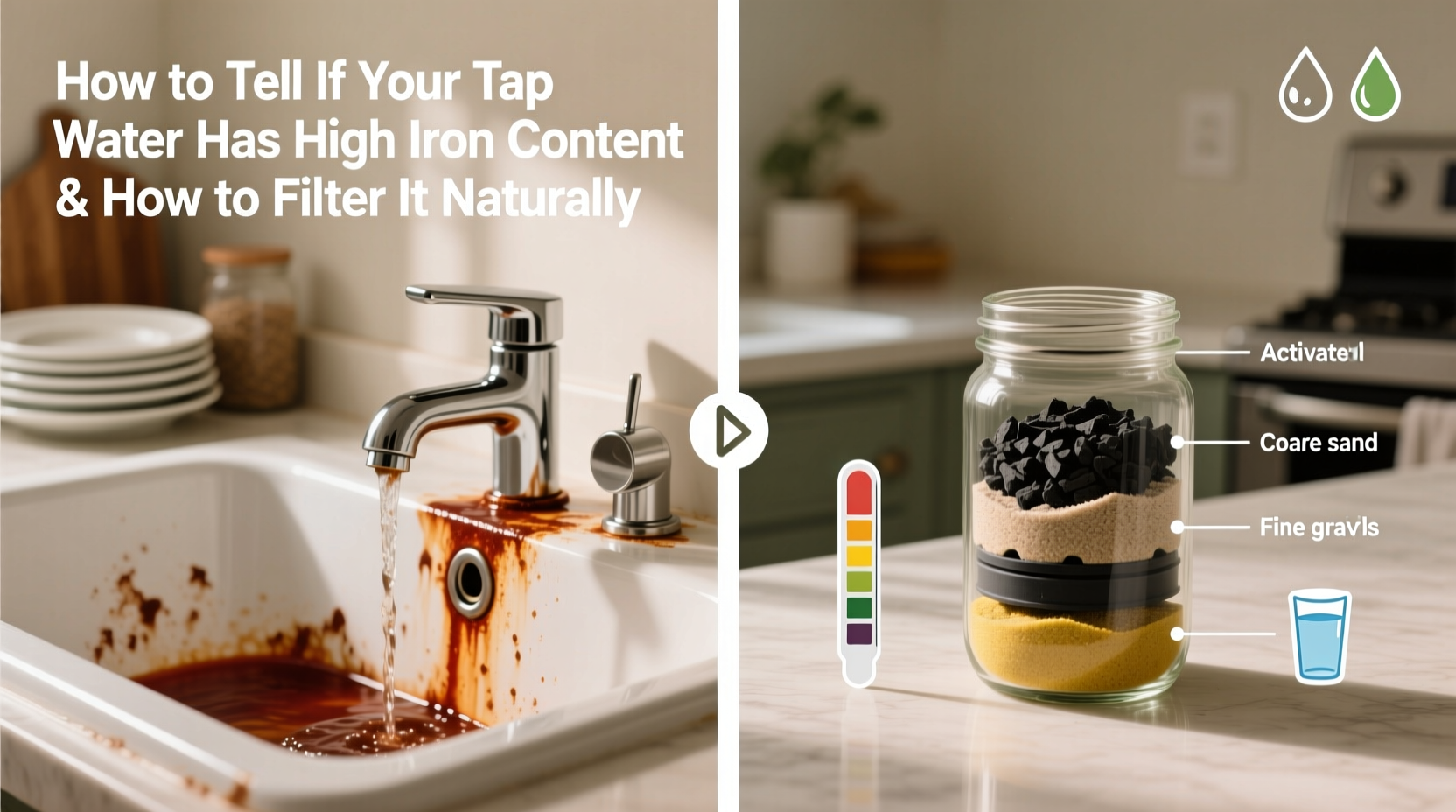
The first step in managing iron in your water is identifying whether it's present and in what form. Iron appears in two primary forms: ferrous (dissolved) and ferric (oxidized, particulate). Each behaves differently and leaves distinct clues.
- Reddish-brown stains: One of the most obvious signs is rust-colored staining on sinks, toilets, bathtubs, and laundry. These stains are difficult to scrub and often reappear quickly after cleaning.
- Metallic taste: Water with elevated iron levels often tastes metallic or bitter, especially when used for drinking or cooking.
- Cloudy or discolored water: If your water runs clear at first but turns yellow, orange, or brown after sitting for a few minutes, it likely contains dissolved ferrous iron that oxidizes upon exposure to air.
- Unpleasant odor: While iron itself is odorless, high concentrations often coexist with iron bacteria, which produce a swampy, musty, or sewage-like smell.
- Clogged plumbing or reduced water pressure: Over time, iron buildup can accumulate inside pipes, showerheads, and appliances like water heaters and dishwashers, reducing efficiency and lifespan.
Testing Your Water for Iron Levels
Visual cues are helpful, but accurate assessment requires testing. The Environmental Protection Agency (EPA) classifies iron as a secondary contaminant, meaning it affects aesthetics rather than posing direct health risks. The recommended limit is 0.3 milligrams per liter (mg/L), above which staining and taste issues become noticeable.
You can test your water using one of three methods:
- Home test kits: Affordable and easy to use, these kits include strips or reagents that change color based on iron concentration. Look for kits that measure both ferrous and ferric iron.
- Laboratory testing: For precise results, send a sample to a certified lab. This is especially important if you suspect iron bacteria or other contaminants like manganese or arsenic.
- Professional evaluation: Local water treatment specialists can perform on-site analysis and assess your entire system, including pH and hardness, which influence iron behavior.
Keep in mind that iron often appears alongside low pH (acidic water), which corrodes pipes and leaches metals, or hard water minerals like calcium and magnesium. A comprehensive test gives you a clearer picture of your water’s overall condition.
Natural Methods to Filter Iron from Tap Water
If your water exceeds acceptable iron levels, several natural filtration methods can reduce or eliminate it without introducing chemicals or relying on electricity. These solutions work best when tailored to the type and concentration of iron present.
1. Aeration and Settling Tanks
This method converts dissolved ferrous iron into insoluble ferric iron through oxidation. Exposing water to air causes iron to precipitate, forming particles that can be filtered out.
A simple setup involves pumping well water into an open-air tank where it mixes with oxygen. After oxidation, the water flows through a settling chamber where iron particles sink. The clearer water above moves to a final mechanical filter.
Tip: Add a fine mesh screen or sand layer at the outlet of the settling tank to catch residual particles before distribution.2. Sand Filtration
Once iron has oxidized, sand filters are highly effective at trapping the particles. A basic sand filter consists of layers of graded sand and gravel housed in a tank. As water passes through, suspended iron is physically removed.
For natural operation, backwashing (reversing flow to clean the filter) can be done manually or with gravity-fed systems. Regular maintenance ensures long-term performance.
3. Greensand Filtration
Greensand, made from glauconite, is a naturally occurring mineral coated with manganese oxide. It acts as a catalyst to oxidize and capture iron, even at lower pH levels. While technically a manufactured medium, greensand is derived from natural sources and regenerates using potassium permanganate—a controlled but non-synthetic process.
It works best under pressurized conditions and requires periodic regeneration, but offers reliable performance for moderate iron levels (up to 10 mg/L).
4. Constructed Wetlands and Biofiltration
In rural or off-grid settings, engineered wetland systems use plants and microbial activity to treat water. Reeds, cattails, and certain aquatic plants absorb minerals, while aerobic bacteria break down organic matter and oxidize iron.
While not practical for point-of-use filtration, this method is ideal for treating large volumes of water from shallow wells or surface sources before entering the home.
5. Ceramic and Activated Carbon Filters with Pre-Oxidation
At the tap, ceramic filters with sub-micron pores can remove particulate iron if combined with pre-aeration. Pairing them with activated carbon improves taste and removes odors caused by iron bacteria.
Note: These do not remove dissolved iron unless it has already been oxidized.
Step-by-Step Guide to Natural Iron Removal at Home
Implementing a natural filtration system doesn’t require advanced engineering. Follow this timeline to reduce iron safely and sustainably:
- Week 1: Observe and Test
Collect water samples from different taps after letting them run for one minute. Use a home test kit to check iron levels. Note any discoloration or odor. - Week 2: Identify Iron Type
Fill a glass with water and observe changes over 24 hours. Clear water turning cloudy indicates ferrous iron; immediate cloudiness suggests ferric iron. - Week 3: Choose a Filtration Method
Based on your findings:- Ferrous iron < 3 mg/L → Aeration + sand filter
- Ferrous iron > 3 mg/L → Greensand or multi-stage system
- Ferric iron → Mechanical filtration (e.g., pleated cartridge or sand)
- Week 4: Install and Monitor
Set up your chosen system. For DIY setups, ensure all components are food-grade and properly sealed. Test water again after two weeks of operation. - Ongoing: Maintain Regularly
Clean filters monthly. Inspect tanks for sludge buildup. Replace media like greensand every 5–7 years depending on usage.
“Natural filtration systems, when correctly designed, can match the performance of conventional units while minimizing environmental impact.” — Dr. Lena Patel, Environmental Hydrologist, University of Vermont
Do’s and Don’ts of Managing Iron-Rich Water
| Do | Don't |
|---|---|
| Test water annually, especially if using a private well | Ignore early signs like faint staining or metallic taste |
| Use vinegar-based cleaners to remove iron stains | Use chlorine bleach regularly—it can worsen bacterial growth |
| Flush your water heater every 6 months to prevent sediment buildup | Let water sit in faucets overnight without flushing in the morning |
| Install a whole-house filter if iron exceeds 0.3 mg/L | Rely solely on refrigerator filters—they don’t remove dissolved iron |
| Monitor pH; acidic water increases iron solubility | Assume bottled water is a long-term solution—it’s costly and unsustainable |
Real-Life Example: The Miller Family’s Well Water Fix
The Millers, living in rural Maine, began noticing orange stains in their sinks and a foul smell from their well water. Their dishwasher frequently malfunctioned, and laundry developed persistent splotches. Initial tests revealed 2.8 mg/L of dissolved iron and traces of iron bacteria.
Instead of installing a chemical-based oxidizer, they opted for a natural solution: a pressurized aeration tank connected to a dual-media sand filter. Air was injected into the water stream before it entered the filter, causing iron to oxidize and settle. They added a UV light as a final barrier against bacteria.
After six months, follow-up tests showed iron levels below 0.1 mg/L. Stains stopped appearing, and the metallic taste disappeared. The system required only quarterly maintenance and significantly extended the life of their appliances.
Tip: Combine aeration with UV sterilization if iron bacteria are detected—it prevents biofilm formation without chemicals.Frequently Asked Questions
Is iron in tap water dangerous to drink?
Generally, no. The EPA does not classify iron as a health risk at typical concentrations. However, very high levels may cause gastrointestinal discomfort in sensitive individuals. More importantly, iron often indicates corrosive water or bacterial contamination, which should be addressed.
Can boiling water remove iron?
No. Boiling kills pathogens but does not remove dissolved minerals like iron. In fact, evaporation during boiling can concentrate iron in the remaining water.
Are there foods that help counteract excess iron intake from water?
Dietary iron from water is minimal compared to food sources. However, tannin-rich beverages like tea can inhibit iron absorption if consumed with meals. This is only relevant for individuals with hemochromatosis (a genetic condition causing iron overload), who should consult a doctor about water safety.
Final Recommendations and Next Steps
High iron content in tap water is more than a nuisance—it can degrade your plumbing, diminish appliance efficiency, and affect daily comfort. But with careful observation, proper testing, and natural filtration strategies, you can restore clean, clear water to your home.
Start by confirming the presence and type of iron. Then choose a filtration approach that matches your water volume, iron concentration, and lifestyle. Simple systems like aerators and sand filters are accessible and effective for many households, especially those using well water.
Natural solutions emphasize sustainability and self-reliance. They reduce dependence on plastic bottles, avoid chemical additives, and integrate seamlessly into eco-conscious living.
💬 Ready to take control of your water quality? Begin with a test, document your findings, and share your journey. Whether you're on city water or a private well, clean water starts with awareness and action.








