
Running shoes don’t last forever. Even the most durable models degrade over time, losing critical cushioning, stability, and grip. Many runners continue using their shoes long after they’ve lost functional integrity, increasing their risk of injury and diminishing performance. Recognizing when a shoe is truly worn out isn’t always obvious—especially since visible wear doesn’t always align with internal breakdown. The two most reliable indicators? Tread condition and structural support. By learning how to assess both, you can protect your joints, maintain efficient form, and extend the life of future pairs through smarter rotation.
Why Tread and Support Matter in Running Shoes
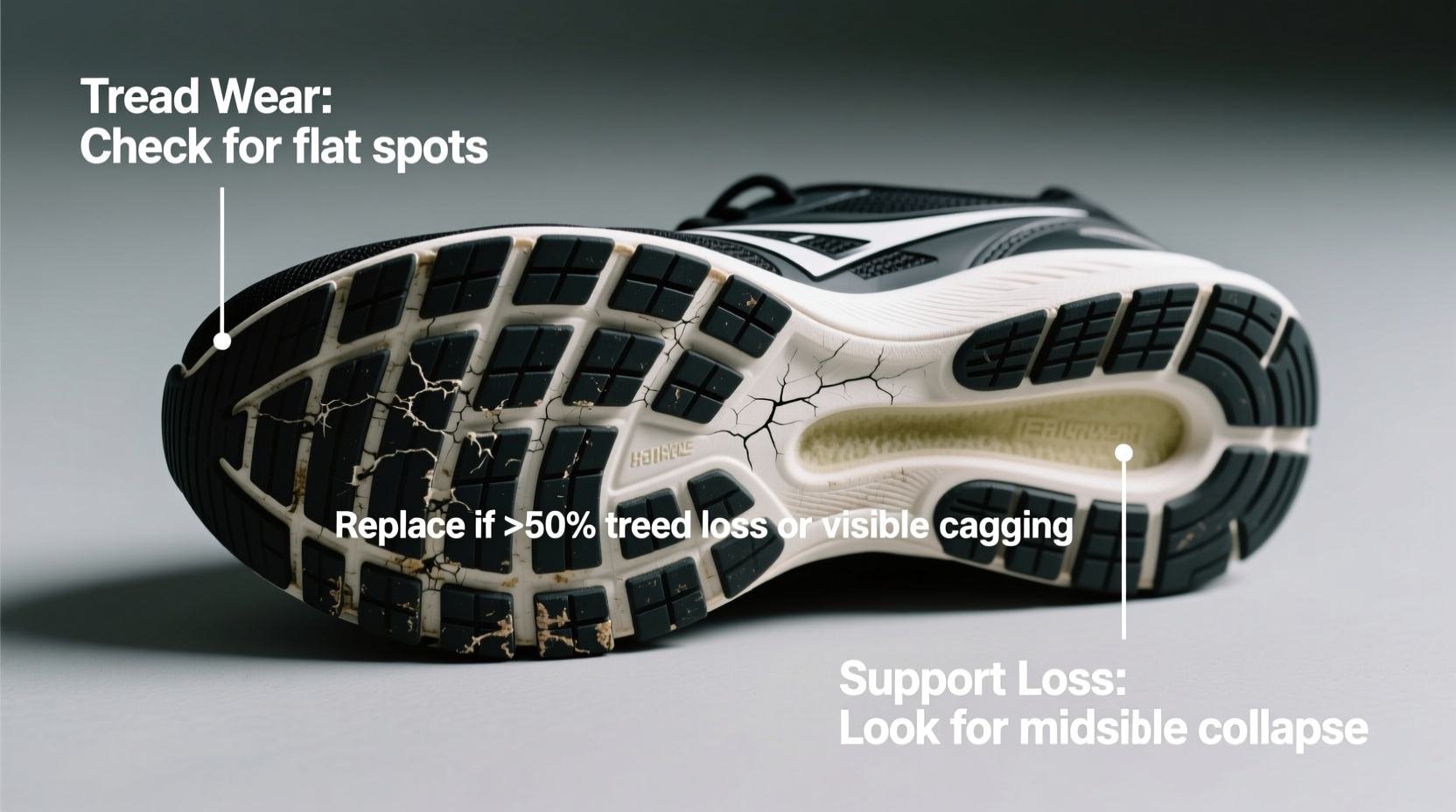
The outsole—the rubber part that contacts the ground—provides traction and absorbs impact forces during footstrike. As the tread wears down, especially in high-pressure zones like the heel and forefoot, the shoe’s ability to grip surfaces diminishes. This becomes particularly dangerous on wet pavement, trails, or uneven terrain where slipping could lead to falls or awkward landings.
Equally important is midsole support. Most modern running shoes use foam compounds like EVA, PU, or proprietary blends (e.g., Nike React, Adidas Boost) designed to compress and rebound with each stride. Over time, this foam breaks down, losing its spring and shock absorption. When support collapses, your feet absorb more stress, which travels up through your ankles, knees, hips, and lower back.
“Even if the upper looks fine, once the midsole loses resilience, the shoe has reached the end of its functional life.” — Dr. Lena Torres, Sports Podiatrist and Biomechanics Specialist
Tread and support work together: good tread ensures safe footing; intact support maintains alignment and reduces fatigue. Ignoring either compromises safety and efficiency.
How to Check for Tread Wear: A Step-by-Step Guide
Tread inspection is straightforward but requires attention to detail. Unlike car tires, running shoe treads aren't meant to last thousands of miles—they’re lightweight by design, making them susceptible to rapid wear under consistent use.
- Inspect the Outsole Regularly: After every 50 miles, turn your shoes upside down and examine the rubber. Look for smooth patches where grooves have flattened or disappeared.
- Focus on High-Impact Zones: Heel strikers will see the most wear at the outer edge of the heel. Forefoot runners may notice erosion beneath the ball of the foot. These areas bear the brunt of impact and often show wear first.
- Feel the Surface: Run your fingers across the lugs (the raised patterns). If they feel flat or slick rather than textured, the grip is compromised.
- Compare Both Shoes: Uneven wear can indicate gait imbalances. One shoe wearing faster than the other might signal overpronation, supination, or an old injury affecting your stride.
- Use the Penny Test (Modified): Insert a penny into the deepest groove of the heel. If Lincoln’s head is fully visible, tread depth is below 2mm—time to retire the shoe.
Assessing Midsole Support and Cushioning Integrity
Unlike tread, midsole degradation isn’t always visible. Foam compression happens gradually, often going unnoticed until discomfort sets in. However, several physical cues reveal when support has failed.
- Loss of bounce: Does your stride feel flat or jarring, even on soft surfaces? That’s a sign the foam isn’t rebounding properly.
- Asymmetrical compression: Place the shoes side by side on a level surface. If one tilts inward or outward, the midsole has broken down unevenly.
- Creaking or cracking sounds: While not common, some foams emit noises when compressed beyond their elastic limit—indicating microfractures.
- Pain onset: Shin splints, plantar fasciitis, or knee pain that wasn’t present before may correlate with worn-out cushioning.
Another method is the thumb test: press firmly into the heel and forefoot areas of the midsole. Compare it to a new pair of the same model. If the newer shoe feels significantly firmer or more responsive, your current pair has likely degraded.
Manufacturers typically rate running shoes for 300–500 miles, but individual results vary based on weight, gait, surface, and weather conditions. A 150-pound runner logging easy miles on pavement may get 450 miles, while a 200-pound trail runner tackling steep descents might need replacement at 300.
Visual Comparison: Signs of Wear at Different Mileage Stages
| Mileage Range | Tread Condition | Midsole Support | Recommended Action |
|---|---|---|---|
| 0–150 miles | Fully defined grooves, sharp edges | Firm, responsive compression | Break-in phase; ideal performance |
| 150–300 miles | Visible smoothing in heel/forefoot | Slight softening; still resilient | Monitor for changes; begin tracking comfort |
| 300–400 miles | Flattened lugs, shallow grooves | Noticeable loss of spring; slight tilt possible | Consider retirement; switch to backup pair |
| 400+ miles | Grooves nearly gone; slick spots | Compressed, mushy feel; visible collapse | Retire immediately; do not use for runs |
This table provides a general framework. Individual experience may vary, so combine mileage tracking with sensory feedback and visual checks.
Real Runner Case Study: From Denial to Diagnosis
Mark, a recreational half-marathoner, trained consistently for six months leading up to his race. Around week 10, he began experiencing persistent pain in his left Achilles tendon. Assuming it was tightness from increased volume, he stretched more and added strength exercises. The pain persisted.
After visiting a physical therapist, Mark brought his primary training shoes for evaluation. Despite appearing “not too bad” cosmetically, the therapist noted significant heel bevel wear on the right side and a collapsed medial post—a built-in stabilizer meant to control overpronation. The midsole had compressed asymmetrically, causing his foot to roll inward excessively with each step, straining the Achilles.
He had logged 475 miles on the pair, exceeding the recommended range. Once he switched to a fresh pair, combined with gait retraining, his symptoms resolved within three weeks.
Mark now tracks mileage religiously and inspects his shoes monthly. “I thought I was saving money by stretching them out,” he said. “But I ended up losing training time and paying for therapy. Not worth it.”
Do’s and Don’ts of Shoe Longevity and Evaluation
| Do’s | Don’ts |
|---|---|
| Track mileage using a log or app | Ignore persistent joint or foot pain |
| Rotate between two pairs | Wear the same shoes daily without rest |
| Inspect tread and midsole monthly | Assume appearance equals functionality |
| Replace shoes proactively, not reactively | Run through discomfort “to finish the miles” |
| Store shoes in a dry, temperate place | Leave wet shoes in a gym bag overnight |
Moisture accelerates material breakdown. Damp insoles and linings promote bacterial growth and weaken adhesives. Always air out shoes after use and avoid direct heat sources like radiators, which can warp soles and degrade glue bonds.
Comprehensive Checklist: Is It Time to Retire Your Running Shoes?
Use this checklist monthly or every 50 miles to evaluate your footwear objectively:
- ✅ Have I exceeded 300–500 miles on this pair?
- ✅ Is the tread visibly smooth or missing in key zones?
- ✅ Does the shoe tilt when placed on a flat surface?
- ✅ Has the cushioning become noticeably softer or less responsive?
- ✅ Do I experience new or worsening pain during or after runs?
- ✅ Are there cracks in the upper or separation between sole layers?
- ✅ Does the arch feel less supported than when the shoe was new?
- ✅ Can I press deeply into the midsole with little resistance?
If you answer “yes” to two or more, it’s time to shop for a replacement. Waiting longer risks injury and diminishes training quality.
Frequently Asked Questions
Can I continue using worn-out shoes for walking or light activities?
Yes, lightly used-up running shoes can transition to casual or non-impact use. Walking, household chores, or standing jobs don’t demand the same level of support. Just don’t rely on them for athletic performance or long-distance walking, where inadequate cushioning can still cause strain.
Do lightweight racing shoes wear out faster than trainers?
Absolutely. Racing flats and carbon-plated speed shoes prioritize weight savings and energy return over durability. Their outsoles are thinner, and midsoles are optimized for responsiveness, not longevity. These models often reach end-of-life at 200–300 miles, sometimes less. Use them only for workouts and races, not daily training.
Is there a way to restore cushioning in old shoes?
No. Once foam cells break down, they cannot regenerate. Some companies claim to “recharge” midsoles using heat or pressure treatments, but independent testing shows minimal measurable benefit. These services may clean and deodorize shoes, but they won’t restore structural integrity. Replacement remains the only effective solution.
Final Thoughts: Protect Your Stride, Respect Your Shoes
Your running shoes are high-performance tools engineered for a finite number of impacts. Treating them as disposable commodities leads to inefficiency and injury. Conversely, respecting their lifespan—by monitoring tread, assessing support, and replacing them proactively—enhances comfort, improves biomechanics, and supports long-term progress.
Don’t wait for complete disintegration. Build habits: log your miles, rotate your pairs, inspect regularly, and listen to your body. The difference between a strong finish and a sidelined season often comes down to something as simple as recognizing when your shoes have given their all.
💬 Have a shoe-wear story or tip? Share your experience in the comments—your insight could help another runner avoid preventable injury.








