Ballet flats have long been a favorite in women’s wardrobes for their comfort, simplicity, and timeless appeal. Yet many professionals hesitate to wear them in business casual settings, fearing they may appear too casual or lack authority. The truth is, when styled intentionally, ballet flats can elevate a work wardrobe with sophistication and polish. The key lies in thoughtful coordination, quality selection, and attention to proportion and detail.
Whether you're navigating office corridors, attending client meetings, or working remotely with video calls, pairing ballet flats with business casual attire can project confidence and personal style—without sacrificing comfort. This guide breaks down exactly how to integrate ballet flats into your workwear with assurance, offering practical strategies, real-world examples, and insights from fashion experts.
Choose the Right Flat for Professional Settings
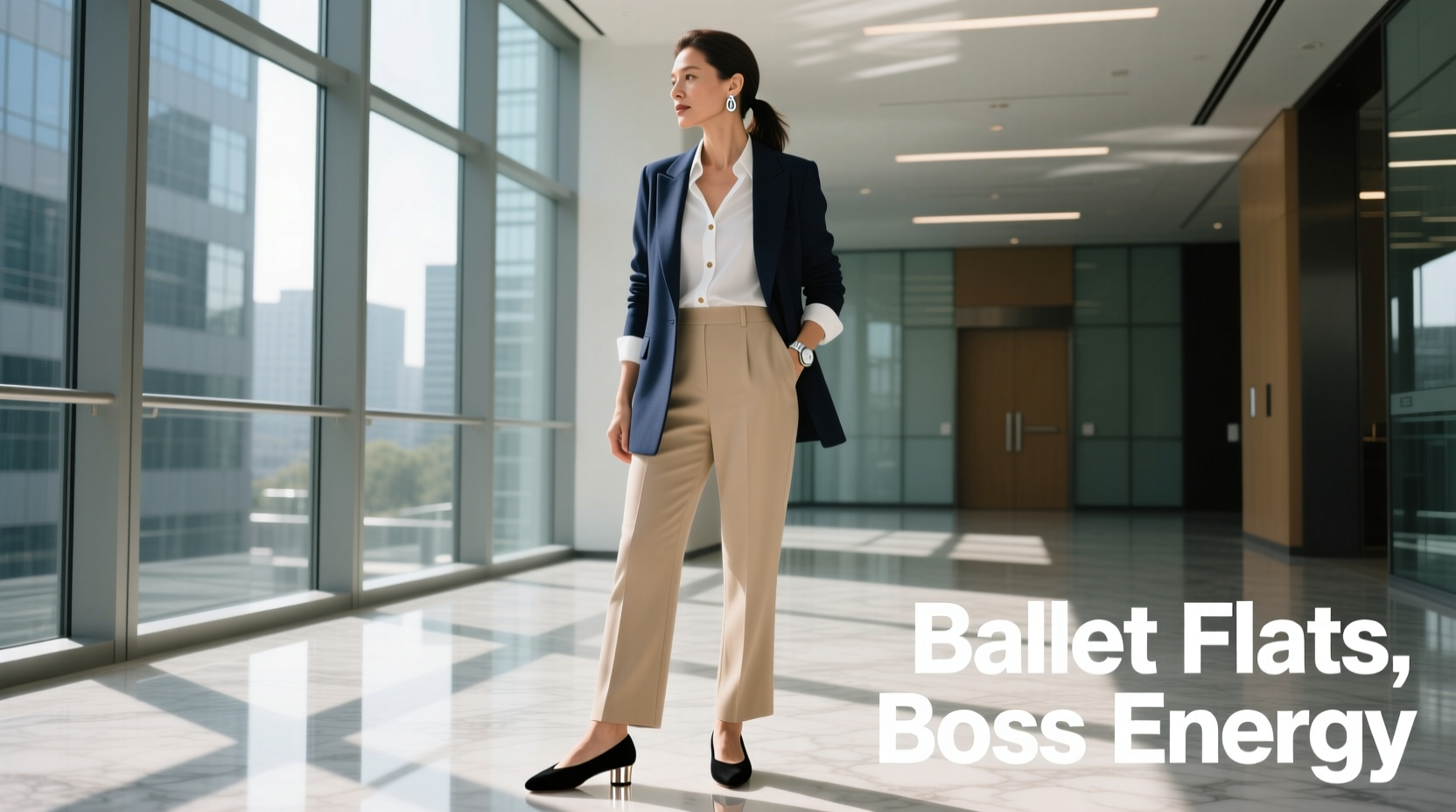
Not all ballet flats are created equal. To maintain a polished look in business casual environments, select styles that lean toward refinement rather than whimsy. Avoid overly embellished designs like bows larger than two inches, glitter finishes, or cartoonish prints. Instead, opt for minimalist silhouettes in premium materials such as smooth leather, suede, or matte calfskin.
A well-constructed flat should hold its shape, feature a structured sole, and offer adequate arch support. Look for brands known for blending style with function—think Tod’s, Cole Haan, or Sam Edelman’s dressier lines. Neutral colors like black, navy, taupe, burgundy, or dark gray seamlessly integrate into most professional wardrobes.
Tip: If you're unsure about color coordination, stick to flats that match your belt or handbag for a cohesive, intentional look.Material & Color Guide for Office-Appropriate Ballet Flats
| Material | Best For | Season | Color Recommendations |
|---|---|---|---|
| Polished Leather | Formal meetings, client-facing roles | All year | Black, navy, oxblood |
| Suede | Creative offices, Friday wear | Fall/Winter | Mocha, forest green, charcoal |
| Patent Leather | Adding subtle shine without heels | Winter/Holiday season | Deep plum, classic black |
| Textured Calfskin | Daily wear with trousers or skirts | All year | Taupe, camel, graphite |
Pairing Ballet Flats with Key Business Casual Bottoms
The foundation of a strong business casual look starts with the lower half. How your flats interact with pants, skirts, or cropped trousers dramatically affects overall silhouette and professionalism.
Pants & Trousers
For full-length tailored trousers, ensure the hem rests cleanly at the top of the foot without excessive pooling. A slight break is acceptable, but avoid dragging fabric over the shoe. Cropped or cuffed ankle pants are ideal—they expose just enough of the flat to highlight its design while maintaining structure.
Wide-leg pants require caution. While stylish, they can visually shorten the leg when paired with flats. To counter this, choose high-waisted styles and tuck in your top to elongate the torso. Alternatively, opt for tapered or straight-leg cuts that skim the ankle.
Skirts & Dresses
Mid-length pencil skirts (ending just above or below the knee) create a balanced proportion with ballet flats. Pair a navy skirt with a crisp white blouse and black flats for a classic combination. Avoid very short skirts with flats, as the combo can skew youthful or underdressed.
Sheath dresses in wool or ponte knit are excellent one-piece options. Choose a dress with defined waistline and pair it with a structured cardigan or blazer. Add a delicate watch and small stud earrings to complete the ensemble.
“Ballet flats can be as authoritative as heels when the rest of the outfit respects proportion and finish.” — Lydia Chen, Fashion Stylist & Corporate Image Consultant
Build Balanced Outfits Using Proportion & Layering
One common concern with wearing flats in professional settings is the perceived loss of height or presence. However, strategic layering and fit adjustments can create vertical lines that enhance stature.
Wear tops that end at the hip or slightly longer, especially when paired with high-waisted bottoms. This creates a clean transition between pieces. Blazers should end at or just below the hip to avoid overwhelming the frame. Consider unbuttoned layers—such as open cardigans or duster jackets—to draw the eye downward and maintain flow.
Vertical details like pinstripes, center-front buttons, or long necklaces subtly elongate the body. Avoid horizontal elements that cut the figure, such as wide belts worn over bulky sweaters.
Tip: Roll sleeves once or twice on shirts and blazers to expose the wrist—this small detail adds precision and intentionality to your look.Step-by-Step: Creating a Polished Business Casual Look with Ballet Flats
- Start with a base piece: Choose tailored ankle pants in charcoal gray or a knee-length A-line skirt in navy.
- Add a refined top: Opt for a silk shell, button-down oxford, or fine-knit turtleneck in a coordinating neutral.
- Incorporate a structured layer: Drape a single-breasted blazer or cropped jacket over the shoulders.
- Select your flats: Pick a pair of black or burgundy leather ballet flats with minimal detailing.
- Refine with accessories: Carry a structured tote, wear a slim watch, and keep jewelry minimal—small hoops or studs work best.
- Final check: Ensure clothes are pressed, shoes are scuff-free, and hosiery (if worn) matches your skin tone or shoe color.
Avoid Common Styling Pitfalls
Even well-intentioned outfits can fall short due to small missteps. Awareness of frequent mistakes helps maintain a consistently professional image.
- Wearing worn-out flats: Scuffed soles, creased uppers, or frayed edges undermine credibility. Rotate shoes regularly and retire those showing significant wear.
- Mismatched formality: Pairing sequined flats with a tweed skirt sends mixed signals. Keep material and occasion aligned.
- Neglecting socks or foot coverage: In cooler months, sheer no-show liners prevent sweat marks without visibility. For opaque tights, match them to your shoe or skin tone—never wear bright white athletic socks.
- Ignoring posture: Comfortable footwear shouldn’t lead to slouching. Stand tall, shoulders back, to project confidence regardless of heel height.
Do’s and Don’ts of Styling Ballet Flats at Work
| Do | Don't |
|---|---|
| Match your flat to your handbag or belt | Wear scuffed or dusty flats |
| Pair with cropped or tailored pants | Combine with overly baggy jeans |
| Use sheer or invisible foot linings | Let toes peek through stretched fabric |
| Choose flats with a defined toe box | Select overly rounded or “crushed” styles |
| Coordinate with a structured outer layer | Wear with oversized knits that drag |
Real-World Example: Maria’s Transition to Flats-First Workwear
Maria, a marketing manager at a mid-sized tech firm, spent years rotating between low heels and supportive loafers. After developing plantar fasciitis, she sought alternatives that wouldn’t compromise her professional image. She began experimenting with pointed-toe ballet flats in black leather, starting with Fridays.
Her first successful combination: high-waisted cream trousers, a navy turtleneck, and a cropped beige blazer. She added a thin gold necklace and a matching leather tote. Colleagues complimented her look, assuming the flats were a deliberate style choice rather than a medical necessity.
Over time, Maria expanded her flat collection to include oxblood and taupe pairs. She now wears them three to four days a week, reserving heels only for presentations. Her experience highlights how thoughtful styling turns functional needs into signature elegance.
Expert-Approved Checklist for Confident Flats Wear
- ✅ Shoes are clean, polished, and structurally sound
- ✅ Hemlines align properly with shoe height
- ✅ Top and bottom proportions balance each other
- ✅ Outer layer adds structure (blazer, cardigan, trench)
- ✅ Accessories are minimal and coordinated
- ✅ Footwear matches the office culture (conservative vs. creative)
- ✅ Socks or liners are invisible or tonal
Frequently Asked Questions
Can I wear ballet flats to a job interview?
Yes, provided they are sleek, conservative, and well-maintained. A closed-toe leather flat in black or navy paired with a tailored suit or coordinated separates projects competence and attention to detail. Avoid trendy cuts or loud colors.
Are ballet flats appropriate for client meetings?
They can be, especially in industries like creative services, education, or nonprofit sectors where comfort and approachability matter. Ensure the rest of your outfit maintains formality—pair flats with a well-tailored dress or pantsuit. In highly traditional fields (e.g., law or finance), reserve them for internal meetings unless flats are part of accepted office norms.
How do I prevent my ballet flats from slipping off the back of my heel?
Consider adding gel heel grips or cushioned insoles for better fit. Alternatively, choose styles with elasticized bands across the vamp or slightly snugger sizing (without pinching). Breaking in new flats at home before wearing them all day also improves grip and comfort.
Final Thoughts: Style with Intention, Not Just Convenience
Styling ballet flats in business casual settings isn’t about settling for comfort—it’s about making a conscious sartorial choice that reflects both intelligence and individuality. When chosen with care and paired with precision, flats can convey calm authority, modern elegance, and self-assuredness.
The most polished professionals don’t rely on height to command respect; they use proportion, grooming, and consistency to build trust. By integrating ballet flats thoughtfully into your rotation, you’re not stepping down—you’re stepping forward with purpose.
💬 What’s your go-to business casual flat combination? Share your favorite outfit formula in the comments and inspire others to embrace comfort without compromise.








