
A narrow hallway is often the first space guests encounter in a home, yet it’s one of the most challenging areas to decorate effectively. When you add a hallway tree—whether real, artificial, or sculptural—the risk of overcrowding increases. The goal isn’t just functionality; it’s about creating an inviting atmosphere that balances aesthetics with flow. With careful planning, even the slimmest corridor can become a stylish entry point that enhances your home’s character without sacrificing comfort or safety.
The key lies in understanding spatial dynamics: proportion, visual weight, lighting, and movement. A well-styled hallway tree should complement the space, not dominate it. This guide explores practical solutions, design principles, and real-world adjustments that allow you to enjoy seasonal greenery or sculptural beauty without making the hallway feel cramped or obstructed.
Assessing Your Space: Width, Flow, and Function
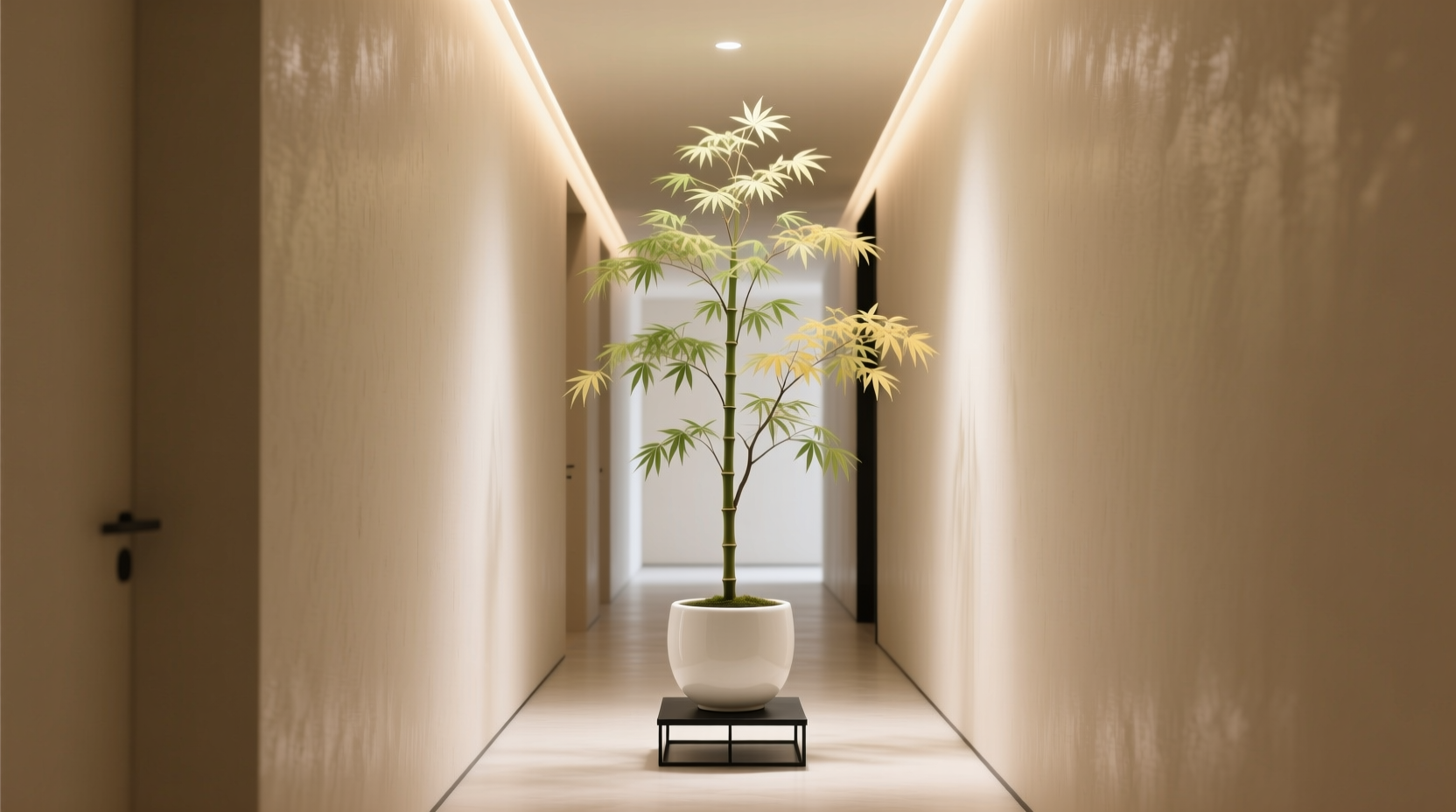
Before introducing any furniture or decor into a narrow hallway, evaluate its dimensions and primary function. Most hallways range from 24 to 36 inches in width—barely enough for two people to pass comfortably. If your hallway falls below 36 inches, every inch counts. The standard recommendation for unimpeded foot traffic is at least 30 inches of clear walking space. That means if your hallway is 36 inches wide, your tree (including decorations) must occupy no more than 6 inches of depth.
Consider what else shares the space: coats on hooks, shoes on racks, artwork on walls, or lighting fixtures. These elements contribute to the overall visual load. A cluttered wall combined with a bulky floor object amplifies the feeling of confinement. Prioritize essential functions first—storage, lighting, passage—then layer in decorative choices like a hallway tree.
Tip: Use painter’s tape to mark the outline of your intended tree base on the floor. Walk past it several times to test clearance and comfort before purchasing.Choosing the Right Type of Hallway Tree
Not all trees are created equal when it comes to narrow spaces. The ideal hallway tree is tall and slender, maximizing vertical space while minimizing floor footprint. Here’s a breakdown of suitable options:
- Slender Artificial Trees: Look for models labeled “pencil” or “slim-line,” typically under 18 inches in diameter at the base.
- Floor-to-Ceiling Branch Arrangements: These use bare branches (like birch, willow, or manzanita) arranged in a tall vase or stand, offering height without bulk.
- Wall-Mounted Tree Designs: A creative alternative—use garlands, lights, or branch arrangements mounted vertically along the wall to mimic a tree shape.
- Miniature Potted Trees: Small citrus, olive, or dwarf ficus trees in narrow planters work year-round and add life without overwhelming.
Real Christmas trees, while traditional, are rarely practical in tight hallways due to their fullness and shedding. However, a potted Norfolk Island pine can offer a similar look with a neater profile and reusability.
“Verticality is your ally in narrow spaces. Draw the eye upward, and suddenly the room feels taller and less confined.” — Lena Torres, Interior Designer & Author of *Small-Space Solutions*
Strategic Placement and Layout Techniques
Location matters as much as size. In a narrow hallway, avoid placing a tree in the direct path between rooms. Instead, position it where it won’t interrupt natural movement patterns. Ideal spots include:
- Near the front door, but offset to one side
- At the end of the hallway, acting as a focal point
- In a recessed niche or beside a mirror to create depth
If your hallway opens into a larger room, consider placing the tree just inside that adjacent space so it’s visible from the hall but doesn’t block passage. Use sightlines to your advantage—positioning a tree where it can be admired from multiple angles reduces the need for close proximity.
To enhance spatial perception, pair the tree with reflective surfaces. A long mirror opposite the tree doubles its presence visually while making the hallway feel wider. Similarly, glossy flooring or light-colored walls help bounce light around, reducing shadow buildup that contributes to claustrophobia.
Do’s and Don’ts of Hallway Tree Placement
| Do | Don’t |
|---|---|
| Choose a tree no wider than 18 inches at the base | Use a full-bodied tree that extends beyond 24 inches |
| Place near a light source or add ambient lighting | Position in a dark corner without supplemental light |
| Use vertical decor to draw the eye up | Add low, wide furniture that emphasizes horizontal lines |
| Anchor with a narrow console or floating shelf | Crowd the floor with additional furniture |
Lighting and Visual Weight Management
One of the biggest contributors to a claustrophobic feel isn’t physical obstruction—it’s visual heaviness. A dark, densely decorated tree absorbs light and appears larger than it is. To counteract this, focus on luminosity and openness.
Opt for lightweight ornaments in glass, crystal, or metallic finishes that catch and reflect light. Avoid large, opaque decorations. String lights are highly effective: LED mini lights in warm white or soft gold add glow without heat or bulk. Wrap them sparsely—every third or fourth branch—to maintain airiness.
Color psychology also plays a role. Lighter hues—ivory, silver, pale blue, blush pink—feel less imposing than deep reds or blacks. Even during holidays, a monochromatic scheme in whites and silvers can evoke festivity without visual noise.
Tip: Use battery-powered puck lights or a small spotlight aimed at the tree to create a gallery-like effect without cords or floor lamps.Step-by-Step Guide to Styling Your Hallway Tree
- Measure the space: Confirm at least 30 inches of clear walkway remains after placement.
- Select a narrow tree: Choose a pencil-style artificial tree or a vertical branch arrangement.
- Pick a strategic spot: Place near a wall, doorway, or mirror—never in the center of the path.
- Add lighting: Weave in string lights or install nearby accent lighting.
- Decorate minimally: Use fewer, smaller ornaments with reflective surfaces.
- Enhance surroundings: Hang a mirror opposite, use light-colored walls, and keep the floor clear.
- Test traffic flow: Walk through the hallway at different times to ensure ease of movement.
This sequence ensures both aesthetic appeal and functional integrity. Reassess seasonally—especially when transitioning from holiday decor to everyday styling.
Real Example: Transforming a 32-Inch Hallway in a Brooklyn Brownstone
Sarah K., a graphic designer living in a historic brownstone, struggled with her 32-inch-wide hallway each holiday season. Past attempts with a traditional 3-foot tree blocked access to the coat closet and made the space feel like a tunnel. After consulting a space-planning specialist, she opted for a 7-foot pencil tree with a 16-inch base, placed against the wall just inside the front door.
She wrapped it with 100 warm-white LED lights and added only 15 small glass orbs in varying shades of silver and frost. A full-length mirror on the opposite wall doubled the visual impact. For extra ambiance, she installed a slim floating shelf above the tree to hold a single candle and winter greens.
The result? A festive, elegant entry that didn’t hinder movement. Neighbors remarked on how “open” the hallway felt despite the decoration. Sarah now uses the same structure year-round, swapping ornaments for seasonal themes—dried flowers in spring, miniature lanterns in fall.
Storage and Seasonal Rotation Tips
A narrow hallway demands smart storage solutions, especially for seasonal items. After the holidays, disassemble your tree and store it vertically in a closet, behind a door, or under a bed using a slim tree bag. Label components clearly to simplify next year’s setup.
Consider multi-functional decor: a narrow vase that holds branches in winter can display tall tulips in spring. This rotation keeps the space fresh without requiring permanent installations.
Tip: Use stackable, clear bins for ornaments—label by color or theme—to save space and reduce decision fatigue during redecorating.Frequently Asked Questions
Can I use a real tree in a narrow hallway?
It’s possible, but not ideal. Real trees tend to be bushier and shed needles, which complicates cleaning in tight spaces. A potted evergreen like a Norfolk Island pine is a better choice—it’s neater, reusable, and easier to manage.
How do I prevent my hallway from feeling darker with a tree?
Counteract shadows by increasing ambient light. Use string lights on the tree itself, install wall sconces nearby, or place a mirrored surface opposite to reflect available light. Stick to lighter-colored decor to maintain brightness.
What if I have kids or pets? Is a hallway tree safe?
Safety is critical. Secure the tree to the wall with a discreet bracket or clear cord. Use unbreakable ornaments, keep cords out of reach, and avoid toxic plants. Alternatively, opt for a wall-mounted version to eliminate tripping hazards entirely.
Final Thoughts: Balance Beauty with Breathability
Styling a narrow hallway tree isn’t about compromise—it’s about intentionality. Every choice, from width to ornament selection, should serve both form and function. By prioritizing vertical lines, minimizing visual weight, and preserving clear pathways, you create a space that feels welcoming rather than restrictive.
Remember, the goal isn’t to fill every inch, but to make the most of what you have. A thoughtfully styled hallway tree becomes a quiet moment of beauty in an otherwise utilitarian space—one that greets you daily without weighing you down.
💬 Ready to reimagine your hallway? Start with one change—swap in a slimmer tree, add a mirror, or string some lights—and notice the difference. Share your transformation story in the comments!








