There’s a special kind of heartbreak when you reach for your favorite pair of jeans and realize they no longer fit. Whether it was an accidental hot water wash or a tumble in the dryer, cotton denim is notoriously prone to shrinking. But before you give up on them, know this: most shrunken jeans can be restored—partially or fully—to their original fit using simple, at-home techniques. The key lies in understanding how denim behaves, what methods actually work, and which ones risk damaging your investment.
Denim is made from tightly woven cotton fibers, which naturally contract when exposed to heat and moisture. Once shrinkage occurs, the fabric becomes denser and less flexible. However, cotton also has memory. With the right combination of moisture, tension, and time, you can coax those fibers back into a looser state. This guide walks through scientifically sound and field-tested strategies to stretch your jeans safely and effectively.
Why Jeans Shrink—and How Much Can Be Recovered?
Most raw or untreated cotton jeans are pre-shrunk to about 95–98% of their final size during manufacturing. But even \"pre-shrunk\" denim can tighten further under high heat or improper laundering. The average pair of jeans can shrink by 3–5% in length and 1–3% in waist and hip measurements after exposure to hot water or a heated dryer cycle. That might not sound like much, but for snug-fitting styles like slim or skinny cuts, even a half-inch reduction can make the difference between comfort and discomfort.
The good news? Cotton fibers are hygroscopic, meaning they absorb water and swell. When wet, denim becomes more pliable. By applying gentle, sustained tension while the fabric is in this softened state, you can encourage realignment of the yarns and recover lost dimensions. Recovery rates vary, but many users report regaining 70–90% of original fit with proper technique.
“Stretching shrunken denim isn’t magic—it’s physics. Moisture relaxes hydrogen bonds in cotton; mechanical tension then helps re-establish the fiber matrix.” — Dr. Lena Torres, Textile Scientist, University of Massachusetts
Step-by-Step Guide to Stretching Wet Jeans
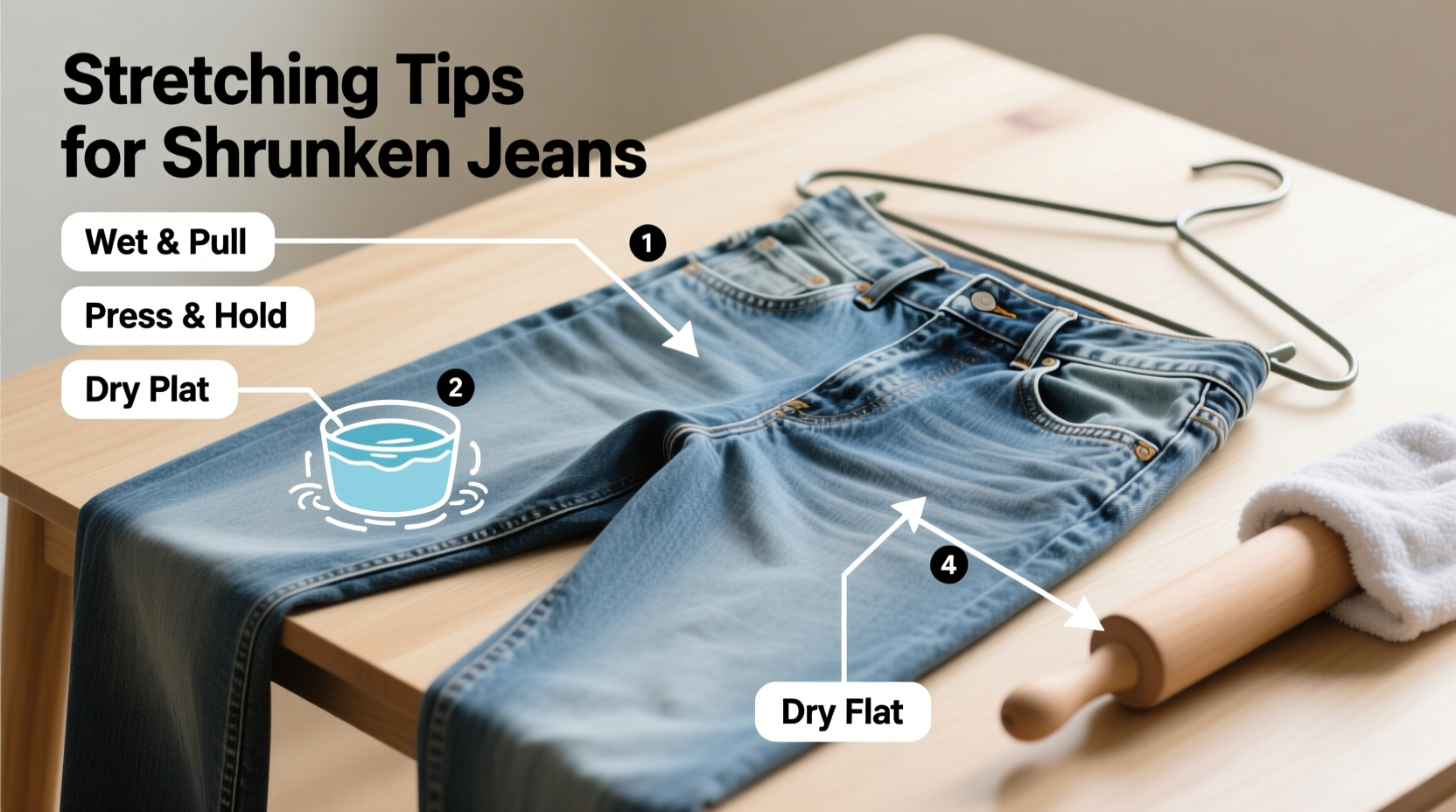
The most reliable method for stretching jeans involves soaking and targeted pulling. This process mimics industrial sanforization—the treatment used to minimize shrinkage—but works in reverse to gently expand the fabric.
- Fill a bathtub or large basin with lukewarm water. Avoid hot water, as it can further set shrinkage. Add one cup of baby shampoo or mild liquid detergent to help loosen fibers.
- Submerge the jeans completely. Let them soak for 30 to 45 minutes. Turn them inside out to protect color and finish.
- Drain the water and gently press out excess moisture. Do not wring—this can distort seams. Lay the jeans flat on a clean towel and roll to absorb water.
- Put on the damp jeans immediately. They should be damp, not dripping. Wear them as they dry for 2–4 hours. Move around—sit, squat, walk—to apply natural tension where you need it most (typically hips, thighs, waist).
- Air-dry fully while wearing. Avoid heat sources. As the denim dries on your body, it molds to your shape, reclaiming usable space.
Alternative Methods for Targeted Stretching
If wearing wet jeans isn’t practical—or if only specific areas need adjustment—targeted techniques offer precision control.
Using a Spray Bottle and Hanger Method
Ideal for minor waistband or hip tightness:
- Mix equal parts water and hair conditioner in a spray bottle (conditioner softens fibers).
- Spray the mixture onto problem zones (e.g., upper thighs, waistband).
- While damp, manually stretch the fabric by pulling diagonally across stress points.
- Hang the jeans with clips attached to the hems, adding light weights (like water bottles) to elongate the leg.
- Let dry completely away from sunlight.
Freezer Myth: Does It Work?
You may have heard that placing jeans in a freezer “reverses” shrinkage by expanding water molecules. This is a myth. Freezing does not stretch cotton. In fact, ice crystals can damage fibers over time. Skip this trend—it’s ineffective and potentially harmful.
Do’s and Don’ts of Denim Stretching
| Do | Don't |
|---|---|
| Use lukewarm water for soaking | Wash in hot water or use bleach |
| Apply slow, consistent tension | Pull aggressively or use tools like pliers |
| Air-dry naturally | Use a dryer or radiator to speed drying |
| Test methods on one area first | Assume all denim responds the same way |
| Repeat the process if needed | Expect full recovery in one try |
Blended fabrics (e.g., denim with spandex or elastane) respond differently than 100% cotton. Stretch denim often bounces back more easily due to synthetic elasticity, but over-stretching can break down the Lycra component. Always handle blended jeans with extra care.
Real Example: Restoring a Vintage Pair
Sarah, a vintage clothing collector from Portland, once owned a rare pair of 1980s Levi’s 501s. After accidentally machine-washing them in hot water, she found the waist had tightened from 32” to 30.5”, making them nearly impossible to button. Instead of selling them for parts, she tried the soak-and-wear method.
She soaked the jeans in a tub with baby shampoo for 40 minutes, then put them on while damp. Over the next three hours, she moved around her apartment—sitting at her desk, doing lunges, and even lying down to simulate daily wear. After air-drying fully, the waist measured 31.75”—not perfect, but wearable again. Two repeat treatments brought them to a stable 31.5”, which she now maintains with hand washing and line drying.
“They’re not factory-new,” she says, “but they fit better than I expected. More importantly, I didn’t ruin them trying.”
Prevention: How to Keep Jeans From Shrinking Again
Once you’ve successfully stretched your jeans, protecting that fit is crucial. Prevention beats correction every time.
“Eighty percent of denim issues stem from improper care. Cold water, inside-out washing, and air drying preserve both size and color.” — Marcus Lee, Denim Archivist & Founder of RawDye Journal
- Always wash inside out to reduce friction and fading.
- Use cold water only—even warm water can trigger residual shrinkage.
- Choose gentle cycles or hand wash to minimize agitation.
- Air-dry flat or hanging; never use a dryer unless the label explicitly allows it.
- Limit wash frequency; spot-clean when possible. Denim doesn’t need weekly laundering.
Checklist: How to Stretch Shrunken Jeans Safely
Follow this step-by-step checklist to maximize results without damaging your denim:
- ☐ Confirm the fabric content (100% cotton vs. blend)
- ☐ Check for signs of damage (fraying, weak seams) before starting
- ☐ Gather supplies: bathtub, mild detergent, towel, optional conditioner
- ☐ Soak jeans in lukewarm water for 30–45 minutes
- ☐ Remove excess water without wringing
- ☐ Put on damp jeans and move naturally as they dry
- ☐ Reassess fit after full drying; repeat if necessary
- ☐ Wash and dry properly going forward to maintain new fit
Frequently Asked Questions
Can I stretch jeans permanently?
While cotton denim will always have some elasticity, repeated stretching beyond its structural limit can lead to sagging or misshaping. The goal is functional recovery—not turning slim-fit jeans into baggy ones. Most successful stretching restores original dimensions, not creates new ones.
How many times can I stretch the same pair?
Two to three stretching sessions are generally safe. Beyond that, fibers fatigue and seams weaken. If your jeans still don’t fit after three attempts, consider professional tailoring or repurposing them into shorts or patchwork.
Will vinegar help stretch jeans?
Vinegar is acidic and can degrade cotton fibers over time. While some suggest mixing vinegar with water to “soften” denim, it risks weakening the fabric and fading indigo dye. Stick to pH-neutral conditioners or baby shampoo instead.
Conclusion: Save Your Favorite Jeans—With Patience and Care
Shrunk jeans don’t have to mean the end of their life. With the right approach, you can restore comfort and extend wearability for months or even years. The process demands patience—there are no instant fixes—but the payoff is worth it. You preserve not just the garment, but the memories stitched into its seams: the concert you wore them to, the road trip where they got scuffed, the confidence they gave you on hard days.
More than saving fabric, this is about mindful consumption. Every pair of jeans saved from the landfill reduces textile waste and honors craftsmanship. And in a world of fast fashion, choosing repair over replacement is quietly revolutionary.
💬 Have a pair of beloved jeans that survived the shrinkage battle? Share your story or tip below—your experience could help someone else rescue their favorite denim.








