Vintage band tees are more than just clothing—they’re wearable history, symbols of music culture, and often valuable collectibles. Whether you own a rare Grateful Dead concert shirt from the '70s or an original Nirvana graphic tee from the '90s, preserving its condition is essential. Over time, improper storage can lead to irreversible damage: fabric yellowing, ink cracking, and permanent stretching. The good news is that with the right approach, these garments can remain vibrant and structurally sound for decades. Understanding the environmental and physical factors that degrade cotton and screen-printed graphics allows collectors and fans alike to protect their investment and sentimentality.
The Science Behind Fabric Deterioration
Cotton, the primary material in most vintage band tees, is a natural fiber that reacts strongly to environmental conditions. Exposure to light, heat, humidity, and pollutants triggers chemical reactions within the fabric, leading to oxidation—the main culprit behind yellowing. Ultraviolet (UV) radiation from sunlight or even fluorescent lighting breaks down cellulose chains in cotton, weakening fibers and discoloring the material. This process accelerates when combined with atmospheric pollutants like nitrogen oxides, which bond with moisture to form mild acids on the fabric surface.
In addition to yellowing, mechanical stress plays a significant role in degradation. Cotton loses elasticity over time, especially when subjected to repeated tension. Hanging a vintage tee on a standard wire hanger, for example, stretches the shoulders and neckline beyond recovery. Folding improperly—such as with sharp creases across printed areas—can cause ink to crack or flake off. These issues compound over years, making early intervention critical.
“Textiles are among the most fragile forms of cultural artifacts. A vintage band tee might outlive its wearer, but only if stored under stable, controlled conditions.” — Dr. Lila Chen, Textile Conservator at the American Museum of Popular Culture
Step-by-Step Guide to Proper Storage
Preserving vintage band tees requires a methodical process that begins before the garment ever reaches storage. Each step—from cleaning to final placement—impacts longevity.
- Assess Condition First: Inspect the tee for stains, odors, insect damage, or weakened seams. Address any issues prior to storage. Never store a dirty or damp garment.
- Wash Only If Necessary: Frequent washing degrades fabric. If cleaning is required, hand-wash in cold water using a pH-neutral detergent designed for delicates. Avoid bleach, fabric softeners, and enzymes.
- Air-Dry Flat: Lay the tee face-down on a clean, absorbent towel in a shaded area. Do not wring or hang to dry, as this introduces stretch and distortion.
- Press Gently (Optional): Use a low-heat iron with a pressing cloth only if needed. High heat damages vintage cotton and prints. Steam should be avoided entirely.
- Fold Correctly: Fold along natural seams to avoid creasing graphics. Place acid-free tissue paper between folds to prevent friction and support the shape.
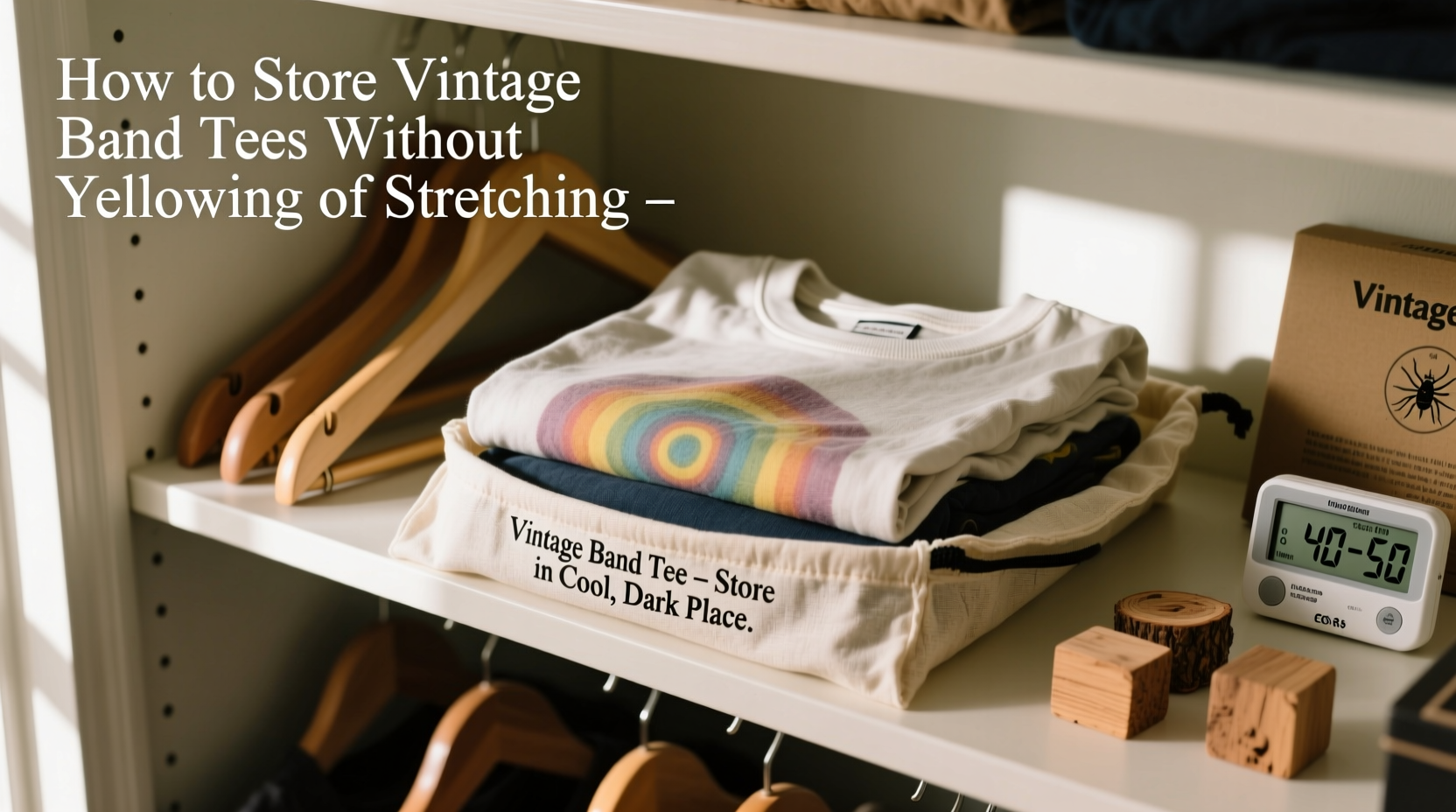
- Select Archival Packaging: Store each tee in an acid-free, lignin-free box or breathable cotton garment bag. Never use plastic bags, which trap moisture and promote yellowing.
- Choose Storage Location: Pick a climate-stable area away from windows, radiators, basements, and attics. Ideal conditions: 65–70°F (18–21°C), 45–55% relative humidity.
Do’s and Don’ts of Vintage Tee Storage
| Do | Don't |
|---|---|
| Fold neatly with acid-free tissue paper | Hang on regular hangers |
| Store in a dark, cool closet or drawer | Leave near windows or under lights |
| Use archival-quality storage boxes | Store in cardboard boxes or plastic bins |
| Keep away from perfume, smoke, or chemicals | Store in a garage or basement with fluctuating temps |
| Label boxes externally with contents | Write directly on garment or packaging |
Real Example: Preserving a 1985 Ramones Tour Shirt
Jamal Rivera, a collector based in Portland, inherited his father’s 1985 Ramones “Animal Boy” tour tee after his passing. The shirt had been worn only a handful of times but was stored loosely in a cedar chest alongside wool sweaters and mothballs. When Jamal retrieved it, he noticed faint yellow streaks along the collar and shoulders, and the print had faded unevenly.
He consulted a local textile conservator who explained that the combination of acidic wood vapors from the chest and prolonged exposure to mothball fumes (naphthalene) had catalyzed oxidation. The solution? The shirt was gently surface-cleaned with a conservation sponge, then washed in a buffered solution to neutralize residual acids. After air-drying flat, it was folded with acid-free tissue and placed in a museum-grade storage box lined with oxygen-absorbing sachets. Now kept in a temperature-controlled cabinet, the tee shows no further signs of deterioration after three years.
This case underscores a crucial point: even well-intentioned storage methods—like using cedar for pest control—can backfire if materials aren’t chemically inert.
Essential Supplies for Long-Term Preservation
Investing in the right tools makes a measurable difference in fabric longevity. While some options may seem excessive, they are standard in museum textile preservation and accessible to private collectors.
- Acid-Free Tissue Paper: Prevents acid transfer between folded layers and supports fabric structure.
- Archival Storage Boxes: Rigid, sealed containers made from conservation-grade board that block light and dust.
- Cotton Muslin Garment Bags: Breathable covers ideal for frequently accessed pieces.
- Silica Gel Packets: Placed inside boxes to regulate humidity (replace or recharge every 3–6 months).
- Oxygen Absorbers: Used in sealed environments to slow oxidative aging (not to be confused with desiccants).
- Nitrile Gloves: Wear when handling vintage tees to avoid transferring oils and acids from skin.
FAQ: Common Questions About Storing Vintage Band Tees
Can I hang my vintage band tees if I use padded hangers?
While padded hangers reduce shoulder strain, hanging still places continuous tension on the neckline and shoulders. Over years, gravity causes subtle but permanent stretching. For true preservation, folding is always preferred. If display is necessary, rotate shirts monthly and limit exposure to less than six hours at a time.
Will storing my tees in vacuum-sealed bags help?
No. Vacuum sealing compresses fibers unnaturally and traps residual moisture, creating microclimates conducive to mold and hydrolysis. Additionally, the plastic itself may off-gas harmful chemicals. These bags are suitable for space-saving with modern clothing but detrimental to vintage textiles.
How do I prevent ink from cracking on old prints?
Screen-printed designs become brittle with age. Avoid folding directly over the graphic. Instead, fold so that the image lies flat within the garment’s interior. Store in a location free from vibration (e.g., not near washing machines or speakers), as constant movement accelerates ink fatigue.
Preservation Checklist
Follow this checklist to ensure your vintage band tees remain in optimal condition:
- ☐ Inspect each tee for stains, odors, or damage before storage
- ☐ Clean only if necessary, using cold water and gentle detergent
- ☐ Dry flat, never hang or tumble dry
- ☐ Iron on low heat with a protective cloth (if needed)
- ☐ Fold along seams, using acid-free tissue paper to cushion folds
- ☐ Place in archival box or breathable cotton bag
- ☐ Store in a dark, climate-stable environment (65–70°F, 45–55% RH)
- ☐ Avoid direct contact with wood, plastic, rubber, or adhesives
- ☐ Check inventory every 6 months; refold items to shift stress points
- ☐ Keep away from perfumes, cigarette smoke, and cleaning products
“The value of a vintage band tee isn’t just monetary—it’s emotional and historical. Proper storage honors both.” — Marcus Reed, Founder of Rock Archive Collective
Conclusion: Treat Your Collection Like Art
Vintage band tees deserve the same level of care as any other culturally significant artifact. They capture moments in music history, reflect personal identity, and often represent irreplaceable memories. Yellowing and stretching are not inevitable—they are preventable consequences of neglect. By adopting museum-level storage practices, even casual collectors can ensure their favorite shirts survive for future generations. It’s not about perfection; it’s about intention. Start today by removing one tee from a plastic bin or taking it down from a hanger. Fold it properly, place it in a safe environment, and commit to treating it not just as clothing, but as legacy.
💬 Have a vintage band tee you’ve successfully preserved? Share your story or tips in the comments—your experience could help others protect their cherished pieces.








