There’s a quiet revolution happening in bars and home kitchens alike: the non-alcoholic highball is no longer an afterthought—it’s a deliberate, crafted experience. A true highball isn’t defined by alcohol; it’s defined by balance, texture, temperature, and intention. It’s the crisp lift of carbonation against a layered base, the slow dilution of ice, the aromatic garnish that signals *this matters*. When done well, a non-alcoholic highball delivers the same psychological and sensory satisfaction as its boozy counterpart—not as a substitute, but as a parallel pleasure.
This isn’t about masking absence. It’s about amplifying presence: the brightness of cold-pressed citrus, the earthy depth of roasted tea, the herbal lift of house-made shrubs, the subtle tannic grip of fermented grape juice. The best non-alcoholic highballs succeed because they honor the highball’s core architecture—spirit (or spirit-like base), modifier, dilution, and aroma—while replacing ethanol with equally expressive, functional ingredients.
The Highball Framework: Why Structure Matters More Than Alcohol
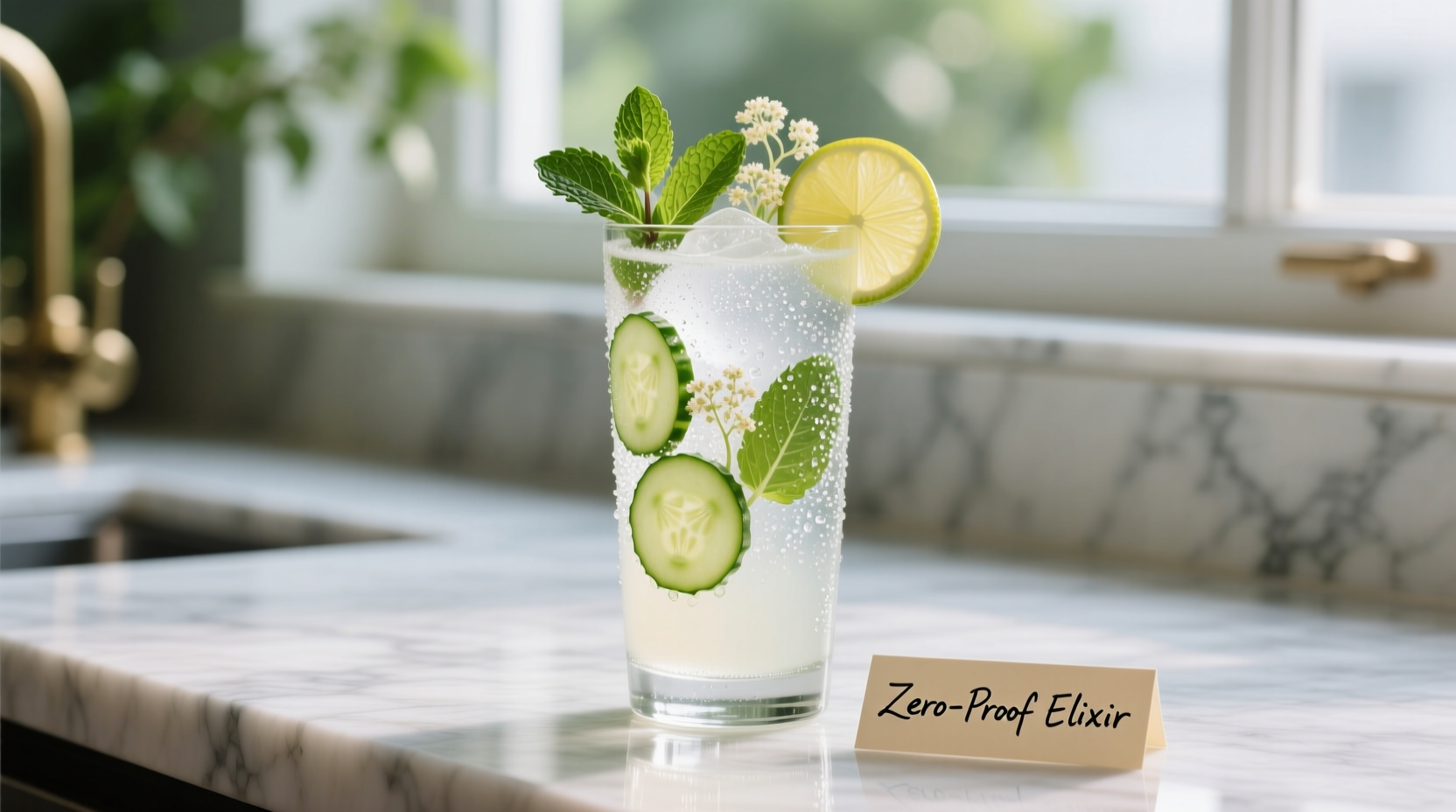
A traditional highball (like a whiskey highball or gin & tonic) relies on four interlocking elements:
- The Base: A distilled spirit—providing structure, warmth, botanical complexity, and mouthfeel.
- The Modifier: A flavorful, often bitter or citrus-forward ingredient (e.g., tonic, soda with quinine, ginger beer) that adds contrast and cuts richness.
- The Dilution: Ice—chilling, gently watering down over time, and softening edges.
- The Aroma: A garnish (lemon twist, mint sprig, grapefruit peel) that releases volatile oils upon expression, engaging the olfactory system before the first sip.
Remove alcohol, and you don’t discard the framework—you reinterpret each component. The base becomes a complex, low-ABV or zero-ABV “spirit alternative” with body and dimension. The modifier must carry more weight, offering acidity, bitterness, or spice to prevent flatness. Dilution remains essential—not just for chill, but for gradual flavor release. And aroma becomes even more critical, compensating for the missing ethanol-driven volatility.
“People don’t miss alcohol—they miss the ritual, the refreshment, and the sense of occasion. A great non-alcoholic highball delivers all three. It’s not about what’s missing; it’s about what’s thoughtfully placed.” — Claire Lefebvre, Beverage Director at Tonic Bar Collective and co-author of Zero Proof: The Art of Intentional Drinking
Your Non-Alcoholic Spirit Alternatives: Beyond Simple Juices
Calling something “non-alcoholic” doesn’t mean it has to be sweet, thin, or one-dimensional. True satisfaction comes from bases with viscosity, umami, tannin, or roasted depth—qualities that mimic the mouth-coating presence of spirits.
Tip: Always serve your base chilled—even if it’s shelf-stable. Cold temperature suppresses perceived sweetness and sharpens acidity, making flavors feel crisper and more refreshing.| Base Type | Why It Works | Best Paired With | Pro Tip |
|---|---|---|---|
| Fermented Non-Alc Wines & Vinegars (e.g., dealcoholized Riesling, dry verjus, apple cider vinegar shrubs) |
High acidity + natural fruit tannins + subtle funk = structural backbone. Verjus offers bright green-apple tartness without sugar; shrubs add sweet-sour complexity. | Earthy modifiers (ginger beer, cold-brewed chicory soda), citrus garnishes | Dilute shrubs 1:3 with sparkling water before building—prevents cloying intensity. |
| Roasted & Smoked Teas (e.g., hojicha, lapsang souchong cold brew) |
Deep umami, toasted nuttiness, and gentle smoke provide weight and warmth reminiscent of aged spirits. Low tannin avoids bitterness when diluted. | Bitter modifiers (tonic, gentian soda), citrus or smoked salt rim | Brew strong (1 tbsp leaf per 100ml), then chill overnight. Strain finely—cloudiness adds visual appeal. |
| Distillate-Style Botanical Elixirs (e.g., Seedlip Grove 42 alternative: house-blended bergamot, orange zest, rosemary, and black pepper steeped in glycerin-water base) |
Captures volatile top notes without alcohol’s burn. Glycerin adds subtle silkiness; citrus oils offer aromatic lift. | Light, crisp modifiers (seltzer, yuzu soda), expressed citrus oils | Infuse for only 12–24 hours—longer extracts bitter pith. Strain through cheesecloth, then coffee filter. |
| Pressed Vegetable & Herb Juices (e.g., celery-cucumber-kohlrabi, roasted beet-caraway) |
Earthy, savory, and mineral-rich. Provides body and umami that satisfies cravings for “depth.” Avoid overly sweet produce like carrot alone. | Spicy modifiers (ginger beer, chili-lime soda), herb garnishes (dill, tarragon) | Add 1/8 tsp flaky sea salt per 100ml juice—enhances perception of freshness and balances vegetal notes. |
The Modifier Matrix: Bitter, Bright, and Bold
In alcoholic highballs, modifiers like tonic or ginger beer play a supporting role. In non-alcoholic versions, they become co-stars—carrying the load of contrast and complexity. Sweetness alone fatigues the palate; bitterness, acidity, and heat create dynamic tension.
- Bitter First: Look beyond standard tonic. Try gentian root sodas (bitter, earthy, clean), amaro-style sodas (e.g., non-alc Fernet-inspired with wormwood and mint), or charred lemon soda (simmer lemon peels with a pinch of activated charcoal and simple syrup, then carbonate).
- Bright Second: Citrus isn’t just garnish—it’s functional. Use blood orange or yuzu sodas for floral acidity, or grapefruit-lavender fizz for aromatic bitterness. Avoid generic “lemon-lime” sodas—they lack nuance.
- Spice Third: Ginger beer should be assertive—not syrupy. Seek brands with visible sediment (indicating real ginger) or make your own: simmer fresh ginger, turmeric, and black peppercorns for 20 minutes, strain, cool, then mix 1:4 with plain seltzer.
A Step-by-Step Ritual: Building Your Highball (No Shaker Required)
Great highballs are built—not shaken or stirred. This method maximizes control over dilution, carbonation retention, and aroma expression.
- Chill Everything: Refrigerate your base, modifier, and highball glass for at least 15 minutes. A cold vessel keeps bubbles lively and slows premature melting.
- Prep the Garnish: Choose a citrus peel (grapefruit for bitterness, lemon for brightness, lime for zing). Using a channel knife or vegetable peeler, cut a 2-inch strip, avoiding white pith. Set aside.
- Build in Order: Place 3–4 large, dense ice cubes (2x2 cm) into the chilled glass. Pour 60ml of your chosen base over ice. Then, gently pour 120ml of your modifier down the side of the glass—never directly onto ice—to preserve effervescence.
- Express & Garnish: Hold the citrus peel skin-side down over the drink. Pinch firmly to release oils into the air above the surface—watch the fine mist land on the foam. Drop the peel in as garnish.
- Sip & Savor: Take the first sip within 30 seconds of building. That’s when carbonation is highest, aromatics are most vivid, and temperature is ideal. Notice how the drink evolves over 4–5 minutes as ice melts and flavors harmonize.
Real-World Example: How “The Cedar & Smoke” Replaced Whiskey at The Oak Room
The Oak Room, a neighborhood bar in Portland known for its serious whiskey list, launched a non-alcoholic menu in 2023. Their breakout hit? “The Cedar & Smoke”—a highball that routinely outsells its bourbon counterpart on weeknights.
It starts with a base of cold-brewed lapsang souchong (steeped 8 hours, strained, chilled), infused with a whisper of cedarwood hydrosol (not oil—too strong). The modifier is a house-made gentian-lime soda: gentian root decocted with dried lime peel and a touch of honey, then carbonated. Served over hand-cut ice, garnished with a charred cedar sprig (lightly torched, then cooled) and a lime twist.
What makes it work? The smoky tea provides the whiskey’s weight and warmth; the gentian-lime soda delivers the bitter-acid punch of a quality ginger ale; the cedar sprig isn’t just scent—it adds a tactile, forest-floor note that grounds the experience. Patrons report feeling “settled,” “refreshed,” and “ritually attended to”—exactly what a highball promises.
Essential Do’s and Don’ts for Highball Success
| Do | Don’t |
|---|---|
| Use large, clear ice cubes—they melt slower and chill without over-diluting. | Use crushed or small ice—it floods the drink too quickly and kills carbonation. |
| Chill your seltzer or modifier for 1 hour before use—cold bubbles last longer. | Assume “sparkling water” is neutral—it varies wildly in mineral content and CO₂ level. Try different brands (e.g., Topo Chico for aggressive bite, San Pellegrino for softer mousse). |
| Balance sweetness with acid or salt—not just more bitter. A pinch of Maldon in a savory highball can be revelatory. | Rely solely on store-bought “non-alcoholic spirits” without tasting first. Many are overly sweet or artificial. Always taste and adjust ratios. |
| Experiment with temperature contrast: serve a smoky base at 4°C but a citrus modifier at 8°C for layered sensation. | Forget the garnish. It’s not decoration—it’s functional aroma delivery. No twist? No highball. |
FAQ: Answering Real Questions from Home Mixologists
Can I make a non-alcoholic highball ahead of time?
No—not fully assembled. Carbonation will fade, ice will melt, and aromatics will dissipate. However, you *can* prep components: batch your base (store refrigerated up to 3 days), pre-chill glasses and ice, and portion modifiers into small bottles. Assemble within 60 seconds of serving for peak experience.
Why does my non-alcoholic highball taste “flat” compared to the alcoholic version?
Three likely culprits: (1) Your base lacks body—add 1/4 tsp xanthan gum per 250ml (blended until smooth) to mimic alcohol’s viscosity; (2) Your modifier is under-carbonated—try chilling seltzer longer or using a soda siphon for higher pressure; (3) You’re skipping the citrus express—those volatile oils are 70% of perceived freshness.
What’s the best budget-friendly base for beginners?
Start with cold-brewed hojicha (roasted green tea). It’s affordable, shelf-stable as leaves, deeply flavorful, and forgiving. Brew 1 tbsp loose-leaf hojicha in 200ml hot water for 30 seconds, pour over ice, then top with grapefruit soda and a grapefruit twist. That’s your foundation—then layer in complexity.
Conclusion: It’s Not Abstinence—It’s Attention
Making a non-alcoholic highball that feels just as satisfying isn’t about replicating alcohol. It’s about honoring the intelligence of the palate—the way we crave contrast, texture, aroma, and ritual. It’s about choosing presence over autopilot, craftsmanship over convenience, and respect for your body’s signals without sacrificing joy.
Every element—the careful chill, the precise pour, the intentional garnish—is a small act of self-regard. When you build a highball this way, you’re not saying “I’m not drinking.” You’re saying “I’m choosing this moment, this flavor, this clarity.” That shift in framing transforms the drink from omission to celebration.
So tonight, skip the default soda water and lime. Pull out that neglected bag of hojicha or those citrus peels you usually compost. Measure, chill, express, and sip—not as a compromise, but as a declaration. Your palate, your energy, and your evenings will thank you.
💬 Try one recipe this week—and tell us what changed. Did the citrus express surprise you? Did the slow dilution reveal new layers? Share your highball moment in the comments. Let’s build a library of satisfaction, one intentional sip at a time.








