There’s something quietly powerful about handing someone a certificate that reads “Barrel #482, Distilled Spring 2021, Bottled at 116.2° Proof, Aged 5 Years in New American Oak.” It’s not just paper—it’s time, craft, and intention made tangible. Yet the moment you say, “This is *my* barrel,” or “I hand-selected this cask,” the air can thicken with unintended grandeur. The bourbon world reveres humility—distillers speak of “listening to the barrel,” not commanding it; blenders credit yeast and climate as much as skill. So how do you honor that ethos while giving a deeply personal, high-value gift? The answer isn’t in lowering the stakes—but in raising the sincerity.
This isn’t about avoiding luxury. It’s about refusing to let luxury become a barrier between giver and receiver. A personalized barrel proof certificate carries weight—not because it’s expensive, but because it represents shared values: patience, craftsmanship, attention to detail, and quiet confidence. Done well, it feels like an invitation—not a declaration. Done poorly, it lands like a trophy handed across a velvet rope. Below are field-tested principles, drawn from conversations with distillery archivists, private barrel program coordinators, and recipients who’ve opened such gifts in kitchens, backyards, and Zoom calls alike.
1. Anchor the gift in story—not status
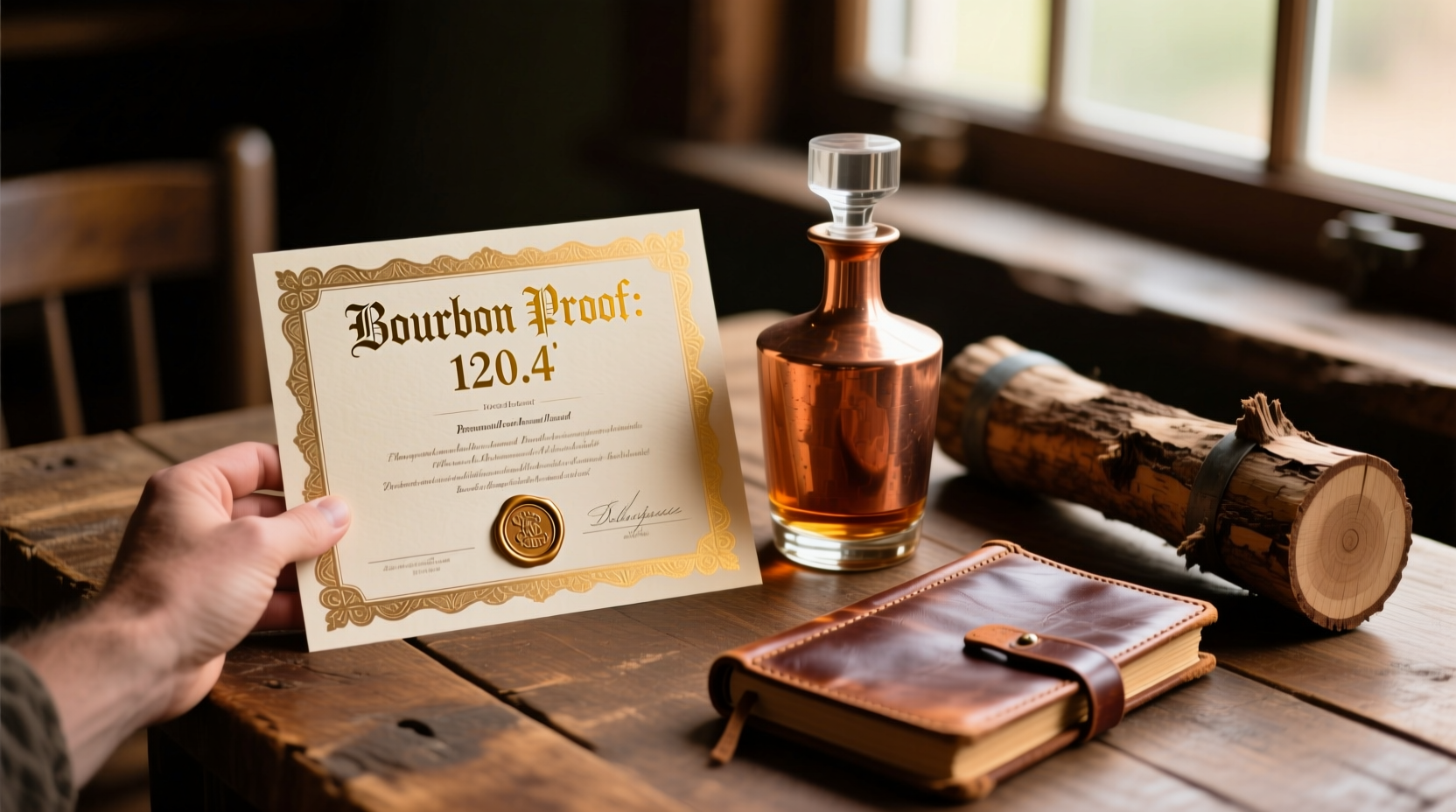
The most common misstep is leading with metrics: “It’s 116.2 proof!” or “Only 197 bottles came from this barrel.” Those facts matter—but only after context. Start instead with origin: Where did this barrel live? Was it on the third floor of Warehouse D, where summer heat builds slowly and winters are damp? Did it rest near a brick wall that radiates warmth at dusk? Did the distiller note “bright citrus notes emerging at month 42”? These aren’t embellishments—they’re evidence of care, and they humanize the process.
A recipient doesn’t need to know the ABV to feel the gift’s resonance. They need to know why *this* barrel, *this* time, felt right for *them*. Maybe you chose it because the tasting notes reminded you of their favorite coastal hike—salt air, dried grass, a hint of wild mint. Or because the aging period (exactly 5 years, 3 months, 11 days) matches how long they’ve mentored your sister at work. That specificity transforms data into intimacy.
Tip: Write the story first—on scratch paper, in a voice memo, or as a text draft—before touching the certificate wording. If your draft contains words like “exclusive,” “elite,” or “curated by me,” delete them and rewrite with verbs like “found,” “remembered,” “paired,” or “set aside.”2. Design the presentation with restraint
A personalized barrel proof certificate often arrives framed, embossed, or sealed with wax. There’s nothing wrong with elegance—but elegance shouldn’t shout. Consider what signals quiet confidence versus conspicuous distinction. A thick cotton rag paper certificate, letterpress-printed in charcoal ink with minimal borders, feels grounded. A foil-stamped, gold-leafed scroll in a lacquered box feels ceremonial—and easily misread as performative.
Compare two real-world approaches used by Kentucky-based private barrel programs:
| Approach | What It Communicates | Risk of Misreading |
|---|---|---|
| Handwritten annotation on the back: “Tasted 4/12/24 — reminded me of the ginger cake you brought to Thanksgiving.” | Attention, memory, personal continuity | None — feels human, not hierarchical |
| “Master Distiller Approved” seal stamped prominently beneath the barrel number | Authority, validation, institutional endorsement | Can imply the gift’s value depends on external approval—not your relationship |
| QR code linking to warehouse photo + 30-second audio clip of the distiller describing that day’s humidity reading | Transparency, access, behind-the-scenes respect | Low—if the audio is warm and unscripted; high if it sounds like a corporate promo |
The goal isn’t austerity—it’s alignment. If the recipient collects vintage bourbon ads, a certificate styled like a 1940s bottling ledger (with period-appropriate type and subtle sepia tone) honors their passion without fanfare. If they’re a scientist, include the actual hygrometer log from the warehouse floor where the barrel aged—no commentary needed.
3. Name the gift honestly—and briefly
What do you call it when you hand it over? Not “your private barrel selection,” not “a bespoke cask experience.” Those phrases center *you*, your access, your discernment. Instead, name what the recipient receives: a bottle, a taste, a moment, a connection.
Real examples from recipients who felt genuinely seen:
- “This is the bottle we’ll open the night your daughter graduates.”
- “I kept tasting this one and thinking, ‘She’d love how the oak doesn’t overwhelm—the fruit comes through clean.’ So I set it aside for you.”
- “They let me pick one barrel this year. I didn’t choose the loudest one—I chose the one that tasted like conversation.”
Notice what’s absent: no claims of superiority (“this is better than standard releases”), no gatekeeping (“only 12 people get to do this”), no self-referential framing (“I spent hours selecting…”). The focus stays on sensory truth, shared meaning, or future ritual.
4. Pair it with action—not just aesthetics
A certificate alone risks feeling abstract. Ground it in something tactile, immediate, or participatory. This shifts emphasis from possession to presence.
Consider these low-cost, high-resonance pairings:
- A small, unlabeled 50ml sample vial drawn from the same barrel—tasted side-by-side during the gift exchange. No notes required. Just “What do you notice first?”
- A date circled on a shared calendar: “Let’s open the first bottle together next spring—maybe at the river bend where we talked about moving cross-country.”
- A handwritten list of three food pairings tested with the spirit—not gourmet suggestions, but real ones: “Try with sharp cheddar and apple slices,” “Pours beautifully over a single large cube with orange zest,” “Warms up perfectly in hot cider.”
This approach echoes how master blenders work—not in isolation, but through iterative, humble tasting. You’re not presenting a finished verdict. You’re extending an invitation to explore, question, and return to the liquid with fresh eyes.
5. What to say (and what to skip) in the card
The accompanying note is where pretension most often creeps in—usually unintentionally. Phrases like “crafted for the connoisseur” or “a testament to uncompromising standards” sound like marketing copy, not personal voice. They also assume the recipient identifies as a “connoisseur”—which may not be true, or may not be how they wish to be seen.
Instead, borrow language from distillers themselves. In interviews across five Kentucky and Tennessee distilleries, the phrase used most frequently to describe exceptional barrels wasn’t “powerful” or “complex”—it was “honest.” As Chris Morris, Master Distiller at Woodford Reserve, told me: “A great barrel doesn’t try to impress you. It tells you exactly what it is—no more, no less. Our job is to listen, not direct.”
“A great barrel doesn’t try to impress you. It tells you exactly what it is—no more, no less. Our job is to listen, not direct.” — Chris Morris, Master Distiller, Woodford Reserve
Apply that mindset to your note. Here’s what works—and what doesn’t:
✅ Do:• “I remembered how you said bourbon tastes like ‘campfire and caramel’—this one starts there, then unfolds into something quieter.”
• “No need to ‘appreciate’ it. Just taste it how you like—neat, with water, in a cocktail, or even splashed into gravy.”
• “The barrel number is 482. I liked that it’s unremarkable at first glance—like good things often are.”
❌ Don’t:
• “This expression showcases unparalleled depth and nuance.”
• “As a fellow enthusiast, you’ll recognize its rarity.”
• “I selected this for its exceptional balance and finish.”
(These shift focus from relationship to evaluation.)
Mini Case Study: The Quiet Gift That Landed Perfectly
When Maya gifted her mentor David a personalized barrel proof certificate, she avoided every trap. She didn’t mention the $299 price tag, the fact that she’d flown to Louisville for the barrel selection, or that only 12 bottles remained. Instead, she printed the certificate on uncoated ivory stock, added a single line in pencil at the bottom: “Tasted it with the distiller on March 17. He said, ‘It’s got the kind of patience you taught me.’”
She included a 375ml bottle—unlabeled except for barrel number and proof—and a small notebook titled “Tasting Pages (No Rules).” Inside, the first page held two entries: hers (“First pour: strong vanilla, then leather—like your old workshop bench”) and space for his. She gave it to him at his retirement party—not on a pedestal, but on the picnic table beside potato salad and lemonade.
David opened it mid-sentence, paused, and read the pencil note twice. He didn’t reach for his phone to Google the barrel number. He poured two fingers, passed one glass to Maya, and said, “Remember when you asked me why I never rushed a glue joint? This tastes like that.” That was the entire conversation. No further explanation needed. The gift succeeded because it mirrored his values—craft, restraint, quiet pride—and required no performance from either of them.
FAQ
What if the recipient isn’t a bourbon drinker?
That’s not a problem—it’s clarity. Use the gift as a bridge, not a test. Write: “I chose this because the distiller described it as ‘approachable but never simple’—kind of like your laugh.” Include serving suggestions beyond sipping: “Splashes beautifully into chocolate cake batter,” “A teaspoon lifts savory oatmeal,” or “Stirs a surprisingly bright Old Fashioned.” The spirit becomes a tool, not a litmus test.
Is it okay to mention the cost or effort involved?
Only if it serves the story—not your ego. Saying “I saved for six months to get this” centers sacrifice over connection. But “I kept passing other barrels until I found one that smelled like the cedar chest in your attic” centers shared memory. Let the effort remain implied in the care, not declared in the narrative.
Should I explain barrel proof vs. bottled-in-bond or other terms?
No—unless the recipient asks. Over-explaining assumes ignorance; under-explaining invites curiosity. Your note should leave room for discovery. If they want to know why barrel proof matters, they’ll ask. And when they do, you’ll have the chance to share—not lecture.
Conclusion
Gifting a personalized bourbon barrel proof certificate isn’t about proving access, knowledge, or taste. It’s about bearing witness—to a person’s character, to a craft’s patience, to time transformed into something you can hold in your hand and share across a table. The most memorable gifts don’t announce themselves with flourish. They settle in quietly, like the best bourbons do in oak: gaining depth without demanding attention.
You don’t need rare access or industry connections to give this kind of gift. You need only attention—to what moves the person, what they savor, what they return to again and again. Whether it’s the way light hits their garden at 5 p.m., the specific brand of coffee they grind each morning, or how they always pause before answering a hard question—that’s your barrel. That’s your proof.
So go ahead and select the barrel. Read the warehouse notes. Taste the sample. Then set aside the jargon, the metrics, the prestige. Write what you actually felt—not what you think you should say. Hand it over without fanfare. And when they taste it, listen more than you speak.
💬 Your turn: What’s one small, specific detail you’d include to make a bourbon gift feel unmistakably *theirs*? Share your idea in the comments—we’ll feature the most thoughtful ones next month.








