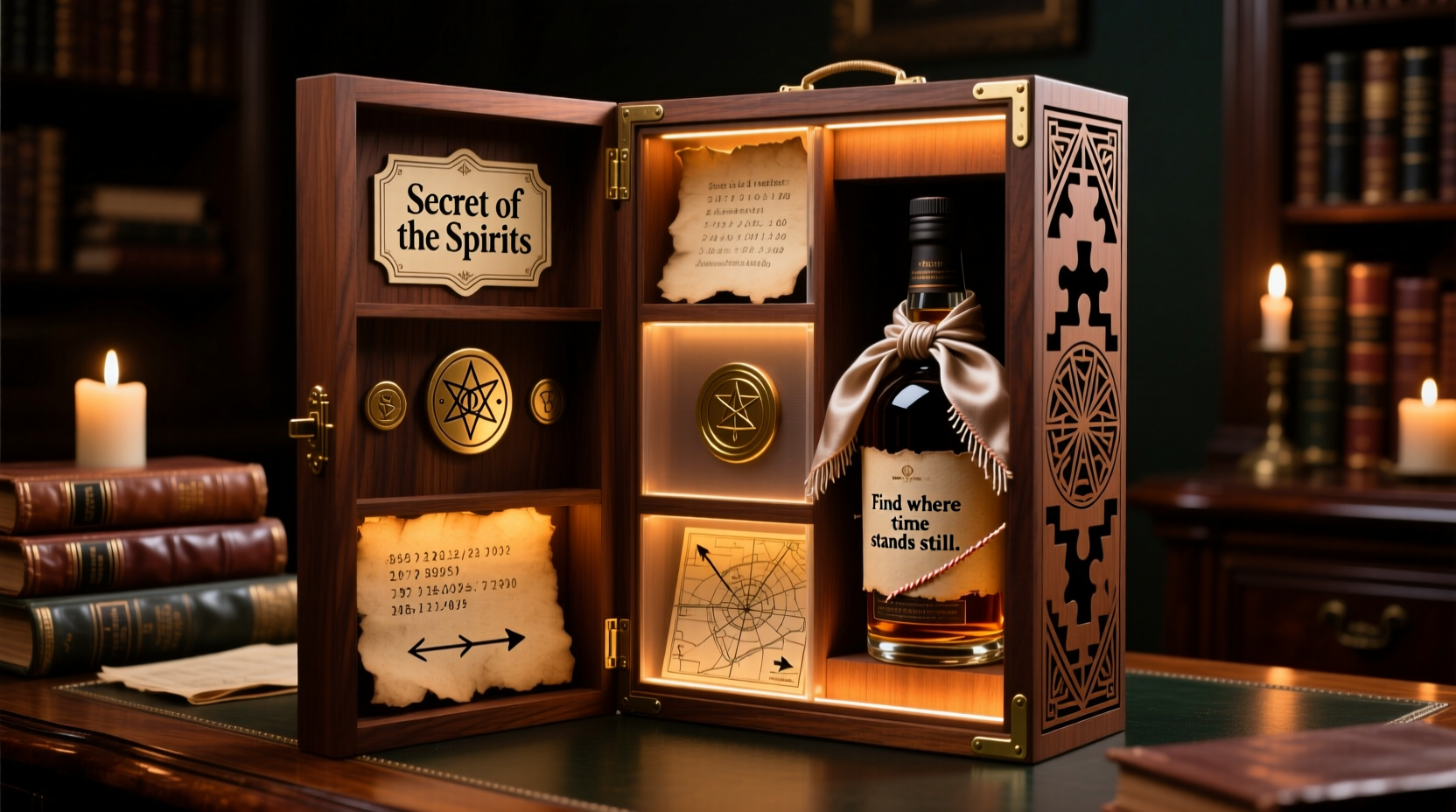
Gifting alcohol is common. Gifting a *story*—one that unfolds bottle by bottle, clue by clue—is memorable. A mystery liquor box transforms a simple present into an immersive experience: part cocktail puzzle, part sensory journey, part shared discovery. It’s not about hiding what’s inside—it’s about inviting the recipient to engage, interpret, and savor the narrative as much as the spirits. Done well, it reflects thoughtfulness, cultural awareness, and playful intentionality. Done poorly, it risks confusion, mismatched expectations, or even safety oversights. This guide distills years of experiential gifting—from craft distillery collaborations to bespoke holiday boxes—to help you design a mystery liquor box that delights without disappointing.
Why Clue-Based Liquor Gifting Works (and When It Doesn’t)
A mystery liquor box succeeds when it aligns with the recipient’s personality, palate, and context—not just your creativity. Enthusiasts who track new releases on Whisky Advocate or host blind-tasting nights welcome layered clues. Beginners may feel intimidated by cryptic riddles or obscure regional references. The key is calibration: clues should invite curiosity, not demand expertise. They should hint at provenance, production method, or flavor profile—not obscure trivia like “Which 18th-century tax act led to the rise of Irish poitín?”
Clue-based gifting also deepens connection. Unlike a standard gift card or pre-selected bottle, it requires you to observe: Do they prefer smoky whiskies or floral gins? Do they collect Japanese bottles or explore American craft distilleries? That attention becomes part of the gift. As sommelier and experiential designer Lena Torres notes:
“Great gifting isn’t about the object—it’s about the resonance between giver and receiver. A well-clued mystery box says, ‘I know how you taste, how you think, how you play.’ That recognition is what lingers long after the last pour.” — Lena Torres, Founder of Tastescape Experiences
But avoid this approach if the recipient has strict dietary restrictions (e.g., gluten sensitivity with certain whiskies), is in recovery, or receives alcohol infrequently. Always confirm comfort with alcohol gifting first—no amount of clever clueing overrides respect for personal boundaries.
Step-by-Step: Building Your Mystery Liquor Box
Creating a cohesive, enjoyable mystery box is a four-phase process: concept, curation, clue architecture, and presentation. Each phase builds on the last—skip one, and the experience fractures.
- Define the Narrative Arc: Choose a unifying theme—e.g., “The Silk Road Spirits Journey” (tracing botanicals from Sichuan pepper to Persian saffron), “Coastal Terroir” (bottles influenced by sea air, kelp, or coastal barley), or “Rebirth Distilleries” (three brands revived after Prohibition-era closures). Themes anchor clues and prevent randomness.
- Select Bottles Strategically: Choose 3–5 bottles across categories (e.g., gin, rum, whiskey) but unified by your theme. Prioritize accessibility: at least one bottle should be widely available (for verification or replacement) and all must be legally shipable to the recipient’s location. Avoid ultra-rare or auction-only bottlings—they undermine the spirit of shared discovery.
- Design Clue Layers: Build three tiers of clues: Surface (visual/tactile—e.g., wax seal color hints at region), Middle (textual—e.g., a haiku referencing distillation time), and Deep (interactive—e.g., a QR code linking to a distiller interview snippet). Each tier should logically point toward the next, never contradict.
- Assemble & Test: Physically pack the box *before* finalizing clues. Does the weight distribution make sense? Does the clue card fit snugly beside the bottle? Most critically—does someone unfamiliar with your theme solve it within 15–20 minutes? If not, simplify.
Clue Design Principles: What Makes a Good Hint?
Effective clues operate on three principles: relevance, resolvability, and delight. A clue about “the year this distillery’s copper still was refurbished” fails all three—it’s irrelevant to taste, unverifiable without insider access, and joyless. Instead, prioritize clues rooted in sensory experience or verifiable public knowledge.
Consider this example for a Jamaican pot-still rum:
- Relevant: “This rum ferments longer than any other in its category—7 days versus the island’s average of 2–3. What tropical fruit dominates its nose after extended fermentation?” (Answer: overripe banana—linked to ester development.)
- Resolvable: The fermentation duration is listed on the distillery’s website and in industry reports like Rum Journal.
- Delightful: It invites the recipient to smell, compare, and connect chemistry to aroma—a moment of insight, not a trivia test.
Avoid these common pitfalls:
| Clue Type | Why It Fails | Better Alternative |
|---|---|---|
| Obscure historical dates | Requires niche research; no sensory link | “This bottle honors a 1932 patent for continuous distillation—what metal alloy coats its column still?” (Answer: stainless steel—tactile and verifiable) |
| Subjective flavor notes | “Tastes like childhood summers”—too vague | “First sip delivers green apple skin, then toasted almond—what orchard fruit grows near its distillery?” (Answer: apple—ties to terroir) |
| Overly technical jargon | “ABV adjusted via vacuum distillation at 25°C” | “Distilled so gently, its delicate florals survive—what flower blooms beside the still house each May?” (Answer: hawthorn) |
Real-World Example: “The Midnight Coast” Box
When Brooklyn-based event planner Maya Chen gifted her sister—a marine biologist and gin enthusiast—a mystery box titled “The Midnight Coast,” she anchored every element in oceanic science and coastal ecology.
The box contained three bottles: a Cornish seaweed gin, a Tasmanian coastal rye whiskey, and a Norwegian kelp-infused aquavit. Clues were embedded in physical artifacts:
- A small vial of dried bladderwrack (attached to the lid) with the note: “I cling to cliffs where storms meet calm. My iodine scent is this gin’s first breath.”
- A tide chart for St. Ives Bay (Cornwall) with highlighted high-tide windows—the same times used for harvesting the gin’s coastal botanicals.
- A sonar-printed coaster showing seabed contours near Tasmania’s Freycinet Peninsula, overlaid with distillery coordinates and the question: “What mineral-rich current feeds the barley fields here?” (Answer: the East Australian Current—verified via CSIRO oceanography maps.)
Maya tested the box with two friends who knew nothing about gin production. Both solved the Cornish gin within 8 minutes using the seaweed sample and tide chart. The Tasmanian whiskey took longer—but the sonar coaster prompted a delighted “Oh! It’s the EAC!” moment when cross-referenced with a quick phone search. Her sister spent three evenings researching coastal distilling practices, then hosted a virtual tasting with Maya, sharing photos of actual bladderwrack from her fieldwork. The gift didn’t just deliver spirits—it catalyzed shared learning and storytelling.
Practical Checklist: Before You Seal the Box
Use this checklist to ensure legal compliance, safety, and experiential integrity. Missing one item can derail the entire unboxing:
- ✅ Verified shipping legality: Confirmed alcohol shipping laws for recipient’s state/country (e.g., Utah prohibits direct-to-consumer spirits; Germany requires age verification upon delivery).
- ✅ Temperature stability: Bottles packed with insulated liners if shipping >48°F or <32°F (heat expands liquid; freezing cracks glass).
- ✅ Clue redundancy: At least two clues point to each bottle’s identity (e.g., botanical list + region map + distillation method).
- ✅ Palate safety net: Included a non-alcoholic “clue key” card with gentle flavor descriptors (“Think: bright citrus, saline finish, herbal bitterness”) for those avoiding alcohol during unboxing.
- ✅ Accessibility: All text clues use 14pt+ font; QR codes link to audio descriptions for visually impaired recipients.
- ✅ Regulatory compliance: Bottles retain original labels; no tampering with government-mandated health warnings or ABV statements.
FAQ: Solving Common Mysteries
How do I handle dietary restrictions like sulfite sensitivity or gluten concerns?
Disclose ingredients transparently in your clue key. List sulfite levels (if provided by the distillery) and clarify gluten status: most distilled spirits are gluten-free even when made from wheat/rye/barley, but verify with producers—some add gluten-containing flavorings post-distillation. Include a note: “All bottles verified gluten-free by producer statements; sulfites below 10ppm.”
Can I include non-alcoholic clues or items without breaking the theme?
Absolutely—and you should. A sprig of dried rosemary (for a Mediterranean gin), a miniature copper coil (echoing still design), or a vial of sea salt (for coastal rums) deepens immersion without alcohol. These tactile elements often become keepsakes, extending the gift’s lifespan beyond consumption.
What if my recipient solves everything instantly—or gets stuck for hours?
Build in graceful exits. Include a “Hint Hierarchy” envelope: Level 1 (e.g., “This spirit is aged in ex-bourbon barrels”), Level 2 (e.g., “Its distillery sits within 10 miles of the Atlantic Ocean”), Level 3 (e.g., “Founder’s name starts with ‘C’”). Let them choose their challenge level. As master distiller Hiroshi Tanaka advises: “The best mysteries leave room for wonder—not frustration. If the answer feels earned, the drink tastes better.”
Conclusion: The Last Pour Is Just the Beginning
A mystery liquor box with thoughtful clues is more than packaging—it’s hospitality in physical form. It asks the recipient to slow down, observe, question, and connect. It transforms consumption into contemplation and gifting into dialogue. You’re not just sending spirits; you’re sending context, care, and curiosity. And when done right, the unboxing doesn’t end when the last bottle is opened. It lives on in the stories told over shared pours, the follow-up texts (“Did you catch the meaning behind the tide chart?”), the photos of coasters and seaweed samples pinned to refrigerators. That’s the real return on your effort: not just a delighted “Wow,” but sustained engagement and meaning.
Start small. Choose one bottle you love and one clue rooted in its origin story. Test it with a friend who matches your recipient’s profile. Refine. Then expand. Your first box won’t be perfect—and that’s part of the charm. Every misstep teaches you about palates, patience, and the quiet power of a well-placed question.
💬 Ready to craft your first mystery box? Share your theme idea or clue draft in the comments—we’ll help you refine it. Because the best unboxings happen together.








