Hosting an anime marathon night isn’t just about queueing up episodes—it’s about building atmosphere, deepening engagement, and transforming passive viewing into a multisensory experience. A thoughtfully curated cocktail menu does more than quench thirst; it reinforces narrative tone, mirrors character arcs, and anchors the evening in intentionality. Unlike generic party drinks, a *themed* menu invites guests to taste the world of the story—to sip a crisp “Sakura Frost” while watching *Your Name*, or down a smoky “Shadow Realm Sour” during *Jujutsu Kaisen*’s climactic battles. This isn’t novelty for novelty’s sake. It’s hospitality elevated by storytelling discipline, beverage science, and cultural respect.
1. Align Drinks with Narrative & Aesthetic DNA
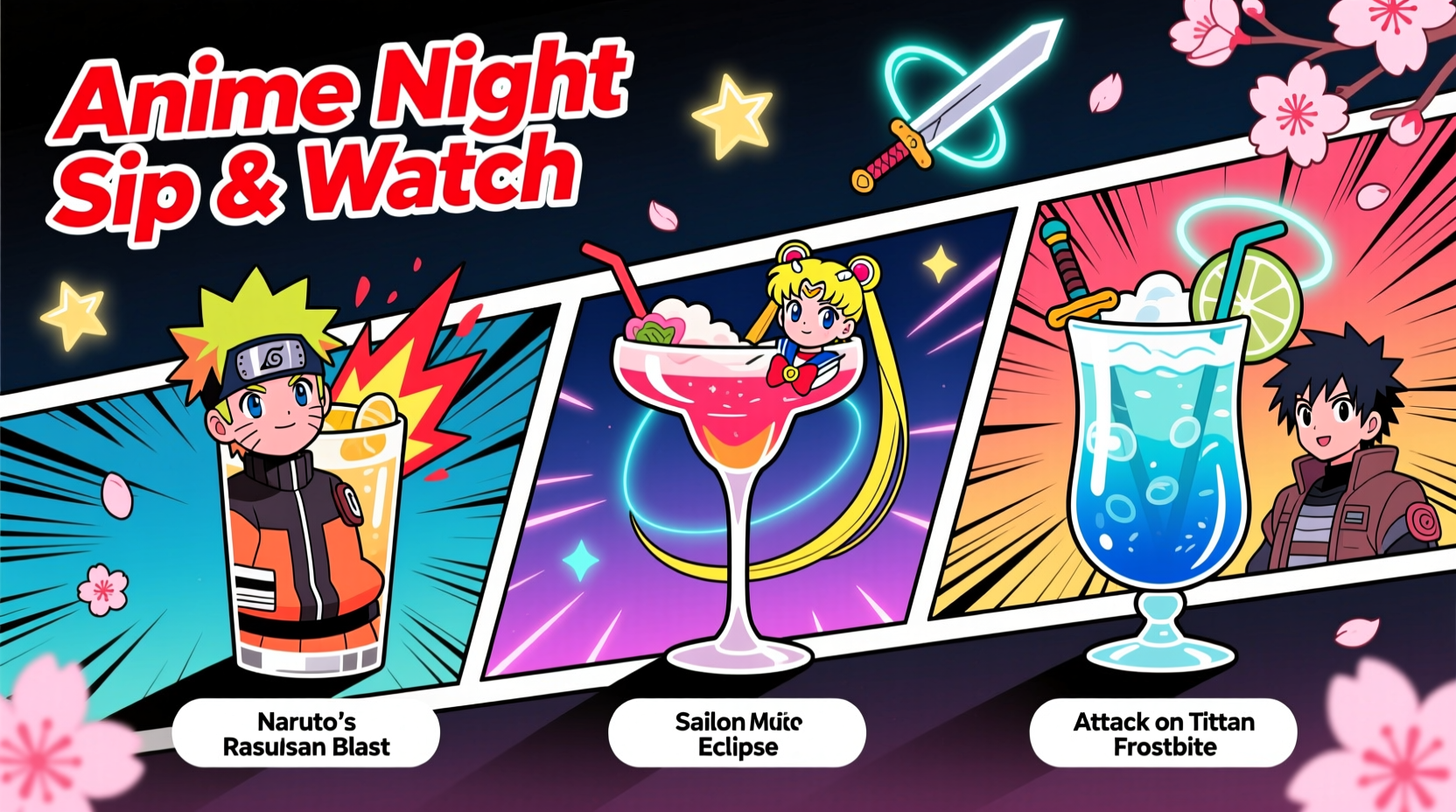
Effective thematic cohesion starts not with alcohol selection—but with narrative analysis. Before mixing a single shaker, identify the core emotional palette, visual motifs, and cultural touchpoints of your chosen anime series or marathon lineup. Is it *Demon Slayer*: high-contrast intensity, Edo-period authenticity, seasonal symbolism (e.g., cherry blossoms, winter frost)? Or *My Hero Academia*: kinetic energy, urban futurism, aspirational idealism? Each demands a distinct flavor language.
For example, *Cowboy Bebop* thrives on noir jazz, interstellar loneliness, and retro-futurist cool. Its cocktails should reflect that: stirred, spirit-forward, with bitter or herbal notes—think amaro-based “Black Dog Old Fashioned” (rye, blackstrap molasses syrup, Fernet-Branca, orange twist) rather than bright, fruity spritzes. Conversely, *K-On!* calls for light, effervescent, nostalgic flavors—strawberry-milkshake martinis or matcha-white chocolate fizz—mirroring its gentle pacing and school-life warmth.
Tip: Assign each drink a “character role”: protagonist (signature showstopper), sidekick (accessible crowd-pleaser), antagonist (bold, challenging, or complex), and cameo (non-alcoholic or low-ABV option). This ensures narrative balance across the menu.2. Build a Structured 5-Drink Menu Framework
Aim for five carefully calibrated options—not to overwhelm, but to offer progression and choice. This structure mirrors how viewers emotionally journey through a marathon: anticipation, immersion, intensity, reflection, and closure. Below is the proven framework used by professional pop-culture mixologists and home entertainers alike:
- The Opener (Pre-Marathon Spark): Light, refreshing, low-ABV (5–8% ABV). Served chilled, no ice melt dilution. Purpose: awaken the palate, set tone without intoxication. Example: “Hokkaido Mist” (shiso-infused gin, yuzu juice, soda, cucumber ribbon).
- The Protagonist (Marathon Anchor): Medium strength (10–14% ABV), balanced, memorable. The centerpiece drink—visually evocative and narratively resonant. Example: “Mugen’s Scramble” (blanco tequila, grilled pineapple syrup, lime, chili salt rim, smoked paprika dust).
- The Intensity Shift (Mid-Marathon Surge): Higher proof or layered complexity (14–20% ABV), often stirred or clarified. Matches rising action or emotional stakes. Example: “Gojo’s Infinity” (vodka, white miso–caramel syrup, dry vermouth, saline, served up with edible gold leaf).
- The Reflective Pause (Intermission Cooler): Non-alcoholic or zero-ABV, rich in texture and umami-sweet depth. Designed for mental reset between episodes. Example: “Totoro’s Forest Tea” (cold-brew hojicha, roasted barley syrup, steamed oat milk foam, black sesame crumble).
- The Finale (Post-Marathon Wind-Down): Lower alcohol, warming, herbaceous or nutty. Encourages calm reflection. Example: “Kiki’s Midnight Brew” (aged rum, toasted almond orgeat, lavender bitters, hot oat milk).
This progression prevents palate fatigue, supports responsible consumption, and honors the emotional rhythm of long-form storytelling. It also accommodates diverse preferences—including designated drivers, pregnant guests, or those abstaining—without relegating non-alcoholic options to afterthought status.
3. Cultural Integrity + Flavor Innovation: What to Do (and Not Do)
Theming requires nuance—not caricature. Borrowing from Japanese culinary or drinking traditions (e.g., shochu, yuzu, matcha, umeboshi) adds authenticity, but only when executed with care. Missteps—like calling a neon-blue vodka soda “Naruto Chakra Blast”—undermine credibility and risk cultural trivialization.
| Do | Don’t |
|---|---|
| Use regionally accurate ingredients (e.g., real yuzu juice—not “yuzu-flavored” syrup; proper matcha grade for drinking, not culinary) | Substitute wasabi for horseradish in “spicy” drinks—wasabi is fresh, volatile, and rarely used in beverages |
| Reference real Japanese drinking customs (e.g., ochoko cups for sipping shochu, chilled beer with ramen scenes) | Label drinks with romanized Japanese words you don’t understand (e.g., “Kami-sama Sour” without context or meaning) |
| Highlight seasonal ingredients (sakura in spring, kabosu in summer, persimmon in autumn) | Use chopsticks as drink stirrers—unhygienic and culturally inappropriate for communal service |
| Credit inspiration: “Inspired by the tea ceremonies in *Hyouka*” or “Echoes the izakaya vibe of *Bar Lemon Hart*” | Appropriately label non-Japanese anime themes as such (e.g., *Attack on Titan* drinks should reference Germanic or Eastern European notes—caraway, rye, dill—not forced “samurai” tropes) |
Respect extends to ingredient sourcing. Real yuzu is expensive and rare outside Japan—but frozen yuzu concentrate (not “yuzu essence”) is widely available and far superior to artificial alternatives. Likewise, matcha must be ceremonial-grade for cold drinks; culinary-grade burns and turns bitter when shaken. These details separate immersive experiences from theme-park mimicry.
4. Real-World Execution: A Mini Case Study
In March 2023, Maya T., a Tokyo-based graphic designer and anime club organizer, hosted a 12-hour *Spy x Family* marathon for 14 friends. Her goal: reflect the show’s tonal duality—Loid’s stoic spycraft, Yor’s lethal grace, Anya’s childlike wonder—without resorting to gimmicks. She spent two weeks developing her menu, testing batches, and sourcing ingredients from local izakayas and specialty grocers.
Her final lineup included:
- “Operation Strix” (Opener): Cucumber–shiso kombucha, gin, lemon, sea salt rim — clean, crisp, subtly savory.
- “Wise Man’s Toast” (Protagonist): Blended Scotch, black sesame syrup, pear nectar, lemon — smoky, nutty, complex, served in small rocks glasses.
- “Anya’s Telepathy Tonic” (Intensity Shift): Aquavit, elderflower liqueur, grapefruit, rosemary tincture — bright yet herbal, with a lingering finish.
- “Eden’s Garden Spritz” (Reflective Pause): Sparkling apple cider, ginger-kombu syrup, lemon verbena infusion — zero-ABV, effervescent, deeply aromatic.
- “Family Hearth” (Finale): Hot spiced rice milk (toasted rice, cinnamon, star anise, brown sugar) — comforting, dairy-free, gently sweet.
Guests reported heightened emotional connection to key scenes—particularly during Loid and Yor’s rooftop date episode, where “Wise Man’s Toast” was served alongside homemade curry puffs. “It wasn’t just about the drink,” one guest wrote in the post-marathon survey. “It felt like we were sharing their quiet moment—not just watching it.” Maya’s success came from restraint, research, and treating each drink as narrative punctuation—not decoration.
5. Step-by-Step: From Concept to Cocktail Station (Under 90 Minutes)
Creating a functional, safe, and elegant bar setup doesn’t require professional equipment—or hours of prep. Follow this realistic timeline:
- T-90 min: Finalize Menu & Inventory Check — Confirm quantities (allow 2 servings per guest per drink), cross-check pantry staples (simple syrup, citrus, garnishes), order missing items. Pro move: Pre-measure syrups into labeled squeeze bottles.
- T-60 min: Prep All Components — Juice citrus, make syrups (if not pre-made), infuse spirits (e.g., shiso in gin), toast spices, prepare garnishes (cucumber ribbons, citrus twists, edible flowers). Store chilled or covered.
- T-30 min: Set Up Stations — Group by function: “Shake Zone” (shaker, strainer, jigger, citrus press), “Stir Zone” (mixing glass, bar spoon, ice bucket), “Non-Alc Zone” (sparkling water, syrups, garnishes), “Garnish Bar” (small bowls with herbs, salts, spices). Label everything clearly.
- T-15 min: Chill Glassware & Ice — Freeze coupe and martini glasses; fill ice bucket with large, dense cubes (melts slower). Avoid crushed ice unless required (e.g., for slushy-style drinks).
- T-5 min: Final Layout & Safety Brief — Place hand sanitizer, spill towels, and a “Designated Pourer” sign near the bar. Assign one person (not the host) to manage alcohol service if needed. Ensure clear walkways and non-slip mats.
This system eliminates bottlenecks, reduces stress, and keeps guests engaged—not waiting. It also builds anticipation: seeing thoughtfully arranged stations signals intentionality and elevates the entire event.
6. Expert Insight: The Psychology of Themed Hospitality
Dr. Lena Park, Professor of Consumer Experience Design at Kyoto Institute of Technology and author of *Immersive Rituals: How Themed Environments Shape Memory*, emphasizes that thematic coherence activates deeper cognitive processing: “When sensory inputs—taste, aroma, color, vessel—align with narrative expectations, the brain encodes the experience more vividly. A ‘Totoro Rain’ drink served in a ceramic raindrop mug doesn’t just taste good—it triggers associative memory, making the viewing experience more emotionally resonant and memorable. That’s not entertainment. That’s experiential architecture.”
“Cohesion isn’t about matching colors—it’s about aligning emotional frequency. A sharp, bracing drink during a tense scene doesn’t distract; it synchronizes physiology with narrative pulse.” — Dr. Lena Park, Consumer Experience Design Researcher
7. FAQ: Practical Concerns Answered
How do I accommodate guests who don’t drink alcohol without making them feel like an afterthought?
Integrate non-alcoholic drinks as full members of the menu—not footnotes. Give them equal naming creativity (“Sakura Zero” vs. “Virgin Sakura”), use premium ingredients (cold-pressed juices, house-made shrubs, artisanal sodas), and serve them in the same glassware. Offer a “Zero-Proof Flight” (3 mini servings) so guests can sample the full thematic range. Never call them “mocktails”—that term implies imitation, not intention.
Can I batch cocktails ahead of time to save effort?
Yes—but selectively. Stirred, spirit-forward drinks (Manhattans, Martinis, Negronis) batch beautifully and improve with brief fridge rest (up to 24 hours). Avoid batching anything with fresh citrus juice (oxidizes), egg whites (separates), or carbonation (goes flat). For citrus-based drinks, pre-batch the base (spirit + syrup + bitters), then add fresh juice and shake per serving. Always label batches with date, contents, and dilution notes.
What’s the safest way to handle multiple guests mixing their own drinks?
Provide pre-measured “build-your-own” kits: individual pour bottles labeled with drink names and volume lines (e.g., “Gojo’s Infinity: 2 oz Rum / 0.75 oz Miso-Caramel / 0.5 oz Vermouth”). Include a QR code linking to a 30-second video demo. Keep high-proof spirits (over 50% ABV) behind the bar and serve only by the host or designated pourer. Post a clear sign: “Please ask before pouring spirits—safety first.”
Conclusion
A themed cocktail menu for your anime marathon night is more than a party trick—it’s an act of curation, empathy, and creative generosity. It says to your guests: *I didn’t just pick shows. I considered how they make us feel—and built a world where taste, sight, and story converge.* You don’t need a home bar or a sommelier’s budget. You need curiosity, attention to detail, and the willingness to treat your living room like a stage where every element—from the condensation on a chilled glass to the whisper of toasted sesame in a syrup—serves the story. Start small: pick one series, design three drinks, test one with a friend. Refine. Iterate. Then share what works—not just the recipes, but the moments they created. Because the best marathons aren’t measured in hours watched, but in memories made, laughter shared, and the quiet realization that, for a few hours, you weren’t just watching anime—you were inside it.
💬 Your turn. Which anime would you theme first—and what’s the first drink you’d craft? Share your concept, your biggest hurdle, or your favorite pairing in the comments. Let’s build the ultimate community cocktail canon—one episode at a time.








