Gaming marathons—whether competitive ranked matches, co-op story runs, or nostalgic LAN parties—demand more than just strong Wi-Fi and ergonomic chairs. They require strategic fueling. Most gamers reach for chips, soda, and energy drinks without considering how those choices sabotage reaction time, cognitive stamina, and mood stability after hour three. A well-designed gaming night bar menu isn’t about indulgence; it’s about metabolic intelligence. It balances sustained glucose release, neurotransmitter support (especially dopamine and acetylcholine), hydration integrity, and digestive comfort—all while preserving the social, celebratory spirit of the occasion. This isn’t fast food disguised as fun. It’s performance nutrition, tailored for seated endurance.
Why Standard “Gaming Snacks” Fail Under Real Session Pressure
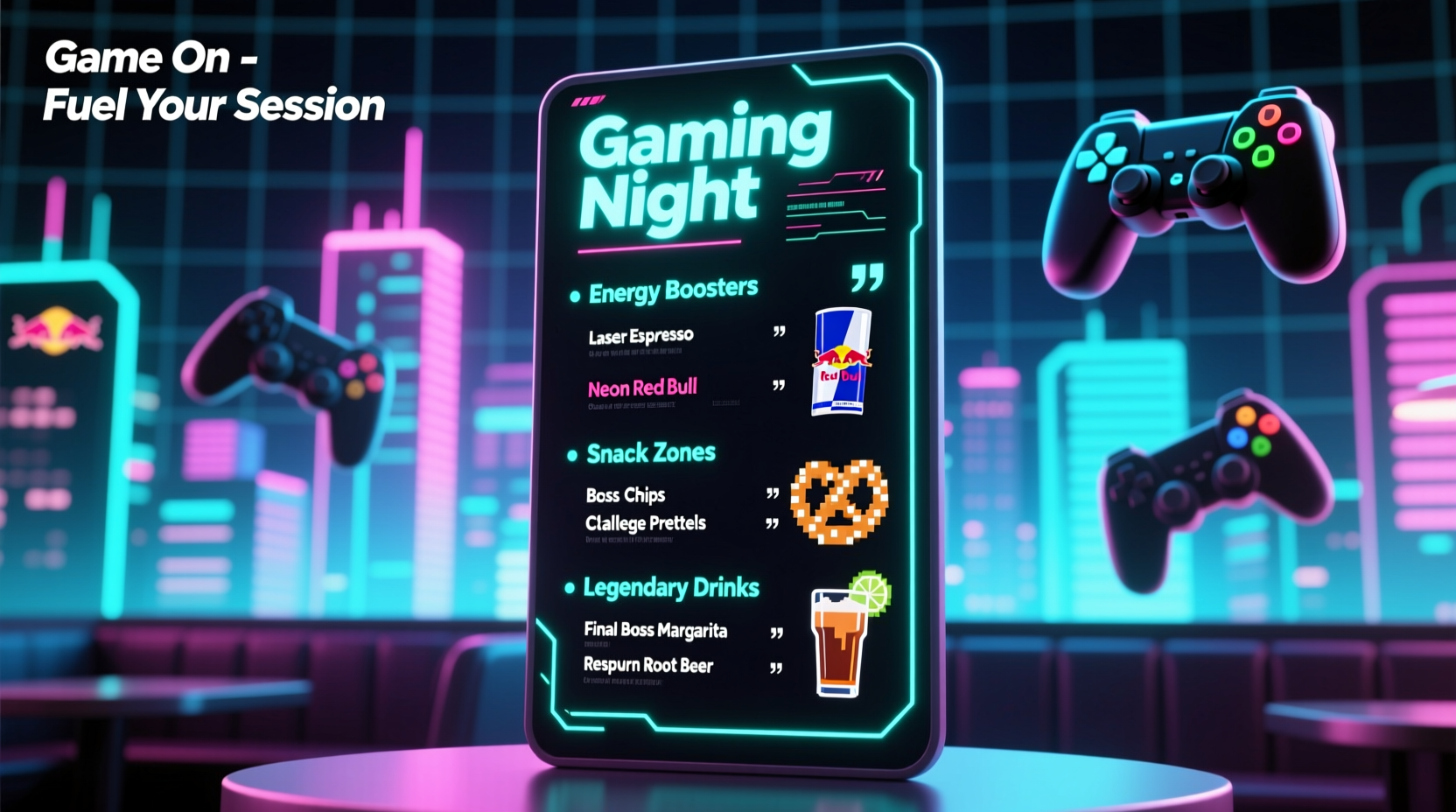
When players default to conventional bar fare—sugary sodas, salt-laden pretzels, fried snacks, and late-night pizza—they trigger predictable physiological consequences: rapid blood sugar spikes followed by crashes (causing brain fog and irritability), dehydration from caffeine and sodium overload, gut inflammation from ultra-processed fats, and oxidative stress from poor antioxidant intake. Neuroscientist Dr. Lena Torres, who studies digital cognition at MIT’s Human-Computer Interaction Lab, confirms this pattern: “We’ve measured measurable declines in visual tracking accuracy and working memory recall within 90 minutes of consuming high-glycemic-load snacks during continuous gameplay. The brain doesn’t run on sugar—it runs on stable glucose, oxygen, and clean cofactors.” In other words, your controller inputs may stay sharp, but your decision-making, situational awareness, and emotional regulation degrade silently—and quickly.
Tip: Replace “energy” with “endurance.” True gaming endurance comes from steady ATP production—not adrenaline surges. Prioritize foods that feed mitochondria, not just taste buds.The Four Pillars of a Performance-Optimized Gaming Bar Menu
A resilient gaming night menu rests on four non-negotiable pillars: Stable Energy Delivery, Cognitive Support, Hydration Intelligence, and Digestive Resilience. Each pillar addresses a distinct physiological need that emerges across multi-hour sessions. Ignoring any one undermines the entire system.
- Stable Energy Delivery: Prevents insulin spikes and crashes using low-glycemic carbohydrates paired with healthy fats and protein. Think roasted chickpeas instead of candy bars; oat-based energy bites instead of donuts.
- Cognitive Support: Supplies brain-specific nutrients—omega-3 DHA, choline, magnesium, and polyphenols—that maintain neural membrane fluidity, synaptic transmission, and cerebral blood flow. Walnuts, matcha, dark cacao, and eggs are functional anchors here.
- Hydration Intelligence: Goes beyond water. Includes electrolytes (potassium, magnesium, sodium) to prevent muscle cramps and mental fatigue, plus caffeine dosed deliberately (≤100 mg per serving) and timed to avoid sleep disruption.
- Digestive Resilience: Minimizes bloating, reflux, and sluggishness with fiber-rich whole foods, fermented options (like kimchi-topped sliders), and avoidance of emulsifiers, artificial sweeteners, and heavy dairy that impair gut-brain axis signaling.
Building Your Menu: A Step-by-Step Framework
Designing a high-performing bar menu isn’t improvisation—it’s intentional layering. Follow this five-step framework to build yours methodically:
- Assess Your Session Profile: Determine average duration (e.g., 4–6 hrs vs. 10+ hrs), player count (2–8), and typical start/end times. A 2 a.m. finish demands different choices than a 7 p.m.–11 p.m. session.
- Map Nutrient Timing Windows: Divide the session into phases: Pre-Game (30–60 min before), First Half (0–3 hrs), Mid-Session Reset (3–5 hrs), Late-Night Sustenance (5+ hrs), and Post-Game Recovery (within 60 min after). Each phase has unique nutritional priorities.
- Select Core Anchors: Choose 1–2 items per pillar that serve as consistent, scalable staples (e.g., magnesium-enriched sparkling water for hydration; spiced roasted almonds for stable energy + cognitive support).
- Build Modular Stations: Organize your bar into clearly labeled zones: Hydration Hub, Brain Bites, Sustained Fuel Bowls, and Recovery Elixirs. This reduces decision fatigue mid-session and encourages balanced intake.
- Test & Iterate: Run a dry-run session with your menu. Track subjective metrics (alertness at hour 4, clarity at hour 7, post-session fatigue) over 3 sessions. Refine based on real data—not assumptions.
Real-World Implementation: The “Pixel & Pistachio” LAN Party Case Study
In early 2023, Toronto-based game developer Marco Chen hosted a 12-hour *Stardew Valley* co-op tournament for eight friends. His first attempt featured standard fare: two 2-liter sodas, three family-sized chip bags, frozen pizza, and candy bowls. By hour six, three players reported headaches, two admitted to “zoning out” during critical farming sequences, and one fell asleep mid-boss fight. For his second event, Marco redesigned the menu using the four-pillar framework. He introduced chilled coconut water with added magnesium glycinate, savory lentil-walnut energy balls (choline + omega-3), air-popped popcorn tossed with nutritional yeast and smoked paprika (B-vitamins + umami satisfaction), and cold-brew matcha lattes (L-theanine to smooth caffeine’s edge). He also served mini kimchi-cucumber sliders on sprouted grain buns for probiotic support. Feedback was unanimous: “I didn’t hit a wall,” said one player. “My aim stayed tight through the final harvest festival.” Blood glucose monitoring (via optional wearable sensors) confirmed flatter, more stable curves across all participants—averaging only a 12% variance versus 47% in the first session.
What to Serve (and What to Skip): A Practical Comparison Table
| Category | Smart Choice | Rationale | Avoid | Why It Undermines Performance |
|---|---|---|---|---|
| Hydration | Magnesium + potassium-infused sparkling water (unsweetened) | Replaces electrolytes lost during focused breathing and mild stress response; carbonation aids satiety without bloating. | Regular soda or “zero-sugar” colas with phosphoric acid & artificial sweeteners | Phosphoric acid depletes magnesium; artificial sweeteners disrupt gut microbiota linked to dopamine regulation. |
| Quick Fuel | Oat-date-cacao energy squares (with almond butter & sea salt) | Low-glycemic oats + fiber-rich dates + healthy fat = 90+ minutes of steady glucose release. | Granola bars with >8g added sugar & hydrogenated oils | Triggers insulin surge → reactive hypoglycemia → impaired visual processing speed by hour 2. |
| Savory Bite | Spiced roasted edamame + pumpkin seeds | Zinc + magnesium + plant protein supports neurotransmitter synthesis and reduces eye strain fatigue. | Processed cheese cubes or fried wonton strips | High saturated fat slows gastric emptying → postprandial drowsiness and reduced peripheral awareness. |
| Brain Boost | Cold-brew matcha latte (1 tsp matcha, 1/4 cup oat milk, dash of cinnamon) | L-theanine counters jitteriness; EGCG protects neurons; cinnamon improves insulin sensitivity in brain tissue. | 5-Hour Energy shots or pre-workout powders | Excessive synthetic caffeine + taurine + glucuronolactone strains adrenal output and impairs REM rebound later. |
Expert Insight: The Neuroscience of Sustained Play
“The prefrontal cortex—the command center for focus, inhibition, and strategy—consumes disproportionate glucose during intense gameplay. But flooding it with simple sugars is like over-revving an engine. You get noise, not power. What gamers need is mitochondrial efficiency: clean fuel, antioxidant protection, and vascular support. That means prioritizing foods rich in polyphenols (berries, cacao), choline (eggs, cruciferous veggies), and DHA (algae oil or fatty fish)—not just ‘more calories.’” — Dr. Aris Thorne, Cognitive Nutrition Researcher, Stanford Brain Health Initiative
Essential Gaming Night Bar Checklist
Before your next session, verify these essentials are prepped and accessible:
- ✅ Hydration Station: At least 2 liters total liquid volume—50% electrolyte-enhanced water, 30% herbal/cold-brew infusions, 20% optional low-sugar fermented option (e.g., lightly fizzy kombucha).
- ✅ Three-Tier Fuel System: One “quick access” item (e.g., single-serve nut pack), one “sustained bowl” (e.g., quinoa-tahini tabbouleh), and one “brain-focused” item (e.g., dark chocolate-covered blueberries).
- ✅ No-Crash Caffeine Cap: Total caffeine intake ≤200 mg per person across the entire session—distributed in doses no larger than 100 mg, with last dose no later than 5 hours before planned sleep.
- ✅ Digestive Safeguards: Include at least one fermented element (kimchi, sauerkraut, plain kefir) and one high-fiber raw veggie (jicama sticks, cucumber ribbons) to support gut-brain signaling.
- ✅ Reset Ritual Trigger: Designate a 5-minute “reset break” at the 3.5-hour mark—no screens, just mindful sipping and light stretching—to recalibrate autonomic tone.
FAQ: Addressing Common Gaming Nutrition Questions
Can I still have pizza—or is it off-limits?
Pizza isn’t forbidden—but its formulation matters. Opt for thin, whole-grain or cauliflower crust, minimal cheese (or use aged goat cheese for better digestibility), and vegetable-heavy toppings (roasted mushrooms, spinach, cherry tomatoes). Avoid deep-dish, stuffed-crust, or meat-laden versions. Serve with a side of arugula salad dressed in lemon and olive oil to balance acidity and aid digestion. Portion control remains key: one modest slice, not three.
What’s the best late-night snack if we’re still playing past midnight?
A small portion of full-fat cottage cheese with sliced banana and ground flaxseed delivers tryptophan (for calm focus), potassium (for nerve conduction), and soluble fiber (to slow glucose absorption). It avoids the cortisol spike of sugary treats and the indigestion risk of heavy proteins. Never pair it with caffeine—timing matters more than content.
How do I keep everyone hydrated without constant bathroom breaks?
Strategic electrolyte balance reduces urinary frequency. Magnesium and potassium help cells retain water more efficiently than plain H₂O alone. Also, avoid diuretics like excessive black tea or high-sodium snacks. Encourage sipping—not chugging—and use clear glasses so players can visually track intake. A good rule: one glass per hour, minimum.
Conclusion: Fuel Like a Pro, Not a Player on Autopilot
Your gaming night bar menu is more than convenience—it’s your silent teammate. It shapes attention spans, buffers stress responses, and determines whether your squad finishes the raid elated or exhausted. The most memorable sessions aren’t defined by flawless execution alone, but by the quiet confidence that comes from knowing your body and brain are fully supported. You don’t need gourmet skills or expensive supplements. You need intention: choosing walnuts over chips because they contain neuroprotective vitamin E; selecting sparkling magnesium water over soda because it preserves neural firing precision; timing your matcha to align with natural circadian dips in alertness. These aren’t restrictions—they’re upgrades. Start small: swap one processed item for a whole-food alternative this weekend. Observe the difference in your own focus, mood, and recovery. Then scale up. Because when every bite and sip serves performance—not just pleasure—you’re not just playing longer. You’re playing sharper, steadier, and more joyfully.
💬 Share your top-performing gaming snack or hydration hack in the comments. Let’s build the ultimate community-sourced playbook—one intelligent bite at a time.








