
Hiking with your dog is one of the most rewarding outdoor activities—strengthening your bond, boosting fitness, and exposing both of you to nature’s wonders. But when your dog wears an ill-fitting or poorly designed harness, what should be a joyful experience can quickly turn uncomfortable or even painful. Chafing, restricted movement, pressure on sensitive areas, and skin irritation are common issues that stem from choosing the wrong harness. For active dogs who spend hours on uneven terrain, a properly fitted, high-performance harness isn’t just a convenience—it’s essential.
Selecting the right harness goes beyond simply matching your dog’s weight to a size chart. It involves understanding fit, material quality, structural design, and how the harness interacts with your dog’s anatomy during motion. This guide breaks down every factor that contributes to a comfortable, secure, and chafe-free hiking experience, so you can equip your dog with confidence and care.
Understand Why Harness Fit Matters for Hiking
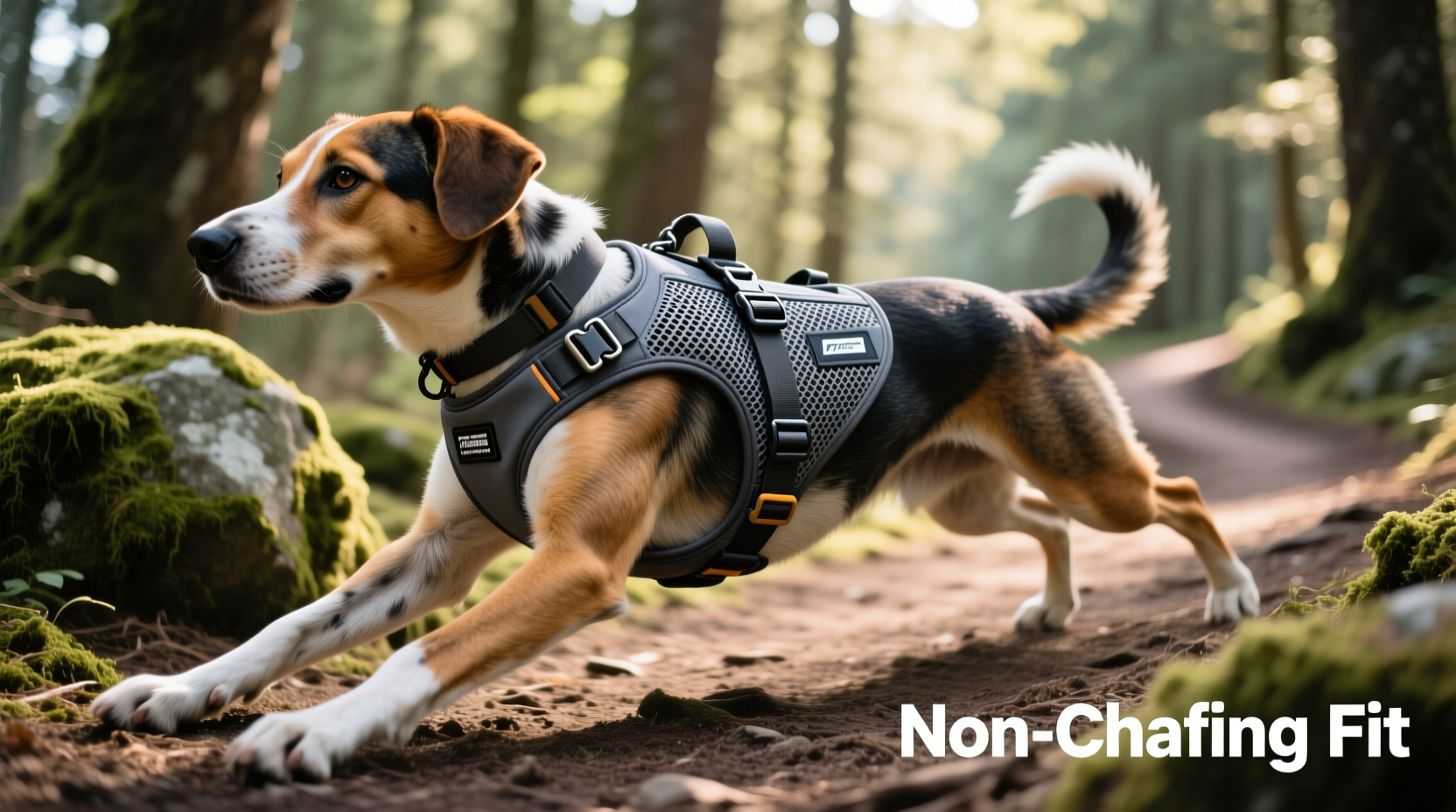
Unlike walking around the neighborhood, hiking demands more from both dog and gear. Trails often involve steep inclines, scrambling over rocks, wading through streams, and navigating dense brush. A poorly fitting harness can shift, rub, or dig into soft tissue during these movements, leading to friction burns, shoulder restriction, or even long-term musculoskeletal strain.
Dogs rely on their shoulders and chest for propulsion, especially uphill. A harness that crosses over the shoulder blades or compresses the trachea limits natural gait and increases fatigue. Additionally, moisture from sweat or water exposure can amplify friction, making synthetic materials that don’t breathe a recipe for chafing.
The ideal hiking harness distributes weight evenly across the strongest parts of the dog’s body—across the chest and behind the front legs—while staying clear of delicate areas like the throat, armpits, and spine.
Tip: Always check your dog’s harness fit after 15 minutes of hiking—movement and heat can cause shifting or tightening.Step-by-Step Guide to Measuring Your Dog Correctly
Accurate measurement is the foundation of a good fit. Many owners rely solely on breed or weight charts, but individual variation in chest depth, neck girth, and torso length means only direct measurement delivers reliable results.
- Gather tools: Use a flexible tape measure (like a tailor’s tape). Have your dog stand on a flat surface, relaxed but alert.
- Measure the neck: Wrap the tape around the base of the neck where the collar normally sits. Don’t pull tight—allow enough space for two fingers underneath.
- Measure the chest: Find the widest part of the ribcage, just behind the front legs. This is the most critical measurement. Ensure the tape is snug but not compressing the fur or skin.
- Check the girth under the belly: Some harnesses use a loop that wraps under the abdomen. Measure from the back of the ribcage, under the belly, to the same point on the other side.
- Note the back length: From the base of the neck to the start of the tail. This helps determine coverage and adjustability range.
Record all measurements and compare them directly to the manufacturer’s sizing chart—not generic online guides. Reputable brands provide detailed instructions and tolerance ranges (e.g., chest girth 24–28 inches). If your dog falls near the edge of a size, opt for the larger one if adjustability allows fine-tuning.
“Even a half-inch too tight in the chest can restrict lung expansion and lead to overheating on strenuous hikes.” — Dr. Lena Torres, Veterinary Sports Medicine Specialist
Key Features of a High-Performance Hiking Harness
Not all harnesses are built for trail work. Urban or casual harnesses may look stylish but lack the durability, ventilation, and anatomical support needed for extended hikes. Look for these non-negotiable features:
- Padded, breathable panels: Foam padding on the chest and behind the shoulders cushions impact without trapping heat. Mesh lining improves airflow and reduces moisture buildup.
- Adjustable straps: Multiple adjustment points (neck, chest, belly) ensure a custom fit. Avoid fixed-loop designs unless your dog matches the exact dimensions.
- Load-bearing attachment points: A rear D-ring for leash attachment is standard; a front clip can help with steering but shouldn’t bear full load. For technical terrain, dual clips offer versatility.
- Top handle: A reinforced handle near the shoulders allows you to assist your dog over obstacles or lift them safely if injured.
- Reflective stitching or trim: Essential for early morning or late-day hikes, increasing visibility in low light.
- Quick-dry materials: Nylon webbing with water-resistant coating dries fast and resists odor retention.
Avoid harnesses with thin straps, plastic buckles, or fabric that bunches at stress points. These are early signs of potential chafing zones.
Do’s and Don’ts When Fitting a Hiking Harness
| Do’s | Don’ts |
|---|---|
| Test fit indoors first with a short walk or play session | Skip the break-in period—expect immediate comfort |
| Ensure you can slide two fingers comfortably under any strap | Leave excess strap dangling—trim or tuck to prevent snagging |
| Check for rubbing after 10–15 minutes of activity | Assume the fit stays constant—recheck after sweating or swimming |
| Wash according to manufacturer instructions to maintain elasticity | Machine-wash with harsh detergents that degrade padding |
| Inspect stitching and hardware monthly for wear | Use a worn or frayed harness on remote trails |
Real Example: How One Owner Prevented Shoulder Chafing on a Mountain Trail
Sarah, an avid hiker from Colorado, noticed her Border Collie mix, Juno, was hesitant to climb steeper sections during a weekend trek in the Rockies. After the hike, she found redness and minor abrasions behind Juno’s left shoulder. The harness—a popular no-pull model designed for city walks—had shifted upward during exertion, pressing against the joint.
She switched to a hiking-specific harness with a Y-shaped design that routed straps away from the shoulder blades. She remeasured Juno, discovering her chest was actually 26.5 inches—just above the medium size limit. By sizing up and adjusting the belly strap tighter, she achieved a secure fit that didn’t ride up.
On their next 8-mile hike, Juno showed no signs of discomfort. Sarah now checks the harness fit every hour during long outings and carries a spare set of adjustable straps for mid-trail tweaks.
Expert Recommendations for Active Breeds and Body Types
Different breeds have distinct conformational challenges. A Greyhound’s narrow chest and deep ribcage require a different harness geometry than a stocky Bulldog or muscular Husky.
- Deep-chested breeds (e.g., German Shepherd, Doberman): Prioritize chest coverage and a high chest strap to avoid pressure on the sternum.
- Narrow-chested breeds (e.g., Whippet, Italian Greyhound): Look for harnesses with front-adjustable neck loops to prevent slipping.
- Broad-shouldered dogs (e.g., Labrador, Rottweiler): Choose wide, contoured padding to distribute force and reduce friction at the shoulder joint.
- Short-legged dogs (e.g., Dachshund, Corgi): Ensure the harness doesn’t drag on the ground and has a rear handle for easy lifting over roots or rocks.
For dogs with thick undercoats, consider harnesses with minimal internal seams to prevent matting and trapped debris. In humid climates, antimicrobial linings can reduce bacterial growth from prolonged moisture exposure.
“Dogs aren’t one-size-fits-all, and neither should their gear be. A well-fitted harness supports biomechanics, not fights against them.” — Dr. Rajiv Mehta, Canine Rehabilitation Therapist
Checklist: Pre-Hike Harness Readiness
Before hitting the trail, run through this quick checklist to ensure your dog’s harness is safe and comfortable:
- ✅ All straps are securely fastened and adjusted snugly (two-finger test passed)
- ✅ No twisting or folding of padding along contact points
- ✅ D-rings are intact and rotate freely
- ✅ Leash attaches smoothly without strain on stitching
- ✅ Top handle lifts the dog slightly without pinching or slipping
- ✅ Skin underneath appears clean, dry, and free of redness
- ✅ Excess strap ends are secured or trimmed
- ✅ Harness has been tested on a short walk to confirm fit stability
Frequently Asked Questions
How tight should a hiking harness be?
A hiking harness should be snug enough to prevent slipping over the head or shoulders but loose enough to allow full range of motion. You should be able to fit two fingers flat between any strap and your dog’s body. Over-tightening restricts breathing and circulation, especially during exertion.
Can I use a regular harness for hiking?
While possible for short, easy trails, regular harnesses often lack the durability, ventilation, and ergonomic design needed for sustained activity. They may also concentrate pressure on sensitive areas. Investing in a purpose-built hiking harness reduces injury risk and enhances performance.
Why does my dog’s harness leave red marks after a hike?
Red marks indicate excessive pressure or friction. Common causes include improper sizing, poor strap routing over joints, or material that doesn’t breathe. Inspect the harness fit, consider switching to a padded, mesh-lined model, and monitor your dog closely on future hikes. Persistent marks warrant a veterinary consultation to rule out dermatitis or nerve compression.
Conclusion: Gear Up for Comfort, Safety, and Adventure
Choosing the right size dog harness for active hiking isn’t about convenience—it’s about respecting your dog’s physical limits and preparing them for the demands of the trail. A well-fitted, thoughtfully designed harness prevents chafing, supports natural movement, and gives you greater control in unpredictable terrain. By measuring accurately, selecting performance-oriented features, and regularly assessing fit during use, you ensure every hike remains a positive, shared adventure.
Your dog trusts you to lead the way. Return that trust by equipping them with gear that prioritizes their comfort and safety. Take the time today to evaluate your current harness, remeasure your dog, and upgrade if necessary. The trail awaits—make sure your companion is ready for it.
💬 Have a harness success story or a fit tip that worked for your dog? Share your experience in the comments and help fellow hikers make smarter choices!








