Running is one of the most accessible forms of exercise, but for individuals with flat feet—also known as fallen arches—it can quickly become painful without proper footwear. Flat feet affect over 30% of adults and are characterized by little to no arch, causing the entire sole of the foot to touch the ground when standing. This biomechanical trait often leads to overpronation, where the foot rolls inward excessively during movement. Without adequate arch support, this can strain tendons, misalign joints, and result in chronic discomfort in the feet, knees, hips, or lower back.
Selecting the right running shoe isn’t just about comfort—it’s a critical investment in long-term joint health and running efficiency. The ideal shoe should stabilize your gait, correct overpronation, and provide targeted arch reinforcement. Yet with hundreds of models on the market, each touting advanced cushioning or motion control, choosing wisely requires knowledge of your foot type, gait mechanics, and the specific technologies that matter most.
Understanding Flat Feet and Overpronation
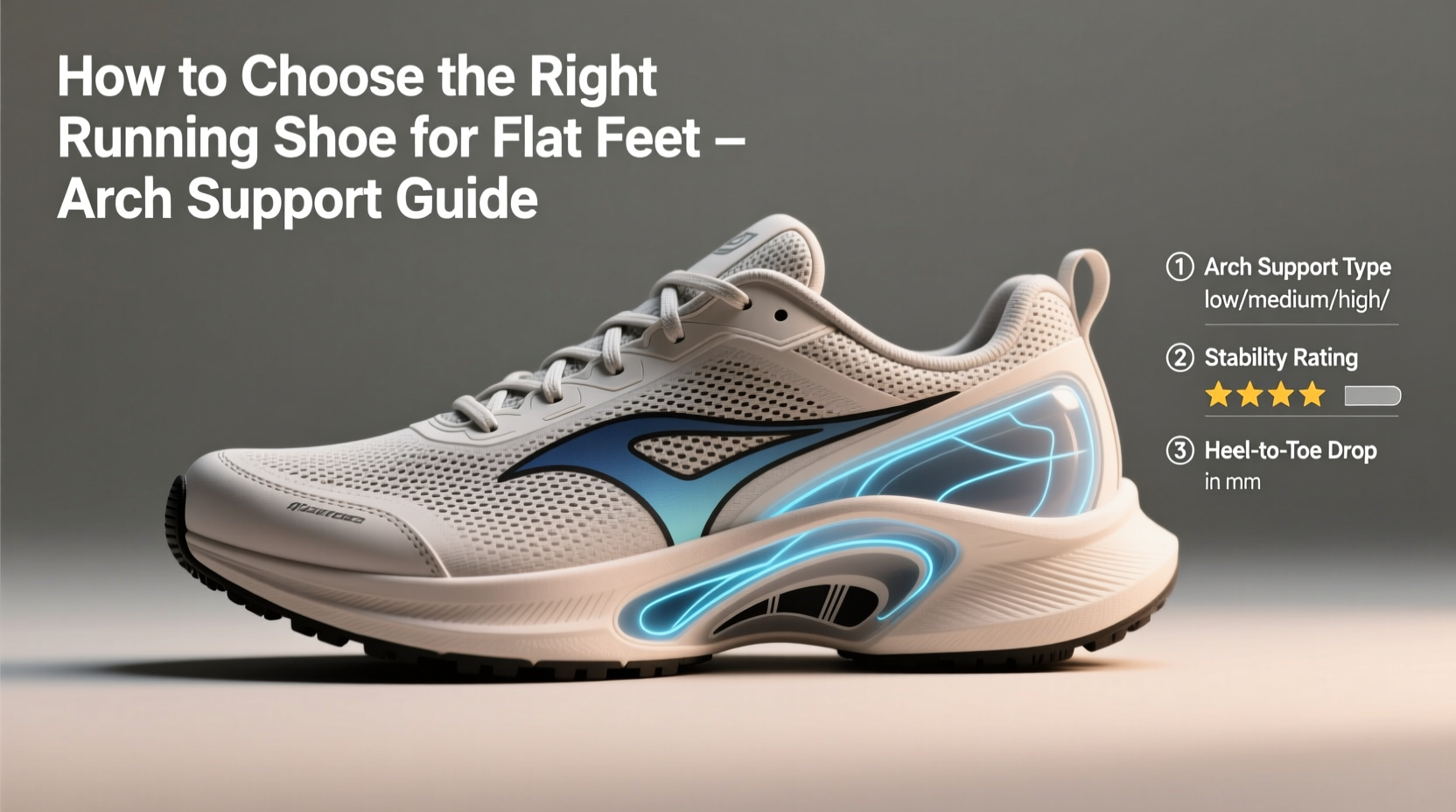
Flat feet occur when the posterior tibial tendon, which supports the arch, becomes weakened or damaged. While some people develop flat feet due to injury or aging, others are born with them. Regardless of origin, the key issue lies in how the foot interacts with the ground during activity.
When you have flat feet, your ankle tends to collapse inward upon impact—a condition known as overpronation. This shifts weight unevenly across the foot and forces other parts of the kinetic chain (ankles, knees, hips) to compensate. Over time, this imbalance can lead to plantar fasciitis, shin splints, Achilles tendonitis, and even stress fractures.
“Runners with flat feet need structured shoes that reduce excessive inward motion. Motion control and stability features aren't optional—they're essential for injury prevention.” — Dr. Lena Patel, Podiatrist & Sports Medicine Specialist
It’s important not to confuse flat feet with flexible flat feet, a variation common in children and some adults where an arch appears only when the foot is off the ground. A simple wet test at home can help identify your foot type: wet the sole of your foot, step onto a piece of paper, and examine the imprint. If nearly the entire sole is visible, you likely have low or no arch.
Tip: Don’t rely solely on self-diagnosis. Visit a podiatrist or specialty running store for a professional gait analysis.Key Features to Look for in Running Shoes for Flat Feet
Not all running shoes are created equal, especially when it comes to structural support. For flat-footed runners, prioritize these five design elements:
- Firm Midsole Density: A denser foam or dual-density material along the inner side of the midsole resists compression and limits inward rolling.
- Medial Post Support: A reinforced section under the arch helps prevent collapse and maintains alignment from heel to toe.
- Rigid Heel Counter: A firm cup around the heel locks the foot in place and reduces slippage and instability.
- Structured Arch Profile: Unlike standard neutral shoes, supportive models feature a built-in arch contour that mirrors natural foot anatomy.
- Wide Base Platform: A broader outsole increases surface area, improving balance and reducing pressure on the medial side.
Cushioning matters too—but not all cushioning is beneficial. Excessive softness without underlying structure can worsen overpronation by allowing the foot to sink too deeply into the shoe. Instead, look for balanced cushioning: responsive enough to absorb shock, yet firm enough to maintain stability.
Stability vs. Motion Control: What’s the Difference?
Two categories dominate the market for flat-footed runners: stability shoes and motion control shoes. Understanding the distinction ensures you don’t under- or over-correct your gait.
| Feature | Stability Shoes | Motion Control Shoes |
|---|---|---|
| Best For | Mild to moderate overpronation | Severe overpronation or very flat feet |
| Midsole Technology | Dual-density foam or guide rails | Firm, full-length medial post |
| Weight | Light to moderate (~9–11 oz) | Heavier (~11–14 oz) |
| Flexibility | Moderate flexibility in forefoot | Limited flexibility; highly rigid |
| Recommended Use | Daily training, tempo runs | Long-distance, heavy-impact running |
If you’re new to structured footwear, start with a stability shoe unless a professional recommends otherwise. Motion control shoes, while effective, can feel restrictive and may cause discomfort if your overpronation isn’t severe.
Top Recommended Running Shoes for Flat Feet
Based on biomechanical testing, user feedback, and podiatric recommendations, the following models consistently rank among the best for flat-footed runners:
- Brooks Adrenaline GTS 23: Features GuideRails® support system that keeps excess motion in check without overcorrecting. Ideal for daily training.
- ASICS Gel-Kayano 30: Combines Dynamic Duomax support with plush rearfoot cushioning. Excellent for high-mileage runners.
- Saucony Guide 17: Offers a balanced blend of support and responsiveness, with a lightweight frame suitable for tempo efforts.
- New Balance 860v14: Features a rigid medial post and Blown Rubber outsole for durability and traction on varied surfaces.
- Hoka One One Arahi 6: Uses J-Frame™ technology instead of traditional posts for a smoother ride and adaptive support.
Each of these models has undergone rigorous wear testing and integrates modern engineering to address both comfort and biomechanics. However, personal fit remains paramount. A shoe rated “best” online might not suit your unique foot shape or stride pattern.
Tip: Always try shoes later in the day when feet are slightly swollen—this mimics running conditions more accurately.Step-by-Step Guide to Choosing Your Perfect Fit
Finding the right shoe involves more than reading reviews or trusting brand reputation. Follow this proven process to ensure optimal selection:
- Get a Gait Analysis: Visit a specialty running store that offers video gait assessment. Watch how your foot strikes and rolls during treadmill walking or running.
- Measure Both Feet: Have your foot length and width professionally measured. Many people assume they know their size, but variations between brands and asymmetry between feet are common.
- Test Multiple Models: Try on at least three different stability or motion control shoes. Wear the same socks you plan to run in.
- Walk and Jog Indoors: Most stores allow brief test runs. Pay attention to heel lock, arch contact, and any pinching or slipping.
- Evaluate Arch Contact: Ensure the shoe’s arch contour aligns with your foot. There should be snug, continuous support—not gaps or excessive pressure.
- Check Toe Box Space: Leave a thumb’s width (about ½ inch) between your longest toe and the end of the shoe to accommodate swelling during runs.
- Break In Gradually: Once purchased, wear the shoes for short walks before progressing to runs. Monitor for hot spots or discomfort.
This method minimizes guesswork and significantly increases the likelihood of long-term satisfaction. Remember: the most expensive shoe isn’t necessarily the best—it’s the one that fits your biomechanics precisely.
Real Runner Case Study: From Pain to PRs
Mark T., a 38-year-old recreational runner from Denver, struggled with persistent knee pain after increasing his weekly mileage to train for a half marathon. Despite stretching and strengthening exercises, the discomfort persisted. After visiting a sports clinic, he was diagnosed with overpronation linked to undiagnosed flat feet.
His physical therapist recommended switching from neutral cushioned shoes to a stability model. Mark tried the ASICS Gel-Kayano and noticed immediate improvement in foot alignment. Within two weeks of consistent use—and paired with prescribed orthotics—he reported reduced knee strain and improved running form. By race day, he achieved a personal best, crediting his footwear change as a pivotal factor.
“I didn’t realize how much energy I was wasting fighting my own stride,” Mark said. “The right shoe didn’t just stop the pain—it made running feel easier.”
Do’s and Don’ts When Buying Running Shoes for Flat Feet
| Action | Do | Don’t |
|---|---|---|
| Arch Support | Choose shoes with built-in medial support or compatibility with custom orthotics | Assume all \"cushioned\" shoes offer arch reinforcement |
| Fitting Time | Shop in the evening when feet are naturally expanded | Buy based on morning measurements or old size records |
| Replacement Schedule | Replace every 300–500 miles or when midsole compression is visible | Continue using worn-out shoes to \"stretch them in\" |
| Orthotic Integration | Remove factory insoles to make room for custom orthotics | Stack orthotics on top of existing inserts, reducing space |
| Brand Loyalty | Stick with brands proven to work for your foot type | Switch to a neutral shoe just because it's trendy |
Frequently Asked Questions
Can I use orthotics with running shoes designed for flat feet?
Yes—and often, it’s recommended. Many stability shoes are designed with removable insoles to accommodate custom orthotics. If you’ve been prescribed orthotics by a podiatrist, pair them with a shoe that provides additional motion control for maximum benefit.
Are minimalist shoes safe for flat feet?
Generally, no. Minimalist shoes lack the structured support needed to counteract overpronation. They require strong intrinsic foot muscles and proper biomechanics to avoid injury. For most flat-footed runners, minimalist footwear increases the risk of strain and overuse injuries.
How often should I replace my running shoes if I have flat feet?
Every 300–500 miles, regardless of visible wear. The internal support systems degrade over time, even if the outsole looks intact. Worn-down midsoles lose their ability to control pronation, increasing injury risk. Keep a log of your mileage to stay on schedule.
Final Checklist Before You Buy
- ✅ Confirmed flat feet via wet test or professional diagnosis
- ✅ Completed gait analysis at a specialty running store
- ✅ Narrowed choices to stability or motion control category
- ✅ Tried on multiple models with running socks
- ✅ Verified secure heel fit and proper arch alignment
- ✅ Ensured adequate toe box clearance
- ✅ Confirmed compatibility with orthotics (if used)
- ✅ Compared return policy in case adjustments are needed
Take the First Step Toward Pain-Free Running
Your feet are the foundation of every stride. Ignoring their structural needs may lead to short-term convenience but long-term consequences. With the right running shoe—one that actively supports your arches and stabilizes your gait—you’re not just protecting yourself from injury. You’re unlocking greater endurance, improved efficiency, and a more enjoyable running experience.
Don’t settle for generic advice or ill-fitting shoes. Apply the insights above, visit a trusted running retailer, and put your best foot forward. Whether you're logging your first mile or training for a marathon, the right support makes all the difference.
💬 Have questions about your shoe choice or experiences with flat feet? Share your story in the comments below—your insight could help another runner find relief.








