Selecting the right grip tape isn't just about aesthetics or brand preference—it's a critical decision that affects your balance, foot placement, and overall performance. While many skaters focus solely on board dimensions or truck setup, one often overlooked factor is how your shoe size interacts with the grip tape surface. Larger feet require more coverage and stability, while smaller feet may benefit from finer textures and precise control. Understanding this relationship helps you tailor your setup to your body mechanics, reducing fatigue and improving trick execution.
Grip tape serves as the interface between your shoes and your deck. Its texture, coverage, and edge finish influence how securely you can pivot, slide, or land. But since shoe size determines how much of the deck your feet occupy, it directly impacts which type of grip tape will work best. A mismatch—such as narrow grip on a wide deck for large-footed riders—can lead to heel overhang, reduced leverage, or even slips during technical maneuvers.
Understanding the Role of Shoe Size in Grip Selection
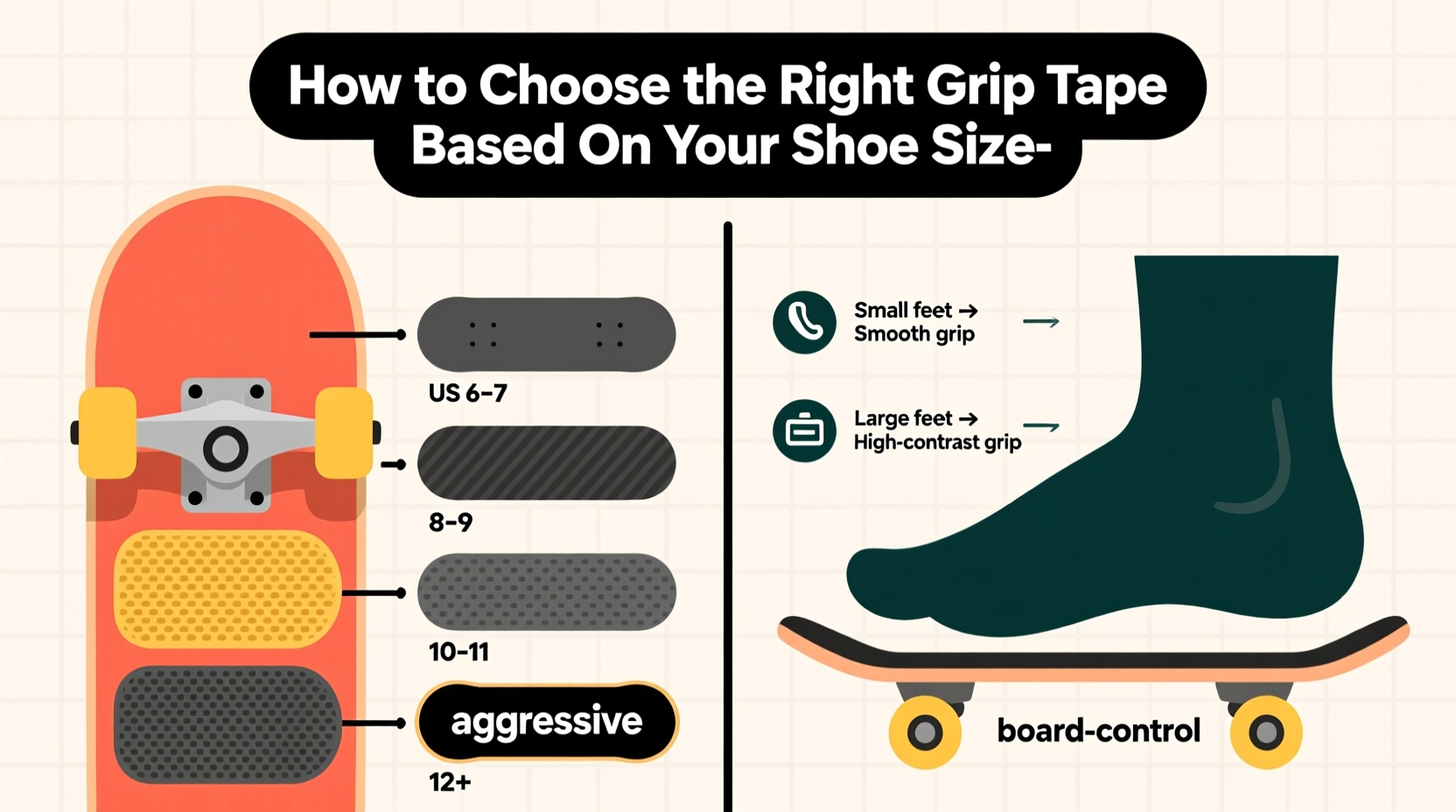
Your shoe size influences two key aspects of grip tape performance: surface contact area and pressure distribution. Skaters with larger shoe sizes (US 10 and above) naturally cover more deck space. Their stance tends to span wider, especially if they skate with a natural or slightly wide stance. Without sufficient grip coverage, parts of their soles may rest on the bare wood, creating inconsistent traction and increasing the risk of slipping mid-trick.
Conversely, skaters with smaller shoe sizes (US 7 and below) often have more centralized foot placement. They may not need full-deck coverage and could prefer tighter textures that allow subtle adjustments without excessive friction. Over-gripping can feel abrasive or overly sticky for lighter or smaller-footed riders, making flip tricks harder to execute smoothly.
The goal is balance: enough grip to maintain control, but not so much that it hinders movement or causes premature wear on your shoes. Shoe size acts as a baseline for determining how much deck surface needs to be covered and what kind of grit will complement your foot shape and skating dynamics.
Tip: Measure your shoe’s sole width at the ball of the foot and compare it to your deck’s width to estimate grip coverage needs.Matching Grip Tape Width to Deck and Foot Size
The standard skateboard deck ranges from 7.5” to 8.5” in width, with some specialty boards going up to 8.75” or wider. Grip tape typically comes pre-cut to match these widths. However, choosing the correct width isn’t just about fitting the deck—it’s about ensuring your entire sole makes consistent contact with the grippy surface.
As a general rule:
- Shoe size US 6–8: Works well with decks 7.75”–8.0”. Standard 8” grip tape provides ample coverage without excess overhang.
- Shoe size US 9–11: Best paired with 8.0”–8.5” decks. Opt for full-width 8.25” or 8.5” grip tape to prevent heel drag and improve stability.
- Shoe size US 12+: Consider decks 8.25” or wider. Use oversized grip tape (8.5”+) to minimize exposed wood and enhance foot security.
If you're using a narrower deck than ideal for your shoe size, you might compensate by applying grip tape slightly beyond the nose and tail edges—but only if structural integrity allows. Some skaters trim excess tape cleanly for a custom fit, though factory-cut options are usually sufficient.
| Shoe Size (US) | Recommended Deck Width | Suggested Grip Tape Width | Common Issues if Mismatched |
|---|---|---|---|
| 6–8 | 7.75\"–8.0\" | 8.0\" | Over-gripping, stiff feel, reduced pop sensitivity |
| 9–11 | 8.0\"–8.5\" | 8.25\"–8.5\" | Heel overhang, loss of rear-foot control |
| 12+ | 8.25\"+ | 8.5\"+ or custom cut | Slipping off deck, inconsistent landings |
Texture and Grit: How Shoe Size Influences Feel
Grip tape comes in various grit levels—fine, medium, coarse, and extra-coarse—each suited to different riding styles and preferences. But shoe size plays a subtle yet important role here too. Larger soles exert more downward force across the deck, meaning coarser grit can be managed without sacrificing shoe longevity. Smaller feet apply less pressure, so ultra-coarse textures may feel excessively abrasive and accelerate wear on lightweight sneakers.
For example, a skater wearing US size 13 likely has a heavier footprint and benefits from aggressive grip like Mob Extra Coarse or Jessup Double Piss. These provide maximum traction during high-impact landings and slides. In contrast, a size 7 wearer might find such tapes too harsh, opting instead for Medium or Fine grip like Shake Junt Light or OJ Smooth for better board feel and smoother flicks.
Additionally, tread pattern matters. Some tapes feature perforated designs or directional grooves that channel moisture or reduce weight. Larger-footed skaters may appreciate perforations for breathability during long sessions, while precision-focused street skaters with smaller feet often prefer solid, uninterrupted surfaces for consistent feedback.
“Foot size changes how you interact with the board. It’s not just about standing on it—it’s about how the energy transfers from your body through your shoes into the deck. The right grip tape completes that circuit.” — Derek Lang, Skateboard Design Consultant at BoardForm Labs
Step-by-Step Guide to Choosing Your Ideal Grip Tape
Follow this process to select the most compatible grip tape based on your shoe size and skating habits:
- Measure your shoe’s sole width at the widest point (ball of foot). Use a ruler or measuring tape for accuracy.
- Determine your deck width and confirm whether it aligns with recommended standards for your shoe size.
- Evaluate your skating style: Street skaters may prefer medium-to-fine grip for better pop and flick control; transition or vert skaters often favor coarse grip for enhanced hold during drops and grinds.
- Select grip tape width that matches or slightly exceeds your deck width, ensuring full coverage where your heels and toes rest.
- Choose grit level based on feel: Test samples if possible. If unavailable, start with medium grit and adjust based on performance and shoe wear after a few weeks.
- Install carefully, avoiding bubbles and trimming edges flush with the deck. Poor application negates even the best selection.
- Monitor wear patterns over time. Uneven peeling or smooth spots indicate misalignment between foot placement and grip coverage.
Real-World Example: Matching Grip to Foot Size
Consider Marcus, a 6'2\" skater who wears US size 12 shoes. He started skating on an 8.0” deck with standard 8.0” grip tape. Despite good technique, he struggled with consistent tail control on kickflips and often caught his heel on rough pavement during manuals. After analyzing his stance, he realized his heel extended slightly past the taped area, leaving part of his sole on bare wood.
He upgraded to an 8.38” deck and applied 8.5” Mob Grip tape. The additional coverage gave him full sole contact, improving balance and reducing unintended slips. He also switched to Mob Medium, finding that extra-coarse was unnecessarily harsh on his shoes. Within two weeks, his landing consistency improved significantly, particularly on ollies and shove-its.
This case illustrates how small equipment adjustments—guided by physical attributes like shoe size—can yield measurable performance gains.
Checklist: Choosing Grip Tape Based on Shoe Size
- ☐ Measure your shoe sole width accurately
- ☐ Match deck width to shoe size using standard guidelines
- ☐ Select grip tape width equal to or greater than deck width
- ☐ Choose grit level appropriate for your foot pressure and style
- ☐ Avoid overhanging tape that curls or peels easily
- ☐ Install with proper tools to prevent bubbles or misalignment
- ☐ Reassess every 2–3 months based on wear patterns
Frequently Asked Questions
Does grip tape affect shoe durability?
Yes. Coarse grip tapes, especially those labeled “extra coarse” or “double piss,” accelerate outsole wear. Skaters with larger feet who apply more pressure should rotate shoes more frequently or opt for durable cup-soles. Using moderately abrasive grip can extend shoe life without sacrificing control.
Can I use smaller grip tape on a wide deck if I have small feet?
You can, but it’s not recommended. Even with small feet, riding on untaped wood increases the risk of slipping, especially when the deck gets wet or dusty. Full coverage ensures consistent texture underfoot and protects the deck from moisture damage. If you prefer less aggression, choose full-width fine-grit tape instead of downsizing.
Is there a universal grip tape for all shoe sizes?
No single tape suits everyone. While brands like Jessup or Mob offer popular middle-ground options (e.g., Jessup Standard), personalization based on foot size, weight, and skating discipline leads to better results. Think of grip tape like tires on a bike—what works for a commuter won’t suit a downhill racer.
Final Thoughts and Action Plan
Choosing the right grip tape based on shoe size is a practical step toward a more personalized and effective skateboard setup. It bridges the gap between biomechanics and equipment, allowing you to ride with confidence, control, and comfort. Whether you're a beginner dialing in your first board or an experienced skater refining your setup, taking foot size into account ensures no detail is left to chance.
Don’t assume that one-size-fits-all solutions apply here. Take the time to measure, test, and evaluate how your feet interact with the deck. Try different combinations of width and grit, track performance changes, and make informed upgrades. Small tweaks today can lead to smoother rides, cleaner tricks, and longer-lasting gear tomorrow.
💬 Have you adjusted your grip tape based on shoe size? Share your experience or ask questions in the comments—your insights could help others find their perfect setup.








