Running with flat feet doesn’t mean sacrificing performance or comfort. In fact, millions of runners worldwide have low or collapsed arches and still log miles efficiently—thanks to the right footwear. The key lies in understanding your foot mechanics and selecting a shoe that supports your unique biomechanics. Poorly chosen shoes can lead to overpronation, plantar fasciitis, shin splints, or knee pain, but the right pair enhances stability, alignment, and long-term joint health.
Flat feet, also known as pes planus, occur when the arches of the feet collapse during weight-bearing activities, causing the entire sole to come into near-complete contact with the ground. This structural variation affects how force is distributed through the foot and up the kinetic chain. While not inherently problematic, it often requires specific shoe features to prevent strain. Choosing the correct running shoe isn’t just about brand or style—it’s about function, fit, and informed decision-making.
Understanding Flat Feet and Overpronation
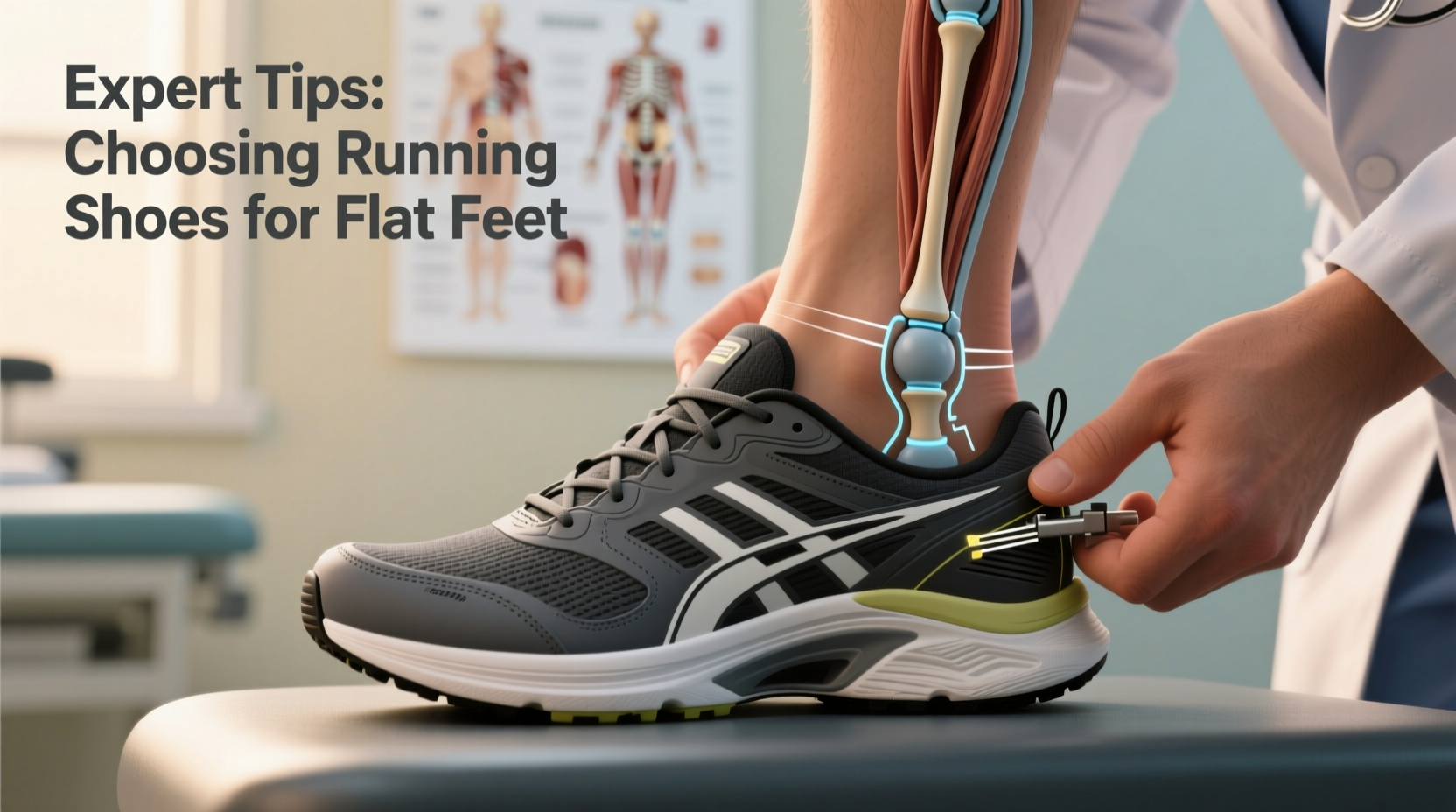
Flat feet are more than just a lack of visible arch. They’re often associated with excessive inward rolling of the foot—known as overpronation. When the foot rolls too far inward upon impact, it places added stress on tendons, ligaments, and joints from the ankle to the lower back. Over time, this misalignment can cause chronic discomfort or injury.
It’s important to distinguish between flexible and rigid flat feet:
- Flexible flat feet: The arch appears when non-weight-bearing (e.g., sitting or standing on tiptoes) but collapses under load. This is common and usually manageable with proper footwear.
- Rigid flat feet: The arch remains absent even when off the ground. This may stem from tarsal coalition or congenital conditions and might require medical evaluation.
According to Dr. Laura Chen, a sports podiatrist with over 15 years of clinical experience:
“Not all flat-footed runners need orthotics, but they do need structured support. The goal is to control motion, not restrict it entirely. A well-fitted stability or motion-control shoe can make a significant difference in injury prevention.” — Dr. Laura Chen, DPM, Sports Podiatry Specialist
Key Shoe Features for Flat-Footed Runners
The ideal running shoe for flat feet balances cushioning with firm support. It should guide the foot through a neutral gait cycle without forcing unnatural movement. Below are the essential design elements to look for:
1. Arch Support and Midsole Structure
A supportive midsole is critical. Shoes designed for flat feet typically include a dual-density foam or medial post—a firmer material on the inner side of the midsole that resists excessive inward roll. This subtle reinforcement helps align the foot and reduce overpronation.
2. Heel Counter Stability
The heel counter is the rigid cup at the back of the shoe that surrounds the heel. A firm, well-structured heel counter prevents the rearfoot from wobbling or collapsing inward. To test it, press your thumb into the back of the shoe; it should resist compression.
3. Firm, Dense Cushioning
While soft cushioning feels plush initially, it can break down quickly and worsen instability in flat-footed runners. Opt for shoes with firmer midsoles that maintain integrity over time. Look for terms like “dual-density EVA” or “compression-molded foam.”
4. Wide Base and Beveled Edges
A broader platform improves balance and weight distribution. Some models feature beveled or flared outsoles that promote smoother heel-to-toe transitions, reducing strain on the arch and Achilles tendon.
Tip: Avoid minimalist or maximalist shoes if you have flat feet. Minimalist shoes lack support, while overly cushioned maximalist models can destabilize already compromised arches.Step-by-Step Guide to Fitting Running Shoes with Flat Feet
Choosing the right shoe involves more than reading labels. Follow this proven process to ensure an accurate, personalized fit.
- Assess Your Gait Pattern
Visit a specialty running store that offers gait analysis. Many use pressure-sensitive treadmills or video slow-motion capture to evaluate how your foot strikes and rolls. This reveals whether you overpronate and to what degree. - Determine Your Foot Type
Perform the “wet test” at home: Wet the bottom of your foot and step onto a piece of cardboard. If you see a complete or nearly complete footprint, you likely have flat feet. - Try Shoes in the Late Afternoon
Your feet swell throughout the day. Always shop for running shoes later in the day when your feet are largest to avoid tightness during runs. - Wear Running Socks
Bring the socks you typically run in. Thick moisture-wicking socks affect volume and fit differently than dress socks. - Check the Fit Zones
- Toe box: You should have a thumb’s width (about ½ inch) between your longest toe and the end of the shoe.
- Width: No pinching on the sides. Your forefoot should feel secure but not compressed.
- Heel lock: The heel should sit snugly without slipping. Try walking up an incline to test stability.
- Arch contact: The shoe’s arch should align with your natural arch point, providing gentle support without digging in.
- Test Them Out
Run around the store or on a treadmill. Pay attention to any inward tipping, slippage, or pressure points. Don’t rely solely on first impressions—walk or jog for at least five minutes. - Consider Custom Orthotics (if needed)
If off-the-shelf shoes aren’t enough, consult a podiatrist about custom orthotics. These inserts can be paired with neutral or stability shoes to fine-tune support.
Top Shoe Categories for Flat Feet: Comparison Table
| Shoe Type | Best For | Key Features | Examples |
|---|---|---|---|
| Stability Shoes | Mild to moderate overpronation | Medial post, dual-density midsole, moderate cushioning | Brooks Adrenaline GTS, ASICS GT-2000, Saucony Guide |
| Motion Control Shoes | Severe overpronation or rigid flat feet | Firm heel counters, reinforced arches, rigid shanks | Brooks Beast, ASICS Gel-Kayano, New Balance 1540v3 |
| Structured Cushioned Shoes | Neutral runners with flexible flat feet | Balanced cushioning with mild support features | Hoka Arahi, Nike Structure, Mizuno Wave Inspire |
| Custom-Ready Neutral Shoes | Runners using orthotics | Removable insoles, deep heel cups, spacious interiors | Altra Provision, Brooks Ariel, Saucony Tempus |
Real Runner Case Study: From Pain to Performance
Mark T., a 38-year-old recreational runner from Portland, struggled with persistent shin splints and arch fatigue after starting a half-marathon training plan. Despite stretching and strengthening exercises, his symptoms worsened. He visited a local running lab for a gait analysis, where high-speed cameras revealed severe overpronation linked to his undiagnosed flexible flat feet.
The staff fitted him with a pair of Brooks Adrenaline GTS 22s—shoes featuring GuideRails technology and a DNA LOFT midsole. Within two weeks of switching, Mark reported reduced leg soreness and improved stride efficiency. After six weeks, he completed his first half-marathon pain-free.
“I didn’t realize how much my shoes were working against me,” Mark said. “Once I found the right support, everything clicked. It wasn’t just about comfort—it changed how I ran.”
Common Mistakes to Avoid
- Prioritizing style over function: Flashy designs don’t guarantee support. Focus on construction, not colorways.
- Buying based on price alone: Cheap shoes often lack the structural integrity needed for flat feet. Invest in quality.
- Ignoring professional advice: Sales staff at specialty stores are trained in biomechanics. Listen to their recommendations before defaulting to familiar brands.
- Assuming one shoe fits all: Your needs may change with mileage, age, or body weight. Reassess your footwear annually.
- Over-relying on inserts: Orthotics help, but they can’t fix a fundamentally unstable shoe. Start with a supportive base model.
Frequently Asked Questions
Can people with flat feet run barefoot or in minimalist shoes?
Generally, no. Minimalist shoes offer little to no arch support or heel structure, which can exacerbate overpronation and lead to injuries like plantar fasciitis or stress fractures. Barefoot running requires strong intrinsic foot muscles and excellent form—conditions most flat-footed individuals haven’t developed. Consult a physical therapist before attempting this transition.
Do I need orthotics if I have flat feet?
Not necessarily. Many flat-footed runners find sufficient support in stability or motion-control shoes. However, if you experience ongoing pain, uneven wear patterns on your soles, or have been prescribed orthotics by a podiatrist, adding custom inserts can enhance alignment and comfort. Off-the-shelf orthotics like SuperFeet or Powerstep can also provide extra support in neutral shoes.
Are there exercises that help flat feet?
Yes. Strengthening the posterior tibialis, intrinsic foot muscles, and glutes can improve dynamic arch control. Effective exercises include:
- Towel scrunches (using toes to pull a towel toward you)
- Heel raises with inward rotation (to engage the arch-lifting muscles)
- Short foot exercise (contracting the foot’s arch without curling toes)
- Barefoot balancing on uneven surfaces (like a foam pad)
Final Checklist Before Buying
- ✅ I’ve had a gait analysis or performed the wet test.
- ✅ I’m shopping in the afternoon with running socks.
- ✅ The shoe has a firm heel counter and medial support.
- ✅ There’s adequate space in the toe box (½ inch clearance).
- ✅ The arch feels supportive, not intrusive.
- ✅ I’ve tested the shoes with a short run or brisk walk.
- ✅ I know the return policy in case adjustments are needed.
Conclusion: Step Confidently Into Your Next Run
Choosing the right running shoes with flat feet isn’t guesswork—it’s a strategic decision rooted in biomechanics and personal experience. With the right combination of stability, fit, and informed selection, you can run longer, stronger, and with fewer setbacks. Don’t settle for discomfort or generic advice. Visit a specialty running store, ask questions, and prioritize function over fashion. Your feet carry you mile after mile; give them the foundation they deserve.
💬 Have a favorite flat-foot-friendly running shoe? Share your experience in the comments and help fellow runners find their perfect fit.








