
Selecting the right pair of running shoes isn’t just about brand preference or cushioning feel—it’s about biomechanics. One of the most critical factors in making an informed choice is understanding your foot arch type. Your arch influences how your foot strikes the ground, rolls through each step, and absorbs impact. Choosing a shoe that aligns with your arch can reduce the risk of overuse injuries, improve efficiency, and make every run more comfortable.
Yet, many runners buy shoes based on aesthetics, price, or word-of-mouth recommendations without considering their unique foot structure. This oversight often leads to shin splints, plantar fasciitis, knee pain, or persistent discomfort. The solution? Match your shoe support and stability features to your arch type—whether you have flat feet, high arches, or something in between.
Understanding Foot Arch Types
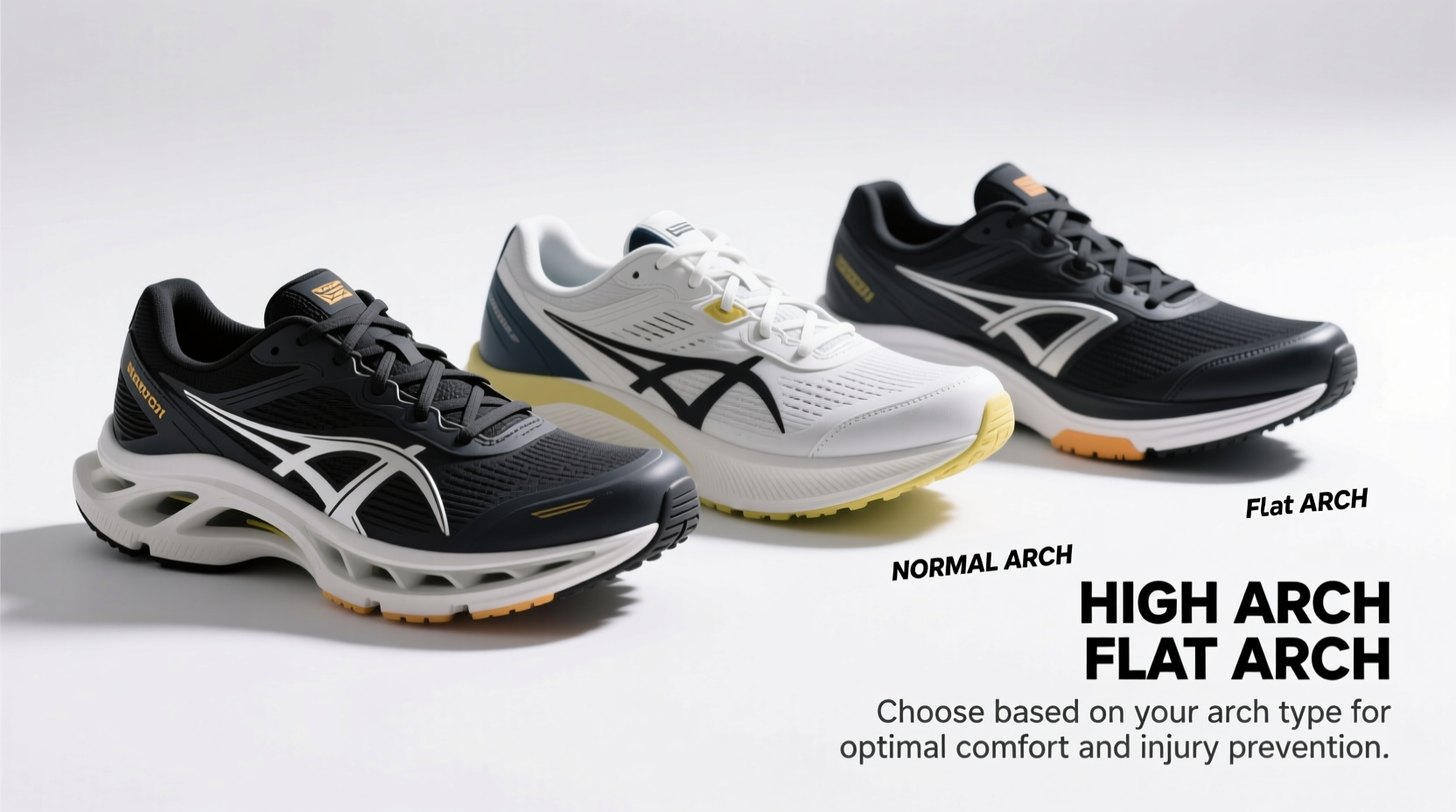
The human foot typically falls into one of three arch categories: low (flat), neutral (medium), or high. Each affects how weight is distributed during movement and determines how much pronation—or inward rolling of the foot—occurs upon landing.
- Low Arch (Flat Feet): The entire sole touches the ground or nearly so. These feet tend to overpronate, meaning they roll excessively inward, which can strain tendons and misalign joints.
- Neutral Arch: A balanced curve along the inner foot. These feet pronate slightly—a natural shock-absorbing motion—but return efficiently to a centered position.
- High Arch: A pronounced upward curve with little contact along the inner edge. High-arched feet underpronate (supinate), placing extra pressure on the ball and heel of the foot.
Knowing where you fall helps determine whether you need motion control, stability, or cushioned shoes. Misalignment between your arch and your footwear increases stress on muscles and ligaments, leading to long-term issues.
Tip: Perform a \"wet test\" at home: wet the bottom of your foot, step onto a piece of cardboard or paper, then examine the imprint. A full footprint suggests flat feet; a narrow band indicates high arches; a moderate curve points to neutral.Matching Shoes to Arch Type: What to Look For
Once you’ve identified your arch, the next step is selecting shoes engineered for that biomechanical profile. Manufacturers design different models with specific technologies—like medial posts, dual-density midsoles, or extra cushioning—to address the needs of each foot type.
| Arch Type | Recommended Shoe Category | Key Features | Common Brands & Models |
|---|---|---|---|
| Low (Flat) | Motion Control or Maximum Support | Firm midsole, structured heel counter, medial post to limit overpronation | Brooks Beast, ASICS Gel-Kayano, Saucony Guide |
| Neutral | Stability or Daily Trainer | Moderate arch support, balanced cushioning, slight guidance for mild pronation | Brooks Adrenaline GTS, Nike Structure, New Balance 860 |
| High | Cushioned or Neutral | Soft midsole, flexible build, superior shock absorption to compensate for rigidity | Hoka Clifton, Brooks Ghost, Adidas Solar Glide |
It’s important not to confuse cushioning with support. Cushioned shoes are designed to absorb impact but may lack structural reinforcement—ideal for high-arched runners who need soft landings but dangerous for flat-footed runners who require stability. Conversely, overly supportive shoes can restrict natural movement in high-arched feet, increasing pressure on smaller surface areas.
“Choosing a shoe that matches your arch isn’t optional if you want to run consistently without pain. It’s as essential as wearing a helmet when cycling.” — Dr. Lena Torres, Sports Podiatrist, University of Colorado Anschutz Medical Campus
Step-by-Step Guide to Finding Your Perfect Fit
Follow this process to ensure your running shoes match both your arch and lifestyle:
- Determine your arch type. Use the wet test or visit a specialty running store for a gait analysis. Some clinics offer pressure mapping systems for precise assessment.
- Visit a running specialty store. Staff trained in biomechanics can observe your stride, assess wear patterns on old shoes, and recommend appropriate models.
- Try shoes later in the day. Feet swell during activity and throughout the day. Shop in the evening for the most accurate fit.
- Wear your typical running socks. Bring the socks you usually train in to ensure proper volume and friction testing.
- Test them on a treadmill or track. Walk or jog briefly in-store. Pay attention to heel slippage, toe-box space, and overall comfort—not just initial softness.
- Evaluate midfoot containment. The shoe should hug the midfoot snugly without pinching. There should be about a thumb’s width between your longest toe and the end of the shoe.
- Check flexibility at the forefoot. Bend the shoe near the toes—it should flex easily where your foot bends, not in the middle.
Real Runner Case Study: From Pain to PRs
Mark R., a recreational runner from Portland, struggled with chronic knee pain after increasing his weekly mileage. He had been using lightweight, highly cushioned shoes because “they felt soft,” despite having flat feet and noticeable overpronation.
After visiting a local running clinic, a video gait analysis revealed excessive internal rotation in his lower leg caused by inadequate arch support. He switched to a structured stability shoe—the Brooks Adrenaline GTS—with a guide rail system and firm medial post.
Within three weeks, his knee discomfort diminished. By week six, he completed his first half-marathon without pain and shaved seven minutes off his previous time. His experience underscores how critical arch-appropriate footwear is—not just for injury prevention, but for performance gains.
Common Mistakes to Avoid
Even well-intentioned runners make errors when selecting footwear. Here are frequent pitfalls and how to avoid them:
- Assuming all brands fit the same. Last shapes vary significantly between manufacturers. A size 10 in Asics may feel narrower than a size 10 in New Balance.
- Prioritizing looks over function. Bright colors and sleek designs don’t protect your joints. Focus on engineering, not aesthetics.
- Ignoring past injury history. If you’ve had plantar fasciitis, Achilles issues, or IT band syndrome, your shoe choice should reflect corrective needs, not just current comfort.
- Buying online without prior fitting. While convenient, ordering without trying first risks mismatched support. At minimum, test the model in-store before purchasing online.
- Using running shoes for cross-training or gym work. Running shoes are built for forward motion. Lateral movements in HIIT or weightlifting can destabilize them, especially stability models.
Expert Checklist: Before You Buy
Use this checklist to verify your potential running shoes meet biomechanical and comfort standards:
- ✅ Confirmed my arch type via wet test or professional analysis
- ✅ Selected a shoe category (motion control, stability, neutral) aligned with my arch
- ✅ Tried shoes on with running socks in the afternoon
- ✅ Ensured no heel slippage or pressure points on bunions or hammertoes
- ✅ Verified adequate toe box space (thumb-width clearance)
- ✅ Tested flexibility—shoe bends at the forefoot, not midsole
- ✅ Felt stable during walking/jogging trial—no inward or outward tipping
- ✅ Compared multiple models within recommended category
- ✅ Checked return policy in case adjustments are needed after short runs
Frequently Asked Questions
Can I use orthotics with any running shoe?
Yes, but consider the shoe’s internal design. Many stability and motion control shoes come with removable insoles to accommodate custom orthotics. High-arched runners using cushioned models often benefit from added arch support inserts. Always test the combination in-store to ensure fit remains secure and doesn’t compress the toe box.
Do arch types change over time?
They can. Aging, weight fluctuations, pregnancy, and prolonged standing may flatten arches over time. Runners who once wore neutral shoes might develop overpronation later in life. Reassess your foot type every 1–2 years, especially if experiencing new discomfort.
Are barefoot or minimalist shoes suitable for all arch types?
No. Minimalist shoes lack support and cushioning, making them risky for flat-footed or high-arched individuals. They’re best suited for those with strong intrinsic foot muscles and neutral mechanics. Transitioning requires gradual adaptation and is not advised for runners with existing biomechanical issues.
Final Thoughts: Invest in Your Foundation
Your feet are the foundation of every run. Just as a house built on unstable ground eventually shows cracks, a body moving on improperly supported feet will develop strain, inefficiency, and pain. Choosing running shoes based on your foot arch type isn’t a minor detail—it’s foundational to sustainable running.
Take the time to understand your biomechanics. Seek expert input when unsure. Prioritize function, fit, and long-term health over trends or marketing claims. When your shoes work *with* your feet instead of against them, running becomes easier, faster, and more enjoyable.
💬 Have you discovered your arch type and found your ideal shoe match? Share your story or questions in the comments—your experience could help another runner find relief and confidence in every stride.








