Flat feet affect millions of hikers worldwide, yet many still struggle to find footwear that balances comfort, stability, and aesthetics. The outdated belief that supportive hiking boots must be bulky or unattractive no longer holds true. Today’s market offers a growing selection of stylish, high-performance hiking boots engineered specifically for low arches. Choosing the right pair isn’t about compromise—it’s about knowing what features matter most and where to look.
Without proper support, flat-footed hikers risk overpronation, plantar fasciitis, shin splints, and knee strain. But equally important is feeling confident in your gear. When your boots reflect your personal style, you’re more likely to wear them consistently and enjoy every trail. This guide breaks down exactly how to select hiking boots that deliver both biomechanical support and modern design appeal.
Understanding Flat Feet and Hiking Demands
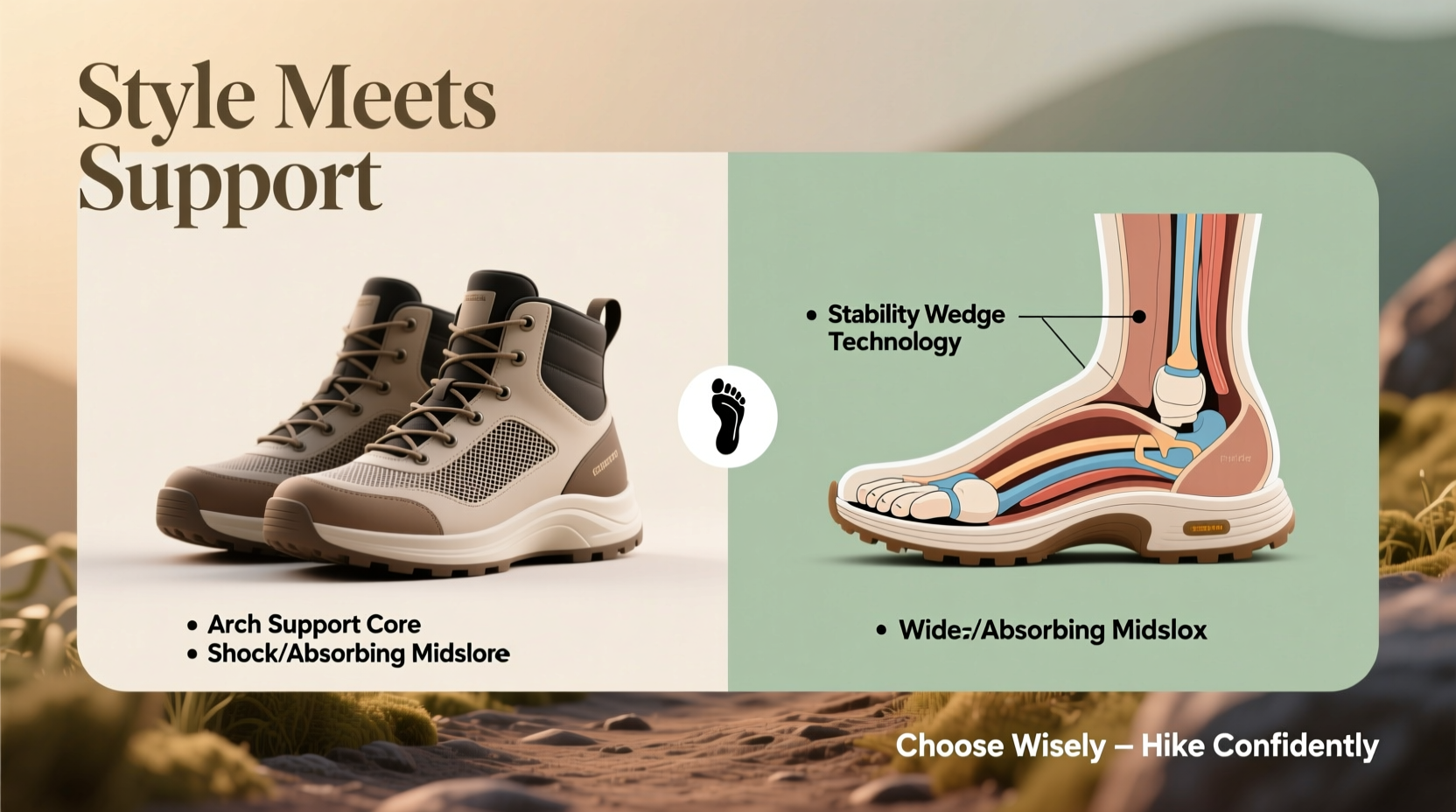
Flat feet, or fallen arches, occur when the entire sole of the foot makes full or near-full contact with the ground. This condition affects the foot’s natural shock absorption and can lead to inward rolling (overpronation) during movement. On uneven terrain, this instability increases fatigue and injury risk.
Hiking amplifies these challenges. Steep ascents, loose gravel, and wet surfaces demand precise balance and lateral support. A boot designed for neutral arches may lack the structural reinforcement needed to stabilize a flat foot under load. That’s why specialized construction—not just cushioning—is essential.
“People with flat feet need motion control and rearfoot stability, not just soft padding. The right boot acts like an extension of the foot’s natural mechanics.” — Dr. Lena Torres, Podiatrist & Outdoor Enthusiast
Modern hiking boots for flat feet incorporate advanced midsole geometries, dual-density foams, and heel counters that correct alignment without rigidity. These innovations allow manufacturers to maintain sleek silhouettes while improving function. Style no longer has to be sacrificed at the altar of support.
Key Features to Look For
Selecting the ideal hiking boot starts with understanding the technical elements that benefit flat feet. Prioritize these five core components:
- Firm Heel Counter: A rigid structure around the heel cup prevents excessive inward collapse and keeps the ankle aligned.
- Structured Arch Support: Built-in medial support reduces overpronation. Removable insoles allow customization with orthotics if needed.
- Stiff Midsole: A moderate to firm flex pattern supports the longitudinal arch and improves energy transfer on long hikes.
- Wide Base & Stable Platform: A broader outsole enhances balance on rocky trails and reduces ankle roll.
- Secure Fit Through Midfoot: Lacing systems that lock down the midfoot prevent slippage and maintain consistent support.
Avoid boots marketed purely on cushioning alone. Excessive softness without structural integrity can worsen instability. Instead, seek models labeled “motion control,” “stability,” or “overpronation support.” These terms indicate intentional engineering for biomechanical correction.
Style Without Compromise: Modern Design Trends
Gone are the days when supportive boots meant boxy shapes and industrial aesthetics. Brands now integrate performance technology into sleek, contemporary designs. Consider these aesthetic advancements:
- Streamlined Silhouettes: Manufacturers use contoured lasts and precision stitching to reduce bulk while maintaining internal support.
- Urban-Inspired Colorways: Earth tones, minimalist greys, and muted pastels make boots suitable for town-to-trail versatility.
- Refined Materials: Suede uppers, waxed nubuck, and textile blends offer texture and visual interest without sacrificing durability.
- Low-Profile Outsoles: Aggressive lugs are now molded with cleaner patterns that provide grip without adding visual weight.
Brands like Salomon, Lowa, Keen, and Hoka have led the charge in blending athletic styling with medical-grade support. Their collaborations with podiatrists and biomechanics labs ensure that form follows function—without either being an afterthought.
Step-by-Step Guide to Choosing Your Boots
Follow this six-step process to find a boot that fits your feet and your fashion sense:
- Assess Your Foot Type: Wet test your foot at home—step onto a brown paper bag with a damp sole. If the imprint shows nearly the full outline, you likely have flat feet.
- Measure Late in the Day: Feet swell after activity. Visit a specialty outdoor retailer in the evening for accurate sizing.
- Try Multiple Brands: Each brand uses different lasts. Salomon tends to run narrow; Keen offers wider toe boxes. Sample at least three models.
- Wear Hiking Socks: Bring the socks you plan to hike in. Thick wool blends change fit dynamics significantly.
- Test on Inclines: Walk on a ramp or stairs in the store. Pay attention to heel slip, arch pressure, and ankle mobility.
- Evaluate Off-Trail Appeal: Ask yourself: Would I wear these to a café after a morning hike? If yes, you’ve found a style-compatible match.
Top Boots That Combine Support and Style
The following models are frequently recommended by podiatrists and outdoor editors alike for their blend of biomechanical support and contemporary design.
| Boot Model | Support Features | Style Highlights | Best For |
|---|---|---|---|
| Salomon Quest 4 GTX | Advanced Chassis system, EVA midsole, heel counter | Sleek lines, urban color options, minimalist branding | All-season backpacking |
| Lowa Renegade GTX Mid | PU midsole, torsion stability, anatomical last | Classic hiker profile with premium leather finish | Day hikes & light trails |
| Keen Targhee III Waterproof | Dual-density EVA, stability shank, wide forefoot | Bold toe bumper, earthy tones, rugged-chic look | Wet conditions & wide feet |
| Hoka Anacapa Mid GTX | Meta-Rocker geometry, early-stage meta ramp, compression molding | Chunky sneaker aesthetic, lifestyle-friendly design | Trend-conscious hikers |
| Merrell Moab 3 Ventilator | Vibram® TC5+ outsole, contoured footbed, nylon arch shank | Casual look, breathable mesh, versatile colors | Beginners & warm climates |
Note: While all these models suit flat feet, individual needs vary. Those requiring custom orthotics should prioritize removable insoles and extra depth. Hoka and Keen generally offer the most internal volume for inserts.
Real-World Example: Sarah’s Trail Transformation
Sarah, a 34-year-old graphic designer from Portland, avoided hiking for years due to chronic foot pain. She assumed supportive boots would clash with her minimalist wardrobe. After developing plantar fasciitis, she consulted a sports podiatrist who recommended trying the Hoka Anacapa Mid GTX.
Initially skeptical of the “maximalist” look, Sarah was surprised by how easily the boots paired with her cropped pants and field jacket. More importantly, the Meta-Rocker design reduced strain on her arches during a weekend trek in the Columbia River Gorge. She completed a 7-mile loop with no post-hike soreness—the first time in years.
“I didn’t realize support could feel this natural,” she said. “Now I pack my boots for weekend getaways even when I’m not sure I’ll hike. They’ve become part of my rotation.”
Checklist: Picking Stylish, Supportive Hiking Boots
Use this checklist before purchasing to ensure you’re making a smart, lasting choice:
- ✅ Confirm your foot type with a wet test or professional scan
- ✅ Prioritize motion control and heel stability over plush cushioning
- ✅ Choose a model with a removable insole for orthotic compatibility
- ✅ Test fit in the afternoon with hiking socks
- ✅ Evaluate the boot’s appearance off-trail—would you wear it casually?
- ✅ Check return policy in case the break-in period reveals issues
- ✅ Research brand reputation for durability and customer service
Frequently Asked Questions
Can I use orthotics with stylish hiking boots?
Yes—many modern hiking boots are designed with orthotic-friendly interiors. Look for models with removable insoles and deep heel cups. Brands like Allbirds Tree Trekker and Dunham offer hybrid hiking-lifestyle boots explicitly built for insert compatibility.
Are minimalist or barefoot-style boots suitable for flat feet?
Generally, no. Minimalist boots lack the structured support needed to manage overpronation. They may increase injury risk for flat-footed individuals. If you're drawn to zero-drop designs, consult a physical therapist first and consider a gradual transition program.
How often should I replace my hiking boots if I have flat feet?
Every 300–500 miles, or sooner if you notice uneven sole wear, loss of arch support, or increased foot fatigue. Flat-footed hikers often wear down the inner edge of the outsole faster. Regular inspection helps prevent overuse injuries.
Final Thoughts: Confidence Starts from the Ground Up
Your boots are more than gear—they’re the foundation of every adventure. For flat-footed hikers, choosing the right pair means aligning medical necessity with personal expression. Today’s best hiking boots prove that support doesn’t require sacrificing aesthetics. With thoughtful selection, you can step onto the trail feeling stable, comfortable, and stylish.
The next time you lace up, let your boots reflect who you are: someone who values both performance and presence. Whether you're summiting a ridge or strolling through a mountain town, your footwear should empower every step—without compromise.
💬 Found your perfect pair? Share your go-to hiking boots for flat feet in the comments and help others discover stylish, supportive options!








