When decorating a compact living room, hallway, or studio apartment, every inch counts. The holiday season brings the joy of decorating, but it also presents a unique challenge: finding a Christmas tree that fits both your space and your aesthetic. Two popular options—slim pine trees and full flocked trees—are often compared, but they serve very different purposes, especially in tight quarters. Understanding their structural differences, visual impact, and practical considerations can help you make an informed decision that enhances your home without overwhelming it.
Understanding the Key Differences
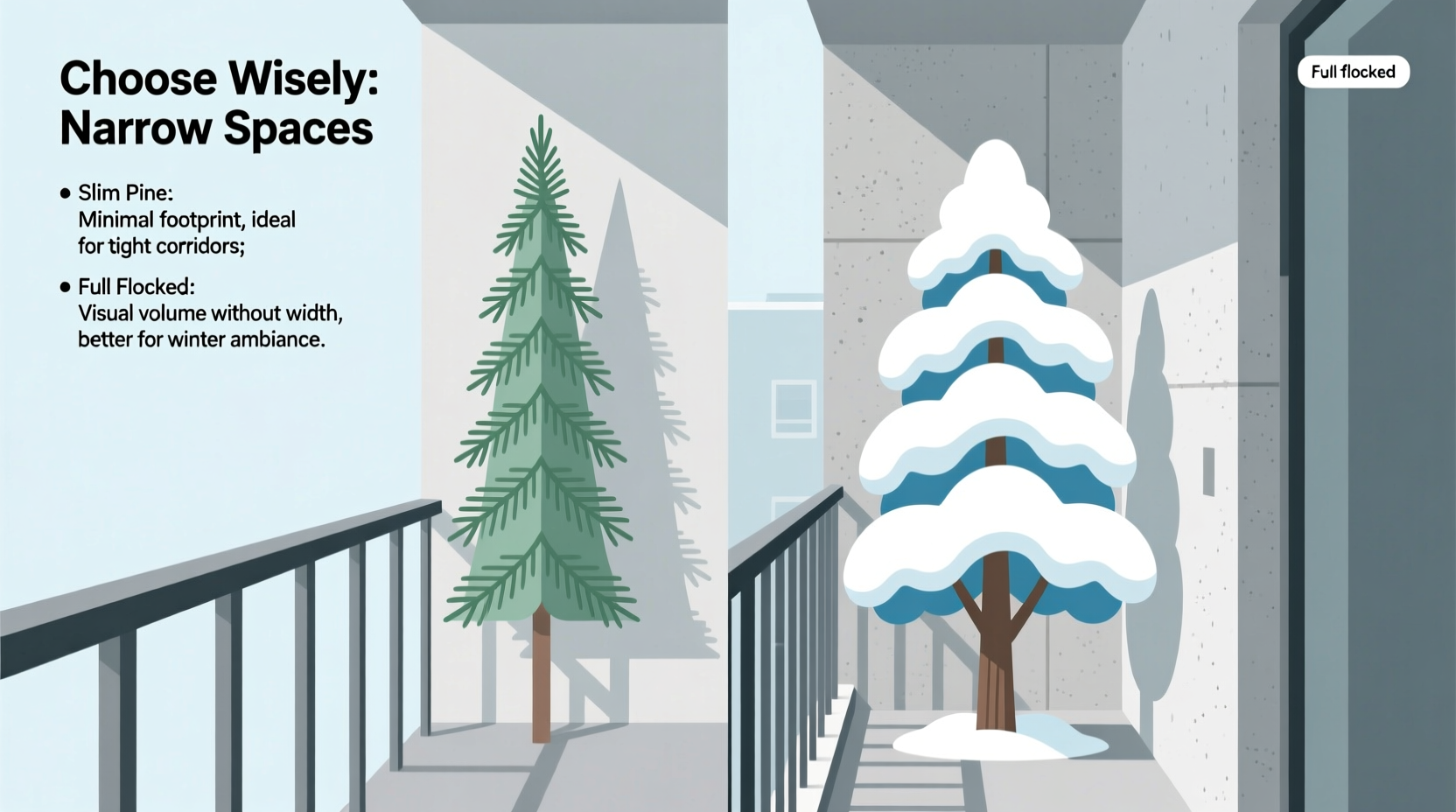
Before diving into selection criteria, it’s essential to understand what sets slim pine and full flocked trees apart. These are not just variations in color or texture—they represent fundamentally different design philosophies.
Slim pine trees are engineered for space efficiency. Typically ranging from 10 to 30 inches in diameter at the base, they maintain a tall, narrow profile while still delivering a natural evergreen look. They’re ideal for corners, hallways, or rooms where floor space is limited. Most models feature realistic PVC or PE needles arranged to mimic the organic spread of a real pine, though with a much more restrained footprint.
Full flocked trees, on the other hand, are known for their lush, snow-dusted appearance. Flocking refers to the white powder applied to branches to simulate freshly fallen snow. These trees are generally fuller and wider, often exceeding 40 inches in diameter even in smaller heights. Their visual weight is substantial, creating a dramatic, traditional winter scene—but this comes at the cost of spatial demand.
The core trade-off is clear: slim pine trees prioritize function and fit, while full flocked trees emphasize ambiance and tradition. In narrow spaces, choosing incorrectly can result in a cramped, cluttered feel or a tree that dominates the room disproportionately.
Tip: Measure your available space before browsing—note both width and ceiling height. Leave at least 6 inches of clearance on all sides for balance and safety.Space Efficiency: How Each Tree Fits Into Tight Areas
For homes with limited square footage, spatial compatibility is non-negotiable. A tree that looks stunning in a catalog might become a navigational hazard in a 10x12 living room.
Slim pine trees typically range from 7.5 to 12 feet tall but maintain a diameter of just 20–30 inches. This allows them to nestle into corners, flank doorways, or stand beside furniture without blocking pathways. Their vertical emphasis draws the eye upward, enhancing the perception of height in low-ceilinged rooms. Many models come with hinged branches that fold flat for storage, making them ideal for renters or seasonal decorators with limited closet space.
Full flocked trees, even in “narrow” versions, tend to have a broader silhouette. A 7.5-foot flocked tree may have a 45-inch spread, consuming nearly four square feet of floor space. While some brands offer “slim flocked” variants, true flocking adds volume—both visually and physically—because the white coating makes each branch appear denser. In a hallway less than 5 feet wide, such a tree can create a tunnel effect, disrupting flow and making the space feel congested.
Consider traffic patterns. Will the tree obstruct access to a kitchen, bathroom, or bedroom? Can people pass by comfortably when seated on adjacent furniture? A slim pine tree rarely interferes, whereas a full flocked tree may require reconfiguring the entire room layout.
Structural Comparison Table
| Feature | Slim Pine Tree | Full Flocked Tree |
|---|---|---|
| Typical Base Diameter | 20–30 inches | 36–50 inches |
| Height Range | 6–12 feet | 6–9 feet (rarely taller) |
| Floor Space Used | 3–5 sq ft | 8–14 sq ft |
| Visual Weight | Light, airy | Heavy, dramatic |
| Ideal Room Size | Small to medium (under 200 sq ft) | Large (over 300 sq ft) |
| Storage Size | Compact, often collapsible | Bulkier due to flocking and density |
Aesthetic Impact and Decorative Flexibility
Beyond measurements, the look and feel of each tree influence the overall mood of your space. Aesthetics matter—not just for personal enjoyment, but for maintaining harmony in a small environment.
Slim pine trees offer a minimalist, modern appeal. Their clean lines and restrained volume allow ornaments to take center stage. Because there’s less visual competition, even simple decorations like glass balls or string lights can appear elegant. They pair well with contemporary interiors—white walls, metallic finishes, and neutral palettes—without clashing. Some models include built-in LED lighting, further reducing the need for additional decor layers.
Full flocked trees evoke nostalgia and grandeur. The snowy finish creates a storybook atmosphere, especially when paired with warm white lights and rustic ornaments. However, in a narrow space, this richness can become overwhelming. Too much visual texture in a confined area leads to sensory clutter. What reads as cozy in a cabin can feel oppressive in a city apartment.
That said, a well-chosen flocked tree can work in tighter spaces—if scaled appropriately. A 6-foot flocked tree with a 36-inch base may fit if placed strategically and decorated sparingly. The key is restraint: use fewer, larger ornaments and avoid overcrowding branches. Let the flocking itself be the primary decoration.
“Balance is everything in small-space decorating. A flocked tree can be magical, but only if it doesn’t dominate the room. Think of it as a centerpiece, not a takeover.” — Lena Pruitt, Interior Designer & Holiday Stylist
Step-by-Step Guide: Choosing the Right Tree for Your Space
Selecting the best tree isn’t just about preference—it’s a process rooted in measurement, lifestyle, and long-term usability. Follow these steps to make a confident choice.
- Measure Your Space: Use a tape measure to record the width, depth, and height of your intended display area. Note nearby furniture, door swings, and walkways.
- Determine Clearance Needs: Allow at least 6 inches on all sides for visual breathing room and safety. If placing near a heat source, follow fire code guidelines (usually 3 feet).
- Assess Your Decor Style: Do you prefer modern minimalism or traditional warmth? Take photos of your room to compare later with product images.
- Check Storage Capacity: Where will you store the tree off-season? Slim pine trees often come in carry bags; flocked trees may require large bins and careful handling to preserve the flocking.
- Review Assembly Time: Slim trees with hinged branches assemble faster. Flocked trees may require fluffing each branch to avoid clumping, which increases setup time.
- Compare Lighting Options: Built-in LEDs save time and reduce cord clutter. Ensure the light color complements your room—warm white for cozy spaces, cool white for modern ones.
- Read Real User Reviews: Look for feedback on durability, ease of assembly, and actual size versus expectations. Many shoppers report flocked trees appearing “much larger in person.”
Real-Life Example: Decorating a Studio Apartment
Maria, a graphic designer in Brooklyn, lives in a 450-square-foot studio where her living area doubles as a workspace. She wanted a holiday tree but worried about losing functional space. After measuring her corner spot—just 28 inches wide—she ruled out any tree over 30 inches in diameter.
She considered a 7-foot flocked tree she saw online but hesitated after reading reviews noting its “bulky feel.” Instead, she chose a 7.5-foot slim pine tree with frosted tips—a compromise that gave her a wintery look without sacrificing space. The tree fit perfectly in the corner behind her sofa, and its narrow profile allowed her to keep her side table and floor lamp in place.
By using monochromatic silver ornaments and warm string lights, she created a festive yet sophisticated display. “It feels special without taking over my life,” she said. “I can still walk around freely, and my cat doesn’t knock things over.”
Tip: Use mirrored surfaces or reflective decor near a slim tree to amplify its presence without adding physical bulk.Long-Term Considerations: Durability and Maintenance
Your tree should last for years, not just one season. Consider how each type holds up over time.
Slim pine trees, especially those made with high-quality PE (polyethylene) needles, resist flattening and retain their shape well. Their simpler structure means fewer points of failure. Cleaning involves light dusting or wiping with a microfiber cloth. Because they’re less dense, pet hair and debris are easier to remove.
Full flocked trees require more care. The flocking material can degrade over time, especially if exposed to humidity or direct sunlight. It may shed, leaving white residue on floors and furniture. Avoid vacuuming directly on flocked branches—use a soft brush attachment on low suction. Store in a dry, climate-controlled space to prevent moisture damage.
If you have pets or children, consider that flocking is not always non-toxic. While most modern trees use safe materials, ingestion risks exist if flakes break off. Slim pine trees, particularly uncoated ones, pose fewer health concerns in active households.
Checklist: Final Decision-Making Guide
- ✅ Measured available space (width, height, clearance)
- ✅ Confirmed storage space for off-season
- ✅ Determined preferred aesthetic (minimalist vs. traditional)
- ✅ Checked tree diameter against room dimensions
- ✅ Verified lighting preferences (built-in, color, brightness)
- ✅ Reviewed care requirements and shedding potential
- ✅ Considered household factors (pets, kids, allergies)
- ✅ Read verified customer reviews for real-world insights
Frequently Asked Questions
Can I use a full flocked tree in a narrow hallway?
It’s possible, but not ideal. A hallway under 4 feet wide will likely feel blocked by a standard flocked tree. If you proceed, choose a tree no wider than 36 inches and limit decorations to avoid visual overload. Consider a tabletop version instead.
Do slim pine trees look fake?
Higher-end models with mixed needle types (PVC and PE) and varied branch lengths look remarkably realistic. Look for terms like “lifelike tips,” “dual-tone needles,” or “realistic trunk” in product descriptions. Avoid budget models with uniform green coloring and stiff branches.
Is flocking difficult to maintain?
Yes, compared to unflocked trees. Flocking can crack, fade, or shed over time, especially in dry or humid environments. It requires gentle cleaning and careful storage. If low maintenance is a priority, a slim pine tree is the better long-term choice.
Make the Right Choice for Your Home
Choosing between a slim pine and a full flocked tree isn’t just about personal taste—it’s about respecting the limits and possibilities of your space. In narrow environments, functionality must guide aesthetics. A slim pine tree offers elegance, efficiency, and adaptability, making it the smarter choice for most compact homes. A full flocked tree, while beautiful, belongs in spacious settings where its grandeur can breathe.
You don’t need a large room to celebrate the season meaningfully. With thoughtful planning, the right tree can bring warmth, tradition, and beauty into even the smallest corner. Measure carefully, prioritize usability, and let your space inspire—not limit—your holiday spirit.
💬 Have a narrow space success story? Share how you styled your slim tree or adapted a flocked one—we’d love to hear your creative solutions!








