There’s a quiet revolution happening at the edge of campgrounds and between festival stages: the rise of the intentional drinker. No longer satisfied with lukewarm beer in a plastic cup or pre-mixed cans that sacrifice flavor for convenience, savvy travelers are crafting bar-quality cocktails — shaken, stirred, and served — miles from the nearest liquor store. But doing it well demands more than enthusiasm. It requires thoughtful design: weight-conscious gear, leak-proof systems, ingredient stability, and real-world resilience. This isn’t about packing a mini-bar into your backpack — it’s about engineering a functional, joyful, and *responsible* drinking system for life outdoors.
Why a Purpose-Built Kit Beats Improvisation
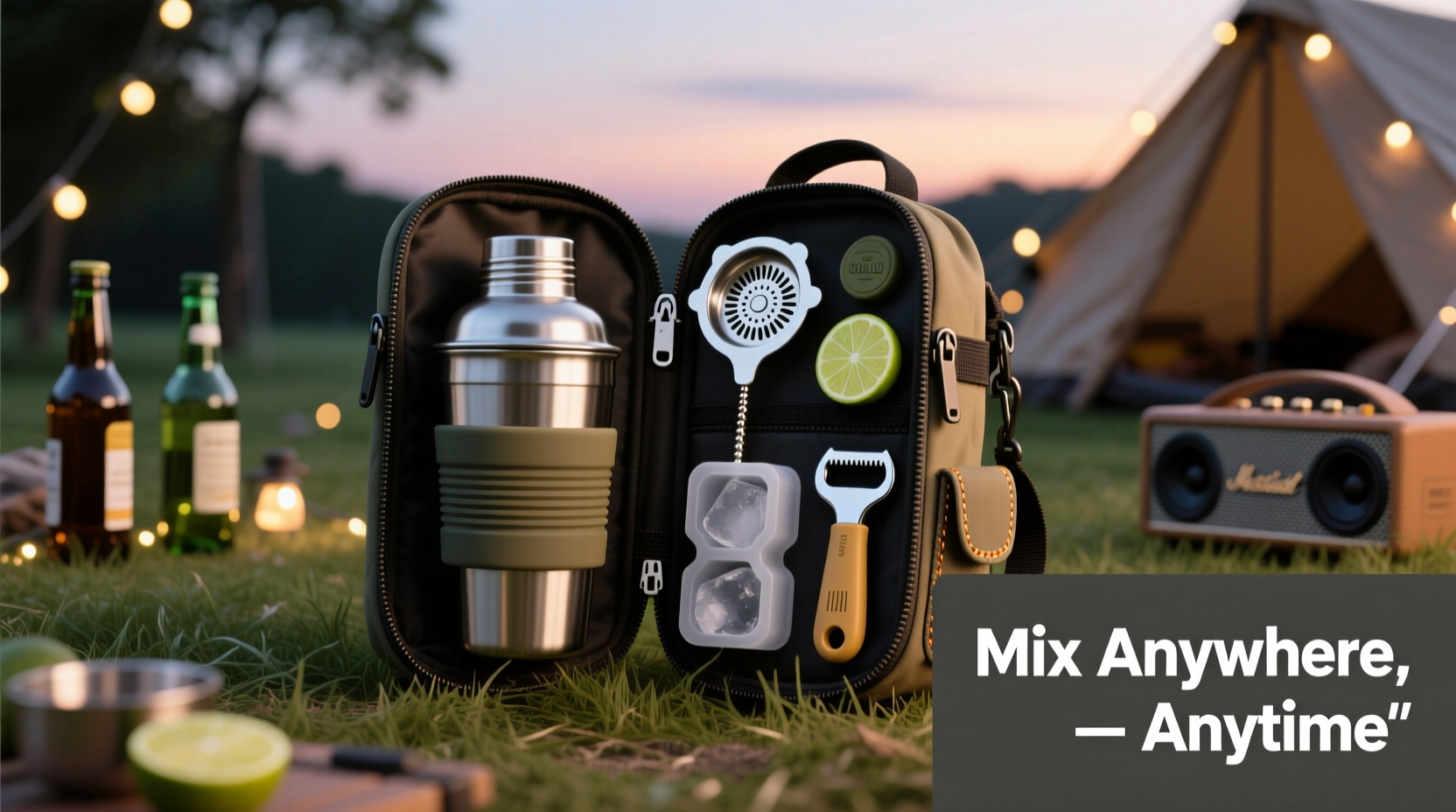
Most festival-goers start with a half-empty bottle of tequila and a lemon wedge wrapped in foil. Within hours, the citrus dries out, the bottle leaks in their pack, and the “margarita” becomes a lukewarm, overly salty slurry. Camping adds new variables: temperature swings, dust, limited water access, and the need to pack everything out. A purpose-built kit solves these problems before they arise — not by adding complexity, but by eliminating friction. It prioritizes durability over aesthetics, function over flash, and sustainability over disposability. The goal isn’t to replicate a speakeasy; it’s to preserve the ritual of a well-made drink — the balance, the aroma, the pause — even when you’re sleeping under stars or dancing in a muddy field.
Tip: Never rely on “just one bottle.” Build your kit around modular, sealed components — each ingredient should be independently contained, labeled, and pressure-tested.Core Principles: Weight, Leak-Proofing, and Shelf Stability
A successful portable cocktail kit rests on three non-negotiable pillars:
- Weight efficiency: Every gram counts. Prioritize concentrated ingredients (e.g., shrubs, bitters, syrups) over full-size bottles of spirits. A 100ml bottle of rum weighs ~85g; a 100ml bottle of fresh lime juice weighs ~105g — but spoils in 24 hours. Replace perishables with stable alternatives.
- Leak-proof integrity: One drip inside your pack can ruin electronics, maps, or sleeping bags. Use only containers with dual-seal mechanisms: threaded caps + silicone gaskets. Avoid flip-top spouts and squeeze bottles unless explicitly rated for travel.
- Shelf-stable formulation: Assume no refrigeration, no ice beyond what you carry, and temperatures ranging from 5°C to 38°C. Citrus juice oxidizes. Cream liqueurs separate. Egg whites curdle. Choose alternatives: dehydrated citrus powder, stabilized shrubs (vinegar-based), or shelf-stable cordials made with glycerin or high-proof spirits as preservatives.
“The difference between a ‘fun idea’ and a working kit is in the testing — not in your living room, but on a 12-mile hike with a 30-pound pack. If it leaks, shifts, or fails after two days in direct sun, it doesn’t belong in your kit.” — Maya Ruiz, Outdoor Mixologist & Founder of TrailTonic Workshops
Your Essential Gear List (Weight-Optimized & Field-Tested)
This list reflects real-world use across Burning Man, Appalachian Trail resupplies, and remote Alaskan campsites. All weights listed are for the *empty* container unless noted.
| Item | Recommended Spec | Weight (g) | Notes |
|---|---|---|---|
| Spirit Bottles | 100ml amber glass Nalgene-style with silicone gasket cap | 72 | Glass preserves flavor better than plastic; amber blocks UV degradation. Avoid clear plastic — ethanol leaches chemicals over time. |
| Shaker | 250ml stainless steel cobbler shaker (no strainer needed) | 185 | Lighter than Boston shakers; integrated strainer eliminates loose parts. No plastic coatings — they scratch and retain odors. |
| Measuring Tool | Double-sided jigger (15ml/30ml) with laser-etched markings | 48 | Plastic jiggers warp. Etched stainless won’t fade or wash off. Skip digital tools — batteries die, screens fog. |
| Citrus Solution | Dehydrated lime or lemon powder + reusable 30ml dropper vial (for reconstitution) | 12 | Mix 1 tsp powder + 15ml water = fresh-tasting juice. Zero spoilage. Store powder in airtight tin. |
| Syrup Container | 60ml amber glass bottle with child-resistant dropper cap | 58 | Dropper prevents spills and allows precise dosing. Ideal for agave, ginger, or orgeat. Avoid syrup pumps — they clog with particulates. |
| Bitters | 15ml glass dasher bottle with tight-fitting rubber stopper | 32 | Standard 5oz bottles are overkill. 15ml lasts 10–12 drinks. Keep capped tightly — alcohol evaporates fast in dry heat. |
| Straw & Stirrer | Collapsible stainless steel straw + bamboo stir stick (12cm) | 24 | No single-use plastics. Bamboo is lightweight, compostable, and won’t melt near campfires. |
Step-by-Step: Assembling Your Kit in Under 15 Minutes
Follow this sequence to ensure consistency, minimize waste, and maximize reliability:
- Select your base spirit and two signature drinks. Example: Mezcal (smoky depth), plus a Mezcal Sour (mezcal, lime powder solution, agave syrup, egg white powder) and a Paloma variation (mezcal, grapefruit powder, lime powder, soda water). Stick to 1–2 spirits max — reduces weight and simplifies inventory.
- Pre-measure and pre-bottle all non-perishable liquids. Use your jigger to fill spirit bottles, syrup bottles, and bitters. Label each with a fine-tip oil-based marker: “MEZCAL – 100ml”, “AGAVE – 60ml”, “GRAPEFRUIT POWDER – 10g”. Include batch date.
- Prepare your citrus system. Portion dehydrated lime and grapefruit powders into separate 5g tins. Pack a 30ml dropper vial filled with distilled water (not tap — minerals accelerate oxidation).
- Assemble dry components. Add 10g egg white powder (pasteurized, shelf-stable) and 2g flaky sea salt to small resealable tins. Salt enhances perception of sweetness and balances smoke — critical for outdoor drinking.
- Load and lock. Place all bottles upright in a rigid, padded organizer pouch (e.g., a modified Pelican 1010 case or a heavy-duty nylon toiletry bag with internal dividers). Nest the shaker and jigger in foam cutouts or rolled microfiber towels. Ensure nothing shifts when the bag is inverted.
- Pressure-test overnight. Seal the kit, place it upside-down on a paper towel, and leave it for 12 hours. Check for moisture rings. If found, replace the cap gasket or switch containers.
Real-World Test: The Gorge Music Festival Kit
Last summer, Sarah K., a geologist and longtime festival attendee, brought her first self-built cocktail kit to The Gorge — a windswept, high-desert amphitheater where daytime temps hit 36°C and nighttime dropped below 10°C. Her kit held: 100ml bourbon, 60ml maple-smoked simple syrup, 15ml orange bitters, 10g dehydrated orange powder, and a 250ml shaker. She used filtered water from her hydration bladder to reconstitute citrus and added crushed ice from vendor bags (packed in a double-layered insulated sleeve to slow melt).
Over three days, she served 22 Old Fashioneds — each stirred precisely for 30 seconds, strained over one large cube, and garnished with a dehydrated orange wheel. Not one bottle leaked. The syrup didn’t crystallize (thanks to smoked maple’s natural invert sugars). And when a sudden windstorm scattered her campsite, the rigid organizer kept every component intact — unlike her neighbor’s ziplock bag of loose bottles, which cracked and pooled whiskey into the dust.
“It wasn’t about showing off,” she shared afterward. “It was about control — knowing exactly how much I’d drink, how strong it would be, and that I wouldn’t be contributing plastic waste. My kit weighed less than my water filter, and it made the whole experience feel more grounded.”
Do’s and Don’ts: Festival & Camping Edition
| Action | Do | Don’t |
|---|---|---|
| Transporting Spirits | Use amber glass with gasketed caps; wrap bottles individually in neoprene sleeves | Carry full-size bottles or reuse soda bottles — they leak, degrade, and lack UV protection |
| Managing Ice | Pre-freeze water in silicone molds; store cubes in vacuum-sealed bags inside an insulated sleeve | Rely on festival ice alone — it melts fast, dilutes drinks unevenly, and may be contaminated |
| Hygiene & Safety | Sanitize shaker and jigger daily with 70% isopropyl alcohol wipes; air-dry fully before repacking | Wipe with damp cloth only — residual moisture breeds bacteria and corrodes metal |
| Leaving No Trace | Pack out all bottles, tins, and used citrus powder residue; rinse containers before recycling | Dispose of “biodegradable” drink mix packets — many contain plastic laminates that don’t break down |
FAQ
Can I bring alcohol into national parks or festival grounds?
Regulations vary significantly. Most U.S. national parks prohibit alcohol in wilderness areas and trailheads (though some developed campgrounds allow it). Major festivals like Coachella or Bonnaroo permit sealed, personal quantities — but ban glass entirely. Always check the official rules *before* packing. When in doubt, choose aluminum or certified shatterproof containers — they’re widely accepted and safer in crowded, high-energy environments.
What’s the best shelf-stable alternative to fresh mint or basil?
Fresh herbs wilt within hours. Freeze-dried mint or basil (not powdered — texture matters) retains volatile oils and rehydrates quickly in cold liquid. Steep 1/4 tsp in 10ml chilled water for 60 seconds before adding to drinks. Avoid essential oils — they’re highly concentrated, difficult to dose accurately, and often contain solvents unsafe for ingestion.
How do I prevent my syrup from crystallizing in cold weather?
Cold temperatures cause simple syrups to grain. Prevent this by using invert sugar (made by heating 1 part water + 2 parts sugar with 1/8 tsp cream of tartar) or substituting 25% of the sugar with honey or maple syrup — their natural fructose content inhibits crystallization. Store syrups in warm layers of clothing during transit if camping below 5°C.
Conclusion: Raise a Glass to Intentional Adventure
Building a portable travel cocktail kit isn’t about luxury — it’s about agency. It’s choosing flavor over filler, precision over guesswork, and care over convenience. It transforms a logistical challenge into a creative ritual: measuring, shaking, tasting, sharing. That moment when you pour a perfectly balanced drink into a clean cup, watch the condensation bead on the metal shaker, and taste something unmistakably *crafted* — that’s the reward. It reminds you that even in transient places, you can create continuity, comfort, and connection.
Your kit will evolve. You’ll swap mezcal for aged rum after a coastal trip. You’ll add chili-infused agave after tasting it at a desert cantina. You’ll learn which bitters hold up best in humidity, which tins survive being sat on, and how much ice you truly need for a 4 p.m. spritz. That’s the beauty of it — it’s not static gear. It’s a reflection of where you’ve been and where you’re going.
💬 Your turn. Build your first kit this weekend. Test it on a local hike. Then come back and tell us what worked — and what you’d redesign. The best cocktails aren’t just mixed. They’re refined, shared, and passed on.








