
Obtaining or renewing a driver’s license is a routine but essential task for millions of Americans. While it may seem straightforward, the actual timeline can vary significantly depending on your state, application method, and individual circumstances. Whether you're applying for the first time, replacing a lost license, or renewing an expiring one, understanding the variables that affect processing time can save you days—or even weeks—of waiting.
This guide walks through average wait times across states, outlines the step-by-step process, and delivers actionable strategies to minimize delays. You’ll also find real-world examples, expert insights, and a checklist to ensure your application sails through without hiccups.
Understanding the Driver’s License Process by State
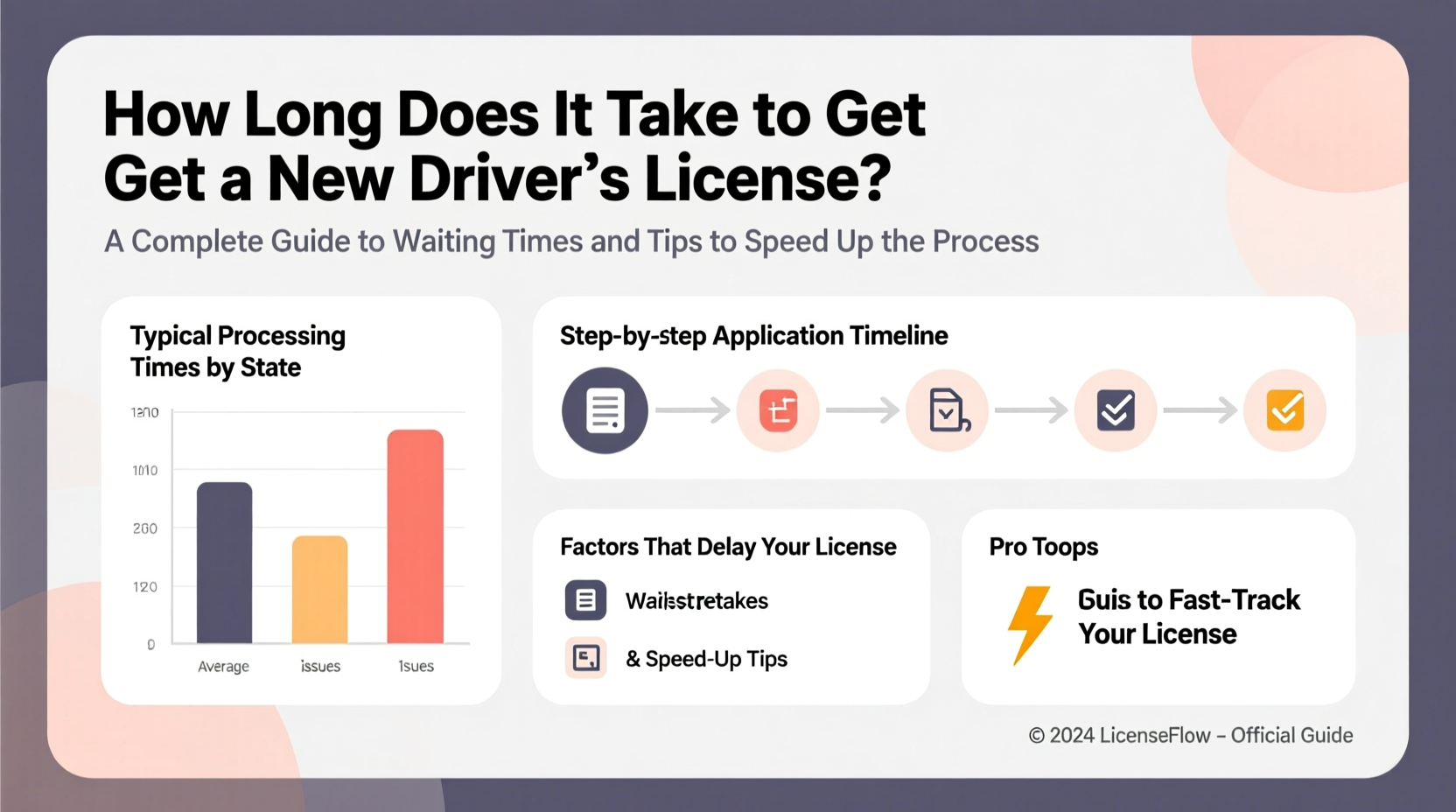
The United States does not have a standardized national driver’s licensing system. Each state’s Department of Motor Vehicles (DMV) or equivalent agency manages its own rules, timelines, and procedures. As a result, processing times can differ dramatically.
In general:
- First-time applicants (especially teens) often face longer waits due to mandatory training, testing, and parental consent requirements.
- Renewals are typically faster, especially if done online or by mail.
- Replacement licenses usually arrive within 7–14 business days after submission.
For example, California issues most replacement licenses within two weeks, while Florida mails out renewed licenses in as little as 7–10 days. In contrast, New York may take up to 21 days for standard renewals, particularly during peak seasons like summer or after holidays.
Tip: Check your state DMV website directly for the most accurate processing estimates—third-party sites often provide outdated information.Typical Processing Times Across Key Scenarios
To help set realistic expectations, here’s a breakdown of how long each type of license request generally takes:
| License Type | Average Processing Time | Delivery Method |
|---|---|---|
| First-Time Issuance (Teen/Adult) | 2–6 weeks | Mail or in-person pickup |
| Routine Renewal (Online/Mail) | 7–14 days | |
| Routine Renewal (In-Person) | Same day (card issued) | Immediate handover |
| Lost/Stolen Replacement | 5–15 business days | |
| International Visitor (Non-U.S. Citizen) | 3–8 weeks | Mail with verification steps |
Note: These times assume all documents are correct and submitted properly. Errors or missing paperwork can add 1–3 weeks to processing.
Step-by-Step Timeline: From Application to Delivery
Follow this sequence to understand exactly what happens—and how long each stage takes:
- Preparation (1–3 days): Gather required documents such as proof of identity, residency, and Social Security number. Some states require original copies.
- Scheduling (Optional – varies): Many states now allow appointments for road tests or in-person visits, which can cut wait times from hours to minutes.
- Application Submission (Same day): Complete the form online, by mail, or in person. Online submissions are processed faster than paper forms.
- Verification & Background Checks (1–5 business days): The DMV verifies your data, checks driving records, and confirms eligibility.
- Production & Mailing (5–14 days): Once approved, the physical license is printed at a central facility and mailed via USPS.
Total estimated time: 7–21 days for renewals and replacements; up to 6 weeks for first-time applicants needing tests and instruction permits.
“Processing delays are rarely about bureaucracy—they’re usually due to incomplete applications. Submitting clean, verified documents the first time is the single best way to avoid setbacks.” — James R. Holloway, Former DMV Operations Manager, Virginia
Tips to Speed Up Your License Application
You don’t have to sit back and wait passively. Proactive steps can significantly shorten your turnaround time.
Tip: Use your state’s online portal for renewals whenever possible—most are designed to bypass mail delays entirely.- Apply early: Begin the process at least 30 days before expiration to avoid rushed processing.
- Double-check documents: One mismatched address or expired ID can trigger manual review, adding days to processing.
- Choose expedited shipping: Some states offer overnight delivery for an extra fee (e.g., $15–$25).
- Schedule appointments: Walk-ins often mean long waits; appointments reduce both in-office time and processing lag.
- Use REAL ID-compliant documents from the start: If upgrading to a REAL ID, bring two proofs of residency, one identity document, and your SSN card.
Real Example: How Sarah Got Her License in 8 Days
Sarah, a 24-year-old moving from Colorado to Georgia, needed to transfer her license quickly for a new job. She researched Georgia’s DDS (Department of Driver Services) portal and discovered she could start the process online.
She uploaded scanned copies of her current license, utility bill (proof of address), and Social Security card. Within 48 hours, her application was verified. She paid the $32 fee and opted for standard mailing. Eight calendar days later, her Georgia license arrived—well ahead of her company orientation.
Her key move? Avoiding the office entirely by using the online system and ensuring all documents matched exactly. “I didn’t realize how much time I’d save by skipping the line,” she said. “It took less effort than ordering groceries.”
Common Mistakes That Cause Delays
Avoid these frequent errors that slow down processing:
- Submitting photocopies when originals are required
- Mismatched names (e.g., nickname vs. legal name)
- Outdated proof of residency (older than 90 days)
- Trying to renew too early (some states only accept renewals within 6 months of expiration)
- Failing to resolve outstanding tickets or suspensions before applying
Checklist: Ensure a Smooth License Application
Use this checklist before submitting your application—online, by mail, or in person:
- ✅ Confirm your state’s specific document requirements
- ✅ Collect original or certified copies of ID, SSN, and residency proof
- ✅ Verify no unpaid fines or suspended privileges
- ✅ Complete any required vision or knowledge tests in advance
- ✅ Fill out the application form completely—no blank fields
- ✅ Pay fees via accepted method (credit card, check, etc.)
- ✅ Track your application using the DMV’s online status tool
Frequently Asked Questions
Can I drive while waiting for my new license?
Yes, in most states—if you already had a valid license and applied for renewal before it expired. Keep a copy of your renewal receipt with you as temporary proof. However, if your license has already expired, check your state’s grace period rules (typically 30–60 days).
What should I do if my license doesn’t arrive?
If your license hasn’t arrived within 10 business days past the expected date, contact your state DMV. They can issue a tracking number or reprint the card. In some cases, fraud alerts may be triggered if the license was misdelivered.
Is it faster to go in person or apply online?
Applying online is almost always faster in terms of processing time. In-person visits eliminate mailing delays only if the office issues a temporary license on the spot. However, wait times at DMVs can exceed 2–3 hours without an appointment, making online the smarter choice for eligible applicants.
Final Thoughts: Take Control of the Process
The time it takes to get a new driver’s license doesn’t have to be a mystery. With clear planning, accurate documentation, and smart use of digital tools, you can receive your license in as little as a week—even during busy periods. Don’t assume delays are inevitable. Instead, treat the process like any important administrative task: prepare thoroughly, act early, and verify every detail.
🚀 Ready to get your license faster? Visit your state’s DMV website today, download the checklist above, and submit your application with confidence. Share this guide with someone who’s stuck in DMV limbo—they’ll thank you!








