Running out of hot water mid-shower is more than just an inconvenience—it disrupts routines, raises frustration, and often signals underlying issues with your water heating system. While many assume this problem stems solely from an aging unit, the reality is far more nuanced. From sediment buildup to thermostat malfunctions and undersized tanks, multiple factors can contribute. Understanding these causes—and how to address them—is essential for maintaining comfort and efficiency in any household.
Common Causes of Rapid Hot Water Depletion
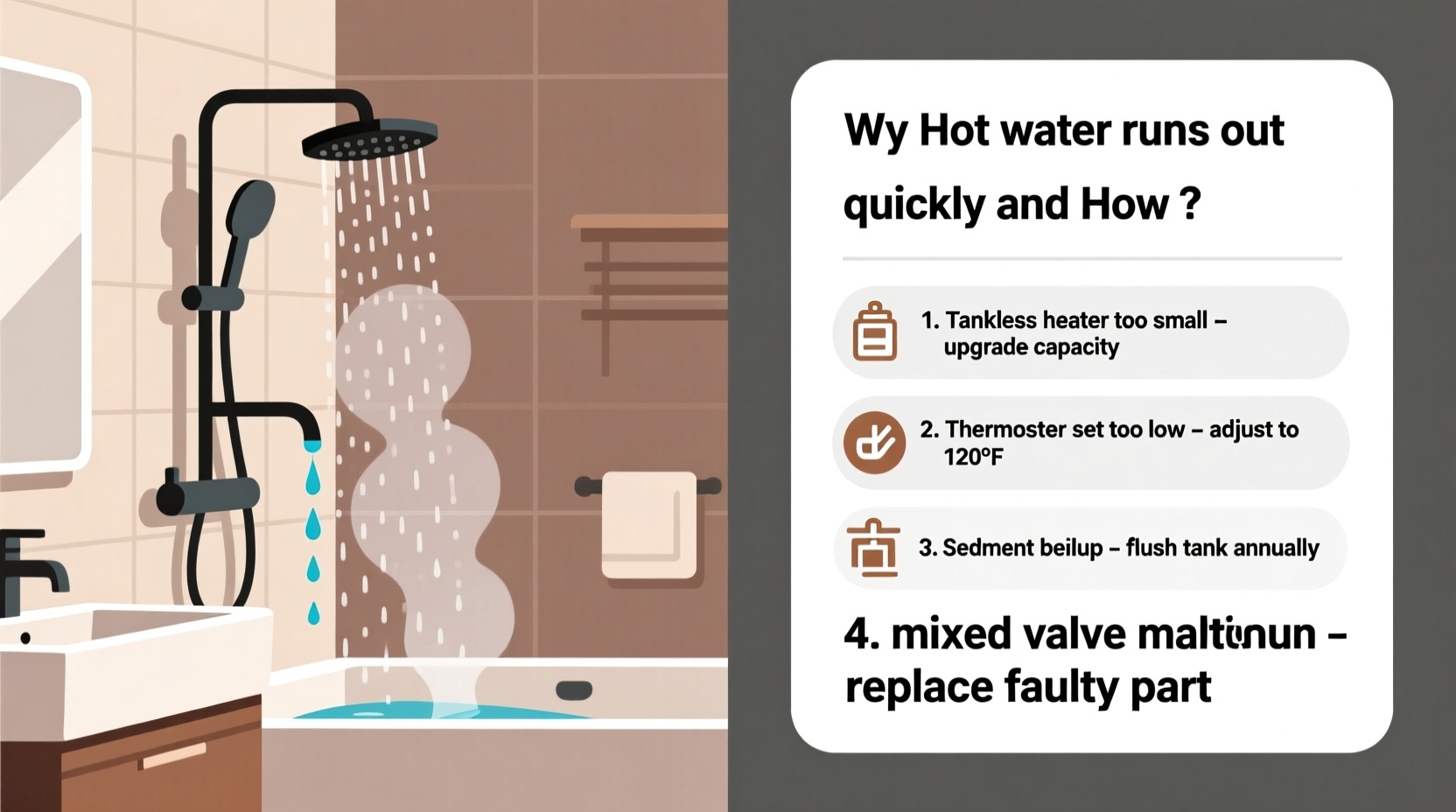
The speed at which hot water depletes depends on both usage patterns and the condition of your water heater. However, when the issue persists beyond normal demand, it’s time to investigate mechanical or structural problems.
- Sediment buildup: Over time, minerals in hard water settle at the bottom of the tank, reducing available space for hot water and insulating the heating element, making recovery slower.
- Faulty dip tube: The dip tube directs cold water to the bottom of the tank. If broken or degraded, cold water mixes prematurely with hot water, lowering temperature and volume.
- Thermostat issues: A malfunctioning thermostat may not heat water to the correct temperature, causing it to feel lukewarm and run out faster.
- Heating element failure (electric models): Dual-element heaters rely on both upper and lower elements. If one fails, only half the tank heats properly.
- Tank size mismatch: A 40-gallon tank may suffice for two people but struggle under the demands of a family of four or five.
- Simultaneous appliance use: Running the dishwasher or washing machine while someone showers increases draw on the system.
Diagnosing the Problem: A Step-by-Step Guide
Before investing in repairs or replacements, follow this logical process to identify the root cause.
- Assess usage patterns: Determine if the issue occurs during peak times (e.g., morning showers). If so, behavioral adjustments or staggered use may help.
- Check water temperature: Use a thermometer at the faucet. Hot water should be around 120°F (49°C). Lower readings suggest thermostat or heating issues.
- Inspect for sediment: Drain a few gallons from the tank into a bucket. If cloudy or gritty, significant buildup is likely.
- Test heating elements (electric units): Turn off power, access the panels, and use a multimeter to check continuity. No reading means replacement is needed.
- Examine the dip tube: Remove the cold water inlet and inspect the tube. If cracked or missing pieces, replace it.
- Monitor recovery time: After full depletion, note how long it takes to reheat. Excessive delays point to element, thermostat, or gas burner problems.
Do’s and Don’ts When Addressing Hot Water Issues
| Action | Do | Don't |
|---|---|---|
| Maintenance | Flush the tank annually and inspect the anode rod every 2 years | Ignore annual maintenance or skip inspections |
| Temperature Setting | Set thermostat to 120°F for safety and efficiency | Turn it above 140°F unless medically necessary |
| Repairs | Hire licensed plumbers for gas lines or electrical work | Attempt DIY repairs on gas valves or wiring |
| Usage | Stagger high-draw activities like laundry and dishwashing | Run multiple hot water appliances simultaneously |
Real-Life Example: The Johnson Family's Fix
The Johnsons, a family of five in suburban Ohio, consistently ran out of hot water by the third shower each morning. They assumed their 50-gallon electric heater was simply too small. A plumber diagnosed the real issue: the lower heating element had failed, meaning only the top half of the tank heated water. Replacing the element cost $180 and restored full functionality without requiring a new unit. This case highlights how internal component failure can mimic capacity shortages.
“Many homeowners jump to replace their entire water heater when a $50 part and minor service would solve the problem.” — Carlos Mendez, Master Plumber & HVAC Technician
Solutions Based on Heater Type
Different systems require tailored fixes. Here’s how to respond based on your setup:
Electric Tank Heaters
Most common in homes without natural gas access. Key vulnerabilities include dual-element imbalance and sediment accumulation. Solutions involve replacing faulty elements, resetting thermostats, and flushing the tank.
Gas Tank Heaters
These recover faster than electric models but are prone to burner assembly issues and thermocouple failures. Check for soot, listen for ignition clicks, and ensure proper ventilation. A weak flame often indicates a dirty burner or flue blockage.
Tankless (On-Demand) Units
While designed to provide endless hot water, flow rate limits and mineral scaling can restrict output. Descale the heat exchanger annually and verify that incoming water pressure isn’t exceeding recommended levels.
Heat Pump Water Heaters
These energy-efficient units pull heat from surrounding air. If installed in cold basements, performance drops significantly in winter. Ensure adequate ambient temperature (above 40°F) and clear airflow around the unit.
Tip: Install low-flow showerheads to reduce hot water consumption by up to 40%, extending availability without lifestyle sacrifice.Preventive Maintenance Checklist
Regular upkeep prevents most premature failures. Follow this checklist seasonally and annually:
- ✅ Test the pressure relief valve monthly
- ✅ Flush the tank every 6–12 months
- ✅ Inspect the anode rod for corrosion every 2 years
- ✅ Clean burner assembly (gas models) annually
- ✅ Descale tankless units every 6–12 months
- ✅ Check insulation on pipes and tank (older units)
- ✅ Monitor for leaks, rust, or strange noises
FAQ
Why does my hot water run out after 10 minutes?
This typically indicates either heavy usage exceeding tank capacity, a failing heating element, or sediment occupying space in the tank. For example, a standard shower uses 2–3 gallons per minute, so a 40-gallon tank provides about 13–20 minutes of hot water—less if mixed with cold due to sediment or dip tube issues.
Can a water heater lose its efficiency over time?
Yes. Sediment buildup acts as insulation, forcing the heater to work harder. Corroded anode rods accelerate tank degradation. Efficiency can drop by 20–30% over a decade without maintenance.
Should I upgrade to a larger tank?
Only if usage exceeds capacity. A family of four typically needs a 50–60 gallon tank. But first, rule out repairable issues like element failure or sediment. Alternatively, consider switching to a tankless system for continuous supply.
Conclusion: Take Control of Your Hot Water Supply
Hot water shouldn’t be a fleeting luxury. By understanding the mechanics behind rapid depletion, homeowners can make informed decisions—whether it’s flushing sediment, replacing a faulty part, or upgrading systems. Most issues are fixable with timely intervention, saving money and avoiding unnecessary replacements. Small investments in maintenance yield long-term comfort and reliability.
🚀 Don’t wait until your next cold shower. Schedule a flush, test your elements, or consult a professional today. Share your experience or questions below—your insight could help another homeowner stay warm tomorrow.








