For decades, hikers have been told that ankle support is non-negotiable. High-top hiking boots became synonymous with safety, especially on rugged trails. But in recent years, a growing number of outdoor enthusiasts are ditching traditional boots in favor of lightweight trail runners—sparking a heated debate: Can your ankles really survive without the rigid structure and elevated collars of classic hiking footwear?
The answer isn’t as simple as “yes” or “no.” It depends on your fitness level, terrain, pack weight, hiking experience, and personal biomechanics. What’s clear is that modern research and real-world data challenge long-held assumptions about ankle protection. Let’s cut through the myths and examine what actually keeps your ankles safe—and whether trail runners might be smarter, safer, and more efficient than we’ve been led to believe.
Ankle Support: Myth vs. Reality
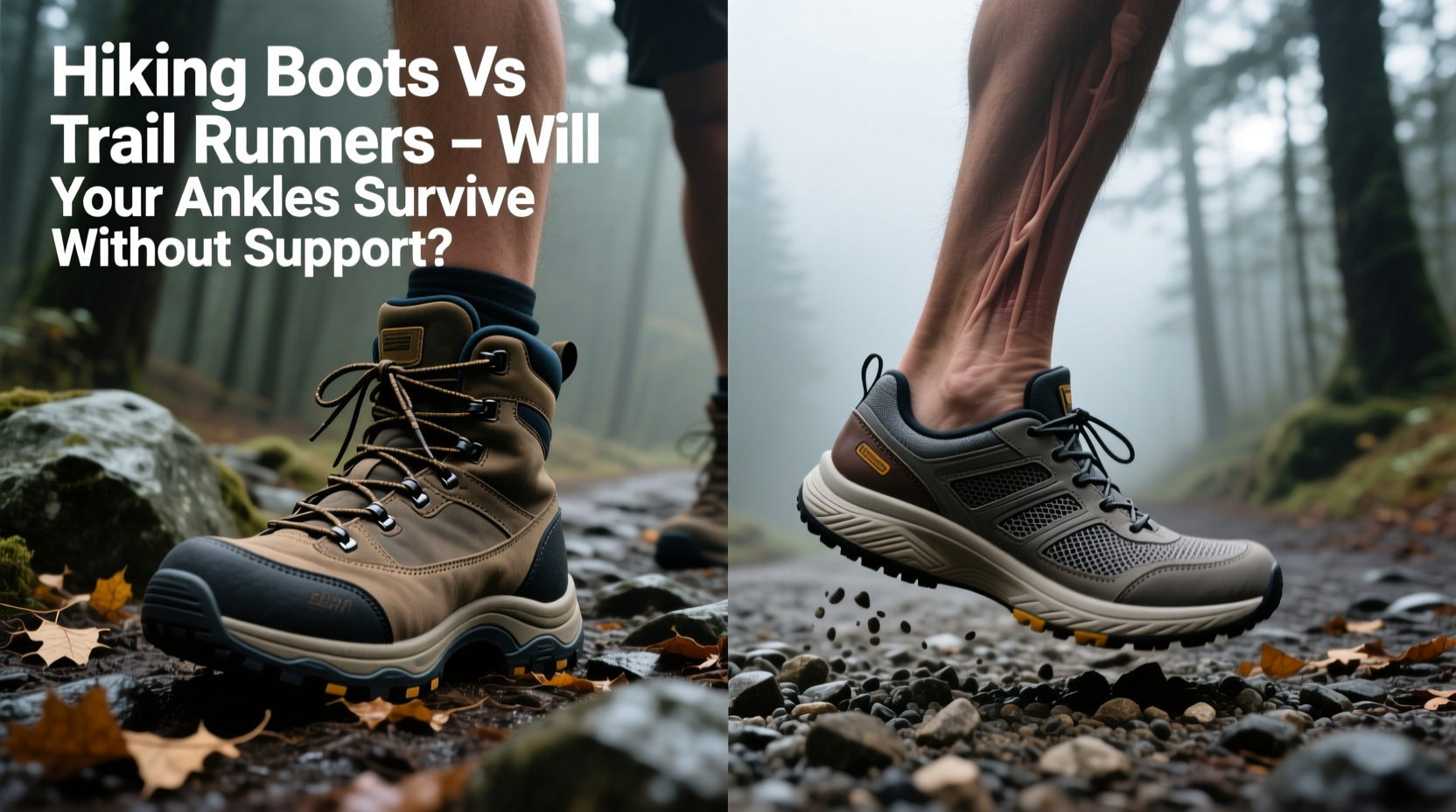
The idea that high-cut boots prevent ankle sprains has been deeply embedded in outdoor culture. The logic seems sound: higher up the ankle = more support. But science tells a different story.
A comprehensive review published in the Cochrane Database of Systematic Reviews analyzed multiple studies on ankle injuries and footwear. The conclusion? There was no significant difference in ankle sprain rates between hikers wearing high-top boots and those in low-cut shoes—provided both groups used proper technique and conditioning.
“Ankle stability comes from muscles, tendons, and neuromuscular control—not just external support. Over-reliance on stiff boots can actually weaken stabilizing muscles over time.” — Dr. Lena Torres, Sports Medicine Physician & Wilderness First Responder
In other words, your body adapts to the demands placed on it. If you consistently wear rigid boots, your peroneal and tibialis muscles—the primary stabilizers of the ankle joint—may become less active. When you eventually switch to lighter footwear or encounter uneven terrain, your natural reflexes may not kick in fast enough.
This doesn’t mean boots are obsolete. They still offer advantages in specific conditions. But for many hikers, especially on moderate trails, the perceived safety of ankle-high construction may be more psychological than physiological.
Comparing Hiking Boots and Trail Runners: A Detailed Breakdown
To make an informed decision, it helps to understand the core differences between these two footwear categories. Each has strengths and trade-offs that go beyond ankle height.
| Feature | Hiking Boots | Trail Runners |
|---|---|---|
| Weight | 1.5–3+ lbs per pair | 0.8–1.5 lbs per pair |
| Ankle Coverage | High-cut (above ankle) | Low-cut (below ankle) |
| Stiffness | High (rigid midsole, shank) | Flexible (responsive cushioning) |
| Traction | Durable lugs, moderate grip | Aggressive sticky rubber (e.g., Vibram Megagrip) |
| Drying Time | Slow (especially leather) | Fast (synthetic mesh) |
| Packability | Bulky | Compact, easy to stow |
| Lifespan | 500–1000 miles | 300–600 miles |
| Best For | Heavy loads, off-trail, wet/muddy terrain, winter hiking | Day hikes, fastpacking, dry trails, well-maintained paths |
The data shows a clear pattern: trail runners prioritize agility, comfort, and responsiveness; hiking boots emphasize durability, protection, and load-bearing capability. Your choice should align with your hiking goals—not outdated assumptions.
Tip: Don’t judge footwear by ankle height alone. Focus on fit, outsole grip, and how the shoe feels during dynamic movement on varied terrain.When Boots Make Sense—and When They Don’t
There are legitimate scenarios where hiking boots are the superior choice. These include:
- Hiking with a heavy backpack (over 30 lbs), where torsional stability matters.
- Navigating off-trail or cross-country routes with loose scree, talus, or unpredictable footing.
- Winter or snowshoeing conditions, where insulation, waterproofing, and compatibility with gaiters are essential.
- Trails with persistent mud, water, or sharp debris, where durable uppers protect feet better.
Conversely, trail runners shine when:
- You’re moving fast over well-defined trails.
- Conditions are dry and temperatures are mild.
- You value comfort and reduced fatigue over long distances.
- You’re doing day hikes or ultralight backpacking.
The key is matching footwear to function. Wearing heavy boots on a smooth, flat forest path is like driving a tank to the grocery store—unnecessary, inefficient, and fatiguing.
Real-World Example: The Appalachian Trail Shift
In 2015, long-distance hiker Jennifer Pharr Davis completed a speed record on the Appalachian Trail wearing trail runners—specifically, Altra Lone Peak models. Her average daily mileage exceeded 30 miles. She reported fewer foot issues, faster recovery, and greater overall efficiency compared to previous trips in boots.
Since then, a quiet revolution has taken place among thru-hikers. According to the Appalachian Trail Conservancy’s annual hiker survey, over 70% of northbound thru-hikers now use trail runners as their primary footwear—up from less than 20% in 2010.
They cite benefits like quicker drying after stream crossings, reduced blister incidence, and less muscular fatigue at the end of long days. While some still carry boots for particularly rough sections, the trend is undeniable: lightweight performance is winning.
How to Transition Safely to Trail Runners
If you're used to hiking boots, switching to trail runners requires preparation. Going too far too fast can lead to soreness, instability, or even injury—especially if your lower-leg muscles aren’t conditioned for increased range of motion.
Here’s a step-by-step guide to making the transition safely:
- Start short: Begin with 3–5 mile hikes on familiar, stable trails. Pay attention to how your ankles feel during descents and on uneven ground.
- Gradually increase distance: Add no more than 10% distance per week. This allows your tendons and ligaments to adapt.
- Practice proprioception: Do balance exercises like single-leg stands or wobble board training to improve ankle awareness.
- Strengthen supporting muscles: Incorporate calf raises, resistance band work, and toe yoga into your routine.
- Test in variable conditions: Try trail runners on rocky or root-filled paths before relying on them for longer trips.
- Carry boots if needed: On multi-day trips early in your transition, consider bringing boots for particularly technical sections.
Checklist: Choosing the Right Footwear for Your Next Hike
- ✅ Assess your expected load (light pack vs. full backpacking gear)
- ✅ Evaluate trail conditions (rocky, muddy, snowy, dry)
- ✅ Consider trip duration (day hike vs. multi-week trek)
- ✅ Know your foot type (flat, high arch, wide toe box needs)
- ✅ Try before you buy—or order multiple sizes to test at home
- ✅ Walk on an incline and decline to test heel lockdown and forefoot space
- ✅ Check return policy in case the fit isn’t right
Frequently Asked Questions
Can trail runners cause more ankle sprains than hiking boots?
Research does not support this claim for most hikers. Studies show similar injury rates between boot and trail runner users when controlling for experience and terrain. Ankle strength, balance, and hiking technique play larger roles than footwear type.
Are trail runners durable enough for serious hiking?
Modern trail runners are engineered for rugged use. Brands like Salomon, Hoka, and Altra build shoes with reinforced toe caps, rock plates, and aggressive outsoles designed for alpine terrain. While they may wear out faster than boots, their performance-to-weight ratio makes them ideal for many hikers.
What if I’ve already had an ankle injury?
If you have a history of chronic ankle instability or recurrent sprains, consult a physical therapist before switching. You may benefit from targeted rehab exercises or temporary bracing. Many post-injury hikers successfully transition to trail runners once strength and proprioception are restored.
Conclusion: Rethinking Support for Smarter Hiking
The question isn’t whether your ankles can survive without hiking boots—it’s whether you’re giving your body the tools and training it needs to thrive on the trail. Ankle health isn’t about restriction; it’s about resilience. And resilience comes from preparation, not padding.
Trail runners aren’t a one-size-fits-all solution, but neither are hiking boots. The best footwear is the one that matches your body, your route, and your goals. For many hikers, that means embracing lighter, more responsive shoes that allow natural movement and reduce fatigue over long distances.
Stop letting tradition dictate your gear choices. Test trail runners on shorter hikes. Strengthen your feet and ankles. Listen to your body. You might discover that less support doesn’t mean less safety—it means more freedom, more comfort, and more miles under your feet.
💬 Have you made the switch from boots to trail runners—or stuck with boots for good reason? Share your experience in the comments and help others find their perfect stride.








