When preparing for a long trek through rugged terrain, choosing the right footwear isn’t just about comfort—it can determine whether you finish the trail or cut it short due to injury. The debate between hiking boots and trail runners often centers on ankle protection. Many hikers assume that higher collars mean better safety, but modern research and field experience suggest the reality is more nuanced. The decision should be based on terrain, load, personal biomechanics, and hiking style—not just tradition.
This article breaks down the science and practicality behind ankle support in both types of footwear, compares their performance across different conditions, and provides actionable insights so you can make an informed choice—especially when your joints are on the line.
Anatomy of Ankle Protection: What Actually Prevents Injuries?
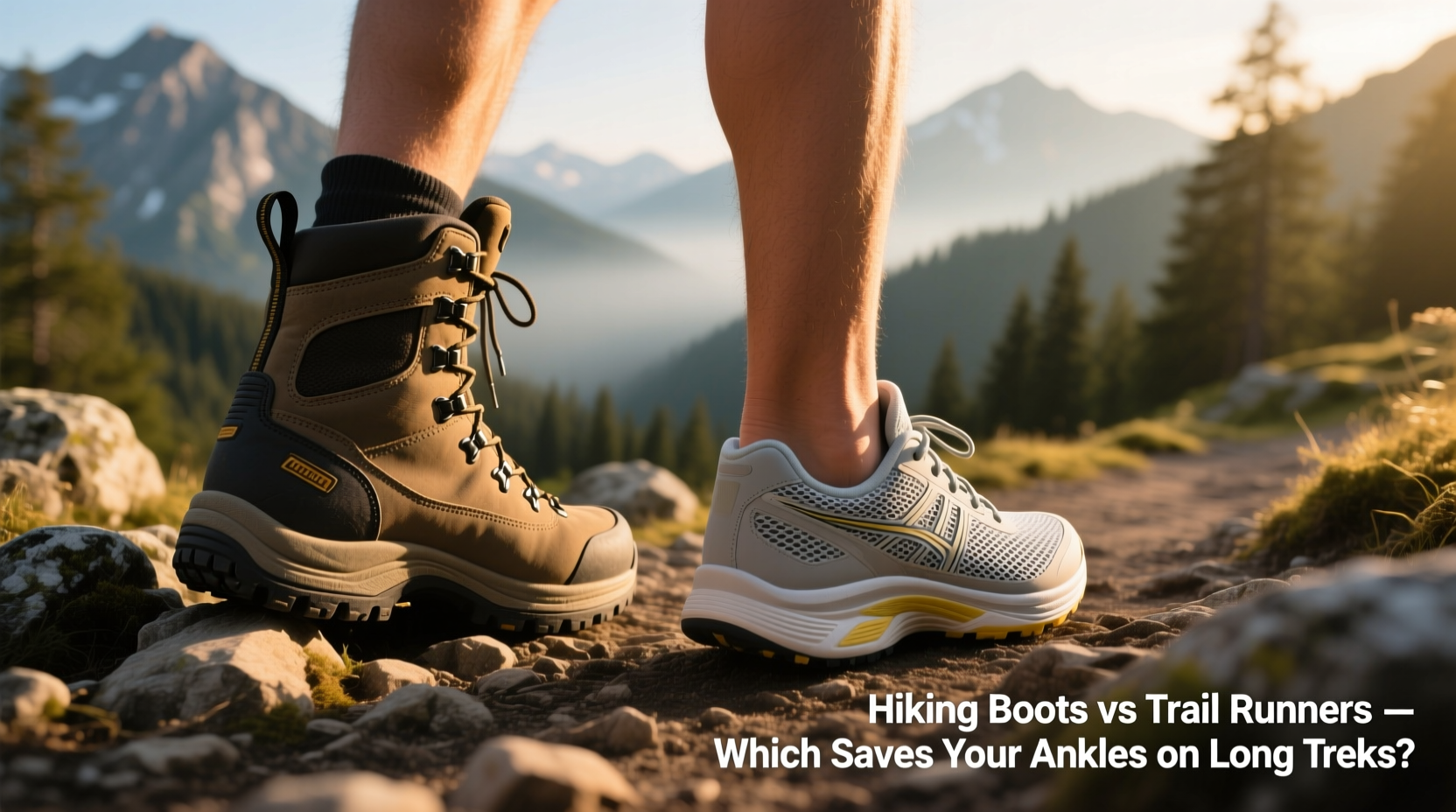
Ankle injuries during hikes typically result from rolling (inversion or eversion sprains), especially on uneven ground, loose scree, or sudden missteps. The assumption has long been that stiff, high-top hiking boots prevent such injuries by restricting ankle motion. However, studies in sports medicine show mixed results. A 2019 meta-analysis published in the Journal of Athletic Training concluded that while hiking boots do limit range of motion, they don’t significantly reduce the incidence of ankle sprains compared to well-designed trail runners—especially when worn by experienced hikers.
The key factor isn't just restriction—it's proprioception, or your body’s ability to sense joint position and react to instability. Stiff boots can dull this feedback, making micro-adjustments slower. Trail runners, with their lower profile and flexible soles, allow greater sensory input from the ground, enabling quicker neuromuscular corrections.
“Ankle stability comes from muscle strength and dynamic control, not just external bracing. Over-reliance on rigid boots can weaken stabilizing muscles over time.” — Dr. Lena Torres, Sports Physiotherapist and Outdoor Medicine Specialist
Comparing Hiking Boots and Trail Runners: Key Differences
| Feature | Hiking Boots | Trail Runners |
|---|---|---|
| Ankle Collar Height | High-cut, wraps above ankle bone | Low-cut, sits below ankle |
| Weight (avg per shoe) | 1.5–2.5 lbs (680–1130g) | 0.6–1.2 lbs (270–540g) |
| Midsole Stiffness | Rigid, often with shanks for load support | Flexible, designed for natural foot motion |
| Traction | Deep lugs, aggressive outsoles | Aggressive but lighter lug patterns |
| Durability | High—resists abrasion and heavy loads | Moderate—uppers wear faster under load |
| Drying Time | Slow—leather/nylon absorbs moisture | Fast—synthetic mesh dries quickly |
| Proprioception | Reduced due to thick midsoles | Enhanced ground feel |
The table reveals a trade-off: hiking boots offer structure and durability at the cost of responsiveness, while trail runners prioritize agility and sensory feedback with less physical restraint.
Tip: If you have a history of ankle instability, consider combining trail runners with a lightweight ankle brace instead of defaulting to heavy boots.When Hiking Boots Provide Real Ankle Protection
Hiking boots shine in specific scenarios where mechanical protection outweighs the need for agility. These include:
- Carrying heavy packs (over 30 lbs / 14 kg): The added inertia increases torque on the ankle during slips. Rigid boots help transfer load to the shin and reduce lateral flex.
- Traversing off-trail or cross-country routes: Unpredictable terrain with hidden roots, rocks, and drop-offs benefits from the structural guardrails of a high-top boot.
- Wet, muddy, or icy conditions: Waterproof leather uppers keep feet dry, and stiffer soles maintain grip on slick surfaces without twisting.
- Multi-week expeditions with resupply limitations: Durability becomes critical when you can’t replace worn gear mid-journey.
In these cases, the boot’s resistance to deformation helps maintain foot alignment during unexpected impacts. However, this benefit diminishes if the hiker lacks core and lower-leg strength. No boot can compensate for poor balance or fatigue-induced gait changes over time.
Where Trail Runners Outperform Boots on Long Treks
Despite skepticism, trail runners have gained favor among thru-hikers and alpine adventurers for good reason. On well-maintained trails, long-distance routes like the Appalachian Trail or Haute Route see increasing numbers of hikers opting for low-cut shoes.
The advantages become most apparent over days or weeks:
- Reduced fatigue: Lighter shoes decrease energy expenditure. Studies estimate a 1% reduction in effort per 100g saved per foot. Over 20 miles, this translates to meaningful endurance gains.
- Better traction on rock slabs: Flexible soles conform to surface irregularities, increasing contact area and grip—critical on granite or wet stone.
- Faster recovery after stream crossings: Mesh uppers drain and dry quickly, reducing blister risk and discomfort.
- Natural gait preservation: Less interference with stride mechanics reduces strain on knees and hips over time.
A 2022 survey of Pacific Crest Trail thru-hikers found that 68% who started in traditional boots switched to trail runners within the first 500 miles, citing chronic knee pain, blisters, and foot numbness as primary reasons.
Mini Case Study: Sarah’s Switch Across the John Muir Trail
Sarah, an experienced backpacker, completed the 211-mile John Muir Trail carrying a 35-lb pack. She began in waterproof hiking boots recommended by her outfitter. By mile 60, she developed persistent ankle stiffness and hot spots behind her heel. After consulting a wilderness medic at Reds Meadow, she mailed home her boots and ordered a pair of trail runners.
“I was skeptical,” she admitted. “But once I got used to the lighter feel, my pace improved. I rolled my ankle twice on loose scree—but each time, I corrected instantly because I could feel the ground. My old boots would’ve twisted and held the awkward angle longer.”
She finished the trail two days ahead of schedule with no major injuries. Her takeaway: “Support doesn’t always mean stiffness. Sometimes it means responsiveness.”
Choosing Based on Your Body and Goals: A Step-by-Step Guide
Instead of following trends or assumptions, use this decision framework to match footwear to your needs:
- Assess your load: Are you carrying under or over 30 lbs? Above that threshold, boots gain an advantage.
- Evaluate the terrain: Is the route mostly established trails, or will you be scrambling, bushwhacking, or crossing snowfields?
- Review your injury history: Do you have weak ankles, prior sprains, or balance issues? Consider targeted strengthening before relying solely on footwear.
- Test before committing: Walk 5–10 miles with your loaded pack in both options. Pay attention to foot fatigue, heel lift, and joint comfort.
- Plan for weather: In persistently wet environments, waterproof boots may still be preferable despite breathability drawbacks.
Checklist: Selecting the Right Footwear for Ankle Safety
- ✅ Determine typical pack weight
- ✅ Map trail conditions (rocky, muddy, root-filled, etc.)
- ✅ Check personal ankle stability (can you stand on one foot with eyes closed?)
- ✅ Try both styles with full pack weight
- ✅ Prioritize fit over brand or model popularity
- ✅ Replace worn-out cushioning—degraded midsoles increase injury risk regardless of type
- ✅ Strengthen calves and peroneal muscles pre-trek
Expert Insight: Rethinking Ankle Support in Modern Hiking
The outdoor industry is shifting toward a functional approach to foot health. Rather than treating the ankle as a joint to immobilize, experts now emphasize training it to be resilient.
“We’ve seen fewer ankle injuries in minimalist footwear users who train properly. It’s not the shoe alone—it’s how you prepare the body to work with it.” — Mark Feng, Lead Guide at Sierra Wilderness Institute
This perspective aligns with rehabilitation principles: controlled exposure to instability builds stronger stabilizers. Just as athletes tape ankles lightly rather than wrap them tightly, many backcountry travelers now view footwear as a tool for performance—not armor.
Frequently Asked Questions
Can trail runners really protect my ankles as well as boots?
Yes, in many cases—especially on maintained trails and with moderate loads. Their flexibility allows faster corrective movements, reducing the duration of an awkward foot position. However, they offer less physical barrier against impacts from rocks or twisting forces under heavy packs.
I’ve sprained my ankle before. Should I avoid trail runners?
Not necessarily. Past injury increases risk, but proper conditioning and gradual adaptation can make trail runners safe. Consider using a supportive insole or light ankle sleeve for added confidence. Always consult a physiotherapist if instability persists.
Do waterproof hiking boots prevent ankle issues?
Waterproof membranes (like Gore-Tex) keep feet dry but trap heat and moisture over time, increasing blister risk—which can indirectly lead to altered gait and strain on the ankle. In consistently wet climates, they’re valuable, but in dry or variable conditions, breathable trail runners often provide better overall foot health.
Conclusion: Match the Shoe to the Hike, Not the Myth
The idea that hiking boots inherently save ankles is outdated. While they provide mechanical support in demanding situations, trail runners offer superior responsiveness, reduced fatigue, and enhanced proprioception—factors that actively contribute to injury prevention over long distances. The best choice depends not on dogma, but on your specific trip parameters and physical preparedness.
Instead of defaulting to tradition, evaluate your route, load, fitness, and goals with honesty. Invest time in strengthening your lower legs, test both footwear types under realistic conditions, and choose the one that supports your movement—not restricts it. When you do, you’ll likely find that true ankle protection comes not from height or weight, but from awareness, preparation, and smart decisions.
💬 What’s your go-to footwear for long treks? Share your experience and lessons learned in the comments—your insight could help others hike safer and smarter.








