
For decades, hiking boots have been the default footwear for anyone stepping onto a trail. Sturdy, supportive, and protective, they’ve earned their place in backpacking culture. But over the past decade, trail runners have gained serious traction—lightweight, breathable, and agile, they’re increasingly common on everything from day hikes to long-distance thru-hikes. So when does it actually make sense to leave the boots at home and lace up a pair of trail runners instead?
The answer isn’t one-size-fits-all. It depends on your route, pack weight, foot strength, weather conditions, and even personal comfort. Understanding the trade-offs between these two types of footwear can save you discomfort, injury, or unnecessary fatigue.
Understanding the Key Differences
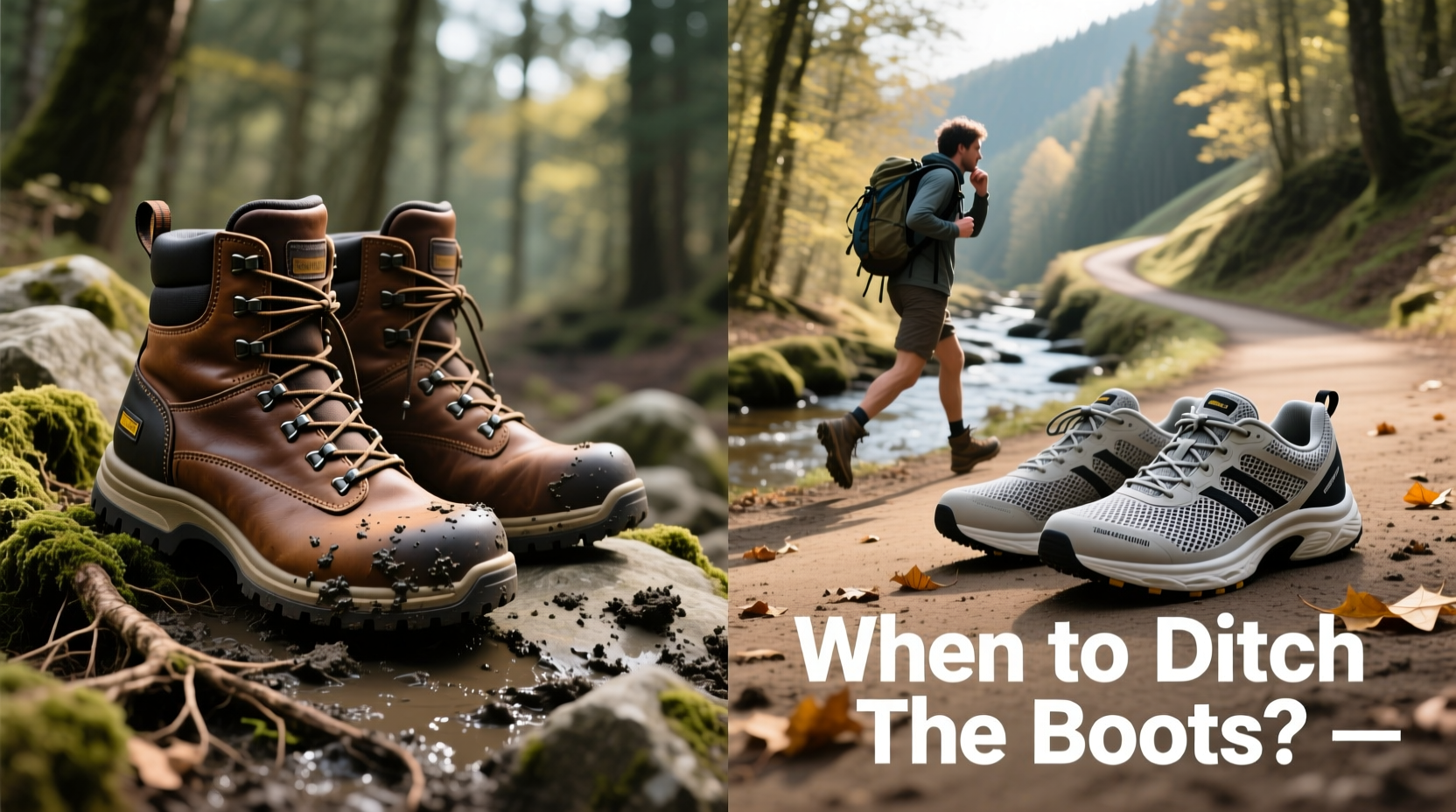
Hiking boots and trail runners serve different purposes, even if both are designed for off-road use. Hiking boots typically feature:
- Stiff midsoles for ankle support and underfoot protection
- Higher cut to stabilize the ankle joint
- Durable leather or synthetic uppers with waterproof membranes (e.g., Gore-Tex)
- Heavy-duty lugs for aggressive traction on loose or wet terrain
- Greater weight—often 2–3 pounds per pair
Trail runners, by contrast, prioritize speed and agility. They offer:
- Flexible soles that allow natural foot movement
- Low-cut design for freedom of motion
- Breathable mesh uppers that dry quickly
- Lightweight construction—usually under 1.5 pounds per pair
- Responsive cushioning tuned for running but adequate for walking
The choice between them often comes down to how much support and protection you need versus how much efficiency and comfort you value.
Tip: If you're unsure which shoe suits your hike, test both on a short trail section with a loaded pack before committing.When Trail Runners Make Sense
Trail runners aren’t just for runners—they’re viable for many hikers, especially under the right conditions. Here’s when ditching the boots is not only acceptable but often preferable:
- Day hikes on well-maintained trails: On dry, non-technical paths with minimal elevation gain, trail runners provide excellent grip and reduce foot fatigue.
- Fastpacking or ultralight trips: When moving quickly with a sub-15-pound pack, the energy savings from lighter shoes add up over miles.
- Hot or humid environments: Breathable mesh prevents overheating and blisters, while quick-drying materials handle stream crossings better than waterlogged leather.
- High-mileage treks like thru-hikes: Many Appalachian Trail and Pacific Crest Trail hikers now prefer trail runners for reduced strain on knees and lower legs over thousands of miles.
- Minimalist or low-impact hiking styles: If you carry light, avoid rugged terrain, and move efficiently, heavy boots may be overkill.
“On long-distance trails, the cumulative impact of carrying extra shoe weight can lead to joint stress. For many hikers, switching to trail runners reduces overall fatigue.” — Dr. Lena Torres, Sports Podiatrist and Outdoor Medicine Specialist
When You Should Stick With Hiking Boots
Despite the advantages of trail runners, there are scenarios where boots remain essential. These include:
- Rugged, uneven terrain: Loose scree, jagged rocks, or root-strewn paths demand the underfoot protection and stability that only stiff-soled boots provide.
- Heavy backpacks (over 30 lbs): The added ankle support helps prevent rolls and sprains when your center of gravity shifts under load.
- Snowy or icy conditions: Even with microspikes, boots offer better insulation and secure fit for winter hiking.
- Wet, muddy environments: Waterproof boots keep feet dry during prolonged exposure to mud and puddles—though breathability suffers.
- Hikers with weak ankles or prior injuries: Extra support can prevent re-injury on challenging trails.
If you're planning a multi-day trek through alpine passes or dense backcountry with unpredictable weather, boots still earn their keep.
Comparison Table: Hiking Boots vs. Trail Runners
| Feature | Hiking Boots | Trail Runners |
|---|---|---|
| Weight | 2–3+ lbs per pair | 1–1.5 lbs per pair |
| Ankle Support | High (high-cut design) | Low to moderate (low-cut) |
| Underfoot Protection | Excellent (rock plates, stiff midsoles) | Fair to good (varies by model) |
| Traction | Aggressive lugs, durable rubber | Good grip on dry surfaces; less effective in deep mud |
| Breathability | Poor (especially with waterproof liners) | Excellent (mesh uppers) |
| Dry Time After Wet | Hours to days | 30 minutes to 2 hours |
| Best For | Heavy loads, rough terrain, cold/wet weather | Light packs, dry trails, speed-focused hiking |
Real-World Example: A Shift on the John Muir Trail
Consider Mark, an experienced hiker who traditionally relied on full-grain leather boots for his annual trip on California’s John Muir Trail. In 2021, after developing chronic knee pain, he switched to a lightweight trail runner setup—Salomon Speedcross with a 17-pound base weight pack.
Initially skeptical, he found that on the well-defined, mostly dry trail, the runners offered superior comfort and responsiveness. He crossed snowmelt streams daily, but the quick-dry fabric meant no soggy socks by mile five. Over 211 miles, he reported less joint fatigue and blister incidence compared to previous years.
However, on a side scramble up Evolution Basin’s talus field, he felt vulnerable—the sharp rocks pressed through the thin sole, and a misstep caused a minor ankle roll. That single experience reminded him that terrain variability matters. For next year, he plans a hybrid approach: trail runners for the main route, but boots for off-trail excursions.
Step-by-Step Guide: How to Decide What Footwear to Use
- Assess your route: Check maps and trail reports for technical sections, elevation changes, and surface conditions.
- Evaluate your pack weight: Under 20 lbs? Trail runners likely suffice. Over 30 lbs? Lean toward boots.
- Check the weather forecast: Expect rain, snow, or persistent mud? Boots may keep you drier and warmer.
- Consider your foot health: Do you have a history of ankle sprains or plantar fasciitis? Support needs may dictate your choice.
- Test before committing: Do a shakedown hike with your intended footwear and full pack to assess comfort and stability.
- Have a backup plan: Carry lightweight camp shoes or consider bringing both options if transitioning between terrains.
FAQ
Can I use trail runners for backpacking?
Yes, especially if your pack is light (under 20 lbs), the trail is well-maintained, and conditions are dry. Many long-distance hikers successfully use trail runners for thru-hikes like the AT or CDT.
Won’t trail runners wear out faster than boots?
Generally, yes—trail runners have shorter lifespans, averaging 500–800 miles versus 1,000+ for boots. However, their lighter weight and comfort often justify more frequent replacement for high-mileage hikers.
What if I want the best of both worlds?
Some hikers opt for \"mid-cut\" trail shoes—a hybrid category offering slightly more ankle support than runners but less bulk than boots. Models like the Hoka Anacapa or Lowa Renegade blend features of both.
Final Thoughts: Listen to Your Feet
The debate between hiking boots and trail runners isn’t about which is objectively better—it’s about matching your gear to your adventure. There’s no shame in ditching heavy boots for something lighter if your hike allows it. Conversely, don’t underestimate the protection and durability boots provide when the trail turns unforgiving.
Footwear is deeply personal. What works for a seasoned thru-hiker might fail a weekend backpacker tackling rocky switchbacks. The smartest approach is flexibility: build a footwear toolkit, understand your body’s needs, and choose based on real conditions—not tradition.
💬 What’s your go-to trail footwear? Share your experiences or questions in the comments—your insight could help others find their perfect stride.








