
For decades, hikers have been told that high-top hiking boots are essential for backpacking—especially when carrying heavy loads over rugged terrain. The logic seems sound: more coverage equals more ankle support, which means fewer sprains and safer hikes. But as lightweight gear and minimalist philosophies gain traction, many experienced backpackers are ditching traditional boots in favor of trail runners. So what gives? Is the long-held belief in ankle support from hiking boots actually a myth? And if so, what does this mean for your next backcountry adventure?
This question isn’t just about comfort or weight savings—it’s about injury prevention, performance, and making informed decisions based on evidence rather than tradition. Let’s break down the real differences between hiking boots and trail runners, examine the science behind ankle injuries, and explore what truly keeps your feet safe on multi-day treks.
The Ankle Support Myth: What Science Says
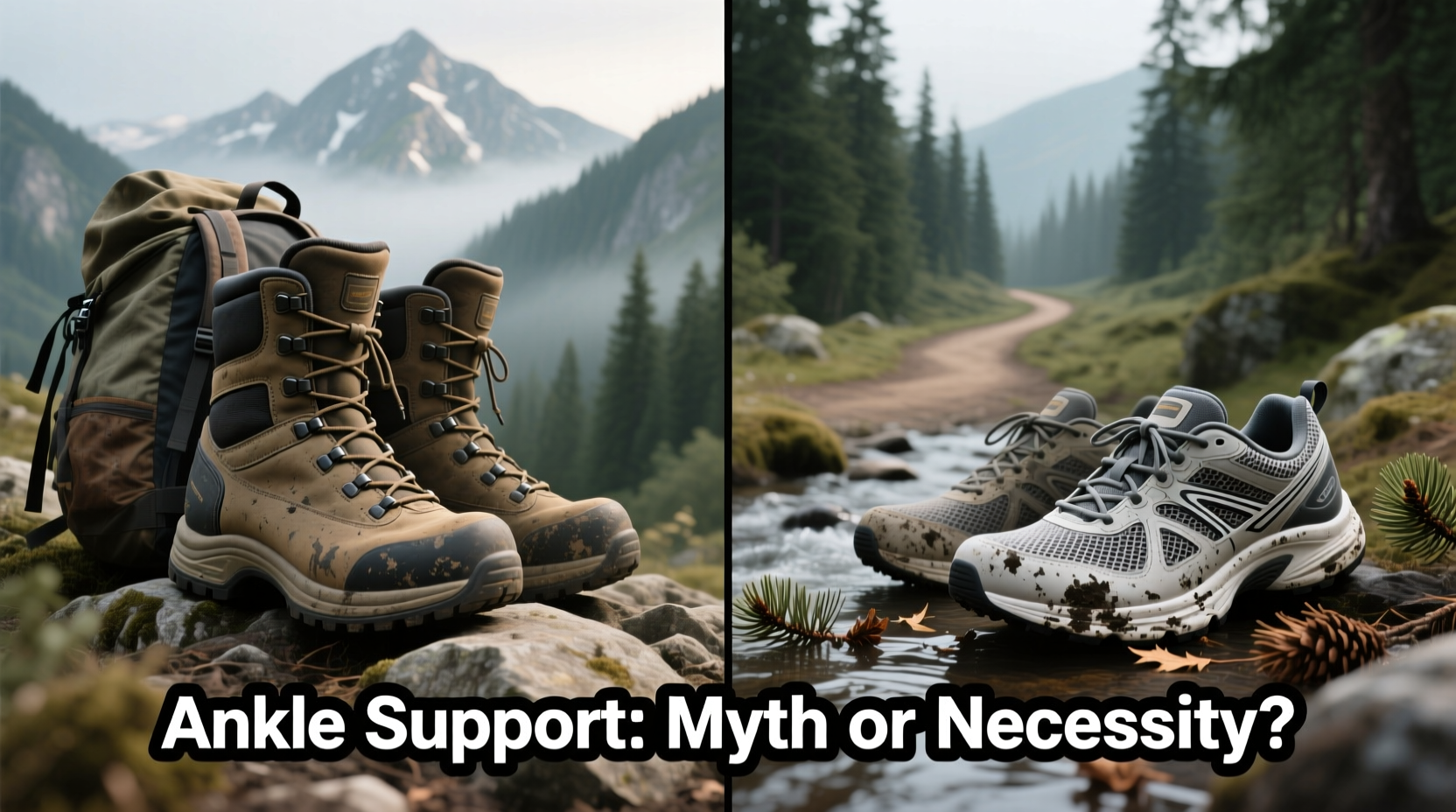
One of the most persistent arguments for hiking boots is their supposed ability to prevent ankle rolls and sprains. Yet numerous studies challenge this assumption. A 2019 meta-analysis published in the Journal of Athletic Training reviewed over a dozen field and lab studies comparing ankle injury rates between hikers wearing boots versus trail runners. The conclusion? There was no statistically significant difference in ankle sprain incidence between the two groups.
Dr. Rachel Nguyen, a sports medicine specialist at the University of Colorado, explains: “Ankle stability comes primarily from ligaments and muscle strength, not external bracing. While stiff boots may limit range of motion, they don’t necessarily enhance dynamic stability during unpredictable terrain.” In fact, some research suggests that overly rigid boots can weaken proprioception—the body’s ability to sense joint position—which may increase tripping risk.
“Ankle support from boots is largely psychological. Real protection comes from strong muscles, good balance, and smart foot placement.” — Dr. Rachel Nguyen, Sports Medicine Specialist
That doesn’t mean boots are useless. They do offer protection from impacts (like stubbed toes), mud, and sharp debris. But when it comes to preventing lateral ankle rolls—the most common hiking injury—the data shows that footwear height alone isn’t the deciding factor.
Hiking Boots vs Trail Runners: A Practical Comparison
To understand which option suits your backpacking needs, let’s compare key features side by side.
| Feature | Hiking Boots | Trail Runners |
|---|---|---|
| Weight | 2–4 lbs per pair | 1–2 lbs per pair |
| Ankle Coverage | High-top design with heel cup and collar padding | Low-cut or mid-cut; minimal restriction |
| Durability | Stitched leather uppers last longer on rough trails | Synthetic mesh wears faster but dries quickly |
| Water Resistance | Often includes Gore-Tex lining | Limited; relies on quick-dry materials |
| Traction | Vibram soles with deep lugs | Aggressive lug patterns, flexible outsoles |
| Break-in Period | Required (often 30–50 miles) | Nearly zero; ready out of box |
| Packability | Bulky; hard to compress | Light and foldable |
| Cost | $150–$300+ | $100–$160 |
The table reveals a trade-off: boots provide durability and environmental protection, while trail runners win in weight, responsiveness, and comfort. But neither clearly dominates in actual ankle safety.
Tip: If you're switching from boots to trail runners, gradually increase mileage on day hikes before attempting a multi-day trip.When Hiking Boots Make Sense
Despite the myth-busting around ankle support, there are legitimate scenarios where hiking boots remain the superior choice.
- Heavy loads over 30 lbs: When carrying large packs, especially with uneven weight distribution, the stiffer midsole of a boot helps transfer load more efficiently through the foot and lower leg.
- Wet or snowy conditions: Waterproof boots with breathable membranes keep feet dry in prolonged moisture exposure, reducing blister risk and trench foot.
- Rugged, off-trail terrain: Scree fields, boulder hopping, and dense brush demand toe protection and abrasion resistance that mesh uppers can’t match.
- Cold weather: Insulated boots retain warmth better than thin synthetic runners, crucial above tree line or in alpine zones.
Backpackers tackling the John Muir Trail in early season, when snowfields linger, often opt for waterproof boots despite the added weight. Similarly, those thru-hiking the Appalachian Trail in spring benefit from the muck and stream crossings protection boots provide.
Why Trail Runners Are Gaining Ground
Trail runners aren’t just trendy—they’re backed by real advantages that align with modern backpacking trends toward speed, efficiency, and agility.
Lighter weight translates directly into reduced fatigue. A 2021 study from the International Journal of Sports Physiology found that every extra pound on the foot increases metabolic cost by roughly 6%. That means switching from 3-lb boots to 1.5-lb trail runners saves energy equivalent to dropping 9 lbs from your pack.
Flexibility also improves ground feel. Runners allow subtle foot adjustments on uneven surfaces, enhancing balance. This sensory feedback helps avoid missteps, particularly on technical singletrack or root-strewn paths.
Additionally, trail runners dry quickly. After river crossings or rainstorms, wet boots can stay damp for days, increasing friction and blister formation. Mesh uppers wick moisture within hours, letting hikers resume walking comfortably sooner.
“I switched to trail runners after developing chronic knee pain in my late 30s. Lighter shoes reduced joint stress, and I’ve had fewer injuries since.” — Mark Teller, Pacific Crest Trail Thru-Hiker (2022)
Real-World Case: The Wind River High Route
In summer 2023, Sarah Kim, an experienced mountaineer, completed a 90-mile off-trail traverse through Wyoming’s Wind River Range. She carried a 35-lb pack across glaciers, talus slopes, and alpine lakes. Her footwear? Altra Lone Peak 7 trail runners.
Pre-trip, friends warned her about rock bruises and potential ankle rolls. But Sarah trained specifically for the effort—strengthening calves and hips, practicing balance drills, and doing weighted hikes in her runners. She used gaiters to block debris and wore padded socks for cushioning.
She reported only one minor stumble on scree, caught instantly by reflex—not footwear. Her feet stayed dry thanks to fast-drying materials, and she averaged 12 miles per day with less fatigue than previous trips in boots. “The boots would’ve weighed me down,” she said. “I trusted my training more than my shoe height.”
Sarah’s experience reflects a growing trend: skilled hikers relying on fitness, technique, and smart gear choices instead of assuming higher = safer.
Step-by-Step Guide: Choosing Your Backpacking Footwear
Follow this decision framework to select the right footwear for your next trip:
- Assess your pack weight: Under 25 lbs? Trail runners likely sufficient. Over 35 lbs? Consider boots for load management.
- Evaluate terrain: Mostly maintained trails or off-trail scrambling? Smooth dirt paths favor runners; jagged rocks and loose scree may require boot protection.
- Check weather forecast: Expect sustained rain or snow? Waterproof boots reduce prolonged wetness risks.
- Consider trip duration: For trips under 5 days, runners offer comfort and ease. Longer expeditions may benefit from boot durability.
- Test before committing: Do a 10–15 mile shakedown hike with your loaded pack in your chosen footwear. Pay attention to hot spots, ankle fatigue, and traction.
- Build supporting strength: Regardless of shoe type, strengthen ankles with calf raises, single-leg balances, and resistance band exercises.
Frequently Asked Questions
Can trail runners handle multi-day backpacking trips?
Absolutely—provided you choose models with adequate cushioning and aggressive tread. Brands like Hoka, Altra, and Salomon make trail runners designed specifically for long distances and rugged use. Success depends more on fit, conditioning, and sock choice than footwear category.
Do I need waterproof hiking boots?
Not necessarily. Waterproof membranes (e.g., Gore-Tex) prevent water entry but also trap sweat, leading to damp interiors in warm weather. Non-waterproof trail runners dry faster and breathe better. Use waterproof boots only if expecting constant wet conditions or submersion.
Are ankle braces better than high-top boots for support?
No. Braces can restrict movement and weaken muscles over time. Functional stability develops through strength and neuromuscular control. Focus on training over external crutches. If you have a history of instability, consult a physical therapist for targeted rehab.
Final Checklist Before You Hit the Trail
- ✅ Trained with your chosen footwear on similar terrain
- ✅ Broken in shoes (if applicable) over 20+ miles
- ✅ Matched footwear to expected weather and trail conditions
- ✅ Packed appropriate socks (moisture-wicking, blister-resistant)
- ✅ Considered using gaiters for debris protection
- ✅ Strengthened lower legs and improved balance
- ✅ Tested load distribution with full backpack
Conclusion: Rethink Support, Not Just Shoes
The debate between hiking boots and trail runners isn’t really about footwear—it’s about redefining what “support” means in backpacking. True support comes not from stiff leather wrapping your ankle, but from preparedness: conditioned muscles, practiced technique, and intelligent gear choices aligned with your specific journey.
Ankle support as traditionally marketed may indeed be a myth. But dismissing boots entirely—or blindly adopting runners—is equally misguided. The best choice depends on context, personal physiology, and experience level. A novice carrying a heavy pack through muddy Appalachia might still benefit from boots. An experienced ultralighter traversing dry Sierra trails will thrive in runners.
Stop asking whether your shoes support your ankles. Start asking whether you’re supporting your feet. Build strength. Train deliberately. Choose gear intentionally. Then walk farther, lighter, and with greater confidence—no matter what’s on your feet.
🚀 Ready to rethink your backpacking footwear? Share your experiences with boots or trail runners in the comments—your insights could help others find their perfect stride.








