When it comes to choosing footwear for young children, parents often face a tough decision between style and function. Hello Kitty shoes have long been a favorite among kids for their whimsical designs and beloved character appeal. But when comparing Hello Kitty board shoes to traditional running shoes, the real question isn’t just about looks—it’s about what’s best for your child’s feet, posture, and daily activity needs. While both types may feature the iconic bow and sweet aesthetic, their construction, support, and intended use differ significantly. Understanding these differences can help you make an informed decision that balances fun with foot health.
Understanding the Key Differences
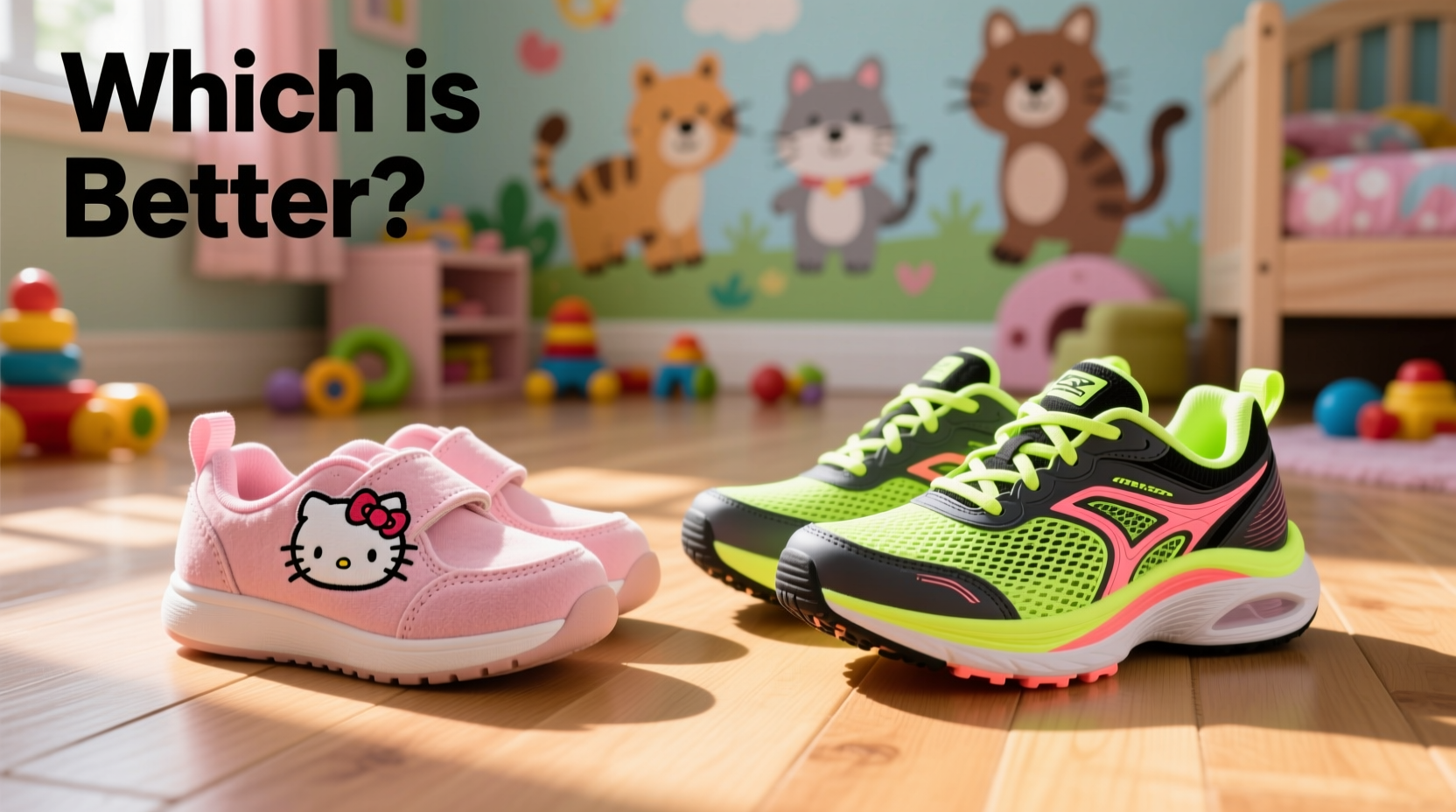
At first glance, Hello Kitty board shoes and running shoes might appear similar—both are casual sneakers typically made for walking and light play. However, their design philosophies diverge in important ways.
Board shoes, originally designed for skateboarding, prioritize flat soles, flexible uppers, and grippy outsoles. They’re built for board control and street wear, not endurance or high-impact movement. In contrast, running shoes are engineered with cushioning, arch support, heel stability, and shock absorption to handle repetitive motion and protect developing joints.
When scaled down for children, especially in themed lines like Sanrio’s Hello Kitty collaborations, board shoes often sacrifice structural support for visual charm. Running shoes, even in kid-friendly designs, maintain biomechanical priorities. This distinction becomes critical during early childhood, when feet are still forming and proper alignment supports healthy development.
Comfort and Support: What Your Child Actually Needs
Children’s feet grow rapidly, but they also require consistent support to develop correctly. According to pediatric podiatrists, flat, unsupportive shoes can contribute to issues like overpronation, plantar fasciitis, and gait imbalances—even in toddlers and preschoolers.
“Between ages 3 and 8, children’s arches are still forming. Footwear should provide gentle guidance, not just flexibility.” — Dr. Lena Torres, Pediatric Podiatrist
Hello Kitty board shoes, while soft and lightweight, typically lack structured midsoles and arch contouring. Their flat profile may feel comfortable initially, but prolonged wear on hard surfaces like school floors or playgrounds can lead to foot fatigue. Running shoes, by comparison, often include:
- Removable insoles for orthotic compatibility
- Dual-density midsoles for impact dispersion
- Heel counters to stabilize ankle alignment
- Breathable mesh linings to reduce moisture buildup
If your daughter spends hours walking, running, or playing at school or daycare, running shoes offer superior protection. Board shoes are better suited for short outings, dress-up, or casual wear where performance isn’t a priority.
Tip: Press down on the sole near the ball of the foot—if it bends too easily, it may not support proper toe-off mechanics during walking.Comparative Breakdown: Features at a Glance
| Feature | Hello Kitty Board Shoes | Kids’ Running Shoes |
|---|---|---|
| Sole Flexibility | High (full sole bend) | Moderate (flex only at toe) |
| Arch Support | Limited or none | Present (molded or removable) |
| Cushioning | Minimal | Medium to high |
| Durability | Moderate (canvas/fabric upper) | High (reinforced stitching, rubber overlays) |
| Best Use Case | Casual wear, light play | Running, school, outdoor play |
| Style Appeal | Very high (character branding) | Varies (some themed options) |
Real-Life Scenario: Emma’s After-School Routine
Emma, age 6, loves her pink Hello Kitty board shoes. She wears them every day after school for the walk home and during park playtime. Her mother noticed she often complained of tired legs and sometimes walked with a slight inward roll of her ankles. After a visit to a pediatric foot specialist, the doctor explained that while the shoes were adorable, they provided no support for her flat feet and active routine.
The family switched to a pair of supportive running shoes with a Hello Kitty-themed design from a reputable athletic brand. Within two weeks, Emma reported less fatigue, and her gait improved noticeably. The new shoes had a firm heel cup, a contoured footbed, and enough cushioning to absorb the impact of jumping and running. Her mom kept the board shoes for weekends and special occasions—reserving them for low-activity days.
This case illustrates a balanced approach: honoring a child’s preferences while prioritizing health based on lifestyle demands.
How to Choose the Right Shoe: A Practical Checklist
Before purchasing any shoe for your child, use this checklist to ensure you’re making a smart, sustainable choice:
- Assess daily activity level: Does your child run, jump, or stand for long periods?
- Check for structure: Squeeze the heel counter—does it feel firm?
- Test the sole: Can you twist the shoe easily? Less twist = more stability.
- Look inside: Is there a defined arch area or removable insole?
- Ensure proper fit: Leave a thumb’s width at the toe; no slipping at the heel.
- Consider rotation: Rotate between 2–3 pairs to extend lifespan and reduce odor.
- Evaluate aesthetics honestly: Will your child wear them willingly, or resist due to discomfort?
Frequently Asked Questions
Can my daughter wear Hello Kitty board shoes to school?
Occasionally, yes—but not daily if her school involves a lot of walking or physical education. Board shoes lack the support needed for all-day wear. If she loves the look, consider pairing a supportive shoe with Hello Kitty socks or accessories instead.
Are there Hello Kitty running shoes available?
Yes. Brands like Skechers, Puma, and New Balance occasionally release licensed Hello Kitty collections that combine character styling with athletic functionality. These hybrid models offer the best of both worlds: recognizable design with proper cushioning and support.
How often should kids’ shoes be replaced?
Every 3–6 months, depending on growth and wear. Children’s feet can grow half a size or more in just a few months. Check fit monthly by tracing the foot on paper and comparing it to the shoe’s interior length.
Final Recommendation: Match Shoes to Lifestyle
There is no single “best” shoe for every child. The answer depends on how the shoes will be used. For active girls who run, climb, and explore, running shoes are the clear winner in terms of foot health and long-term comfort. For imaginative play, dress-up days, or short outings where performance isn’t key, Hello Kitty board shoes can bring joy without harm—when worn in moderation.
The ideal solution is balance: invest in one or two pairs of high-quality running shoes for everyday use, and keep a pair of fun-themed board shoes for special moments. Look for brands that merge safety with style, such as Skechers’ D’Lites Hello Kitty series or New Balance’s junior models with customizable charms.
“The goal isn’t to eliminate fun footwear—it’s to ensure that the shoes doing the heavy lifting are built for the job.” — Dr. Alan Kim, Pediatric Orthopedic Consultant
Take Action Today
Your daughter deserves both comfort and confidence in every step she takes. Start by evaluating her current shoe rotation. Are her favorites supporting her feet—or just her style? Swap out worn or unsupportive shoes for ones that pass the thumb test, the twist test, and the wear-test of real life. And don’t underestimate the power of letting her choose within smart boundaries—a child who feels heard is more likely to wear the right shoes willingly.
💬 Have a favorite kids’ shoe brand that combines support and cuteness? Share your recommendation in the comments and help other parents make confident choices!








