Choosing between a hanging and a freestanding punching bag isn't just about space or budget—it's about how each type affects your training experience. The way a bag moves, absorbs impact, and responds to your strikes directly influences technique development, power transfer, and overall satisfaction during workouts. While both options serve serious fitness and combat sports enthusiasts, the \"feel\" of training can differ dramatically depending on which you pick.
This isn’t merely a matter of personal preference; physics, biomechanics, and real-world usage patterns shape how each bag behaves under pressure. Whether you're building a home gym, refining boxing combinations, or conditioning for self-defense, understanding these differences helps you invest in equipment that enhances—not hinders—your progress.
The Physics of Impact: How Each Bag Absorbs Force
When you throw a punch, force travels from your body through your fist into the target. How the bag reacts determines whether energy is absorbed smoothly or reflected back unnaturally.
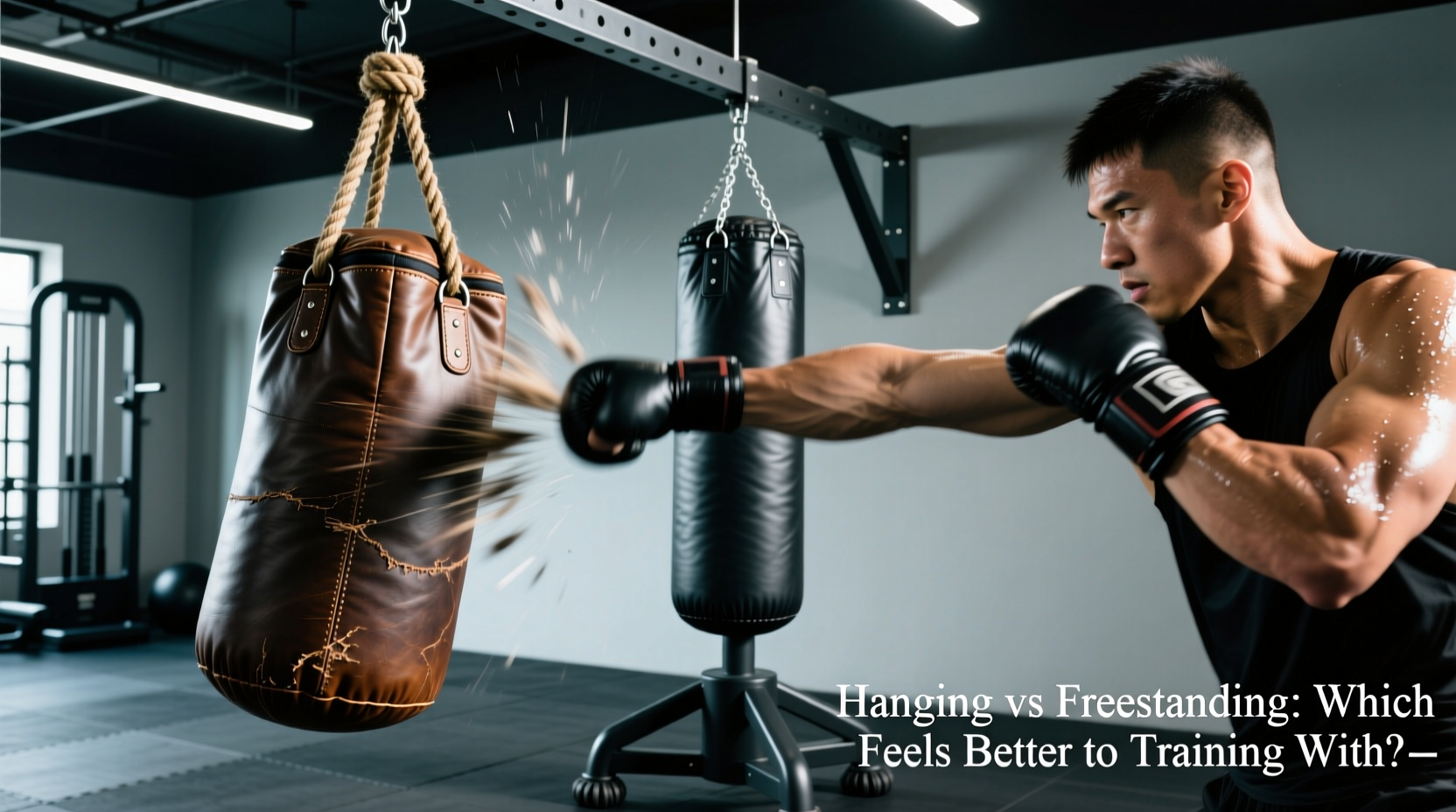
A traditional hanging bag, suspended from a ceiling mount or heavy-duty stand, swings freely. This mimics the movement of a real opponent—when struck, it recoils and returns, teaching timing, distance control, and follow-through. The chain or bungee suspension allows multi-directional motion, so hooks, uppercuts, and body shots produce realistic feedback.
In contrast, most freestanding bags rely on a weighted base filled with sand or water. When hit, they pivot at the base rather than swing from above. While modern models use spring-loaded necks to simulate some give, their movement is more limited and often ends in a wobble instead of a clean rebound. Heavy strikes can cause them to rock excessively or even tip over if not properly stabilized.
“Freestanding bags are great for beginners, but they don’t replicate human kinetic response. If you want authentic feedback, nothing beats a well-hung bag.” — Marcus Tran, Boxing Coach & Strength SpecialistTip: Test a freestanding bag by throwing three consecutive jabs—if it starts wobbling off-axis, its stability may hinder advanced drills.
Realistic Movement and Training Feedback
The sensation of hitting a target that moves like a person improves muscle memory and coordination. A hanging bag rewards proper technique: a clean straight punch causes a smooth rotation, while poor form results in awkward jerks or lateral shakes that signal imbalance.
Because hanging bags typically have higher density (especially canvas or grain-filled models), they provide firmer resistance. This allows fighters to develop power without sinking too deep into soft padding. You feel the impact in your knuckles and wrists—within safe limits—which reinforces correct alignment.
Freestanding alternatives often use softer foam cores and synthetic exteriors. While safer for inexperienced users, this cushioning can mask technical flaws. Punches land without sufficient resistance, leading to false confidence. Over time, this may encourage lazy mechanics because there’s less consequence for improper wrist positioning or weak hip engagement.
Additionally, freestanding bags tend to bob back unpredictably after being struck, especially with body shots. Instead of rotating away and returning gradually, they snap forward due to spring tension, creating an artificial rhythm that doesn’t match sparring dynamics.
Stability, Space, and Setup Considerations
Despite the superior feel of hanging bags, practical constraints often push people toward freestanding versions. Not every home has a ceiling beam capable of supporting 80+ pounds of dynamic load, nor do renters have permission to install hardware.
Here’s a breakdown of key logistical factors:
| Factor | Hanging Bag | Freestanding Bag |
|---|---|---|
| Installation Requirement | Ceiling joist or wall-mounted bracket | None – place on flat surface |
| Floor Space | Moderate (needs swing radius) | Large footprint (base takes up floor area) |
| Mobility | Fixed location unless using portable stand | Easy to move or store |
| Noise Level | Low (no base contact) | Moderate to high (wobbling base creates thud) |
| Cost (Entry-Level) | $70–$120 + $50–$150 for mounting | $100–$250 (all-inclusive) |
If ceiling installation isn’t possible, consider a portable pull-up bar-style frame designed for apartments. These freestanding frames allow you to hang a traditional bag without permanent fixtures, offering the best of both worlds—realistic motion and no structural modifications.
Mini Case Study: Home Gym Trade-offs
Jamal, a software developer in Chicago, wanted to train boxing basics in his studio apartment. He initially bought a top-tier freestanding bag for convenience. After six weeks, he noticed his jab lacked snap and his footwork felt disconnected from his hands. During a visit to a local gym, he tried a 70-pound hanging bag and immediately sensed the difference—the crisp recoil forced him to reset faster and stay balanced.
He returned home and mounted a 70-pound canvas bag using a reinforced doorway frame. Though it took effort and cost extra, the improvement in technique was noticeable within two sessions. “I didn’t realize how much the wobble was messing with my timing,” he said. “Now I actually feel like I’m boxing, not just hitting something.”
Actionable Tips for Choosing Based on Feel
- Prioritize suspension quality: Even with a hanging bag, cheap chains or weak mounts reduce responsiveness. Use aircraft-grade steel chains or elastic bungees rated for 300+ lbs.
- Fill freestanding bases correctly: Use sand instead of water—it doesn’t evaporate, freeze, or shift as easily, improving stability.
- Position matters: Hang bags so the sweet spot aligns with your chin height when shadowboxing. Freestanding bags should be adjusted so they don’t tilt forward when struck.
- Add gloves and wraps: The feel also depends on hand protection. High-density foam gloves on a soft bag dull sensation further—pair firm gloves with appropriate bag firmness.
FAQ: Common Questions About Punching Bag Feel
Does a heavier bag always feel better?
Not necessarily. A 100-pound bag might absorb punches too deeply if undersized for your strength, reducing feedback. Ideal weight depends on skill level: 70–90 lbs is standard for adults. Overly heavy bags can strain shoulders if swung improperly.
Can I make a freestanding bag feel more like a hanging one?
To some extent. Choose models with dual-spring systems and wide, low-center-of-gravity bases. Some brands offer “pro sway” technology that reduces wobble. Still, they won’t fully replicate overhead suspension dynamics.
Is it worth modifying my space for a hanging bag?
If you’re serious about martial arts, boxing, or functional fitness, yes. The investment pays off in improved technique, reduced injury risk, and longer-term satisfaction. Temporary solutions like adjustable stands avoid drilling but still require ceiling clearance.
Final Recommendation: What Feels Better—and Why It Matters
For pure training feel, a properly installed hanging punching bag delivers a more natural, responsive, and technically honest experience. Its movement teaches rhythm, precision, and power generation in ways that freestanding units struggle to match. The resistance, swing, and return mimic human interaction, making drills more transferable to real combat scenarios.
That said, freestanding bags excel in accessibility. They’re ideal for casual users, small children, or those with strict rental agreements. Advances in engineering have narrowed the performance gap, but not eliminated it.
If your goal is authentic striking development—whether for fitness, competition, or self-defense—a hanging bag remains the gold standard. However, if mobility, simplicity, or space limitations dominate your decision, a high-quality freestanding model can still deliver effective workouts—just with compromises in realism.
“The bag should challenge your technique, not hide its weaknesses.” — Lena Park, Muay Thai Instructor, Apex Combat Academy
Checklist: Choosing the Right Bag for Your Needs
- Assess available space and ceiling structure.
- Determine primary use: cardio, skill work, or strength conditioning.
- Test both types if possible (visit gyms or showrooms).
- For hanging bags, verify mounting hardware strength.
- For freestanding, check base weight and material durability.
- Ensure proper flooring protection under either type.
- Match bag size to user height and reach.









