
Deciding between a gym membership and building a home gym is one of the most consequential choices fitness enthusiasts face. Both options promise access to tools for strength, endurance, and overall health—but they differ significantly in cost, flexibility, motivation, and long-term value. The real question isn’t which option is objectively better, but rather: When does each investment become truly worth it?
The answer depends on lifestyle, goals, budget, space, and consistency. For some, the energy of a commercial gym fuels progress. For others, the privacy and convenience of a personal setup make all the difference. This guide breaks down both paths with practical insights, real-world examples, and actionable steps to help you determine the best return on your fitness investment.
Cost Breakdown: Upfront vs Ongoing Expenses
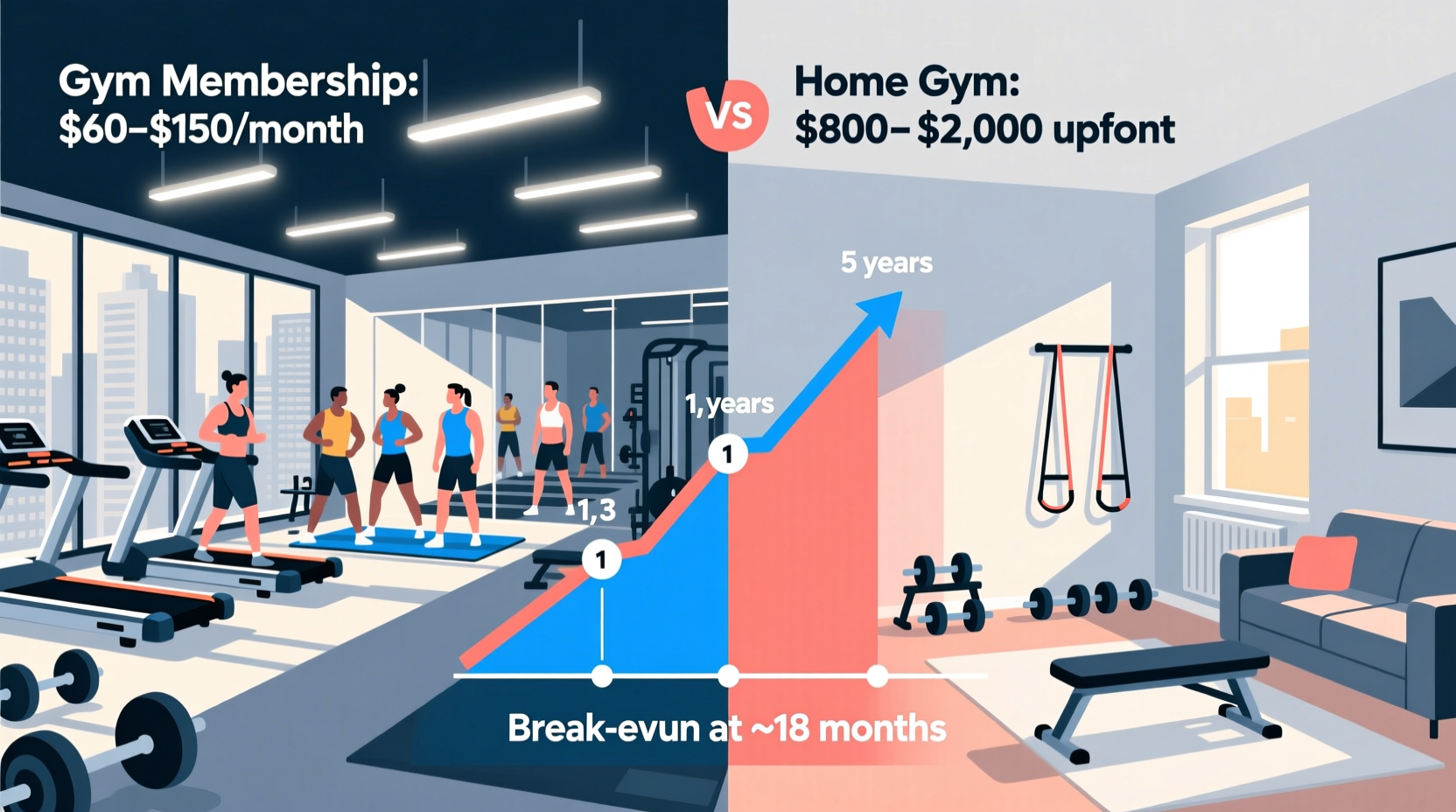
One of the first considerations is financial. While gym memberships appear cheaper month-to-month, their cumulative cost can surpass that of a home gym over time. Conversely, purchasing equipment demands a larger initial outlay but may save money in the long run.
| Option | Average Upfront Cost | Monthly Cost | 5-Year Total (approx.) |
|---|---|---|---|
| Basic Gym Membership | $50–$100 (initiation) | $30–$80 | $1,800–$5,400 |
| Premium Gym (e.g., Lifetime, Equinox) | $100–$300 | $100–$200 | $6,000–$12,000 |
| Minimal Home Gym (dumbbells, bench, resistance bands) | $300–$600 | $0–$20 (maintenance) | $300–$700 |
| Fully Equipped Home Gym (rack, barbell, plates, cardio machine) | $2,000–$5,000 | $0–$50 (utilities, repairs) | $2,000–$5,300 |
At first glance, a $40/month gym seems affordable. But after five years, that’s nearly $2,400—enough to build a solid home gym with room for upgrades. However, if you only plan to work out occasionally or travel frequently, locking into a long-term contract might not offer proportional value.
Tip: Calculate your break-even point. Divide your desired home gym cost by your current monthly gym fee. If it takes more than 3 years to recoup the investment, a membership may still be smarter.Lifestyle Fit: Convenience and Consistency
No matter how advanced a gym is, it’s useless if you don’t go. The same applies to home equipment—if it gathers dust, it becomes an expensive shelf.
Commercial gyms offer structured environments, social accountability, and immediate access to specialized machines like cable stations, squat racks, and cardio arrays. They also host group classes, trainers, and events that foster community. For people who thrive on external motivation, these factors are invaluable.
Home gyms eliminate commute time, weather delays, and scheduling conflicts. You can train at 6 a.m., during lunch, or post-dinner without leaving your house. This flexibility dramatically increases adherence for busy professionals, parents, or those with unpredictable schedules.
“Consistency beats intensity every time in fitness. The best workout is the one you actually do.” — Dr. Sarah Mitchell, Sports Psychologist
If you’ve ever skipped the gym because it was raining, you were tired, or it was too crowded, a home setup could remove those friction points. On the flip side, if working out at home feels isolating or easily interrupted, the structure of a gym may keep you accountable.
Space and Equipment Needs: What Are You Training For?
Your fitness goals play a critical role in determining what kind of setup makes sense.
- General fitness or weight loss: A compact home gym with adjustable dumbbells, a mat, and a jump rope may suffice.
- Powerlifting or Olympic lifting: Requires significant space, a barbell, bumper plates, rack, and flooring—often impractical in apartments.
- Cardio focus: Treadmills and bikes take up space but are easy to use daily. Consider foldable models or under-desk ellipticals.
- Cross-training or HIIT: Minimal equipment needed—resistance bands, kettlebells, and a plyo box work well at home.
Apartment dwellers or those with limited square footage may find even basic gear intrusive. Noise and floor protection are additional concerns, especially in multi-story buildings. Meanwhile, standalone homes with basements or garages offer ideal conditions for robust setups.
Mini Case Study: Jamie’s Transition from Gym to Home
Jamie, a software engineer in Chicago, paid $75/month for a premium gym near her office. She attended regularly for six months after signing up, then attendance dropped as deadlines increased. By year two, she averaged just three visits per month—spending $900 annually for minimal use.
After evaluating her habits, she invested $1,200 in a foldable treadmill, adjustable dumbbells, and a power rack. She converted a corner of her basement into a workout zone. Within three months, her consistency improved. Without commute time and with early-morning access, she now trains four to five times weekly. Her break-even point arrived in 16 months, and she reports higher motivation due to uninterrupted sessions.
Jamie’s story illustrates a common pattern: enthusiasm fades when logistics interfere. Removing barriers made the difference.
Long-Term Value and Resale Potential
Unlike memberships, home gym equipment is a tangible asset. While it depreciates, quality items retain value and can be resold. Used Olympic bars, weight plates, and commercial treadmills often sell for 50–70% of original price if well-maintained.
Additionally, owning equipment allows incremental upgrades. Start with basics, then add accessories like pull-up bars, foam rollers, or smart mirrors over time. This modular approach spreads cost while maintaining momentum.
Gym memberships, however, offer no residual value. Canceling mid-contract may incur fees, and freezing plans often cost extra. Some chains allow guest passes or family add-ons, increasing utility, but these perks vary widely.
Tip: Buy used equipment from reputable sellers. Facebook Marketplace, Craigslist, and gym liquidation sales offer high-quality gear at 30–60% off retail.Step-by-Step Guide: Choosing Your Path
Follow this decision framework to determine the best investment for your situation:
- Assess your current workout frequency. Have you consistently exercised in the past 6 months? If not, consider why—and whether environment was a factor.
- Define your primary goal. Muscle gain, fat loss, mobility, sport-specific training? Match your goal to equipment needs.
- Evaluate available space. Measure the area where you’d place equipment. Can it accommodate a rack and barbell? Is flooring suitable?
- Calculate your budget. Include not just purchase price but delivery, assembly, and maintenance.
- Test commitment level. Try a 3-month gym membership first if unsure. Track actual usage weekly.
- Simulate a home routine. Do a week of bodyweight workouts at home. Did you complete them? Was distraction a problem?
- Compare 3-year totals. Project costs for both options. Factor in inflation, potential rate hikes, and equipment lifespan.
- Make a trial decision. Start small—either with a short-term gym pass or a single piece of home gear—then scale based on results.
Checklist: Is a Home Gym Worth It for You?
Answer “yes” to five or more of these to justify the investment:
- Do you work out at least 3–4 times per week?
- Is your schedule unpredictable or tight?
- Do you feel self-conscious or distracted at the gym?
- Do you have dedicated space (garage, spare room, basement)?
- Are you willing to maintain and organize equipment?
- Have you stuck with fitness routines in the past?
- Do you prefer privacy or solo training?
- Are you planning to stay in your current home for 2+ years?
If most answers are “no,” a flexible gym membership—or even hybrid approach—may serve you better.
Hybrid Model: Best of Both Worlds?
Some individuals benefit from combining both options. For example:
- Use a home gym for quick strength sessions and rely on a facility for swimming, saunas, or group classes.
- Maintain a basic setup at home for travel or illness-related disruptions.
- Downgrade to a low-cost gym (e.g., Planet Fitness) for occasional access while relying primarily on home equipment.
This model offers resilience. When life interferes—moving, injury, or burnout—you’re not entirely dependent on one system. Flexibility becomes a strategic advantage.
FAQ
Can I build an effective home gym for under $500?
Yes. Focus on versatile, space-efficient gear: adjustable dumbbells ($250–$350), a sturdy bench ($80–$120), resistance bands ($30), and a door-mounted pull-up bar ($30). Add a yoga mat and foam roller for recovery. This setup supports full-body training for years.
Do home gyms lose value quickly?
Like cars, equipment depreciates fastest in the first year. However, well-maintained strength gear (barbells, racks, benches) holds value better than cardio machines. Treadmills and ellipticals suffer more wear and are harder to move, reducing resale appeal.
Are there hidden costs with home gyms?
Yes. Consider floor protection (rubber mats: $100–$300), ventilation (especially in garages), lighting, and electricity for larger machines. Also account for eventual replacement of cables, belts, or worn padding.
Conclusion: Make the Investment That Fits Your Life
The choice between a gym membership and home gym equipment isn’t about which is superior—it’s about alignment with your reality. A $5,000 home gym is a poor investment if it sits unused, just as a $100/month gym fee is wasteful if you never walk through the door.
Worth is measured not by price tag, but by utilization, consistency, and results. Whether you choose the energy of a bustling fitness center or the quiet control of a personal space, the real return comes from showing up—repeatedly, intentionally, and sustainably.
🚀 Ready to decide? Audit your last 90 days of workouts. Then apply the step-by-step guide above. Your future self will thank you for choosing wisely.








