Deciding between a gym membership and building a home gym is more than a lifestyle choice—it’s a financial decision. While convenience, motivation, and variety play roles, the real cost difference often becomes clear only after months or years of consistent use. A break-even analysis helps quantify when your initial investment in home gym equipment starts saving you money compared to ongoing monthly fees at a fitness center.
This article breaks down the true costs of both options, compares realistic usage patterns, and calculates the point at which a home gym pays for itself. Whether you're just starting your fitness journey or reevaluating your current setup, this guide provides actionable insights backed by data and real-world examples.
Understanding the True Cost of Gym Memberships
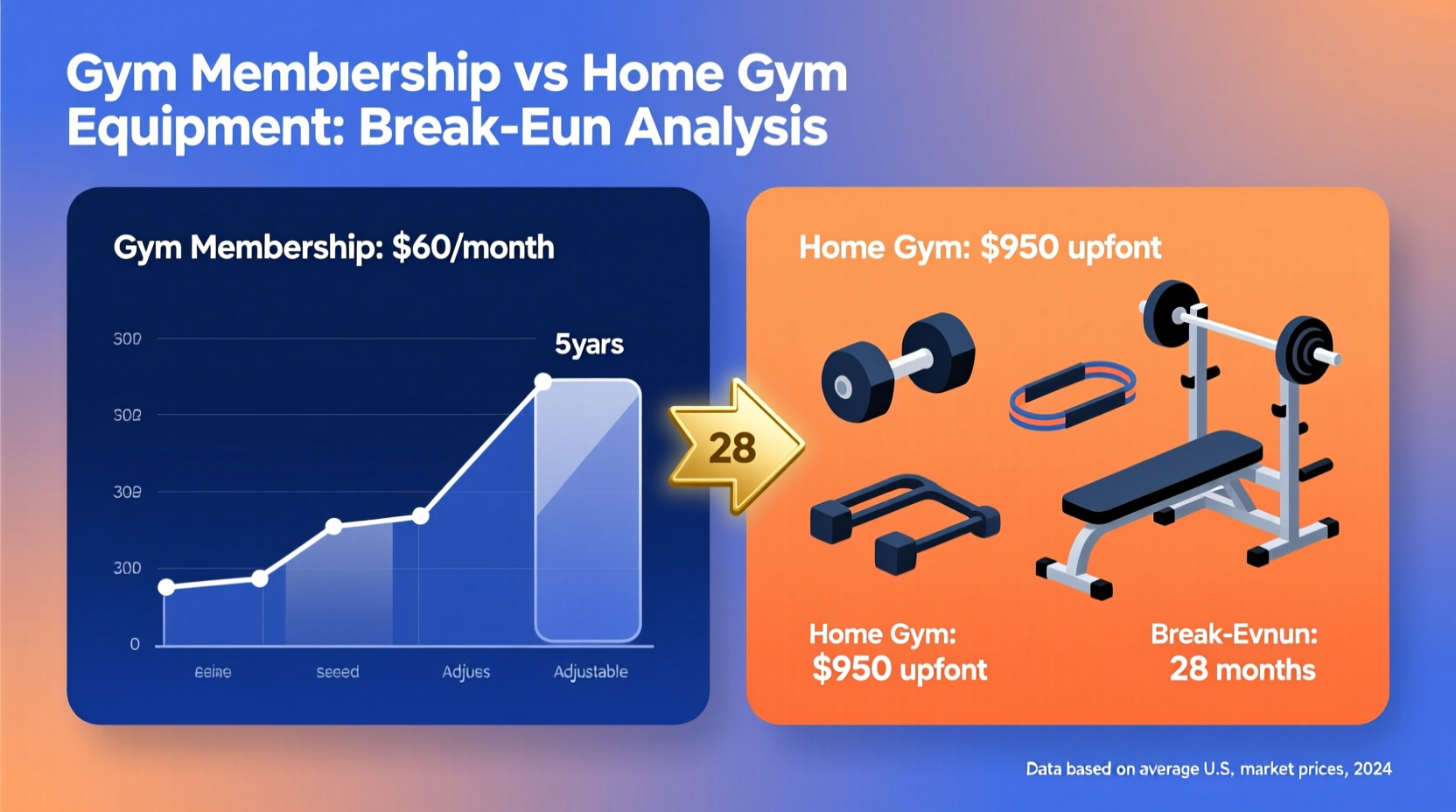
Gym memberships are often marketed as affordable, with entry-level plans starting as low as $10–$30 per month. However, these introductory rates rarely last. Hidden fees, annual price hikes, and additional charges for premium classes or personal training can significantly increase the long-term cost.
According to the International Health, Racquet & Sportsclub Association (IHRSA), the average U.S. gym membership costs $57 per month. Premium urban gyms or boutique studios can charge $100–$200 monthly. Over time, these recurring payments accumulate into substantial expenses.
| Type of Gym | Avg. Monthly Fee | Annual Cost | 5-Year Total |
|---|---|---|---|
| Basic Budget Gym | $29 | $348 | $1,740 |
| Mid-Tier Chain Gym | $57 | $684 | $3,420 |
| Premium/Boutique Gym | $150 | $1,800 | $9,000 |
These figures assume no rate increases, which is optimistic. A 3% annual fee hike—common across many service industries—adds hundreds of dollars over five years. Additionally, cancellation fees, initiation costs ($50–$100), and parking or transportation expenses further inflate the total.
Tip: Always read the contract terms before signing up. Many gyms lock users into 12-month agreements with early termination fees.Calculating the Real Investment in a Home Gym
Building a home gym requires an upfront investment, but unlike a gym membership, there are no recurring monthly fees. The key is determining how much you need to spend to create a functional, sustainable workout space.
A basic home gym doesn’t require thousands of dollars. You can start small and scale up. Essential items include:
- Dumbbells or adjustable weight set ($100–$300)
- Yoga mat ($20–$50)
- Resistance bands ($15–$40)
- Kettlebell ($30–$80)
- Foldable bench ($60–$120)
- Jump rope ($10–$25)
For those wanting more versatility, adding a power rack, barbell, and weight plates brings the total closer to $800–$1,500. High-end setups with treadmills, ellipticals, or smart machines like Peloton or Mirror exceed $2,000–$5,000.
The average effective home gym cost for serious exercisers—those who want full-body strength and cardio capability—is around $1,200. This includes durable, multi-functional equipment that lasts 5–10 years with proper care.
“Most people overestimate what they need. A well-designed compact setup with resistance training tools covers 90% of fitness goals.” — Jordan Carter, Certified Personal Trainer and Home Fitness Consultant
Break-Even Analysis: When Does a Home Gym Pay for Itself?
The break-even point is the moment when the cumulative cost of a gym membership equals the one-time cost of a home gym. After this point, owning equipment becomes cheaper.
To calculate this, use the formula:
Break-Even Time (months) = Home Gym Cost ÷ Monthly Gym Fee
Let’s apply it to three scenarios:
| Home Gym Cost | Monthly Gym Fee | Break-Even (Months) | Break-Even (Years) |
|---|---|---|---|
| $600 | $30 | 20 | 1.7 |
| $1,200 | $57 | 21.05 | 1.75 |
| $1,200 | $150 | 8 | 0.67 |
In most cases, a home gym pays for itself within 1 to 2 years—even faster if you’re paying for a premium gym. After that, every month of workouts costs nothing beyond electricity and minimal maintenance.
This calculation assumes consistent gym use. If you go less than twice a week, the value proposition shifts. But for anyone exercising 3+ times weekly, the math strongly favors a home setup.
Adjusting for Inflation and Usage Patterns
Real-world conditions affect the timeline. Consider:
- Inflation: Gym fees rise ~3% annually. A $57/month plan could cost $69 in five years.
- Usage frequency: People who attend the gym fewer than 10 times a month may not justify the expense.
- Time savings: Eliminating commute time (often 30–60 minutes round-trip) adds hidden value to home workouts.
If you value your time at $20/hour and save 4 hours per week by working out at home, that’s an additional $4,160/year in saved time—not even counting fuel or transit costs.
Mini Case Study: Sarah’s Fitness Decision
Sarah, a 32-year-old marketing professional in Denver, had been paying $79/month for a mid-tier gym with pool access and group classes. She used the gym about 3 times a week but often skipped sessions due to traffic and evening work meetings.
In January, she invested $1,100 in a home gym: adjustable dumbbells, a foldable bench, resistance bands, a yoga mat, and a smart fitness mirror subscription ($39/month). Her first-year total: $1,100 + ($39 × 12) = $1,568.
Her previous gym would have cost $79 × 12 = $948 that year. While her initial outlay was higher, by Year 2, she paid only $468 (subscription only), while her old gym would have cost another $948 (assuming no price hike).
More importantly, Sarah increased her workout consistency from 3 to 5 days a week because of convenience. She lost 15 pounds in six months and reported lower stress levels. The break-even point occurred in Month 14, and by Year 3, she saved over $1,000 compared to her previous plan.
For Sarah, the switch wasn’t just economical—it improved adherence and results.
Checklist: Choosing the Right Option for You
Use this checklist to evaluate whether a gym membership or home gym makes more sense based on your lifestyle and goals:
- Do you exercise at least 3 times per week? → Favors home gym
- Is your gym more than 20 minutes away? → Favors home gym
- Do you rely on group classes or trainers? → Favors gym membership
- Do you have space for basic equipment (e.g., corner of a room)? → Favors home gym
- Are you likely to skip workouts due to schedule conflicts? → Favors home gym
- Do you enjoy social motivation from others at the gym? → Favors gym membership
- Can you afford a one-time $600–$1,500 investment? → Favors home gym
- Do you travel frequently or have an unstable schedule? → May favor flexible gym access
This tool helps align your choice with behavior, not just budget. The most cost-effective option is the one you’ll actually use consistently.
Step-by-Step Guide to Building a Cost-Effective Home Gym
If you decide a home gym is right for you, follow this timeline to build it efficiently without overspending:
- Month 1: Assess Space and Goals
Measure available area and define fitness objectives (strength, cardio, flexibility). Choose a quiet corner or spare room. - Month 1: Start with Essentials
Purchase a yoga mat, resistance bands, and adjustable dumbbells. Total: ~$200–$300. - Month 2: Add Functional Equipment
Buy a sturdy bench and kettlebell. Enables chest presses, step-ups, and core work. - Month 3: Evaluate Gaps
Identify missing components—cardio? Add a jump rope or secondhand treadmill. Strength? Consider a pull-up bar or power cage. - Month 4+: Expand Smartly
Only add gear you’ll use regularly. Avoid impulse buys. Focus on durability over brand names.
This phased approach spreads the cost and prevents buyer’s remorse. Most people complete their ideal setup within 6 months.
Tip: Buy used equipment from Facebook Marketplace, Craigslist, or gym liquidation sales. Save 30–70% on high-quality brands like Rogue, NordicTrack, or Bowflex.FAQ
Is a home gym really cheaper than a gym membership?
Yes, in most cases. Once the initial equipment cost is covered, there are no recurring fees. For users exercising 3+ times a week, a home gym typically breaks even within 1–2 years and becomes significantly cheaper over time.
What if I lose motivation working out at home?
Motivation varies by individual. Some thrive in the structured environment of a gym. To stay consistent at home, set a fixed schedule, use fitness apps, join virtual classes, or train with a partner via video call. Environment design—dedicated space, good lighting, speakers—also boosts adherence.
Can I combine both options?
Absolutely. Some people maintain a low-cost gym membership (e.g., $20/month basic access) for occasional use while relying primarily on their home setup. This hybrid model offers flexibility without high expenses.
Final Thoughts: Making the Smart Financial Move
The choice between a gym membership and a home gym isn’t just about cost—it’s about sustainability, convenience, and personal discipline. But financially, the numbers are clear: for consistent exercisers, a home gym almost always wins in the long run.
The break-even point arrives sooner than most expect—often within a year and a half. Beyond that, every workout strengthens your body and your wallet. And when you factor in time saved, reduced stress, and greater scheduling freedom, the benefits compound.
You don’t need a fully equipped basement gym to start. Begin with a few key pieces, use them daily, and expand as needed. The goal isn’t perfection—it’s progress, both in fitness and fiscal responsibility.
🚀 Ready to take control of your fitness and finances? Calculate your personal break-even point today—then make the move that pays off for years to come.








