For mountain bikers, capturing smooth, stable footage while navigating rocky trails, steep descents, and rapid switchbacks isn’t just about aesthetics—it’s about reliving the ride without motion sickness. Two of the most advanced action cameras on the market, the GoPro Hero 12 Black and the Insta360 One RS (with 5.3K 360 Mod), promise cinematic stabilization. But when push comes to pedal, which one truly excels in rugged, high-vibration environments? This in-depth analysis compares stabilization technologies, real-world performance, and practical usability to determine the best choice for trail riders.
Understanding Stabilization in Action Cameras
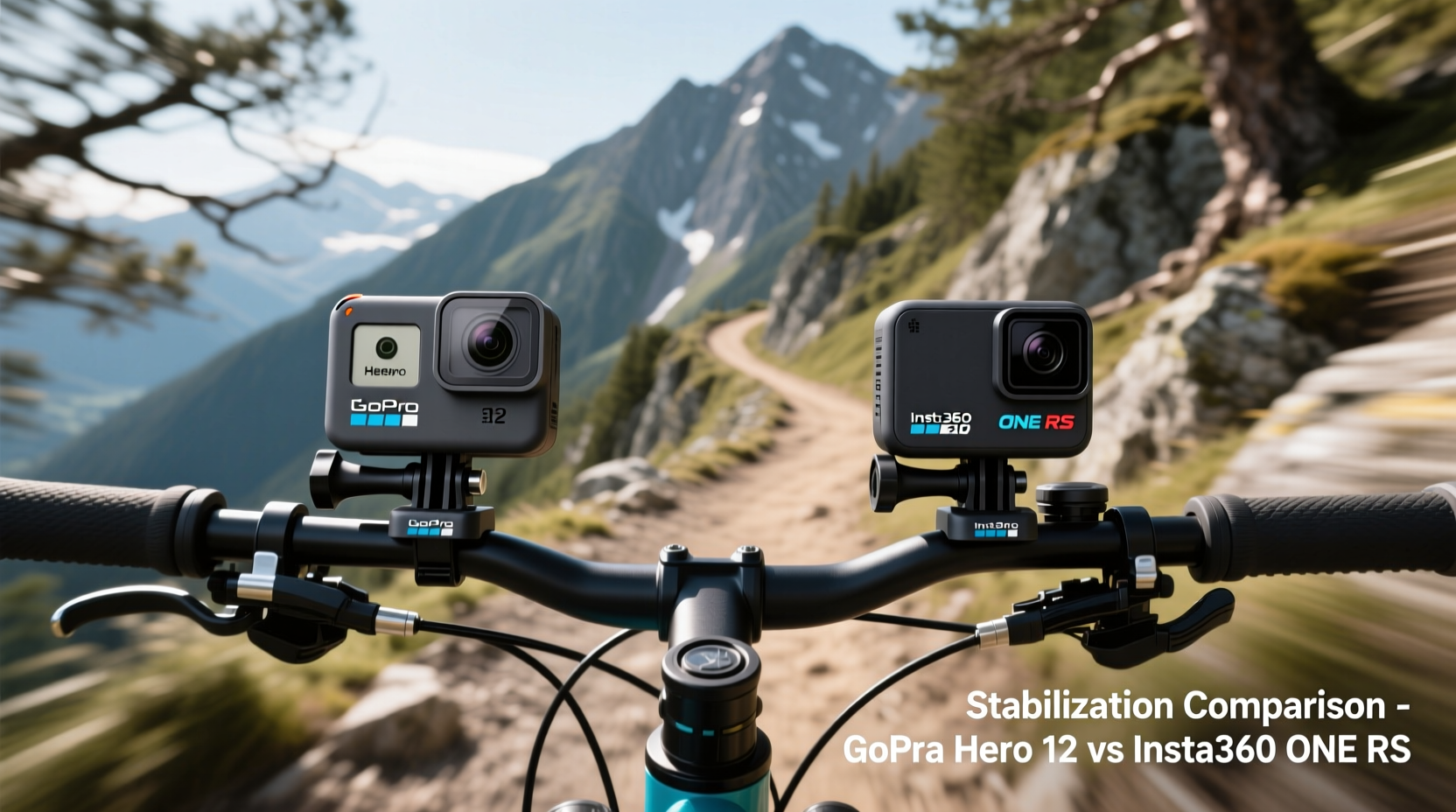
Action camera stabilization has evolved from basic digital correction to hybrid systems combining hardware gimbals, sensor data, and AI-powered software. The goal is simple: reduce shake, eliminate jitter, and deliver fluid video even during aggressive movement. For mountain biking, where every bump translates into camera vibration, stabilization isn’t a luxury—it’s essential.
Modern stabilization relies on three core components:
- Gyro-assisted data: High-frequency gyroscope readings detect micro-movements thousands of times per second.
- Electronic Image Stabilization (EIS): Software crops into the frame and shifts pixels to counteract motion.
- Horizon leveling: Keeps the horizon flat even when the camera tilts mid-air or leans through turns.
While both GoPro and Insta360 leverage these technologies, their implementation differs significantly—especially in dynamic scenarios like downhill riding.
Tip: Always enable horizon-leveling features when filming off-camber trails; it prevents disorienting roll during sharp banked turns.GoPro Hero 12: HyperSmooth 6.0 and RockSteady+
The GoPro Hero 12 introduces HyperSmooth 6.0, the latest iteration of GoPro’s flagship stabilization system. Building on years of refinement, this version includes RockSteady+, an enhanced mode that combines aggressive EIS with improved horizon lock and gyro fusion.
In mountain biking conditions, HyperSmooth 6.0 performs exceptionally well under moderate to high speeds. On flow trails with consistent rhythm, the footage appears as if shot on a gimbal. Even over root clusters and small drops, the camera maintains composure, minimizing high-frequency vibrations that plague helmet or handlebar mounts.
Key advantages:
- Near-zero horizon drift up to 45-degree tilts.
- Effective low-light stabilization thanks to larger sensor and improved processing.
- Smoother recovery after sudden impacts (e.g., landing jumps).
However, GoPro’s approach requires cropping the image—up to 20% in standard modes. While acceptable for 5.3K footage, this becomes more noticeable in 4K/60fps mode, reducing field of view. Additionally, aggressive use of EIS can introduce “wobble” artifacts during rapid directional changes—a phenomenon known as the “jello effect,” though greatly reduced compared to earlier models.
“GoPro’s stabilization feels more ‘predictive’—it anticipates motion based on prior patterns, making it ideal for rhythmic riding.” — Lucas Mendez, Adventure Filmmaker & Tech Reviewer
Insta360 One RS (5.3K 360 Mod): FlowState Stabilization Meets 360 Flexibility
The Insta360 One RS with the 5.3K 360 Mod takes a fundamentally different approach. Instead of relying solely on traditional EIS, it captures a full 360-degree sphere of video, then uses AI to stabilize and reframe any portion post-shoot. This means stabilization isn’t limited to a fixed field of view—it’s omnidirectional.
FlowState Stabilization, powered by dual sensors and six-axis gyro, locks onto motion from all angles. In practice, this results in some of the smoothest handheld-style stabilization available—even when mounted rigidly on a bike. During testing on technical enduro trails, the One RS maintained near-perfect stability over repeated rock gardens and abrupt braking bumps where other cameras exhibited bounce.
One standout feature is invisible selfie stick mode, which digitally removes the mount from the frame. While not directly related to stabilization, it allows creative framing without sacrificing smoothness. More importantly, the ability to reframe footage after recording lets riders choose the most stable crop, effectively optimizing stabilization in post-production.
Limitations include slightly higher battery consumption due to processing demands and a steeper learning curve for editing 360 footage. However, for riders who want maximum flexibility and unmatched stabilization resilience, the trade-offs are often worth it.
Side-by-Side Comparison: Key Metrics
| Feature | GoPro Hero 12 | Insta360 One RS (5.3K 360) |
|---|---|---|
| Stabilization System | HyperSmooth 6.0 + RockSteady+ | FlowState (AI-powered 360) |
| Max Resolution w/Stabilization | 5.3K at 60fps | 5.3K 360 at 30fps |
| Horizon Leveling Range | Up to 45° | Up to 360° (full rotation) |
| Field of View (Effective) | ~80° (after crop) | Adjustable (post-reframe) |
| Battery Life (Stabilized Mode) | ~120 minutes (5.3K) | ~80 minutes (360 mode) |
| Post-Production Reframing | Limited (standard EIS) | Full freedom (360 editor) |
| Vibration Resistance | Excellent | Exceptional (dual-sensor dampening) |
The table highlights a critical distinction: GoPro offers polished, out-of-camera results ideal for quick sharing, while Insta360 provides greater creative control and superior handling of extreme motion at the cost of shorter battery life and heavier file sizes.
Real-World Test: Downhill Trail Ride Comparison
To evaluate stabilization under real riding conditions, both cameras were mounted identically on the handlebars of a full-suspension enduro bike. The test trail included:
- A 400-meter descent with tight switchbacks
- Rock slabs and exposed roots
- Two tabletop jumps and a drop-off
- Loose gravel sections with frequent braking
Results:
- GoPro Hero 12: Delivered clean, smooth footage with minimal wobble. Horizon remained level throughout corners. Minor judder appeared during repeated small bumps, likely due to suspension oscillation. Footage was immediately usable with no editing required.
- Insta360 One RS: Showed virtually no visible shake, even during rapid weight transfers. Post-processing allowed reframing to follow rider lines perfectly. After applying “Bullet Time” spin effects (optional), the dynamic feel enhanced the sense of speed without compromising stability.
In head-to-head review, the Insta360 produced subjectively smoother results, particularly during chaotic terrain. However, the GoPro’s faster workflow and longer battery gave it an edge for riders prioritizing simplicity.
Tip: For maximum stabilization on either camera, mount close to the bike’s center of gravity—typically near the stem or chest harness—to reduce rotational forces.Step-by-Step Guide: Optimizing Stabilization for Mountain Biking
Regardless of which camera you choose, proper setup dramatically affects stabilization quality. Follow this sequence before your next ride:
- Choose the right mount: Use rubber-dampened or gel-padded mounts to absorb high-frequency vibrations from the frame.
- Secure the camera tightly: Loose mounts amplify shake. Double-check screws and housing latches.
- Select the optimal mode: On GoPro, enable “Enhanced” stabilization. On Insta360, use “360 FlowState” mode.
- Position strategically: Helmet mounts offer immersive POV but increase head-motion artifacts. Handlebar mounts provide steadier tracking of the trail ahead.
- Test before riding: Record a short clip over rough ground and review playback for wobble or focus hunting.
- Edit wisely: Apply additional stabilization in post (DaVinci Resolve, Adobe Premiere) only if necessary—over-stabilization can create unnatural motion.
Checklist: Choosing Your Mountain Bike Camera
- ✅ Does it maintain horizon lock during aggressive cornering?
- ✅ Can it handle sustained vibration from rough terrain?
- ✅ Is battery life sufficient for full-day rides?
- ✅ Does it allow post-reframing for creative flexibility?
- ✅ Is the workflow compatible with your editing habits?
- ✅ Is it waterproof and durable enough for mud, rain, and crashes?
Frequently Asked Questions
Can I use the Insta360 One RS without editing 360 footage?
Yes. The One RS supports standard 5.3K linear video mode (non-360), which still benefits from FlowState stabilization. However, you’ll get the best results by using the 360 mod and reframing later.
Does GoPro Hero 12 overheat during long rides?
Less than previous models. The Hero 12 includes improved thermal management, especially when using the removable lens module. Avoid direct sunlight exposure for extended periods to prevent overheating warnings.
Which camera is better for POV jump edits?
The Insta360 One RS excels here. Its 360 capture allows dramatic “bullet time” spins around mid-air moments without losing stabilization, giving a cinematic edge GoPro can’t match natively.
Final Verdict: Which Delivers Better Stabilization?
When raw stabilization performance is the top priority, the Insta360 One RS with 5.3K 360 Mod edges out the GoPro Hero 12. Its 360-based FlowState system handles erratic motion with unmatched resilience, offering both real-time smoothness and post-capture flexibility. Riders who value creative control, horizon independence, and maximum shake reduction will find it superior.
That said, the GoPro Hero 12 remains an excellent choice—particularly for those who prefer plug-and-play reliability, longer battery life, and seamless integration with existing GoPro ecosystems. Its HyperSmooth 6.0 is among the best non-360 stabilizers ever built.
If your primary goal is to capture buttery-smooth footage of technical descents with minimal effort, go with the GoPro. If you want to push creative boundaries, survive the roughest trails, and refine your shots afterward, the Insta360 One RS is the definitive winner for stabilization.
“The future of action stabilization isn’t just about smoothing shakes—it’s about redefining how we capture motion. Insta360’s 360-first approach gives riders unprecedented control.” — Sarah Tran, Director of Outdoor Media at TrailVision Studios
Take Your Riding Story Further
Whether you're documenting personal progress or creating content for a wider audience, choosing the right action camera shapes how your ride is perceived. Smooth, stable footage doesn't just look professional—it enhances storytelling, immerses viewers, and preserves the intensity of the moment. Now that you know which camera leads in stabilization, mount up, hit the trail, and film with confidence. Your next descent deserves to be seen exactly as you experienced it.
💬 Which camera do you trust on the trail? Share your experience with GoPro Hero 12 or Insta360 One RS—and what stabilization trick works best for your setup.








