
For outdoor enthusiasts, capturing high-quality hiking footage has become an essential part of the experience. Whether you're documenting a solo trek through the Rockies or sharing mountain vistas with followers on social media, your choice of camera matters. For years, GoPro has dominated the adventure videography space with rugged, compact action cameras built for extreme conditions. But as smartphone technology advances—especially in video stabilization and dynamic range—many hikers are asking: Is the iPhone now capable of replacing a GoPro 10?
The short answer: it depends on your priorities. While modern iPhones offer impressive video capabilities, especially in ideal lighting, they still face limitations when pushed to the edge—literally and figuratively—of rugged terrain. This article breaks down the key differences between the GoPro Hero 10 Black and the latest iPhone models (iPhone 14 Pro and iPhone 15 Pro) for hiking video use, helping you decide which tool best suits your trail adventures.
Image Quality and Dynamic Range
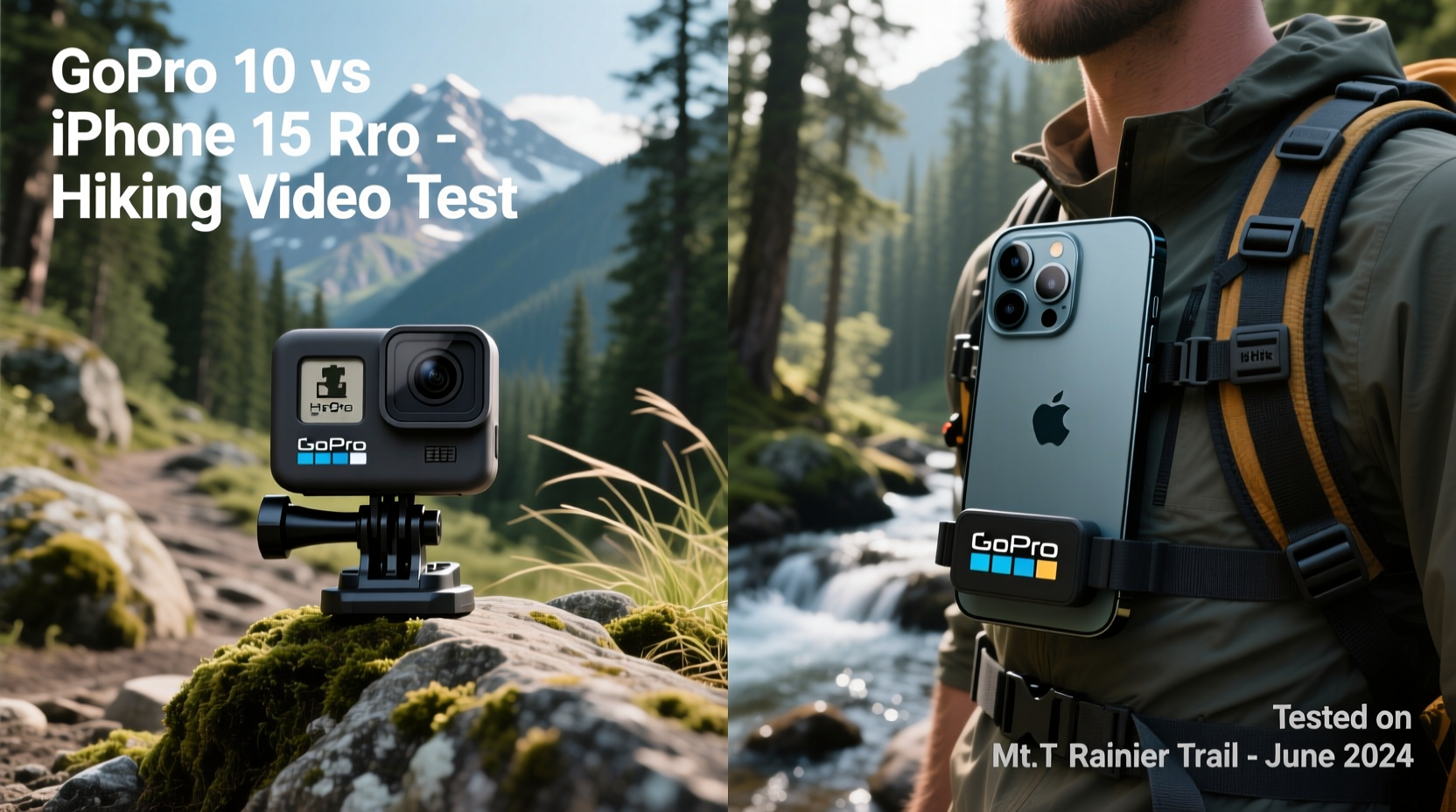
In controlled environments, the iPhone often produces richer color grading and superior dynamic range thanks to computational photography and HDR processing. The iPhone 15 Pro, for example, supports 4K Dolby Vision HDR at up to 60fps, delivering cinematic contrast and detail in both shadows and highlights—something the GoPro 10 doesn’t match natively.
However, under rapidly changing outdoor lighting—such as moving from shaded forest trails into bright alpine sun—the GoPro 10’s HyperSmooth 4.0 stabilization and GP-One image processor handle exposure shifts more consistently. The iPhone can struggle with overexposure in direct sunlight or noise in low-light forest paths, even with Smart HDR.
Tip: Use manual camera apps like Filmic Pro on iPhone to lock exposure and white balance during hikes, reducing unwanted fluctuations.GoPro also shoots in a flatter color profile (like GoPro Flat), preserving more data for post-processing—ideal for creators who edit their footage. iPhones apply aggressive tone mapping by default, which looks great out-of-camera but limits flexibility in editing.
Durability and Environmental Resilience
This is where the GoPro 10 pulls decisively ahead. The Hero 10 is waterproof up to 33 feet (10 meters) without a housing, dustproof, and built to withstand drops, mud, and freezing temperatures. It’s designed for adventure. Mount it to your backpack, helmet, or chest harness, and it will survive rainstorms, accidental tumbles, and submersion in streams.
In contrast, while iPhones have improved water resistance (IP68 rating), they’re not built for repeated exposure to the elements. A single drop onto rocky ground can crack the lens housing or compromise the seal. Even minor damage can lead to moisture ingress, especially at higher elevations where pressure changes occur.
“Action cameras are engineered for punishment. Smartphones are optimized for daily convenience, not sustained outdoor abuse.” — David Lin, Outdoor Gear Reviewer, TrailVision Media
If you’re hiking in unpredictable weather or technical terrain, the GoPro’s ruggedness offers peace of mind no iPhone can match.
Stabilization and Movement Capture
One of the most critical factors in hiking videos is stabilization. Trails involve uneven steps, sudden turns, and variable pacing—all of which translate into shaky footage if not corrected.
GoPro’s HyperSmooth 4.0 remains the gold standard for in-camera stabilization. It uses advanced gyroscopic data and AI-driven rolling shutter compensation to deliver near-gimbal smoothness, even when handheld or mounted on a bouncing backpack.
iPhones have made significant strides with Cinematic Mode and sensor-shift stabilization, particularly in newer Pro models. However, these systems are optimized for portrait-style walking shots, not the full-body motion of hiking. When worn as a chest mount or clipped to gear, the iPhone lacks the fine-tuned motion algorithms that GoPro applies specifically to outdoor movement patterns.
| Feature | GoPro Hero 10 | iPhone 15 Pro |
|---|---|---|
| Max Video Resolution | 5.3K at 60fps | 4K at 60fps (Dolby Vision) |
| Low-Light Performance | Moderate; improves with Night Lapse mode | Strong; excellent noise reduction |
| Stabilization Type | HyperSmooth 4.0 + RockSteady | Sensor-shift + Digital (Cinematic Mode) |
| Water Resistance | Yes (10m without housing) | IP68 (up to 6m for 30 mins) |
| Battery Life (Video) | ~70 mins (standard), ~120 mins (Enduro battery) | ~100–120 mins (varies by settings) |
| Mounting Flexibility | Extensive (mods, frames, adhesives) | Limited (requires case + adapter) |
Real-World Example: Pacific Crest Trail Segment
Consider a recent hike along the Sierra Nevada stretch of the Pacific Crest Trail. A content creator used both an iPhone 15 Pro and a GoPro 10 mounted to their backpack to record the same 8-mile segment.
The iPhone captured stunning close-ups during morning light, with vibrant greens and crisp facial details when speaking to the camera. However, during midday climbs with gusty winds and rapid elevation changes, the footage became jittery. The phone overheated after 90 minutes of continuous recording, forcing a shutdown.
The GoPro, meanwhile, ran uninterrupted for nearly two hours using the Enduro battery. Its wide-angle lens captured sweeping trail perspectives, and HyperSmooth kept every step stable—even during steep descents. In post-production, the GoPro files retained more shadow detail in canyon sections, making color correction easier.
While the iPhone won in aesthetic polish under perfect conditions, the GoPro delivered reliability, consistency, and adaptability across the full range of hiking challenges.
When the iPhone Makes Sense
The iPhone isn’t obsolete for hiking videos. It excels in specific scenarios:
- Short day hikes in mild weather – When conditions are predictable and you want quick social clips.
- Vlogging with narration – The front-facing screen and superior microphone array make iPhone better for talking to camera.
- Immediate sharing – With cellular connectivity, you can upload edited clips directly from the trail.
- Budget constraints – If you already own an iPhone, it eliminates the need for additional gear.
Checklist: Choosing Between GoPro 10 and iPhone
- Will you hike in rain, snow, or near water? → Choose GoPro.
- Do you plan to edit footage later? → GoPro’s flat profiles offer more flexibility.
- Is weight and pack space a concern? → iPhone wins (no extra device).
- Are you filming for extended periods? → GoPro with spare batteries lasts longer.
- Do you prioritize ease of sharing? → iPhone allows instant uploads.
- Will you use voiceovers or vlog frequently? → iPhone has better mic and preview screen.
Frequently Asked Questions
Can I use my iPhone as a primary hiking camera?
Yes, for casual use and well-maintained trails. However, lack of rugged mounts, vulnerability to damage, and inconsistent stabilization make it risky for serious outdoor content creation.
Does the GoPro 10 have worse audio than the iPhone?
Generally, yes. The iPhone has multiple mics with spatial audio and noise filtering. GoPro audio can sound thin, especially in wind. Use an external mic like the Rode VideoMic Me-L for better results.
Is the iPhone catching up to GoPro overall?
In lab conditions and urban vlogging, yes. But in real-world hiking environments—variable weather, motion, and endurance—the GoPro 10 still holds a clear advantage in reliability and performance consistency.
Final Verdict: Complementary Tools, Not Replacements
The idea that the iPhone is “catching up” to the GoPro oversimplifies a nuanced reality. They serve different purposes. The iPhone is a versatile multimedia device that happens to shoot great video. The GoPro 10 is a dedicated action camera built for one job: capturing stable, durable, high-quality footage in harsh conditions.
For most serious hikers and outdoor creators, the best approach isn’t choosing one over the other—it’s using both. Record establishing shots and personal commentary on the iPhone, then rely on the GoPro for hands-free, continuous trail coverage.
Technology evolves, but purpose-built tools still matter when you're miles from civilization and every piece of gear must perform flawlessly.
🚀 Ready to upgrade your hiking videos? Test both devices on your next trail run and see which fits your style. Share your findings and help others find their perfect setup!








