
For many amateur golfers, seeing the ball veer sharply to the right—especially off the tee—is a frustrating and all-too-familiar experience. This shot pattern is commonly known as a slice, and it’s one of the most widespread issues in recreational golf. A slice not only reduces distance but also compromises consistency and confidence on the course. Understanding the root causes behind shots going right and applying targeted corrections can transform your game. This guide breaks down the mechanics, identifies common mistakes, and delivers practical solutions to eliminate the slice for good.
What Is a Slice and Why Does It Happen?
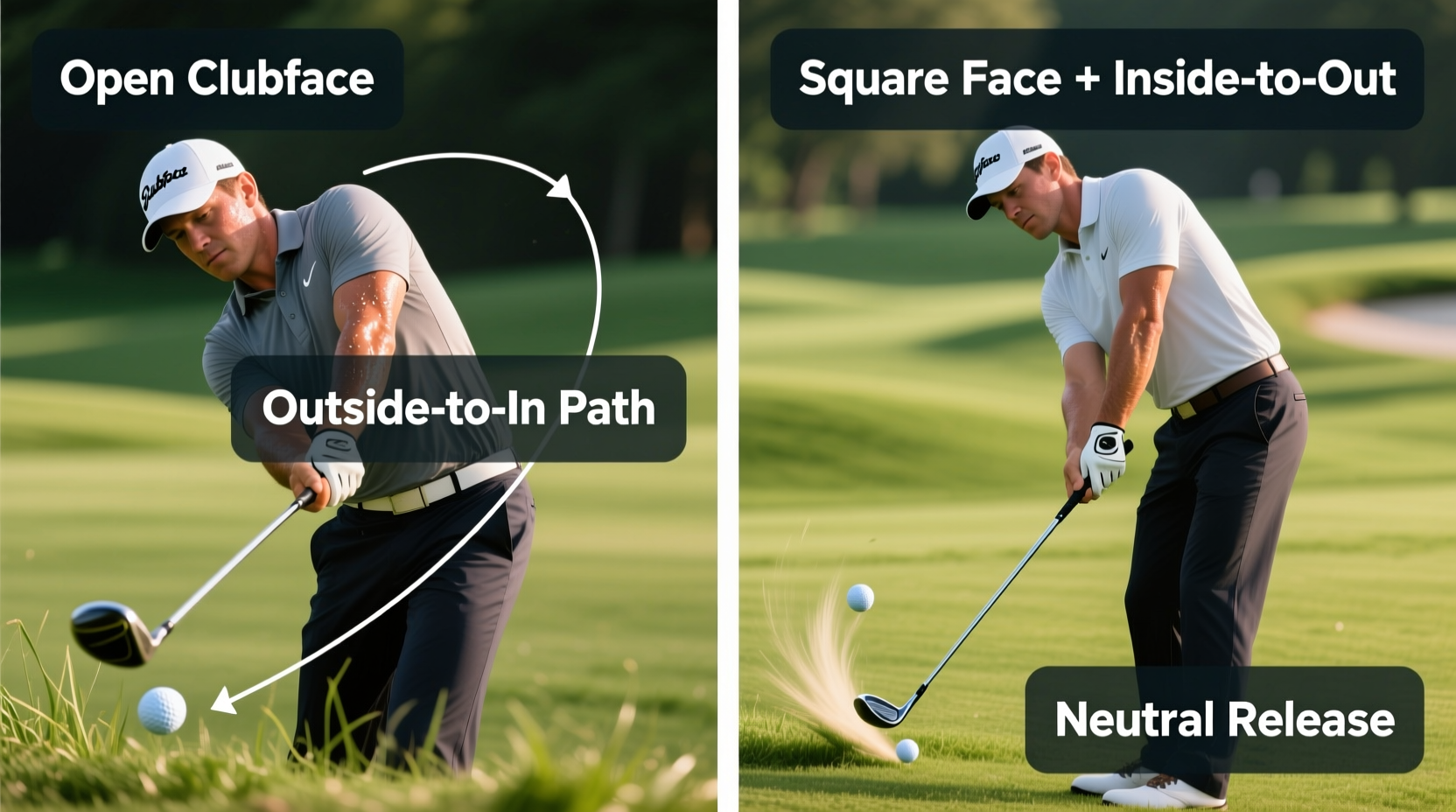
A slice occurs when the golf ball starts left of the target (for a right-handed golfer) and curves dramatically to the right during flight. This movement is caused by sidespin generated at impact, primarily due to an open clubface relative to the swing path. The combination of an outside-in swing path and a clubface pointing to the right of that path creates clockwise spin, sending the ball spinning sideways through the air.
The physics are straightforward: if the clubface is not square at impact—or worse, if it’s open—and the swing path cuts across the ball from outside to in, the result is almost always a slice. While wind or terrain can influence ball flight, the majority of rightward misses stem from swing mechanics rather than external factors.
Tip: Record your swing with a smartphone to visually confirm whether your clubface is open at impact and your path is coming over-the-top.Common Causes of Shots Going Right
Several technical flaws contribute to slicing. Identifying which ones apply to your swing is the first step toward correction.
- Over-the-top swing path: The club moves from outside the target line to inside during the downswing, often due to an early release of the hands or incorrect sequencing.
- Open clubface at impact: Caused by weak grip, poor wrist action, or lack of forearm rotation through the hitting zone.
- Inconsistent grip: A grip that’s too weak (hands turned too far left on the club) prevents proper closure of the face.
- Lack of body rotation: Excessive arm dominance without coordinated torso turn leads to inefficient contact and loss of control.
- Weight imbalance: Hanging back on the rear foot reduces forward lean and promotes an upward strike, increasing side spin.
“Most slicers aren’t aware they’re casting the club early or flipping their wrists. The real fix starts with awareness.” — Mark Cummings, PGA Teaching Professional
How to Fix a Slice: Step-by-Step Guide
Correcting a slice requires both mechanical adjustments and consistent practice. Follow this sequence to retrain your swing patterns effectively.
- Check your grip. Ensure both hands are rotated slightly to the right on the club (for right-handed players). The 'V' formed by your thumbs and index fingers should point toward your trailing shoulder. A neutral-to-strong grip helps promote proper clubface closure.
- Align your stance correctly. Use alignment sticks or clubs on the ground to verify your feet, knees, hips, and shoulders are parallel to the target line. Misalignment often forces compensatory swings that encourage slicing.
- Fix your takeaway. Focus on taking the club back low and inside, keeping it along the target line for the first six inches. This prevents an over-the-top motion later in the downswing.
- Improve your swing path. Practice swinging along a shallower, more inside-to-out path. Try the “gate drill”: place two tees just wider than the clubhead on the target line—one a few inches in front, one behind. Swing without hitting them to groove a better path.
- Promote proper release. Feel your forearms rotating through impact so the clubface squares up. A useful cue is to imagine “showing the palm” of your lead hand to the sky after contact.
- Engage your core. Rotate your torso fully through the shot instead of relying on arms alone. This improves timing and reduces the need to manipulate the clubface manually.
Do’s and Don’ts When Correcting a Slice
| Do’s | Don’ts |
|---|---|
| Use a mirror or video feedback to check grip and posture | Overpower the swing trying to “fix” the slice mid-round |
| Practice slow-motion swings to feel correct sequencing | Grip the club too tightly, which restricts release |
| Hit draws on the range to retrain muscle memory | Ignore ball position—too far forward encourages an open face |
| Work with alignment aids regularly | Expect instant results; motor learning takes time |
| Focus on finishing with weight on front foot | Blame equipment before checking fundamentals |
Real Example: Turning Around a Chronic Slicer
David, a 15-handicap golfer, struggled with a persistent slice that cost him accuracy and confidence off every tee. Despite buying new drivers marketed as “slice-reducing,” his ball flight remained erratic. After a lesson with a local teaching pro, he discovered his grip was extremely weak and his swing path was severely over-the-top.
He began working on strengthening his grip and using alignment rods to train an inside-to-out swing path. Over six weeks, he practiced 30 minutes three times a week, focusing on slow swings and impact bag drills. He also started hitting shots with a closed stance to encourage an inside path.
The results were dramatic. Within two months, David reduced his slice by 70%, consistently hitting fades or straight balls. His driving distance increased by nearly 25 yards due to reduced spin, and his confidence soared. The key wasn’t new gear—it was understanding and fixing the root cause.
Tip: Hit shots with a slightly closed stance and focus on pulling the ball to the left. This trains an inside path and promotes face closure.Essential Drills to Eliminate the Slice
Drills reinforce correct movement patterns and build muscle memory. Incorporate these into your routine weekly.
- Towel-under-arm drill: Tuck a small towel under both armpits and make half swings. This promotes connected, body-driven motion and prevents the arms from flying out on an outside path.
- Impact bag training: Hitting into an impact bag helps you feel proper shaft lean and hand-first impact, reducing the chance of an open face.
- Headcover drill: Place a headcover just outside the ball on the target line. Your goal is to avoid hitting it on the downswing, forcing an inside approach.
- Fade-to-draw progression: Start by hitting intentional fades, then gradually work toward draws. This builds control over clubface and path relationship.
Frequently Asked Questions
Can equipment changes help fix a slice?
Yes, but only after addressing swing fundamentals. Drivers with draw bias, higher loft, or adjustable weights can assist, but they won’t compensate for a fundamentally flawed swing. Use them as support tools, not primary fixes.
Why do I slice my driver but not my irons?
This is common. The driver’s length and lower loft amplify swing flaws. With irons, the shorter shaft and steeper angle of attack often mask path and face issues. Work on consistent mechanics across all clubs to ensure transferable skills.
How long does it take to fix a slice?
With focused practice, most golfers see improvement within 4–6 weeks. However, full integration into on-course play may take several months. Patience and repetition are essential.
Final Checklist: Fix Your Slice in 7 Steps
- Verify and adjust your grip to neutral or strong position
- Record your swing to analyze path and face angle
- Use alignment tools to set up square to target
- Practice the gate drill to improve swing path
- Train with impact bag to feel proper release
- Perform 10–15 slow-motion swings daily to ingrain correct motion
- Play practice holes focusing on shape, not score
Take Control of Your Ball Flight
Eliminating a slice isn’t about quick fixes or magic gadgets—it’s about understanding the mechanics of your swing and making deliberate, informed adjustments. Every great ball-striker has faced mis-hits and inconsistency. What separates them is persistence and attention to detail. By diagnosing your specific causes, applying targeted drills, and committing to gradual improvement, you can stop fighting the slice and start shaping shots with confidence.
💬 Ready to conquer your slice? Pick one drill from this guide and practice it this week. Share your progress or questions in the comments—let’s build better swings together.








