
In 2025, a quiet revolution is unfolding across desks, planners, and classrooms—one defined not by digital gadgets, but by the humble pen. While ballpoints have long dominated offices and exam halls, gel pens are surging in popularity, capturing the attention of students, creatives, professionals, and stationery enthusiasts alike. Their rise isn’t just about aesthetics; it’s rooted in performance, comfort, and a cultural shift toward intentional, enjoyable daily rituals. The question isn’t whether gel pens are better—it’s why they’ve become the preferred tool for a generation redefining how we write.
The Writing Experience: Smoothness Meets Precision
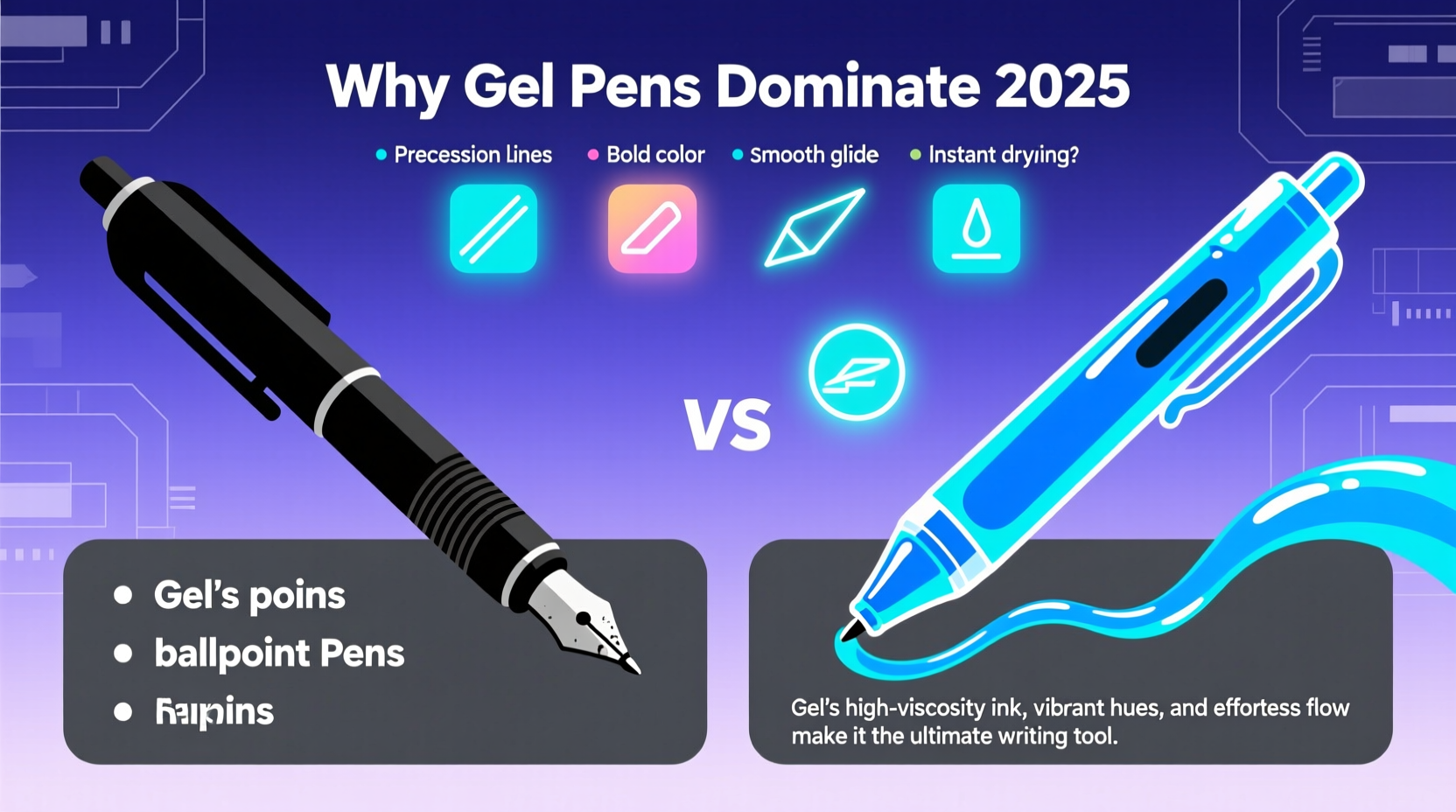
Gel ink technology delivers a noticeably smoother glide than traditional ballpoint pens. Unlike oil-based ballpoint ink, which relies on friction to transfer pigment onto paper, gel pens use water-based ink suspended in a gel matrix. This formulation reduces drag, allowing the tip to move effortlessly across surfaces—even textured or coated papers.
The result? Less hand fatigue during extended writing sessions. For students taking lecture notes or professionals drafting reports, this ergonomic advantage translates into improved focus and endurance. Gel pens also offer finer line control, especially models with 0.38mm or 0.5mm tips, making them ideal for detailed work like bullet journaling, sketching, or annotating documents.
Tip: Rotate between multiple gel pens throughout the day to prevent tip wear and ensure consistent ink flow.Ink Performance: Vibrancy, Drying Time, and Smudge Resistance
One of the most compelling reasons for the gel pen obsession is visual impact. Gel inks come in a vast spectrum of colors—metallics, pastels, fluorescents—that stand out vividly on paper. This chromatic versatility appeals to users who value personal expression, whether highlighting key points in a planner or adding flair to handwritten letters.
Modern gel formulations have addressed earlier weaknesses, such as smudging and slow drying. Brands like Pilot G-2, Uni-ball Signo, and Pentel EnerGel now incorporate quick-dry technologies and smear-resistant pigments. These improvements make gel pens viable even for left-handed writers, who historically avoided them due to smearing issues.
“Gel pens bridge the gap between function and artistry. They’re not just tools—they’re extensions of personality.” — Sarah Lin, Stationery Designer & Founder of InkCraft Studio
Comparative Analysis: Gel Pens vs Ballpoint Pens
| Feature | Gel Pens | Ballpoint Pens |
|---|---|---|
| Ink Type | Water-based gel suspension | Oil-based paste |
| Writing Feel | Smooth, low resistance | Scratchy, higher pressure needed |
| Color Range | Extensive (including metallics, glitter) | Limited (typically blue, black, red) |
| Drying Time | Fast (modern formulas), minimal smudge | Instant, no smudge |
| Paper Compatibility | Excellent on most, may bleed on thin paper | Broad compatibility, less bleed-through |
| Lifespan per Refill | Moderate (1,000–2,000 words) | Longer (up to 5,000 words) |
| Cost per Pen | Higher ($1.50–$3.00 average) | Lower ($0.25–$1.00 average) |
Cultural Shift: Why Gel Pens Are Trending in 2025
The surge in gel pen popularity reflects broader societal trends. In an era dominated by screens, people are seeking tactile, mindful experiences. Handwriting has evolved from a functional task to a form of self-care. Bullet journaling, gratitude logging, and analog planning communities have exploded, driven by a desire to disconnect and create meaningfully.
Social media platforms like TikTok and Instagram have amplified this movement. Hashtags like #InkJoy, #GelPenAddict, and #StationeryTok boast millions of views, where users showcase colorful spreads, ink swatches, and refill rituals. Influencers demonstrate the sensory pleasure of writing with gel pens—the crisp click of the retractable mechanism, the whisper-thin line of a fine tip, the satisfaction of seeing bold color appear instantly.
This isn’t nostalgia; it’s a deliberate reclamation of slowness in a fast-paced world. Gel pens, with their expressive potential and superior feel, have become symbols of intentionality.
Real Example: A Student’s Journey to Better Notes
Maya, a university sophomore majoring in psychology, used to dread taking notes. Her old ballpoint pen required constant pressure, leaving her fingers sore after lectures. She switched to a set of 0.5mm gel pens in soft pastel tones after seeing a recommendation online. Within weeks, she noticed she was more engaged in class, color-coding concepts without thinking. “It sounds silly,” she says, “but using a lavender pen for definitions and coral for examples made studying feel lighter. I retained more because I actually *wanted* to review my notes.”
Choosing the Right Gel Pen: A Practical Checklist
- Evaluate tip size: 0.38mm for precision, 0.5mm for balance, 0.7mm+ for bold lines.
- Test ink drying time: Look for “quick-dry” or “smear-resistant” labels if you’re left-handed.
- Check refill availability: Opt for brands with widely available refills to reduce waste.
- Assess grip comfort: Rubberized or contoured grips reduce strain during long sessions.
- Consider ink variety: Choose sets with multiple colors for organization and creativity.
- Avoid cheap knockoffs: Low-quality gels may skip, blob, or dry out quickly.
Common Myths About Gel Pens—Debunked
Myth 1: Gel pens always smudge.
Modern gel inks are formulated with polymers that dry rapidly. Many perform as cleanly as ballpoints when used on standard paper.
Myth 2: They’re too expensive for daily use.
While individual units cost more, the enhanced writing experience often leads to reduced consumption—users tend to cherish and maintain gel pens longer than disposable ballpoints.
Myth 3: Gel ink doesn’t last.
Archival-quality gel inks (like those in Pigment-based models) are fade-resistant and waterproof, suitable for legal documents and long-term records.
Frequently Asked Questions
Are gel pens suitable for exams?
Yes, provided they meet institutional guidelines. Most standardized testing bodies accept gel pens as long as the ink is black or blue and non-erasable. Always verify rules beforehand, and choose reliable brands to avoid mid-exam failures.
Why do some gel pens skip or start inconsistently?
Skipping can occur due to dried ink at the tip, poor storage (tip-up for long periods), or manufacturing defects. Store gel pens horizontally or tip-down, and prime the refill by writing on scrap paper if flow stalls.
Can I recycle gel pen refills?
Most refills are not recyclable through curbside programs due to mixed materials. However, specialty recycling programs like TerraCycle accept used pens and refills, diverting them from landfills.
Conclusion: Embrace the Write Way Forward
The dominance of gel pens in 2025 isn’t a fleeting trend—it’s a reflection of changing values. People no longer accept mediocrity in everyday tools. They demand pens that feel good, look great, and enhance productivity through pleasure, not endurance. Gel pens deliver exactly that: a seamless fusion of utility and joy.
Whether you're drafting a novel, organizing your week, or signing a contract, choosing a gel pen is a small act of defiance against impersonal efficiency. It says you care about how things feel, not just how fast they get done. So pick up a gel pen, write something meaningful, and rediscover the simple power of putting pen to paper.
🚀 Ready to upgrade your writing experience? Try a high-quality gel pen today—start with one color, one notebook, and see how it changes the way you think, plan, and create.








