
For left-handed writers, the simple act of putting pen to paper often comes with an unwanted side effect: smudged ink. As the hand drags across freshly written text, wet ink transfers onto skin and paper, marring notes, letters, and journals. This common frustration has led many lefties to question which type of pen—gel or ballpoint—is better suited to their natural writing motion. While both have loyal followings, the answer isn’t as straightforward as it might seem. The key lies in understanding how each pen works, how ink behaves on paper, and how these factors interact with a left-handed grip and stroke.
The Science Behind Smearing: Why Left-Handed Writers Are at a Disadvantage
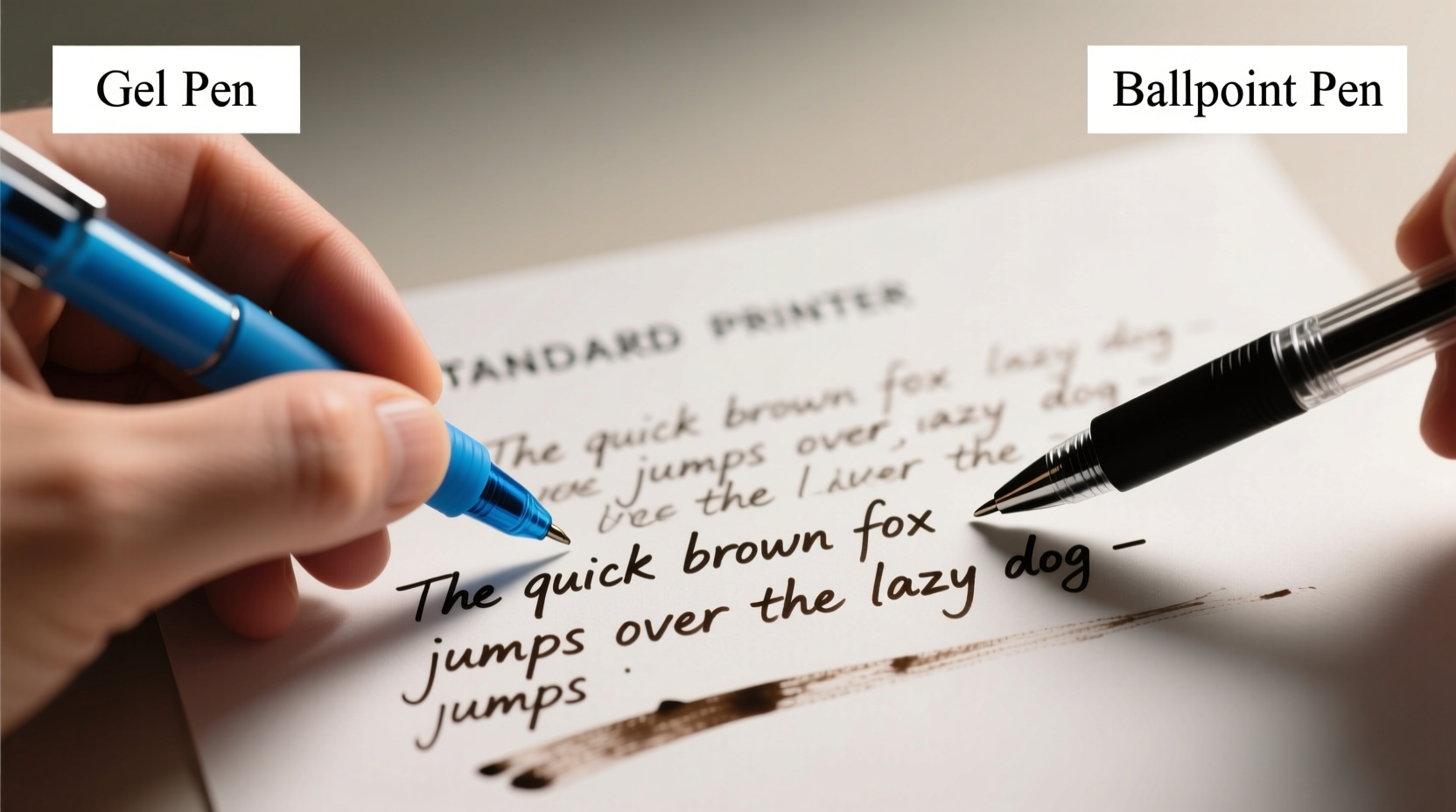
Right-handed individuals write from left to right, meaning their hand moves over blank paper. In contrast, left-handed people typically hook their hand around the writing line, dragging their palm or pinky finger directly over newly applied ink. This motion increases contact time between wet ink and skin, dramatically raising the likelihood of smearing.
Ink drying time is the critical variable. Ballpoint pens use a thick, oil-based ink that dries quickly upon contact with paper. Gel pens, while offering smoother flow and bolder lines, rely on water-based gel ink that takes longer to dry. For a left-handed writer, this delay can mean the difference between clean handwriting and a smeared mess.
“Left-handed writers are essentially writing through their own ink trail. Fast-drying formulations are essential to minimize transfer.” — Dr. Alan Reeves, Handwriting Ergonomics Researcher, University of Leeds
Gel Pens: Performance, Pros, and Smear Challenges
Gel pens have gained popularity for their vibrant colors, smooth glide, and bold lines. They deliver a consistent flow of pigment-rich ink, making them ideal for journaling, bullet planning, and artistic note-taking. However, their performance for left-handed users is mixed.
The gel ink is suspended in a water-based solution, allowing for rich saturation but slower drying. On standard notebook paper, gel ink may take 5–10 seconds to dry completely—plenty of time for a left-handed writer’s hand to smear it. Some high-quality gel pens use quick-dry formulas, but even these are generally slower than ballpoints.
Additionally, gel pens tend to bleed through thin paper, especially when pressure is applied. This not only wastes paper but also increases the chance of ink transferring from the back of the page to the hand during writing.
Tip: If you prefer gel pens, choose models labeled “quick-dry” or “smudge-proof,” and pair them with premium paper (70+ gsm) to reduce bleeding and improve drying time.Ballpoint Pens: The Smear-Resistant Standard
Ballpoint pens remain the go-to choice for left-handed writers seeking minimal smearing. Their oil-based ink dries almost instantly upon contact with paper, drastically reducing the risk of transfer. The trade-off is a slightly scratchier feel and less vibrant output compared to gel pens.
The mechanism behind ballpoints contributes to their smear resistance. A small metal ball rotates at the tip, picking up viscous ink from the cartridge and depositing it on paper. Because the ink is thick and non-aqueous, it adheres quickly and doesn’t spread easily. Even under pressure, ballpoints rarely bleed or feather, making them reliable on low-quality paper.
Disposable ballpoints like the Bic Cristal or Pilot BP-SG5 are frequently recommended by occupational therapists for left-handed students. These pens offer predictable performance, affordability, and excellent smudge control.
Hybrid Options: Gel-Ball and Rollerball Alternatives
A growing category of pens aims to bridge the gap between gel and ballpoint performance. Hybrid gel pens, such as the Uni-ball Jetstream, use water-based ink with faster drying properties. These inks incorporate alcohol solvents or resin additives that accelerate drying without sacrificing smoothness.
Rollerball pens, while similar in appearance to gel pens, often use liquid ink that flows more freely and can be even slower to dry. They are generally not recommended for left-handed writers unless specifically formulated for quick drying.
Comparative Analysis: Gel vs. Ballpoint for Left-Handed Use
| Feature | Gel Pen | Ballpoint Pen |
|---|---|---|
| Ink Type | Water-based gel | Oil-based paste |
| Drying Time | Slow (5–10 sec) | Fast (1–2 sec) |
| Smear Resistance | Low to moderate | High |
| Writing Smoothness | Excellent | Fair to good |
| Bleed-Through | Common on thin paper | Rare |
| Best For Left-Handers? | Only with quick-dry formula | Yes, highly recommended |
This comparison highlights why ballpoint pens are traditionally favored by left-handed individuals. While gel pens win in aesthetics and comfort, they fall short in the crucial area of immediate usability—especially in fast-paced environments like classrooms or meetings.
Real-World Test: A Left-Handed Student’s Experience
Maya, a university student and lifelong left-hander, struggled with smudged lecture notes throughout her first year. She preferred gel pens for their bold lines and ease of use but found herself constantly wiping ink off her palm. After switching to a ballpoint (Pilot G-2 0.7mm in ballpoint mode), she noticed an immediate improvement. “I could write a full page and rest my hand without worrying about smudging,” she said. “The trade-off was a slightly scratchier feel, but I adapted quickly.”
She later experimented with the Uni-ball Jetstream hybrid, which offered a middle ground: smooth writing with minimal smearing. “It felt like a gel pen but dried like a ballpoint,” she noted. “That became my everyday carry.”
Her experience reflects a broader trend: while pure gel pens are often too slow-drying for comfortable left-handed writing, newer hybrid technologies are closing the gap.
How to Minimize Smearing: Practical Tips for Left-Handed Writers
Regardless of pen choice, technique and environment play a significant role in reducing smearing. The following checklist outlines actionable steps to improve writing clarity and comfort.
Checklist: Reduce Smearing as a Left-Handed Writer- Choose fast-drying ink (ballpoint or hybrid gel)
- Use higher GSM paper (70+ gsm) to prevent bleed-through
- Adjust your grip to elevate the hand slightly off the page
- Write at a steeper angle to minimize hand contact
- Let lines dry briefly before moving the hand over them
- Use a smudge guard glove or finger cot on the pinky side
- Keep nails trimmed to reduce drag and accidental smudging
Step-by-Step: Transitioning to a Smear-Resistant Writing System
- Evaluate your current pen: Test if the ink smears within two seconds of writing. If it does, consider switching.
- Select a new pen type: Start with a trusted ballpoint (e.g., Bic Cristal, Pilot Acroball) or hybrid (Uni-ball Jetstream).
- Test on your usual paper: Write a paragraph and immediately rest your hand on the ink. Check for transfer.
- Adjust your posture: Sit upright, tilt the notebook slightly clockwise (30–45 degrees), and keep your wrist elevated.
- Practice deliberate pacing: Allow a brief pause after finishing a line before moving your hand back to the margin.
- Introduce tools: Try a smudge guard or cotton glove to create a barrier between skin and paper.
- Monitor results: After one week, assess whether smearing has decreased and comfort has improved.
Expert Recommendations and Industry Trends
Occupational therapists who work with students often recommend ballpoint pens as the default for left-handed children learning to write. “The immediate feedback of dry ink helps build confidence,” says Laura Bennett, a pediatric OT based in Toronto. “When kids aren’t worried about ruining their work, they focus better on letter formation and spacing.”
Pen manufacturers are increasingly recognizing the needs of left-handed users. Pilot’s “Quick Dry” series, Zebra’s Sarasa Dry, and Pentel’s EnerGel RT are all marketed with smear resistance in mind. These pens use advanced ink formulations that combine the vibrancy of gel with the drying speed of ballpoint technology.
“The future of writing instruments lies in adaptive inks—formulas that respond to pressure, speed, and hand orientation. Left-handed users are driving innovation in this space.” — Dr. Hiroshi Tanaka, R&D Lead at Uni-ball Japan
Frequently Asked Questions
Do gel pens always smear for left-handed people?
No, not always. Some gel pens are engineered with quick-dry or smear-resistant ink. Brands like Uni-ball, Zebra, and Pentel offer “dry” variants that significantly reduce smudging. Always check product labels for terms like “fast-drying” or “smudge-proof.”
Can I make my current gel pen less likely to smear?
You can reduce smearing by using thicker paper, writing more slowly to allow drying, adjusting your grip, or applying a light dusting of transparent powder (like cornstarch) to your hand. However, changing the pen itself is usually the most effective solution.
Are rollerball pens worse than gel pens for left-handers?
Often, yes. Traditional rollerballs use free-flowing liquid ink that dries slowly and bleeds easily. Unless labeled as quick-dry, they tend to smear more than even standard gel pens. They are generally not recommended for left-handed writers.
Conclusion: Choosing the Right Pen for Your Hand
The debate between gel and ballpoint pens for left-handed writers ultimately hinges on priorities. If bold color, smooth flow, and visual appeal matter most, a high-performance hybrid or quick-dry gel pen may suffice. But for reliability, speed, and minimal cleanup, the ballpoint remains the superior choice for preventing smears.
Advancements in ink technology are narrowing the gap, offering left-handed individuals more options than ever before. By combining the right tool with proper technique, smudging no longer has to be an inevitable part of the writing process.
🚀 Ready to reclaim clean, confident handwriting? Try a smear-resistant ballpoint or hybrid pen today—and share your favorite find in the comments below. Your next smudge-free page starts now.








