The humble pen is one of the most overlooked tools in daily life. Whether jotting down a grocery list, signing a document, or filling out a form, most people reach for whatever’s within arm’s reach. But behind that casual choice lies a quiet debate: gel pen versus ballpoint. Gel pens have surged in popularity over the past decade, praised for their smooth ink flow and vibrant colors. Yet ballpoints remain a staple in offices, schools, and pockets worldwide. So, is the gel pen revolution truly worth the hype, or do ballpoints still offer unmatched practicality for everyday tasks?
Ink Technology: How They Work Differently
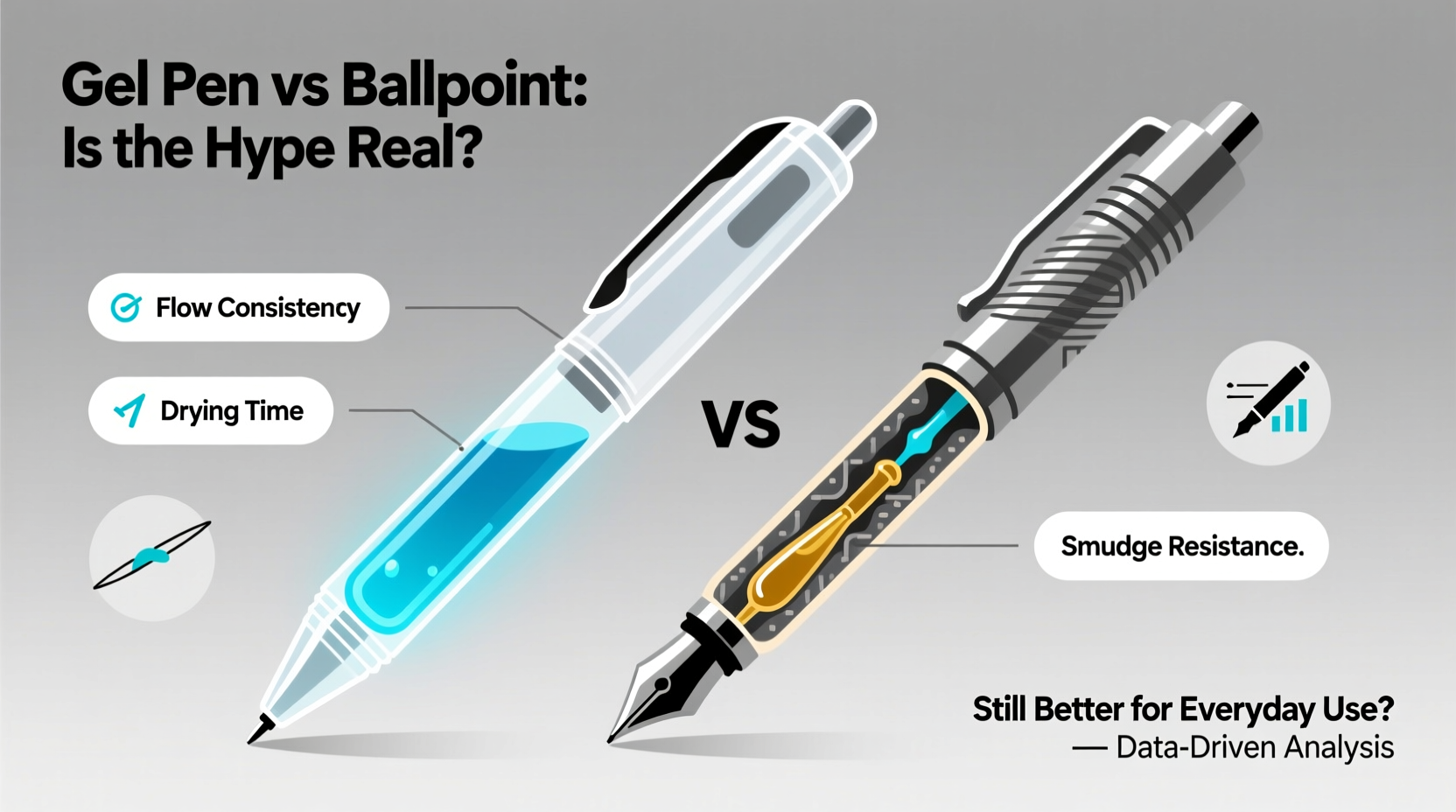
The fundamental difference between gel and ballpoint pens lies in their ink formulation and delivery mechanism.
Ballpoint pens use a thick, oil-based ink that rolls out through a tiny metal ball at the tip. This viscosity makes the ink resistant to smudging and drying, allowing ballpoints to last longer and function reliably in extreme conditions — from high altitudes to desert heat. The trade-off is often a scratchier feel on paper and less consistent line quality, especially on cheaper models.
Gel pens, by contrast, use a water-based gel ink that suspends pigment in a viscous carrier. This allows for richer color saturation, smoother gliding, and more precise control. Because the ink flows more freely, gel pens deliver a writing experience closer to fountain pens — but without the maintenance. However, this fluidity comes with drawbacks: faster ink consumption, higher susceptibility to drying if left uncapped, and potential smudging before the ink dries completely.
Tip: Always cap your gel pen immediately after use. Even 30 seconds exposed can begin drying the tip, especially in low-humidity environments.Performance Comparison: Real-World Writing Scenarios
To determine which pen type performs better, it's essential to evaluate them across common use cases.
| Use Case | Ballpoint Performance | Gel Pen Performance |
|---|---|---|
| Daily Note-Taking | Reliable, but may require more pressure; lines can appear faint or inconsistent. | Smooth, dark lines with minimal effort; ideal for long notes. |
| Left-Handed Writers | Better drying time reduces smearing. | Can smear if ink hasn’t dried; look for quick-dry gel formulas. |
| Outdoor/Field Use | Highly reliable in wind, cold, or heat; won’t leak. | Risk of leakage in temperature extremes; less dependable. |
| Signing Documents | Widely accepted; archival quality varies. | Vibrant but may not be accepted for legal forms due to smudge risk. |
| Artistic Use (Doodling, Journaling) | Limited color range; harder to achieve fine details. | Excellent for detail work, shading, and color variety. |
While gel pens excel in comfort and aesthetics, ballpoints maintain an edge in durability and consistency under stress. For someone who writes intermittently throughout the day — signing receipts, filling out forms, or scribbling reminders — a ballpoint’s reliability may outweigh the allure of a silky gel glide.
Cost and Longevity: Which Gives More Value?
Price per pen is only part of the equation. Long-term value depends on lifespan, refill options, and frequency of replacement.
A standard ballpoint, like the classic Bic Cristal, costs under $0.50 and can write up to 2 miles of continuous line. Refillable models such as the Pilot Acroball extend this further, offering years of use with periodic cartridge replacements. Their sealed design prevents evaporation, meaning they can sit unused for months or even years and still work.
Gel pens, particularly disposable ones, tend to cost 2–3 times more. While premium gels like the Uni-ball Signo or Pilot G-2 offer excellent performance, they deplete faster. A typical gel refill lasts about 800 meters — less than half the distance of a comparable ballpoint. Additionally, gel refills are often proprietary and more expensive to replace.
“Many users don’t realize how much they spend on gel refills until they track it. Over a year, the cost difference can exceed $50.” — David Lin, Office Supply Analyst at Productivity Labs
Mini Case Study: The Office Worker’s Switch
Sarah, a project manager at a mid-sized tech firm, used gel pens exclusively for two years. She loved the smooth writing and bold blue ink that made her notes stand out. But after switching to a refillable ballpoint (Pilot Precise V5 RT) during a company-wide supply audit, she noticed subtle improvements. Her pens lasted longer, didn’t dry out in desk drawers, and required fewer replacements. Though the initial feel was slightly firmer, she adapted within a week. After six months, she calculated she’d saved $72 annually on pen purchases alone — not counting reduced waste.
When Gel Pens Shine — And When to Stick With Ballpoints
The truth is neither pen type is universally superior. Each excels in specific contexts.
Tip: Keep both types on hand. Use gel pens for journaling, creative work, or detailed lists. Reserve ballpoints for quick notes, outdoor use, or situations where reliability is critical.Gel pens are ideal when:
- You prioritize writing comfort and visual clarity.
- You're using the pen for extended periods (e.g., exams, lectures).
- Color variety or bold ink visibility matters (e.g., color-coding notes).
- You’re right-handed and can allow time for ink to dry.
Ballpoint pens are better when:
- Consistency and longevity are top priorities.
- You’re in variable environments (cars, outdoors, airplanes).
- You need a pen that works after being stored for months.
- Budget constraints make frequent replacement impractical.
Step-by-Step: Choosing the Right Pen for Your Needs
- Assess your primary use: Are you taking fast notes, doing creative work, or filling out forms?
- Consider your environment: Do you write outdoors, in dry air, or in moving vehicles?
- Evaluate your budget: Are you comfortable replacing pens every few weeks, or do you want long-term durability?
- Test writing feel: Try both types on your usual paper. Does one skip, smear, or require excessive pressure?
- Check for refills: If sustainability matters, choose models with widely available, affordable refills.
- Make a balanced selection: Opt for a ballpoint as your “default” pen and keep a gel pen handy for special tasks.
Frequently Asked Questions
Do gel pens really write smoother than ballpoints?
Yes, in most cases. Gel ink flows more freely and requires less pressure, resulting in a smoother glide. However, high-end ballpoints like the Uni-ball Jetstream use hybrid ink to bridge this gap, offering near-gel smoothness with ballpoint reliability.
Why do my gel pens dry out so quickly?
Gel ink is water-based and evaporates faster when exposed to air. Leaving the cap off for just a few minutes can start drying the tip. Store gel pens capped and, if possible, retractable-tip models to minimize exposure.
Are ballpoint pens outdated technology?
No. While they lack the flair of gel pens, ballpoints remain unmatched in durability, shelf life, and cost efficiency. Millions of users worldwide rely on them daily — a testament to their enduring utility.
Final Verdict: Hype vs. Reality
The gel pen trend is not unfounded. These pens deliver a genuinely enjoyable writing experience — bold, fluid, and expressive. For personal use, journaling, or creative tasks, they’re hard to beat. But for true everyday reliability, especially in unpredictable conditions or high-frequency scenarios, the ballpoint remains king.
The smart approach isn’t choosing one over the other, but understanding their strengths. Think of gel pens as your premium tool for moments that matter, and ballpoints as your dependable workhorse for everything else.
🚀 Ready to optimize your writing toolkit? Audit your current pens, test one of each type for a week, and see which fits your rhythm. Share your findings in the comments — your experience could help others find their perfect pen match.








