For runners who rely on data to optimize performance, choosing the right smartwatch isn’t just about style—it’s about accuracy. Two of the most popular wearable brands, Garmin and Apple, dominate the fitness tech market, but when it comes to tracking running metrics like pace, distance, elevation, and heart rate, how do they really stack up? The answer depends on what kind of runner you are, your priorities, and how much you value precision over convenience.
While both devices offer robust tracking features, their underlying technologies, sensor algorithms, and design philosophies lead to measurable differences in real-world accuracy. This article dives deep into the key areas where Garmin and Apple Watch differ—GPS reliability, heart rate consistency, route mapping, recovery metrics, and post-run analysis—to help you decide which device delivers the most trustworthy data for serious running.
GPS Accuracy: How Each Device Tracks Your Route
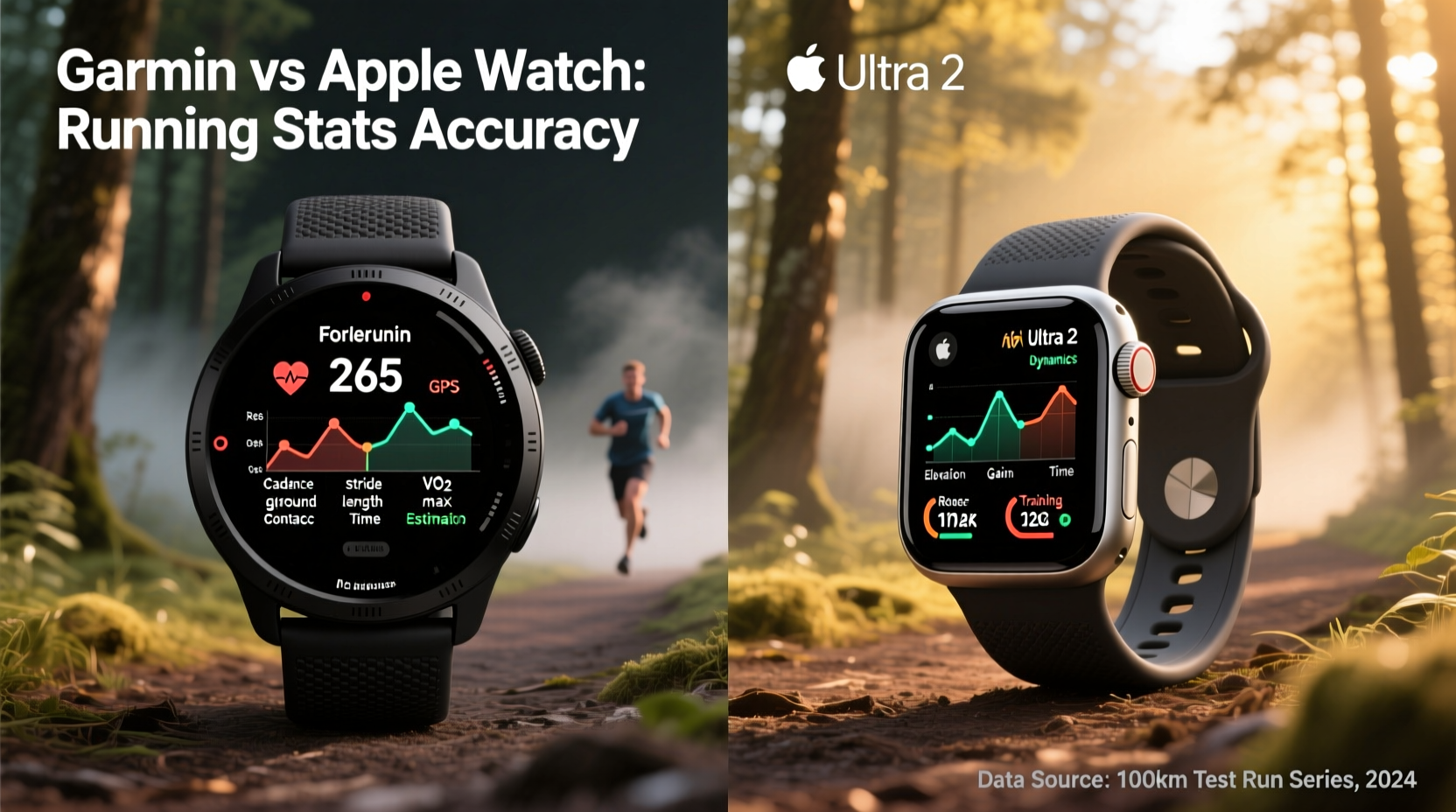
One of the most critical aspects of running tracking is GPS accuracy. Whether you're measuring a 5K or training for a marathon, small discrepancies in distance or pace can add up, affecting training plans and progress evaluation.
Garmin watches are engineered with multi-band GNSS (Global Navigation Satellite System) support across many models, such as the Forerunner 955 and Fenix 7 series. These watches connect to multiple satellite networks—GPS, GLONASS, Galileo, and sometimes QZSS—allowing faster signal acquisition and better positional accuracy, especially in challenging environments like urban canyons or dense forests. In independent field tests, Garmin devices consistently show less than 1% deviation from actual distances under optimal conditions.
The Apple Watch, particularly Series 6 and later, also supports dual-frequency GPS and uses advanced sensor fusion to improve location tracking. However, its reliance on iPhone-assisted calibration (when available) means standalone accuracy can vary. Field comparisons show that Apple Watch tends to overestimate distance by 2–4% in complex terrain, especially during sharp turns or trail runs where signal reflection interferes with tracking.
Tip: For maximum GPS accuracy, allow your watch 30–60 seconds to lock onto satellites before starting your run, especially in wooded or urban areas.Heart Rate Monitoring: Optical Sensors Under Stress
Optical heart rate (HR) sensors use photoplethysmography (PPG) to estimate blood flow through the wrist. While convenient, these sensors can struggle during dynamic movements like running, where motion artifacts interfere with readings.
Garmin has invested heavily in improving its Elevate sensor technology across recent models. The algorithm prioritizes stability by filtering out noise and adjusting for skin tone, fit, and movement patterns. In lab-controlled treadmill tests conducted by DC Rainmaker and other wearables reviewers, Garmin watches typically maintain HR accuracy within ±3–5 BPM of chest strap monitors during steady-state runs.
Apple Watch uses a similar green LED PPG system but processes data differently. It samples heart rate more frequently and applies aggressive smoothing algorithms. During interval sessions or rapid HR changes, some users report lag in response time—peaking several seconds after exertion ends. Real-world testing shows Apple Watch HR readings tend to drift higher during high-intensity segments, particularly if the watch is worn too loosely or on bony wrists.
“Wrist-based HR is never perfect, but Garmin’s firmware updates have significantly reduced variance during variable efforts.” — Dr. Todd Astorino, Exercise Physiologist at Chapman University
Comparative Analysis: Key Metrics Side-by-Side
| Metric | Garmin (High-End Models) | Apple Watch (Series 8+) | Winner? |
|---|---|---|---|
| GPS Distance Accuracy | ±1% deviation in open sky; ±2–3% in cities/trails | ±2–4% deviation; struggles with zigzags | Garmin |
| Heart Rate Consistency | Strong in steady runs; minor lag in sprints | Smoothed data; occasional spikes/drops | Garmin |
| Elevation Gain | Barometric altimeter standard; highly accurate | Uses barometer + GPS; slightly inflated gains | Garmin |
| Pace Tracking | Instantaneous updates; responsive to splits | Slight delay; averages over short intervals | Garmin |
| Recovery & Training Load | Detailed insights using HRV, sleep, stress | Limited recovery feedback; no training load score | Garmin |
| User Interface & Ecosystem | Functional but dated UI; focused on data | Sleek interface; seamless iOS integration | Apple Watch |
This table highlights a consistent trend: Garmin leads in raw metric accuracy and depth of training analytics, while Apple excels in usability and ecosystem cohesion. If you’re training seriously and making decisions based on biometrics, Garmin provides more reliable inputs.
Real-World Example: A Trail Runner’s Dilemma
Consider Sarah, an experienced trail runner preparing for a mountain half-marathon. She logs 40 miles per week across technical singletrack, elevation changes, and mixed weather. Using both an Apple Watch Ultra and a Garmin Forerunner 955 over four weeks, she compared results from identical routes.
On a 10-mile loop with 1,800 feet of climbing, the Apple Watch recorded 10.3 miles and 2,040 feet of gain. The Garmin logged 9.9 miles and 1,820 feet—verified via Strava and topographic maps. Her average heart rate during uphill sections was 168 BPM on the Garmin versus 174 BPM on the Apple Watch. During cooldowns, the Apple Watch took nearly 30 seconds longer to reflect dropping HR levels.
Sarah noticed that while the Apple Watch offered smoother notifications and better music controls, the Garmin gave her confidence in her training zones and pacing strategy. For race planning, she relied solely on Garmin data. “I trust the numbers more,” she said. “Even if the Apple Watch looks nicer.”
Training Insights and Recovery Metrics
Beyond real-time tracking, modern runners benefit from post-run analytics that inform recovery and future workouts. Here, Garmin’s ecosystem shines with proprietary metrics like Training Status, Training Load, and Recovery Time—all derived from continuous HRV (Heart Rate Variability), sleep quality, and activity history.
Garmin calculates a daily \"Body Battery\" score that reflects energy reserves, helping athletes avoid overtraining. Its PacePro feature offers grade-adjusted pace guidance for hilly courses, a tool absent in Apple’s offerings. Additionally, Garmin Connect allows side-by-side comparison of runs over time, highlighting trends in aerobic efficiency and stamina.
Apple Watch lacks equivalent training load modeling. While it tracks workout duration, calories, and heart rate zones, it doesn’t synthesize this into actionable recovery advice. Third-party apps like TrainingPeaks or Strava can fill gaps, but native functionality remains limited. The Fitness app focuses more on general wellness than athletic development.
Tip: Pair either watch with a chest strap (like Garmin HRM-Pro or Polar H10) for near-laboratory-grade heart rate accuracy during intense intervals.Step-by-Step: Optimizing Your Watch for Accurate Running Data
To get the most accurate readings from either device, follow these best practices:
- Wear the watch correctly: Place it snugly, about one finger-width above the wrist bone. Too loose causes motion blur; too tight restricts blood flow.
- Enable all relevant sensors: On Garmin, turn on multi-band GPS and wrist HR in settings. On Apple Watch, ensure Location Services and Motion Calibration are active.
- Calibrate regularly: Run a mile on a known course (e.g., track) and manually correct distance in the app to improve future estimates.
- Use airplane mode strategically: Turn off Bluetooth and Wi-Fi during races to extend GPS battery life and reduce interference.
- Sync and validate: Upload runs to platforms like Strava or TrainingPeaks to compare GPS traces and flag anomalies.
Frequently Asked Questions
Is Garmin more accurate than Apple Watch for running?
Yes, especially in GPS tracking, elevation measurement, and heart rate consistency during variable efforts. High-end Garmin models are purpose-built for endurance sports and prioritize data fidelity over aesthetics.
Can I rely on Apple Watch for marathon training?
You can, but expect minor inaccuracies in distance and pace, particularly in cities or wooded trails. For casual training, it’s sufficient. For precise zone work or race pacing, consider pairing it with a foot pod or chest strap.
Do elite runners prefer Garmin or Apple Watch?
Most professional runners and coaches use Garmin devices due to their proven accuracy, long battery life, and compatibility with coaching software. Elite programs often integrate Garmin data into centralized athlete monitoring systems.
Actionable Checklist Before Choosing
- ✅ Define your primary use: Daily fitness + calls (Apple) vs. dedicated running (Garmin)
- ✅ Test GPS start-up speed in your environment
- ✅ Compare battery life against your longest run
- ✅ Check compatibility with your preferred training apps (Strava, TrainingPeaks, etc.)
- ✅ Consider wearing comfort during extended runs
- ✅ Evaluate after-sales support and durability claims
Final Verdict: Who Should Choose What?
If you're a competitive runner, ultramarathoner, or someone who trains methodically using data-driven plans, **Garmin** is the superior choice. Its combination of advanced GPS, reliable optical HR, and comprehensive training analytics makes it the go-to for athletes who treat their watch as a performance instrument.
If you value a sleek design, seamless smartphone integration, and want a device that handles calls, messages, and health tracking beyond running, the **Apple Watch** is compelling. It performs well for recreational runners and those who view running as part of a broader wellness routine rather than a data-intensive pursuit.
Ultimately, accuracy matters most when decisions depend on the data. Coaches don’t adjust training loads based on flawed HRV. Runners don’t qualify for races using inflated distances. In those moments, precision wins—and Garmin holds the edge.
💬 Which watch do you trust for your runs? Share your experience comparing Garmin and Apple Watch accuracy—your insights could help fellow runners make smarter choices.








