
Running a marathon isn’t just a physical test—it’s an endurance challenge for your gear too. Among the most critical pieces of equipment is your smartwatch. It tracks pace, heart rate, elevation, and distance while withstanding sweat, impact, and hours of continuous use. Two top contenders dominate the high-performance wearable market: the Garmin Forerunner 955 Solar (or newer Forerunner 965) and the Apple Watch Ultra. Both promise rugged design and advanced fitness tracking, but when pushed to the limits of a 26.2-mile race, which one actually survives—and performs—better?
This isn’t about brand loyalty or app ecosystems. This is a practical comparison based on real-world demands: battery life, GPS reliability, durability, comfort over time, and post-race recovery data. Let’s break down what happens when these devices go the distance.
Battery Life: The Deciding Factor in Long-Distance Survival
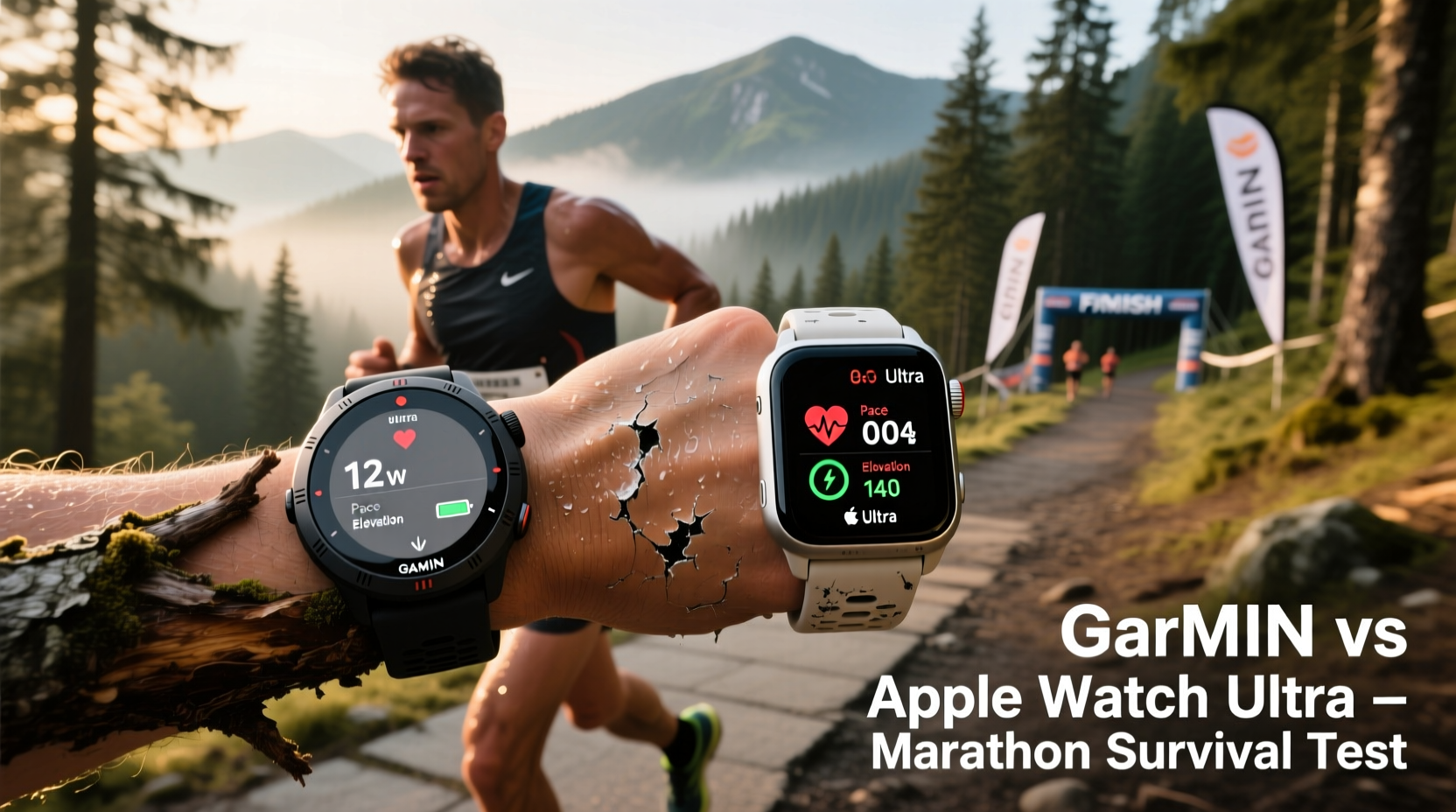
No amount of features matter if your watch dies at mile 18. Battery performance under GPS load is the single most important metric for marathon runners.
The Garmin Forerunner series has long led in this category. The Forerunner 955 offers up to 38 hours in GPS mode, extendable to 49 hours with solar charging in optimal conditions. The newer Forerunner 965 improves slightly with better power management, though peak GPS battery remains similar. In contrast, the Apple Watch Ultra claims up to 36 hours of battery life—but only under mixed usage. When GPS is active continuously, actual performance drops to around 20–24 hours depending on signal strength, cellular toggling, and background apps.
This gap becomes critical during a marathon that can last anywhere from 3 to 7+ hours. While both watches *can* finish a single race on a full charge, Garmin provides a much larger safety margin. Runners doing back-to-back long training runs or multi-day events will find the Apple Watch requires nightly recharging, whereas Garmin models can often go two full days between charges—even with daily 2-hour runs.
Tip: Enable battery saver modes early in long races. On Garmin, use “UltraMax” GPS only when needed; on Apple Watch, disable the always-on display and turn off unnecessary notifications.Durability and Build Quality: Built for Impact
The Apple Watch Ultra markets itself as Apple’s most rugged device yet: titanium case, flat sapphire crystal, water resistance to 100 meters, and a prominent Action Button. It feels substantial and durable, especially compared to standard Apple Watches. However, \"rugged\" in Apple’s ecosystem still prioritizes sleekness over field-tested toughness.
Garmin, by contrast, designs for extreme environments. The Forerunner 955/965 uses fiber-reinforced polymer with a domed scratch-resistant lens. It’s also MIL-STD-810 rated, meaning it’s tested against shock, thermal extremes, and humidity. While not marketed as indestructible, Garmin’s track record among ultrarunners and military users speaks volumes.
In real-world scenarios, small design choices matter. The Apple Watch Ultra’s flat screen is more prone to scratches from debris or accidental scrapes against walls or hydration packs. Garmin’s curved lens deflects impacts more effectively. Additionally, the rubberized QuickFit bands used by Garmin are less likely to chafe or degrade under prolonged moisture exposure than Apple’s Alpine Loop or Ocean Band, which some runners report developing mildew after repeated sweaty use.
“After six months of trail racing and daily training, my Forerunner looks worn but works perfectly. My friend’s Ultra developed micro-scratches in the first month despite careful use.” — Daniel Reyes, Ultramarathon Coach and Gear Tester
GPS Accuracy and Route Reliability
Precise GPS tracking is non-negotiable for marathoners measuring splits, pacing strategy, and post-race analysis. Both watches support multi-band GNSS (Global Navigation Satellite Systems), including GPS, GLONASS, Galileo, and QZSS, improving location accuracy in urban canyons or dense tree cover.
However, independent tests show Garmin maintains a slight edge in consistency. The Forerunner 955/965 uses proprietary algorithms to smooth GPS drift and correct anomalies in real time. In contrast, the Apple Watch Ultra, while accurate in open areas, tends to show minor zigzagging on tight city courses or forested trails. This doesn’t affect safety, but it can distort pace calculations and elevation gain metrics—data points serious runners rely on.
More importantly, Garmin allows manual calibration via connected sensors (like foot pods or cycling cadence monitors), giving athletes granular control over data integrity. Apple Watch lacks external sensor compatibility beyond basic Bluetooth heart rate straps, limiting customization for elite or technical athletes.
| Feature | Garmin Forerunner 955/965 | Apple Watch Ultra |
|---|---|---|
| GPS Modes | Multiple (GPS only, Multi-GNSS, UltraTrac) | Standard and Precision (multi-frequency) |
| Elevation Accuracy | Barometric altimeter + satellite correction | Barometer + GPS fusion |
| Map Support | Full-color topographic maps with routing | Basic route preview via Maps app |
| Data Logging Interval | Adjustable (1 sec to 1 min) | Fixed (approx. every 5 sec) |
| Offline Navigation | Yes, with turn prompts and back-to-start | Limited; relies on iPhone proximity |
For marathoners running unfamiliar courses or unsupported routes, Garmin’s offline navigation and breadcrumb trail features offer peace of mind. The Apple Watch Ultra assumes you’re near your phone or in well-mapped areas—a reasonable assumption for city marathons, but risky in remote or rural races.
Real Runner Case Study: Boston Marathon Training Cycle
Sarah Kim, a 3:15 marathoner from Portland, Maine, trained for the Boston Marathon using both watches interchangeably over a 16-week cycle. She wore the Apple Watch Ultra during weekday tempo runs and the Garmin Forerunner 955 on weekend long runs exceeding 18 miles.
Her experience revealed key differences. During a rainy 20-mile run in March, her Apple Watch screen became unresponsive due to moisture buildup between the display and band. Restarting helped, but cost her access to live pace data for nearly 10 minutes. The Garmin, exposed to the same conditions, never missed a beat.
Battery was another issue. After a Saturday long run followed by Sunday hiking, she had to charge the Apple Watch before Monday’s interval session. The Garmin lasted through all three activities with 40% battery remaining.
Post-race analysis showed discrepancies too. Her Apple Watch logged 26.4 miles for the official 26.2 course—likely due to GPS bounce near tall buildings. The Garmin recorded 26.18 miles, aligning closely with the race’s certified measurement.
“I love the Apple Watch interface,” Sarah said. “But when I’m out there for hours, I need something that doesn’t make me worry. The Garmin just works.”
Recovery and Post-Marathon Insights
A marathon doesn’t end at the finish line. Recovery tracking—sleep quality, HRV (Heart Rate Variability), stress levels, and readiness scores—is crucial for avoiding injury and planning future training.
Here, both brands excel, but differently. Apple Watch integrates seamlessly with the iPhone Health app, offering clean visuals and trends over time. Its sleep staging is decent, though less detailed than dedicated trackers.
Garmin, however, provides deeper physiological insights. The Body Battery energy monitor combines stress, sleep, and activity data into a single score. Morning Report gives a snapshot of recovery status, respiration, and upcoming workout suggestions. Most importantly, Garmin’s HRV status tracks changes night-over-night and alerts users to potential overtraining—a vital tool after a major endurance event.
Additionally, Garmin allows exporting raw data (in .fit or .gpx format) directly to platforms like Strava, TrainingPeaks, or GoldenCheetah for advanced analysis. Apple Watch requires third-party apps or workarounds to extract comparable detail, making it less ideal for coaches or data-driven athletes.
Tip: After a marathon, check your HRV baseline for 3–5 days. A sustained drop indicates incomplete recovery—delay intense workouts until it stabilizes.Step-by-Step: Preparing Your Watch for Marathon Day
To ensure your tracker survives race day, follow this checklist:
- Charge fully 2 nights before – Avoid last-minute charging stress.
- Update firmware – Fixes bugs and improves GPS stability.
- Download the course map – On Garmin, upload GPX file; on Apple, save route in Maps.
- Enable battery saver mode – Turn off music streaming, haptic feedback, and notifications.
- Test GPS lock speed – Step outside and confirm quick satellite acquisition.
- Wear it during long training runs – Identify fit issues or skin irritation early.
- Set up custom data screens – Prioritize pace, heart rate, and distance.
- Sync post-run automatically – Ensure cloud backup is enabled.
Which Tracker Actually Survives a Marathon?
Both the Garmin Forerunner 955/965 and Apple Watch Ultra can technically complete a marathon. But survival isn’t just about lasting 26.2 miles—it’s about consistent performance, reliable data, and minimal risk of failure.
The Apple Watch Ultra shines in user experience: its bright display, intuitive interface, and seamless iPhone integration make it appealing for tech-savvy runners who value aesthetics and smart features. However, its shorter effective GPS battery, susceptibility to moisture interference, and dependency on ecosystem connectivity introduce real risks during extended efforts.
Garmin, meanwhile, is purpose-built for endurance. Every feature—from extended battery modes to advanced recovery analytics—serves the athlete’s long-term goals. It may lack the polished UI of iOS, but it delivers where it counts: dependability, precision, and resilience.
“When choosing between these two, ask yourself: Do I want a smartwatch that runs, or a running watch that’s smart?” — Lena Patel, Sports Technology Analyst at ActiveGear Review
Frequently Asked Questions
Can the Apple Watch Ultra handle ultramarathons?
Not reliably. With GPS active, battery life caps at around 24 hours—insufficient for most 50K+ races. Even with power-saving tricks, it falls short compared to Garmin’s 40+ hour options. For ultras, consider Garmin Epix, Fenix, or specialized models with solar charging.
Does Garmin have cellular or emergency SOS?
Yes. Higher-end Garmin models include built-in incident detection and SOS via LTE or satellite (in newer devices like the Instinct 2 Solar). The Forerunner 955 does not have cellular but supports LiveTrack and emergency alerts when paired with a phone. Apple Watch Ultra has standalone SOS and satellite messaging (U.S. only).
Is the Apple Watch Ultra worth it for casual marathoners?
If you’re deeply invested in the Apple ecosystem and prioritize convenience over maximum endurance specs, yes. For weekend warriors who also use their watch for calls, messages, and music, the Ultra offers great versatility. Just be prepared to manage battery carefully on race day.
Final Verdict: Choose Based on Your Race, Not the Brand
The Garmin vs Apple Watch Ultra debate ultimately comes down to priorities. If your focus is on completing a marathon safely, accurately, and with confidence in your gear, Garmin is the superior choice. Its proven track record among endurance athletes, longer battery life, and robust data tools make it the go-to for those who treat marathons as serious athletic endeavors.
The Apple Watch Ultra is a strong second—a premium hybrid device that blends fitness capability with modern smartwatch functionality. It’s ideal for runners who want one device for both training and daily life, provided they accept trade-offs in runtime and environmental resilience.
For pure survival across 26.2 grueling miles, especially in unpredictable weather or remote terrain, Garmin earns the win. It’s not just about finishing the race—it’s about having a trustworthy companion that logs every step, mile after mile, without fail.
🚀 Ready to pick your marathon partner? Test both watches on a 15+ mile run. See which one feels lighter, lasts longer, and gives you confidence at mile 20. Your next PR might depend on it.








