As we move deeper into 2025, wearable technology has evolved rapidly—smartwatches now offer advanced health tracking, seamless smartphone integration, and extended battery life. Yet, older models like the Garmin Vivoactive 3 and Samsung Gear Sport continue to surface in secondhand markets and user discussions. Despite their age, both devices still have loyal followings. But which one holds up today? And more importantly, is the Garmin Vivoactive 3 still a worthwhile investment when newer options abound?
This isn’t just about specs on paper. It’s about real-world performance, software support, long-term reliability, and whether these watches can meet modern expectations for fitness tracking, daily convenience, and smart features.
Fitness & Health Tracking: Where Each Device Excels
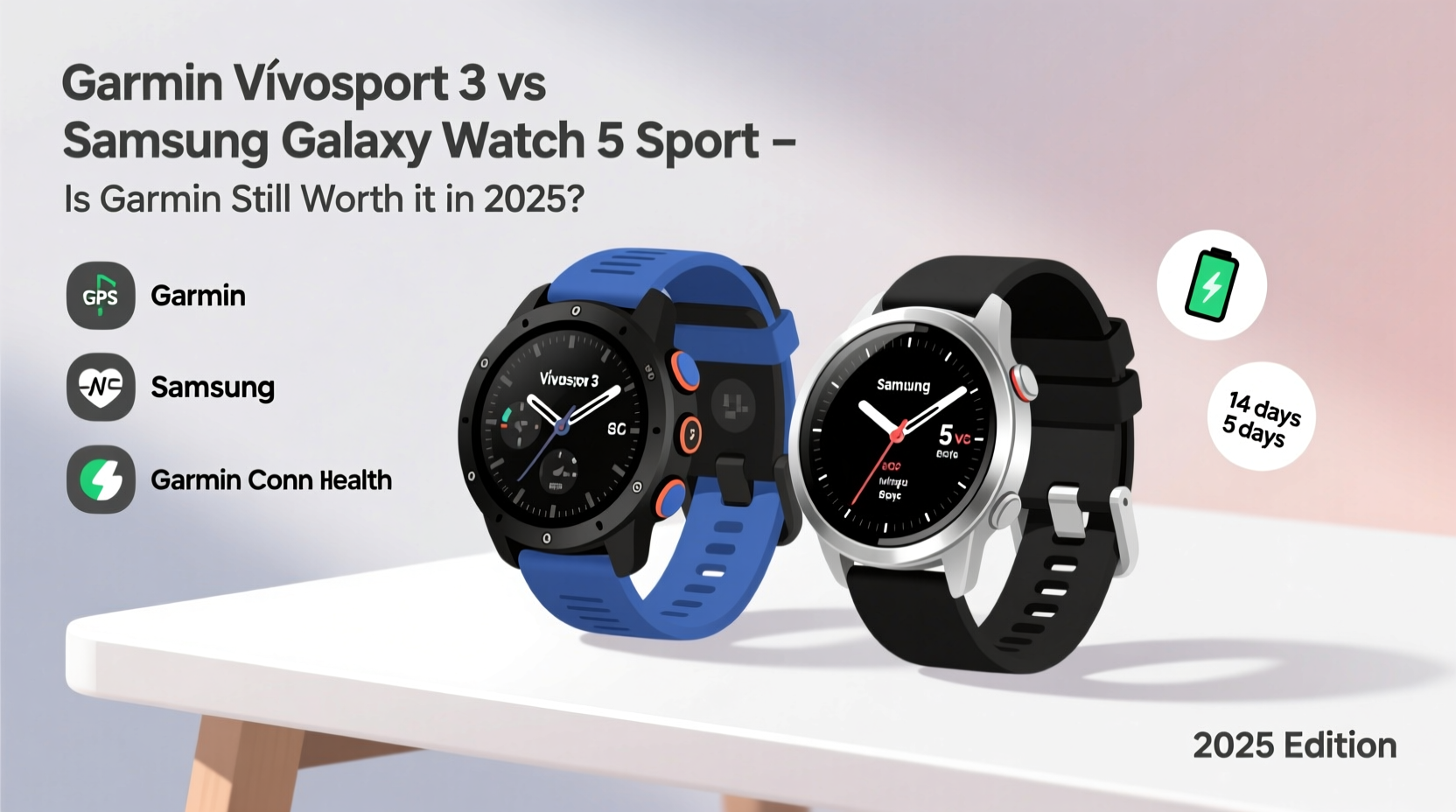
The core purpose of both watches was fitness tracking, but they approached it differently. The Garmin Vivoactive 3 was designed as a sports-first wearable with deep athletic functionality. It includes built-in GPS, heart rate monitoring, VO2 max estimation, and activity profiles for running, cycling, swimming, and even golf. Its strength lies in accuracy and consistency—especially during outdoor workouts.
In contrast, the Samsung Gear Sport leaned more toward lifestyle fitness. While it also offers GPS and heart rate tracking, its algorithms are less refined for endurance athletes. However, it integrates tightly with Samsung’s ecosystem, including Samsung Health, which provides solid step counting, sleep analysis, and stress tracking—though not as comprehensive as Garmin’s platform.
One key advantage the Vivoactive 3 maintains in 2025 is its proven sensor reliability. Even after years of use, users report consistent GPS locks and stable heart rate readings. The Gear Sport, while capable, sometimes struggles with erratic HR data during high-intensity intervals and has been known to lose GPS signal under tree cover.
Tip: If you're serious about training progress, look beyond step counts—focus on recovery metrics, training load, and aerobic efficiency. The Vivoactive 3 delivers this insight better than most mid-tier watches, even today.Battery Life and Charging Habits
Battery performance remains a defining difference. The Garmin Vivoactive 3 boasts up to 7 days in smartwatch mode and around 13 hours with continuous GPS use. In practice, most users get 5–6 days with regular activity tracking and notifications enabled.
The Samsung Gear Sport, on the other hand, offers only about 2–3 days under typical usage and drops below 24 hours when using GPS heavily. This forces more frequent charging, which becomes inconvenient for travelers or active users who don’t want to carry chargers.
In 2025, where many budget smartwatches offer 7+ days of battery, the Gear Sport feels outdated. Meanwhile, the Vivoactive 3 still aligns well with expectations for efficient power management.
“Battery longevity isn’t just about convenience—it reflects engineering priorities. Devices that last longer between charges tend to prioritize function over flash.” — David Lin, Wearable Tech Analyst at GadgetInsight
Software Support and Ecosystem Longevity
This is where things get complicated. As of 2025, neither device receives major firmware updates from their manufacturers. Samsung ended official support for Tizen OS updates on the Gear Sport in 2022, though it still functions with current Galaxy phones. Garmin stopped pushing feature updates to the Vivoactive 3 in 2021 but continues limited bug fixes and compatibility patches through Connect IQ.
However, Garmin’s ecosystem remains far more accessible. You can sync the Vivoactive 3 with iOS and Android seamlessly, upload data to Garmin Connect, and analyze trends over time. The platform still supports this model fully, allowing access to historical workout data, sleep scores, and wellness reports.
Samsung Health still works with the Gear Sport, but integration with non-Samsung phones has deteriorated. Bluetooth instability and delayed notifications are common complaints among iPhone and Google Pixel users.
Real-World Example: A Runner's Experience After Three Years
Consider Mark, a recreational marathoner who bought a Garmin Vivoactive 3 in 2018. He used it through multiple race seasons, relying on its GPS accuracy and post-run recovery advisor. When his screen cracked in 2023, he replaced it with a third-party repair kit for $35. It’s now 2025, and he still uses the same watch because it reliably uploads his runs to Strava via Garmin Connect.
He briefly tried switching to a refurbished Gear Sport in 2022 but returned to the Vivoactive due to inconsistent lap tracking and rapid battery drain during long trail runs. “It does exactly what I need,” he says, “and doesn’t try to do everything else poorly.”
Detailed Feature Comparison
| Feature | Garmin Vivoactive 3 | Samsung Gear Sport |
|---|---|---|
| Release Year | 2017 | 2017 |
| Battery Life (Smartwatch Mode) | Up to 7 days | 2–3 days |
| GPS Accuracy | Excellent (dual-band support in later batches) | Moderate (struggles in urban areas) |
| Water Resistance | Swim-proof (5 ATM) | Swim-proof (5 ATM) |
| Smartphone Compatibility | iOS & Android | Best with Samsung/Android; limited iOS support |
| Fitness Metrics | Advanced (Training Load, Recovery Time, HRV) | Basic (Steps, Heart Rate, Sleep) |
| Music Storage | No | No |
| Third-Party App Support | Limited (via Connect IQ) | Limited (Tizen apps discontinued) |
| Status in 2025 | Legacy device with stable performance | Near end-of-life; declining reliability |
Should You Buy One in 2025? A Practical Checklist
If you’re considering either device today—likely used or discounted—here’s how to decide:
- Evaluate your primary goal: Are you focused on fitness tracking or general smart features?
- Check battery condition: For any used unit, verify if the battery holds charge. Swollen or degraded cells are common in older Gear Sports.
- Test smartphone pairing: Ensure it connects reliably with your phone, especially if you’re not using a Samsung device.
- Inspect physical wear: Look for screen scratches, unresponsive touch, or water damage signs (discoloration under sensors).
- Verify software sync: Confirm that it still pairs with Garmin Connect or Samsung Health without errors.
- Compare price: Avoid paying more than $80 for either model unless it’s nearly new.
FAQ: Common Questions in 2025
Can the Garmin Vivoactive 3 still receive software updates?
No major feature updates are being released, but Garmin maintains basic connectivity and security patches for legacy devices. Core functions like GPS, heart rate, and smartphone alerts remain supported.
Is the Samsung Gear Sport compatible with iPhones?
Technically yes, but functionality is limited. Notifications may be delayed, health data syncing is unreliable, and some apps won’t work. It’s best suited for Android, particularly Samsung phones.
Which watch lasts longer physically?
The Vivoactive 3 generally has better build quality. Its fiber-reinforced polymer case and scratch-resistant display hold up better over time. The Gear Sport’s aluminum body looks sleek but dents more easily, and its Super AMOLED screen is prone to burn-in with static watch faces.
Final Verdict: Is the Garmin Vivoactive 3 Still Worth It?
In 2025, the answer depends on your needs. If you want a no-frills, durable fitness tracker that excels at core athletic functions—GPS tracking, heart rate monitoring, and workout analysis—the Garmin Vivoactive 3 remains surprisingly relevant. It’s not flashy, lacks music storage or voice assistants, but it performs its essential duties with unmatched consistency.
The Samsung Gear Sport, while stylish and innovative in its time, shows its age more clearly. Poor battery life, fading software support, and weaker cross-platform compatibility make it a risky choice today—even at low prices.
For runners, cyclists, swimmers, or anyone who values long-term data tracking without constant recharging, the Vivoactive 3 is still a solid pick—if found in good condition and priced appropriately. It exemplifies a timeless principle in tech: sometimes, doing fewer things well beats trying to do everything.
💬 Have you kept your Vivoactive 3 or Gear Sport running past its prime? Share your experience, tips, or warnings with others navigating the world of legacy wearables. Your insights could help someone avoid a costly mistake—or rediscover an overlooked gem.








