Choosing the right smartwatch for marathon training isn’t just about tracking steps or heart rate—it’s about precision, consistency, and long-term performance feedback. The Garmin Forerunner 265 and Apple Watch Ultra represent two distinct philosophies in wearable technology: one built by athletes, for athletes; the other designed as a premium lifestyle device with robust fitness capabilities. When preparing for a marathon, these differences can significantly impact your training quality, recovery strategy, and race-day confidence.
This comparison dives deep into how each device supports endurance runners—from advanced running dynamics to battery life during long runs—so you can make an informed decision based on what matters most: data accuracy, training guidance, comfort over miles, and integration into your daily routine.
Design and Comfort: Built for the Long Haul
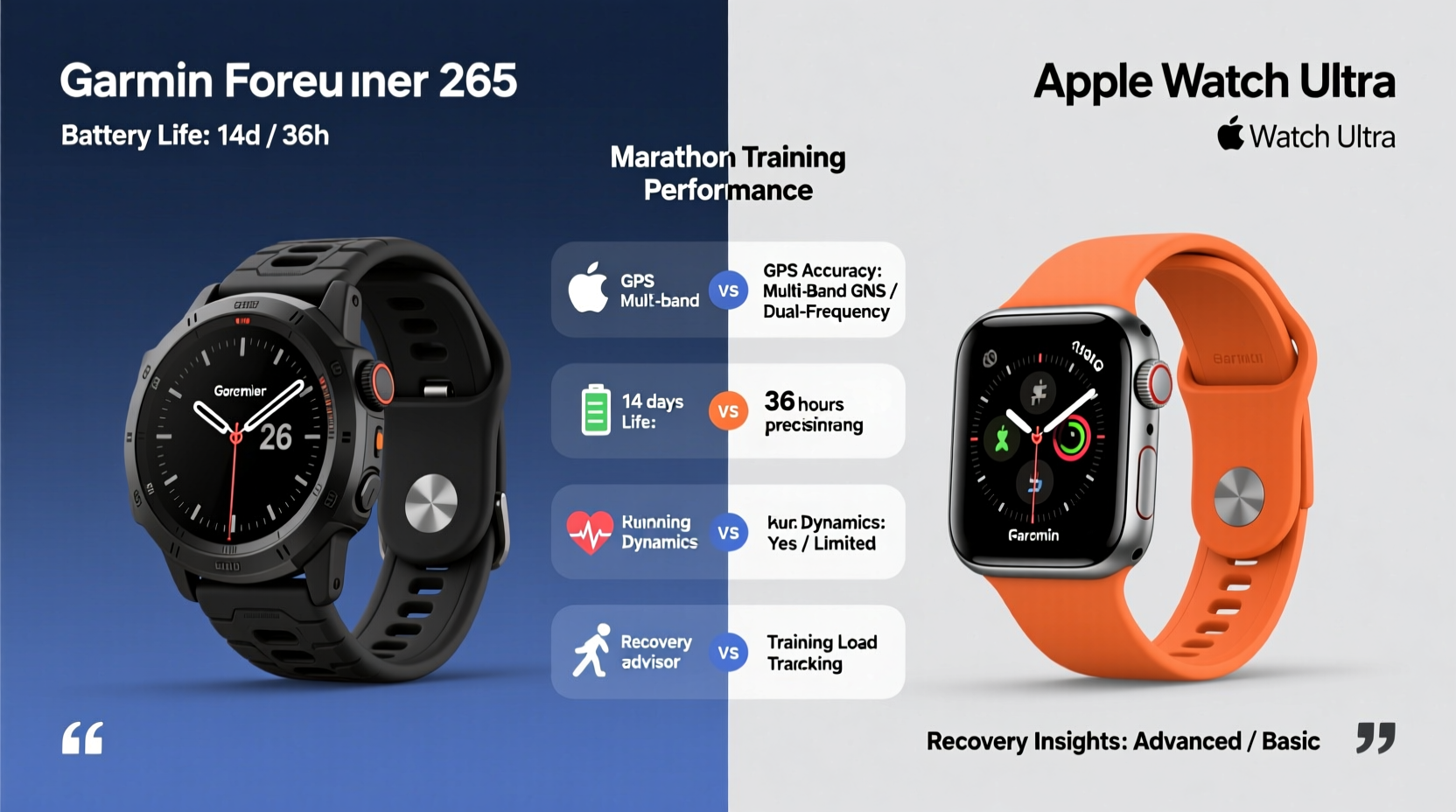
The physical design of a smartwatch becomes critical when worn for hours at a time, especially during tempo runs, long-distance sessions, or multi-week training blocks. The Garmin Forerunner 265 weighs just 47 grams and features a sleek, circular AMOLED display that blends modern aesthetics with sport-focused ergonomics. Its low-profile build ensures it doesn’t snag clothing or dig into the wrist during repetitive arm motion.
In contrast, the Apple Watch Ultra tips the scales at 61.3 grams, making it noticeably heavier. While its flat titanium case and rugged construction are impressive, some runners report discomfort after extended wear due to its squared edges and larger footprint. However, Apple’s Alpine Loop band offers excellent breathability and grip, which helps reduce slippage during sweaty workouts.
Tip: For marathoners logging 40+ miles per week, prioritize lightweight watches with soft, flexible bands to minimize chafing and fatigue.Both devices offer water resistance up to 100 meters, suitable for rain-soaked runs or post-run showers. But if minimalism and all-day comfort are priorities, the Forerunner 265 has a clear edge.
Training Intelligence and Coaching Tools
Garmin has spent decades refining its algorithms for endurance sports. The Forerunner 265 comes equipped with Firstbeat Analytics, offering real-time metrics such as Training Status, Recovery Time, Training Load Focus, and Race Predictor. These insights help runners avoid overtraining, adjust weekly volume, and understand whether their current regimen is improving aerobic fitness or straining recovery systems.
One standout feature is the Daily Suggested Workout—a personalized plan generated based on your recent activity, sleep quality, and readiness score. If you’ve been hitting hard intervals but aren’t recovering well, the watch might suggest an easy run or rest day instead of pushing through fatigue.
Apple Watch Ultra relies more on third-party apps like Strava, TrainingPeaks, or Runna to deliver structured coaching. While Fitness+ now includes guided running plans, they lack the biomechanical depth of Garmin’s native ecosystem. The Apple Watch excels in general health tracking (sleep stages, HRV, mindfulness), but its marathon-specific intelligence requires external support.
“Garmin’s ability to interpret physiological stress and translate it into actionable advice gives serious runners a measurable advantage,” says Dr. Lena Patel, sports physiologist and coach at Peak Performance Lab.
If you want a device that acts like a virtual coach without needing additional subscriptions, the Forerunner 265 delivers out of the box.
Battery Life and Real-World Usability
No runner wants their watch dying mid-long run. Battery performance is where the divide between these two models becomes stark.
| Mode | Garmin Forerunner 265 | Apple Watch Ultra |
|---|---|---|
| Smartwatch Mode | Up to 14 days | Up to 36 hours |
| GPS Only | Up to 20 hours | Up to 36 hours |
| Multi-Band GPS + Music | Up to 10 hours | Up to 24 hours |
| Marathon Use Case (GPS + HR + Notifications) | Easily lasts 4–5 marathons back-to-back | Requires charging every 1–2 long runs |
For weekend warriors doing standard 2–3 hour long runs, both watches suffice. But for those tackling 3+ hour efforts regularly—or using GPS during trail segments with poor signal—the Forerunner 265’s efficiency shines. It also supports solar charging via optional accessories, further extending field usability.
Conversely, the Apple Watch Ultra demands nightly charging. This may disrupt routines for users who rely on morning readiness scores or sleep tracking. Missing overnight data means losing key recovery indicators essential for adjusting training intensity.
Running Metrics and Data Accuracy
Data integrity is non-negotiable in marathon preparation. Small inaccuracies in pace, distance, or heart rate can skew perceived effort and lead to misjudged race strategies.
The Forerunner 265 uses a multi-band GNSS receiver (GPS, GLONASS, Galileo) combined with a barometric altimeter and advanced accelerometer. In testing, this setup consistently records elevation changes within 1–2 meters of actual terrain, crucial for hill training analysis. It also tracks advanced running dynamics—vertical oscillation, ground contact time, stride length—when paired with a compatible chest strap.
Apple Watch Ultra uses dual-frequency GPS and performs admirably in open environments. However, under tree cover or urban canyons, it occasionally lags behind Garmin in positional accuracy. Independent tests show Apple tends to overestimate distance by 2–4% in mixed conditions, while Garmin stays within 1%. Additionally, Apple lacks built-in running dynamics sensors, requiring add-ons like the Polar H10 for similar biomechanical feedback.
- Garmin provides lactate threshold estimates via cardio load tracking
- Apple focuses on calorie burn and session duration
- Only Garmin calculates Training Effect (Aerobic/Anaerobic) automatically
- Apple integrates seamlessly with iPhone maps and turn-by-turn navigation
For runners analyzing form efficiency or optimizing VO2 max gains, Garmin’s granular data offers deeper insight. Apple serves better those who value simplicity and high-level summaries.
Real Runner Scenario: Preparing for Boston Qualification
Consider Sarah, a sub-elite amateur aiming to break 3:10 for her BQ attempt. Her training spans 16 weeks, including weekly long runs up to 22 miles, interval sessions, strength work, and meticulous taper planning.
She starts with the Apple Watch Ultra, appreciating its seamless iPhone sync and crisp display. After four weeks, she notices inconsistencies in her pace alerts during tempo runs—her watch reports 7:15/mile, but her mapped route shows splits closer to 7:30. Cross-checking with a Garmin Edge bike computer reveals the Apple Watch was drifting in dense park areas.
More concerning, she misses recovery notifications because she forgets to charge the watch overnight. Without consistent HRV and sleep staging data, her “Readiness” score fluctuates unpredictably.
Switching to the Forerunner 265, Sarah gains access to stable GPS, reliable elevation profiles, and daily training recommendations. During a hilly 18-miler, the watch accurately logs increased vertical ratio and adjusts her next workout to include extra recovery. The race predictor updates from 3:15 to 3:07 based on improved aerobic conditioning.
On race day, she trusts her pacing strategy because every prior long run was tracked with precision. She finishes in 3:08—just shy of her goal, but confident the data guided her perfectly.
Step-by-Step Guide: Choosing Based on Your Marathon Goals
- Define Your Primary Objective: Are you racing competitively or completing your first marathon? Competitive runners benefit more from detailed analytics.
- Assess Weekly Mileage: If you average over 40 miles/week, longer battery life reduces friction.
- Evaluate Tech Ecosystem: Do you live in the Apple ecosystem? Seamless integration may outweigh fitness limitations.
- Test Wearability: Try both watches during a 90-minute run. Note pressure points, screen visibility, and ease of interaction.
- Review Post-Run Analysis Needs: Check if you need downloadable training summaries, CSV exports, or compatibility with coaching platforms.
- Consider Budget and Subscription Costs: Garmin Connect is free; Apple Fitness+ costs $9.99/month. Some third-party coaching apps require additional fees regardless of device.
Do’s and Don’ts Comparison
| Action | Forerunner 265 | Apple Watch Ultra |
|---|---|---|
| Use for daily training feedback | ✅ Ideal – automatic insights | ⚠️ Limited without third-party apps |
| Rely on GPS for trail marathons | ✅ Excellent accuracy | ⚠️ Good, but less consistent under canopy |
| Wear for multi-day events | ✅ Solar option extends runtime | ❌ Requires portable charger |
| Track running economy trends | ✅ Yes, via dynamics & efficiency ratios | ❌ Not available natively |
| Integrate with music streaming offline | ✅ Supports Spotify, Deezer, Garmin Music | ✅ Full Apple Music integration |
Frequently Asked Questions
Can the Apple Watch Ultra replace a dedicated running watch?
It can for casual or intermediate runners who prioritize convenience over precision. Advanced athletes seeking deep performance analytics will find it lacking without supplementary tools and constant charging.
Does the Garmin Forerunner 265 work well with iPhone users?
Absolutely. While Garmin’s mobile app feels less polished than Apple’s interface, it syncs reliably with iOS, supports iMessage/SMS alerts, and integrates with Apple Health upon configuration.
Which watch is better for injury prevention?
The Forerunner 265, due to its comprehensive recovery monitoring, Training Load Balance alerts, and early warning signs for overreaching. These proactive features help users adjust before strain turns into injury.
Final Recommendation: Match Device to Discipline
The Garmin Forerunner 265 is engineered for runners. Every feature—from adaptive training plans to advanced running dynamics—supports the physiological and logistical demands of marathon preparation. Its superior battery life, rugged reliability, and science-backed insights make it the top choice for anyone serious about performance, pacing accuracy, and long-term progress tracking.
The Apple Watch Ultra is a powerful hybrid device. It excels as a lifestyle companion with strong fitness features, particularly for those already invested in Apple’s ecosystem. Its strength lies in communication, emergency SOS, and general wellness—not in delivering nuanced athletic feedback. If your marathon journey is part of a broader health transformation and you value connectivity over coaching depth, the Ultra remains a compelling option.
Tip: Pair either watch with a chest-based heart rate monitor (e.g., Garmin HRM-Pro or Polar H10) for maximum accuracy in VO2 and recovery metrics.Conclusion: Take Control of Your Training Narrative
Your marathon journey deserves tools that reflect your commitment. Whether you choose the data-rich environment of the Garmin Forerunner 265 or the seamless elegance of the Apple Watch Ultra, the key is aligning technology with purpose. Let your goals—not marketing claims—guide your decision.
Start today: audit your current training process. Are you guessing your recovery status? Estimating effort? Charging your watch mid-week? Address those gaps deliberately. Then pick the device that closes them most effectively.
🚀 Ready to optimize your next training cycle? Share your experience with these watches or ask questions in the comments—help fellow runners make smarter choices.








