
When choosing between fitness watches, value often trumps novelty. The Garmin Forerunner 235, released in 2015, remains a staple among runners and fitness enthusiasts despite its age. Meanwhile, the Samsung Gear Sport, launched in 2017, brought smartwatch functionality to Samsung’s wearable lineup with water resistance and health tracking. But nearly a decade later, is the older Garmin still competitive against the more modern Samsung offering? This comparison dives into performance, usability, longevity, and real-world relevance to determine whether the Forerunner 235 still deserves a spot on your wrist.
Design and Build: Purpose-Built vs Smart-Casual
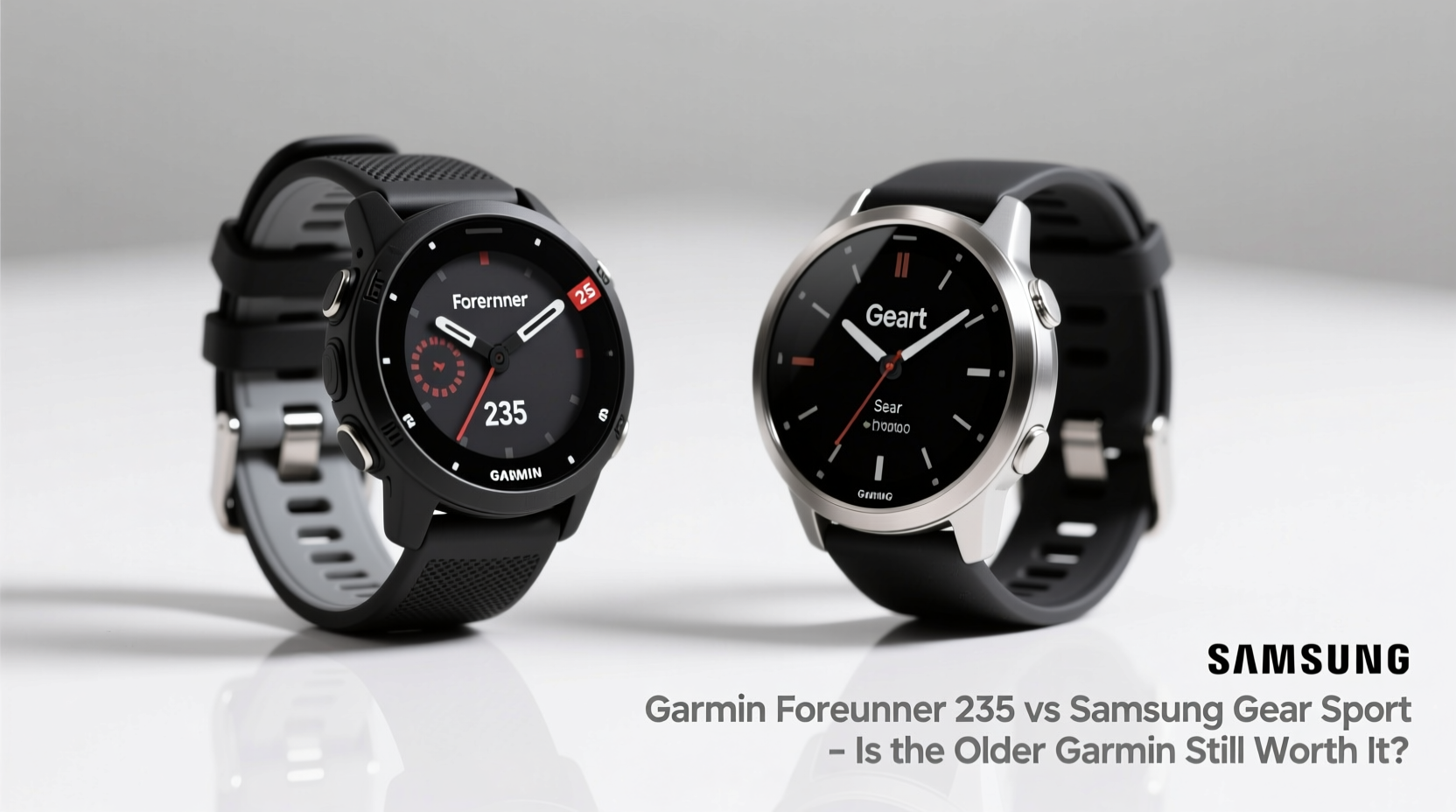
The Garmin Forerunner 235 was engineered with athletes in mind. Its rugged, lightweight polymer case and fixed silicone band prioritize durability during runs, hikes, or gym sessions. The 1.2-inch sunlight-readable transflective display ensures visibility under direct sun—critical for outdoor training. It lacks touch capability, relying instead on physical buttons, which some users find more reliable when sweating or wearing gloves.
In contrast, the Samsung Gear Sport adopts a sleeker, circular AMOLED touchscreen design that blends fitness and lifestyle appeal. With IP68 water resistance and a rotating bezel interface, it feels more like a traditional smartwatch. While also suitable for workouts, its glass front makes it slightly more vulnerable to scratches and impacts compared to the Garmin’s utilitarian build.
Tip: If you train frequently outdoors or in extreme conditions, opt for button-based controls and non-glass displays—they’re more dependable over time.Battery Life and Charging Realities
Battery performance separates these two devices dramatically. The Forerunner 235 delivers up to 11 hours in GPS mode and roughly 9 days in smartwatch mode. That means weekend-long hikes without recharging and weekly use without daily plug-ins. Its micro-USB charging is outdated but widely compatible.
The Gear Sport offers only about 3–4 days in typical mixed use and just 3 hours with continuous GPS—barely enough for a long trail run. It charges via proprietary wireless dock, limiting portability. Frequent charging not only disrupts usage but accelerates battery degradation over time.
“Battery longevity is one of the most underrated aspects of wearable satisfaction. Devices that need daily charging rarely stay on wrists long-term.” — David Lin, Wearable Tech Analyst at FitTech Review
Fitness Tracking Accuracy and Features
Garmin has long been synonymous with precision sports tracking. The Forerunner 235 includes an optical heart rate sensor (Elevate), GPS/GLONASS support, VO2 max estimates, running dynamics (when paired with a chest strap), and detailed post-workout analysis through Garmin Connect. Its algorithms are refined over years of athlete feedback, making it especially strong for runners focused on performance metrics.
The Gear Sport uses Samsung’s BioActive sensor and provides basic heart rate monitoring, GPS via connected phone, stress tracking, and workout detection. However, its standalone GPS depends on your smartphone, reducing independence. Independent reviews have noted inconsistencies in heart rate readings during high-intensity intervals, and its lack of advanced running metrics limits utility for serious athletes.
While both offer step counting and sleep tracking, Garmin’s insights are deeper and better integrated into long-term fitness planning.
Smart Features and Ecosystem Compatibility
Here, the Gear Sport takes clear lead. Running Samsung’s Tizen OS, it supports notifications, voice commands via Bixby, contactless payments with Samsung Pay, Spotify controls, and app downloads. It pairs seamlessly with Android phones, particularly Samsung models, enhancing everyday convenience.
The Forerunner 235 supports basic smartphone alerts (calls, texts, apps) when linked to Android or iOS, but interaction is limited. No voice assistant, no music storage, no mobile payments. Its strength lies in focus: it avoids distractions to keep attention on training goals.
If your priority is a do-it-all device that works well beyond workouts, the Gear Sport wins. But if you want minimal interruptions and maximum athletic insight, the Garmin remains unmatched in its class.
Detailed Comparison Table
| Feature | Garmin Forerunner 235 | Samsung Gear Sport |
|---|---|---|
| Release Year | 2015 | 2017 |
| Display Type | Transflective Memory-in-Pixel (MIP) | Circular Super AMOLED |
| Touchscreen | No | Yes |
| Battery Life (Smartwatch Mode) | Up to 9 days | Up to 4 days |
| GPS Battery Life | Up to 11 hours | ~3 hours (with phone) |
| Heart Rate Monitoring | Garmin Elevate (optical, built-in) | Samsung BioActive Sensor |
| Water Resistance | 5 ATM (swim-proof) | IP68 (splash-resistant) |
| Smartphone OS Compatibility | iOS & Android | Best with Android, limited iOS support |
| Mobile Payments | No | Yes (Samsung Pay) |
| Music Control/Storage | No | Spotify controls only, no offline storage |
| Fitness Focus | Running, cycling, swimming | General wellness, casual workouts |
Real-World Example: A Runner's Dilemma
Consider Mark, a recreational marathoner who bought a Gear Sport in 2018 for its modern look and smart features. Initially impressed by notifications and Samsung Pay, he soon found gaps during training. His long runs drained the battery halfway through, forcing him to carry his phone. Heart rate spikes didn’t align with perceived effort, and post-run data lacked depth. After upgrading to a used Forerunner 235 in 2022, he noticed immediate improvements: full GPS coverage on 20-mile runs, consistent HR readings, and actionable recovery advice from Garmin Connect. Though less flashy, the Garmin became his go-to—proving that function often outweighs form in endurance sports.
Is the Forerunner 235 Still a Good Buy in 2024?
Yes—but with caveats. The Forerunner 235 is no longer sold new by major retailers, but can be found refurbished or secondhand for $80–$130. Given its proven reliability, continued software updates (via Garmin Connect), and compatibility with current sensors and accessories, it represents exceptional value for dedicated runners on a budget.
However, buyers should verify the condition: check for screen scratches, ensure the battery holds charge, and confirm firmware is updated. Some units may show wear after years of use, but many last well beyond five years with proper care.
The Gear Sport, while newer, suffers from discontinued software support. Samsung ended major Tizen updates for older models in 2021, leaving the Gear Sport without new features or security patches. App compatibility is shrinking, and integration with newer Galaxy phones is increasingly spotty. As a result, even “like new” units face obsolescence faster than expected.
Checklist: What to Evaluate Before Buying Either Watch
- Define your primary use: Training-focused (Garmin) vs. lifestyle + light fitness (Gear Sport)
- Test battery health: Look for devices that still hold >80% capacity
- Verify software status: Ensure firmware can update and sync with current smartphones
- Inspect physical condition: Check screen clarity, strap integrity, and button responsiveness
- Confirm ecosystem fit: iOS users may prefer Garmin; Android/Samsung owners gain slight edge with Gear Sport
Frequently Asked Questions
Can the Garmin Forerunner 235 connect to Bluetooth headphones?
No, the Forerunner 235 does not support audio playback or Bluetooth audio streaming. It cannot pair with wireless headphones.
Does the Samsung Gear Sport work with iPhones?
Limited functionality. While basic notifications and fitness tracking work, key features like Samsung Pay, Bixby, and full app syncing require an Android device, preferably a Samsung phone.
Is the Forerunner 235 waterproof enough for swimming?
Yes. Rated at 5 ATM, it’s suitable for pool swimming and open water sessions. It tracks stroke type, SWOLF score, and lap counts accurately.
Final Verdict: Choose Based on Priorities, Not Age
The Garmin Forerunner 235 proves that purpose-built tools age gracefully. Despite being older, its focus on performance, battery life, and accurate biometrics keeps it relevant. For runners, triathletes, or anyone prioritizing fitness over flash, it remains a compelling purchase—if in good condition.
The Samsung Gear Sport offered broader smart capabilities but falters in longevity and specialized tracking. Without ongoing software support and with shorter battery life, it struggles to justify ownership unless acquired very cheaply and used casually.
💬 Still using a Forerunner 235 or Gear Sport? Share your experience below. Your insights could help others decide whether these veterans deserve another lap.








