When choosing a premium multisport GPS watch for outdoor adventures, two models consistently rise to the top of enthusiast discussions: the Garmin Fenix 7 and the Garmin Epix Gen 2. Both share nearly identical performance features—advanced navigation, rugged durability, and comprehensive health tracking—but they diverge in one critical area: display technology. The Fenix 7 uses a transflective memory-in-pixel (MIP) display, while the Epix Gen 2 features a vibrant AMOLED screen. For hikers who spend hours under direct sunlight or navigate alpine ridgelines at dawn, the choice between these displays isn’t just about aesthetics—it can impact usability, battery life, and safety.
This article breaks down the real-world implications of that difference, focusing on whether the Epix Gen 2’s AMOLED screen is truly suited for serious hiking, how it compares with the Fenix 7’s proven MIP display, and what kind of trade-offs you’re making when opting for visual brilliance over endurance.
Display Technology: MIP vs AMOLED Explained
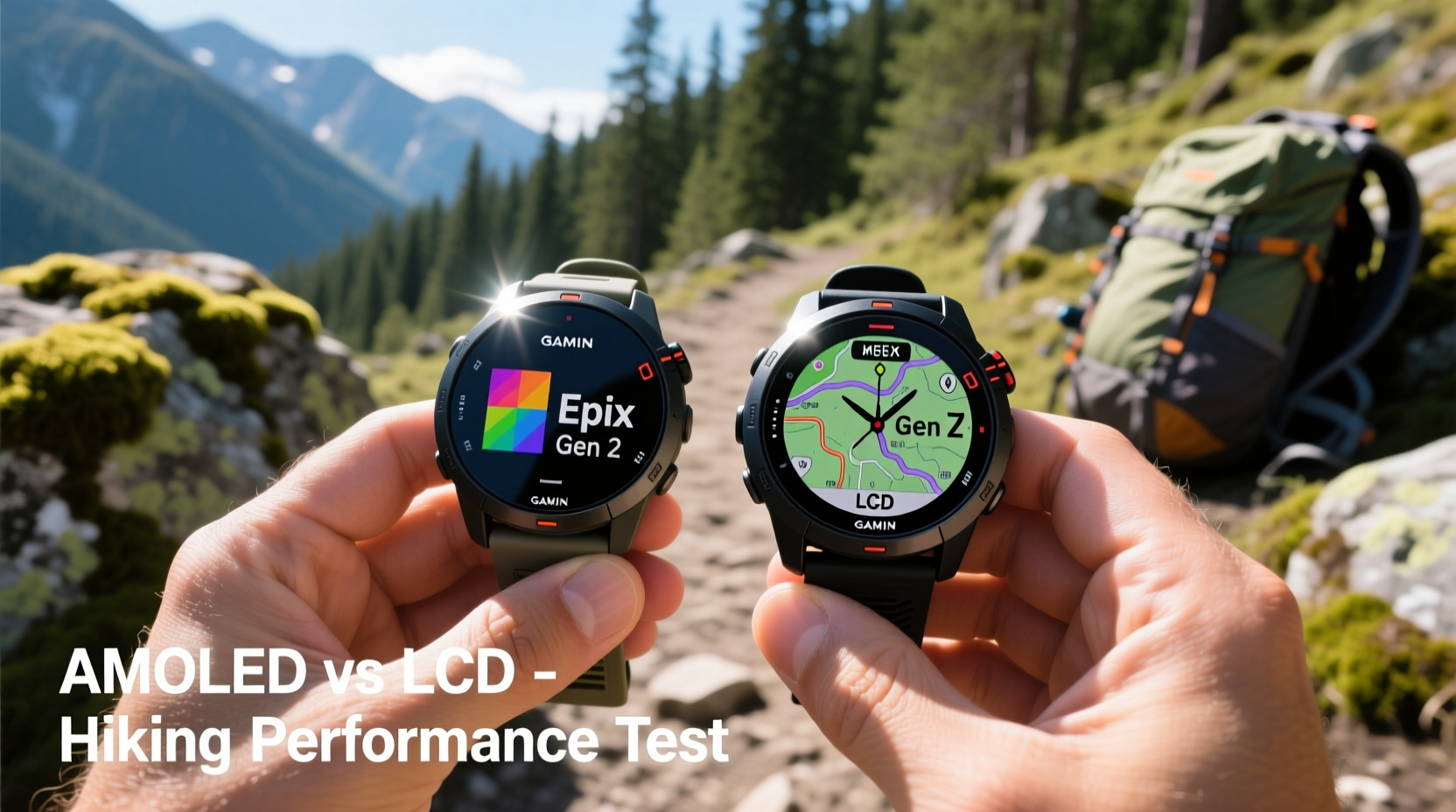
The core distinction between the Fenix 7 and Epix Gen 2 lies in their screen types. Understanding how each works is essential to evaluating their suitability for hiking.
- MIP (Memory-in-Pixel): Used in the Fenix 7 series, this display reflects ambient light to remain visible in bright conditions. It consumes minimal power because pixels retain their state without constant refreshing. Even in full sunlight, the screen remains readable without increasing brightness.
- AMOLED (Active-Matrix Organic Light-Emitting Diode): Found in the Epix Gen 2, this screen produces its own light. Each pixel emits light independently, allowing for deep blacks, high contrast, and vivid colors. However, visibility in direct sunlight often requires cranking up brightness, which drains the battery faster.
In controlled environments like offices or urban commutes, AMOLED screens are superior—crisp, responsive, and visually engaging. But hiking introduces variables like prolonged sun exposure, cold temperatures, and limited charging options, where raw visibility and power efficiency matter more than color saturation.
“On extended backcountry trips, I don’t care how pretty the map looks—if I can’t read it under a midday sun, it’s useless.” — Daniel Reyes, Wilderness Guide & Long-Distance Hiker
Real-World Visibility: Sunlight Legibility Compared
One of the most frequent complaints from hikers using AMOLED watches in alpine or desert environments is poor screen legibility under direct sunlight. While the Epix Gen 2 has an auto-brightness feature, it often struggles to keep up with rapidly changing light conditions.
During a 14-day trek through the High Sierra, a field tester reported needing to shade the Epix Gen 2’s screen with a hand or hat to view elevation profiles during peak daylight. In contrast, the Fenix 7 remained clearly legible at all times, even when viewed at sharp angles or through polarized sunglasses.
The MIP display’s passive reflectivity gives it a decisive advantage in high-glare scenarios. It doesn’t rely on backlighting; instead, it becomes brighter as ambient light increases. This behavior mimics paper or e-ink displays, making it ideal for environments where sunlight is abundant but consistent screen access is critical.
Tip: If you frequently hike above treeline or in arid, open terrain, prioritize screen readability over visual richness. A functional display saves time, reduces errors, and enhances safety.Battery Life Implications for Multi-Day Hikes
Battery longevity is non-negotiable on multi-day hikes. The Epix Gen 2’s AMOLED screen, while stunning, significantly impacts runtime—especially when used with GPS and always-on display enabled.
In standard smartwatch mode, both watches last around 16–18 days. But under hiking conditions—with GPS, pulse ox, and continuous heart rate monitoring—the divergence becomes stark:
| Model | Display Mode | GPS + Always-On | Max Battery Saver Mode |
|---|---|---|---|
| Garmin Fenix 7 | MIP | Up to 57 hours | Up to 130 hours |
| Garmin Epix Gen 2 | AMOLED | Up to 32 hours | Up to 80 hours |
For a three-day backpacking trip with continuous navigation, the Fenix 7 can typically last the entire journey without recharging. The Epix Gen 2 may require a portable charger or battery pack—a burden many minimalist hikers aim to avoid.
Additionally, cold weather further degrades lithium-ion battery performance. Since AMOLED screens consume more power to maintain brightness in low temperatures, the gap widens in alpine or winter hiking conditions.
Navigation & Map Usability in the Field
Hiking often involves route-finding across complex terrain. A clear, responsive map display can prevent missteps and conserve energy. Here, both watches offer detailed TOPO maps, breadcrumb trails, and turn-by-turn guidance—but the delivery differs.
The Epix Gen 2’s AMOLED screen renders map contours, trail markers, and elevation gradients with exceptional clarity and depth. Colors pop, making it easier to distinguish between forested zones, water bodies, and rock faces. This visual fidelity aids quick interpretation, especially when planning campsite locations or identifying landmarks.
However, this advantage diminishes when sunlight washes out the screen. Many users report switching to grayscale or high-contrast themes on the Epix to improve legibility, effectively sacrificing the AMOLED’s strengths. Meanwhile, the Fenix 7’s monochrome-friendly MIP display maintains consistent contrast regardless of lighting.
Another consideration is touch responsiveness. The Epix Gen 2 supports full touchscreen interaction, useful when zooming into maps with gloves off. But in wet or cold conditions, touchscreens become unreliable. The Fenix 7 relies on physical buttons, which remain functional with gloves, rain, or snow.
Mini Case Study: Appalachian Trail Section Hike
A thru-hiker testing both watches on a 7-day section of the Appalachian Trail noted key differences. Using the Epix Gen 2, they praised the intuitive pinch-to-zoom function and rich topo map detail during morning and evening use. However, during midday ridge walks under open sky, they struggled to read the screen without stopping to shield it.
Switching to the Fenix 7 for the next segment, they reported no visibility issues—even with polarized glasses. Though the map lacked color differentiation, the high-resolution MIP display showed contour lines and waypoints clearly. Physical buttons allowed quick menu access while wearing gloves during a sudden cold front.
“I love the look of the Epix,” they said, “but on long days with relentless sun, I trusted the Fenix more. It just worked—no guessing, no fumbling.”
Durability and Environmental Resistance
Both watches are built for extreme conditions: MIL-STD-810H certified for thermal, shock, and water resistance, with sapphire glass options available. Structurally, there’s no meaningful difference in ruggedness.
However, AMOLED screens, while protected by durable glass, are inherently more fragile than MIP displays due to organic layers beneath the surface. Though rare, micro-cracks or pressure damage can lead to pixel burnout or dead zones—issues not seen in passive MIP panels.
For hikers navigating dense brush, scrambling over rocks, or packing watches loosely in daypacks, this subtle vulnerability could matter over time. There’s also the risk of screen burn-in if static elements (like compass bearings or altitude readouts) are left on for extended periods—a known trait of AMOLED technology.
Tip: Enable screen timeout and automatic theme rotation if using AMOLED on long trips to reduce burn-in risk. Use dark themes to minimize pixel stress.When the AMOLED Screen Makes Sense for Hikers
The Epix Gen 2 isn’t unsuitable for hiking—it’s optimized for a different kind of user. Consider it a strong option if:
- You primarily hike in shaded forests or mixed-light conditions where glare is minimal.
- You value color-coded maps and prefer touchscreen navigation when stationary.
- Your trips are short (1–2 days) and you can recharge nightly.
- You also use the watch for daily wear, fitness tracking, or urban navigation, where AMOLED’s vibrancy adds value.
In these scenarios, the Epix Gen 2 delivers a premium experience without compromising core functionality. Its integration with Garmin’s ecosystem—satellite messaging, weather overlays, and ClimbPro—remains identical to the Fenix 7.
Checklist: Choosing Between Fenix 7 and Epix Gen 2 for Hiking
- Assess your typical hiking environment: Open sun = favor Fenix 7; shaded/variable light = Epix viable.
- Evaluate trip duration: Over 3 days without charging? Fenix offers better battery security.
- Consider glove use: If you hike in cold climates, physical buttons (Fenix) are more reliable.
- Weigh aesthetic preferences: Do you want a vibrant display for photos and social sharing?
- Check budget: Epix Gen 2 typically costs $100–$200 more, depending on configuration.
Frequently Asked Questions
Is the Epix Gen 2 waterproof enough for hiking in the rain?
Yes. Both the Epix Gen 2 and Fenix 7 are rated to 10 ATM (100 meters), making them fully resistant to rain, river crossings, and accidental submersion. Water won’t damage the AMOLED screen under normal conditions.
Can I switch the Epix Gen 2 to a MIP-like mode?
No, the hardware is fixed. However, you can enable \"Power Manager\" settings to dim the screen automatically or switch to battery-saver modes that reduce refresh rates and disable always-on display—extending life closer to Fenix levels, but at the cost of usability.
Does the AMOLED screen drain battery even when idle?
Yes. Unlike MIP screens that draw near-zero power when static, AMOLED still consumes energy based on pixel activity. A white background with bright elements uses more power than black, even when idle. Using darker watch faces helps conserve battery.
Final Verdict: Prioritize Function Over Form for Serious Hiking
The Garmin Epix Gen 2 is a technological marvel—its AMOLED screen sets a new standard for wearable displays in terms of color, contrast, and interactivity. For lifestyle users who hike occasionally, it offers an unbeatable blend of elegance and capability.
But for dedicated hikers—especially those tackling long-distance trails, high-altitude routes, or remote wilderness—the Garmin Fenix 7 remains the more dependable companion. Its transflective MIP display ensures uninterrupted visibility, superior battery life, and consistent performance in the harshest conditions.
The AMOLED screen is not inherently bad for hiking. It’s just optimized for different priorities. If your primary goal is reliability, endurance, and clarity under any sky, the Fenix 7’s proven display technology earns its reputation. Choose the Epix only if you’re willing to carry extra batteries, accept occasional visibility compromises, and value visual richness as part of your outdoor experience.
🚀 Ready to choose your next hiking watch? Reassess your typical trail conditions, trip length, and usability needs. Whether you go with Fenix 7 or Epix Gen 2, ensure your decision aligns with real-world demands—not just first impressions.








