
In an age where craftsmanship and personal expression are celebrated, fountain pens have seen a quiet renaissance. Enthusiasts praise their smooth ink flow, elegant design, and tactile writing experience. Yet, in classrooms around the world, the humble ballpoint pen remains king. Despite the aesthetic and ergonomic advantages of fountain pens, most students reach for a plastic-bodied, ink-stained ballpoint without hesitation. Why?
The answer lies not in ignorance or lack of taste, but in practicality. Students operate under constraints—tight budgets, fast-paced environments, and unpredictable conditions. While fountain pens offer refinement, they often fall short in the real-world demands of academic life. To understand this divide, it's essential to examine the functional, economic, and cultural factors that keep ballpoint pens dominant in education.
Practicality in Fast-Paced Academic Environments
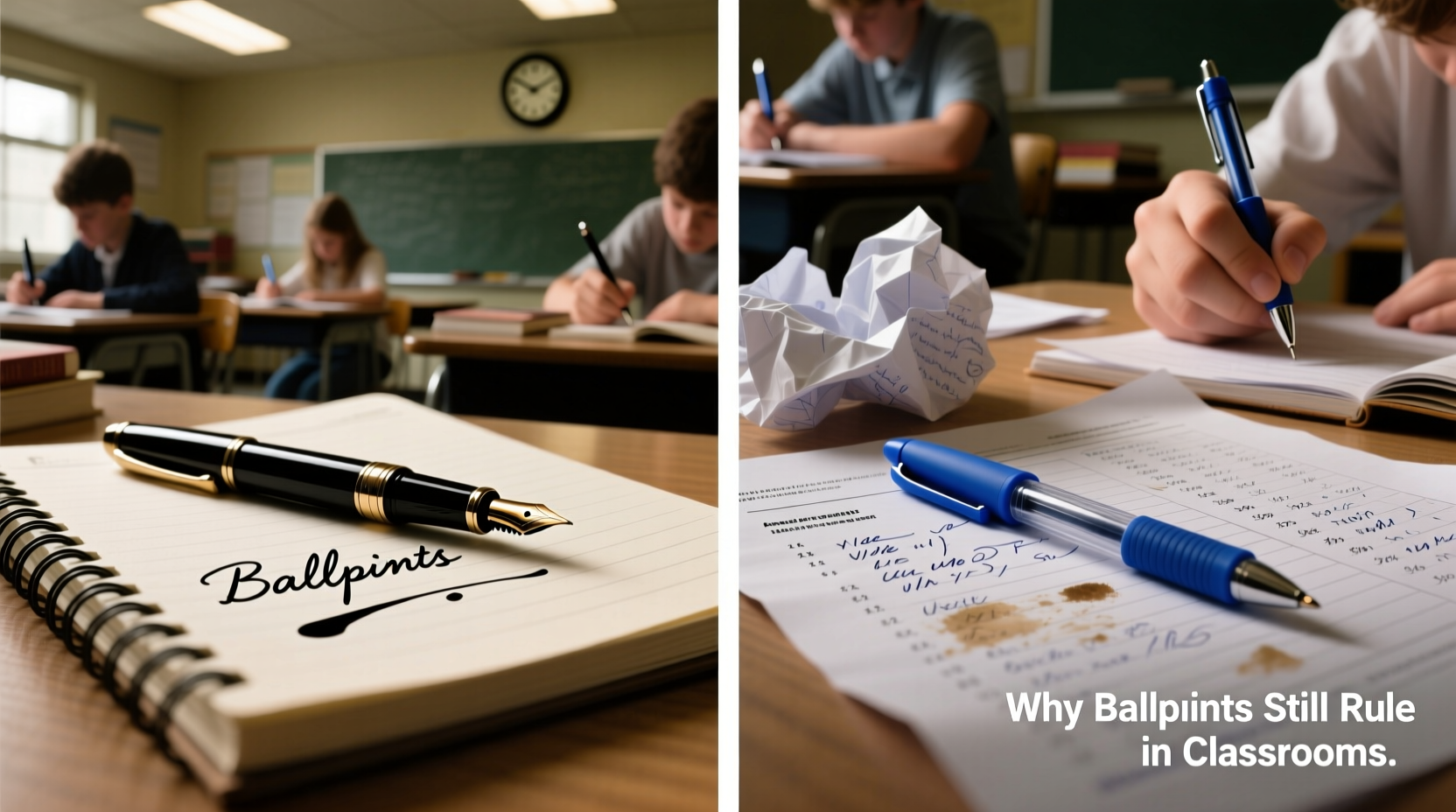
Classrooms move quickly. Students take notes at speed, switch between subjects, and often write for extended periods. In such settings, reliability and ease of use outweigh elegance. Ballpoint pens require no setup—just remove the cap or click the mechanism and write. They work immediately, at any angle, and in nearly any condition.
Fountain pens, by contrast, can skip if not held at the correct angle, may leak in pressurized environments (like airplanes), and require more deliberate maintenance. A student rushing between classes doesn’t have time to clean nibs or refill cartridges. The simplicity of the ballpoint—consistent ink delivery with zero learning curve—makes it ideal for high-pressure academic scenarios.
Tip: For note-taking under time pressure, choose a ballpoint with quick-drying ink to minimize smudging during left-handed writing.Economic Accessibility and Affordability
Cost is one of the most decisive factors. A quality fountain pen starts at around $30 and can exceed hundreds of dollars. Even entry-level models require ongoing investment in bottled ink or proprietary cartridges. Meanwhile, reliable ballpoint pens can be purchased in multi-packs for less than $5.
For students from low-income families or those managing tight budgets, affordability isn't a preference—it's a necessity. Schools rarely supply writing instruments, placing the burden on students and parents. When you need five pens per semester and replacements when they go missing, ballpoints are the only realistic option.
This economic reality extends globally. In developing regions, access to specialty stationery is limited. Ballpoints are mass-produced, widely available, and durable enough to last through a school term—even when tossed into backpacks with textbooks and calculators.
Comparison: Fountain Pen vs Ballpoint for Student Use
| Feature | Fountain Pen | Ballpoint Pen |
|---|---|---|
| Initial Cost | $20–$200+ | $0.50–$3 |
| Ongoing Ink Cost | Moderate (bottles/cartridges) | Low (replace entire pen) |
| Durability | High (if maintained) | Medium (often lost or dried out) |
| Writing Speed Suitability | Moderate (requires control) | High (consistent flow) |
| Maintenance | Weekly cleaning recommended | None |
| Suitability for Left-Handed Writers | Poor (smudging unless using special ink) | Good (quick-drying ink) |
| Portability | Low (leak risk, needs case) | High (toss in bag safely) |
Real-World Case: Maria’s First Semester in University
Maria, a first-year biology major, bought a sleek fountain pen for her college start, inspired by Instagram posts of beautifully handwritten notes. She used it during her first lecture—only to find the ink smudged as she wrote left-handed. By midweek, the nib had caught on recycled paper, tearing it. After two weeks, the pen leaked in her backpack, staining her notebook and calculator case.
She switched back to a pack of retractable ballpoints. “I love how the fountain pen feels,” she admitted, “but I can’t afford to waste time or materials. My classes move too fast.” Maria now reserves her fountain pen for journaling at home—valuable, but not practical for daily academics.
“Students aren’t rejecting fountain pens out of habit—they’re making rational choices based on efficiency, durability, and cost.” — Dr. Alan Pierce, Educational Psychologist, University of Manchester
Standardized Testing and Institutional Policies
Another overlooked factor is institutional requirements. Most standardized exams—SATs, GCSEs, AP tests, university finals—explicitly require ballpoint or gel pens. Some even specify black or blue ink and reject fountain pen submissions due to concerns about ink bleed-through or inconsistent scanning results.
Teachers reinforce this norm. A high school English instructor in Toronto noted, “I tell my students to use ballpoints because we’ve had issues with fountain pen ink showing up poorly on photocopied assignments or bleeding through exam booklets.” This creates a feedback loop: students practice with ballpoints because they’ll be tested with them.
Step-by-Step: Choosing the Right Pen for School
- Assess your budget: Can you afford replacement parts or lost pens?
- Evaluate your writing speed: Do you take rapid notes, or write slowly and deliberately?
- Check exam guidelines: Does your school or board restrict pen types?
- Consider handedness: Left-handed writers benefit from quick-drying ballpoint ink.
- Test durability needs: Will the pen survive being dropped, sat on, or stored loosely?
- Determine usage context: Reserve fountain pens for creative writing or calligraphy, not daily note-taking.
When Fountain Pens Make Sense for Students
This isn’t to say fountain pens have no place in student life. They shine in specific contexts:
- Journaling and reflection: Their smooth flow encourages thoughtful writing.
- Language learning: Ideal for practicing cursive or non-Latin scripts like Arabic or Cyrillic.
- Art and design students: Useful for sketching and annotation when paired with high-quality paper.
- Gift culture: Often given as milestone gifts (graduation, birthdays) and cherished as personal items.
However, these uses are supplementary. They don’t replace the core need for a dependable, no-fuss writing tool during lectures, labs, and exams.
FAQ: Common Questions About Pen Choice in Education
Can I use a fountain pen for taking notes in class?
You can, but only if you’re experienced with fountain pens, use high-quality paper, and don’t write too quickly. Beginners often struggle with skipping, smudging, and leaks—issues that disrupt learning.
Are ballpoint pens bad for handwriting?
No. While fountain pens promote better posture and letter formation due to their weight and glide, ballpoints don’t harm handwriting. In fact, their resistance can help build finger strength in younger students.
Do schools discourage fountain pens outright?
Rarely. But many have implicit norms favoring ballpoints, especially in standardized testing environments. Teachers may not ban them, but they won’t recommend them for everyday use either.
Final Thoughts: Function Over Form in Education
The persistence of the ballpoint pen in schools isn’t nostalgia—it’s pragmatism. Students prioritize tools that work under pressure, survive rough handling, and don’t strain their finances. Fountain pens, while beautiful and rewarding, serve a niche role in academic life.
As one university professor observed, “We teach students to think critically and solve problems. Part of that is choosing the right tool for the job. Sometimes, that tool is a $1.50 pen from the campus bookstore.”
🚀 Ready to optimize your study toolkit? Evaluate your writing habits, test different pens in real conditions, and choose function first—then let style follow. Share your experience in the comments below.








