
Handwriting is more than just communication—it's an expression of personality, focus, and even cognitive processing. In an age dominated by keyboards and touchscreens, the act of writing by hand has taken on renewed significance for memory retention, creativity, and mindfulness. But one question persists among writers, students, and professionals alike: Does using a higher-quality pen actually improve your handwriting?
The debate between fountain pens and ballpoint pens isn’t merely about prestige or nostalgia. It touches on ergonomics, ink flow, feedback, and the psychological relationship between tool and task. While a pen can't magically transform messy scrawl into calligraphy, the right instrument can influence pressure, rhythm, and consistency—key components in legible, fluid handwriting.
The Mechanics of Writing: How Pen Type Affects Stroke Formation
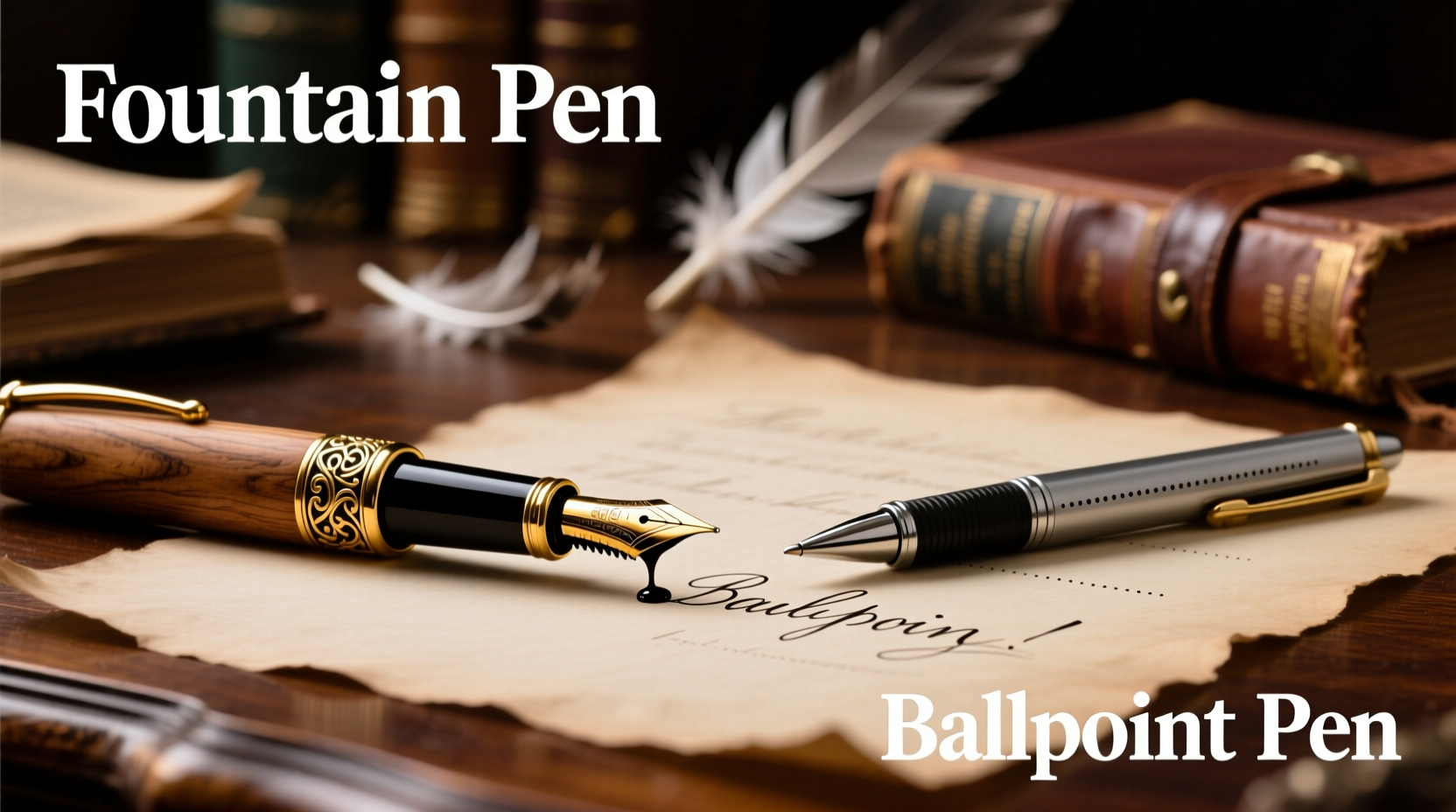
Every pen operates differently, and these mechanical differences shape how we write. Ballpoint pens use a small rotating ball at the tip to dispense thick, oil-based ink. This requires more downward pressure and produces a consistent but sometimes scratchy line. Fountain pens, in contrast, rely on capillary action and gravity to deliver water-based ink through a metal nib. The result is a smoother, more responsive writing experience that adapts to individual pressure and angle.
This distinction impacts stroke formation directly. With a ballpoint, heavy pressure can cause ink blobs or paper pitting, leading to inconsistent letter shapes. Fountain pens reward light touch, encouraging users to glide across the page rather than press into it. Over time, this promotes a more relaxed grip and steadier hand movement—both essential for clean, controlled handwriting.
Tip: If your fingers ache after writing, you're likely pressing too hard—a common issue with ballpoints. Switching to a fountain pen may reduce strain and encourage lighter, more graceful strokes.Comparative Analysis: Fountain Pen vs Ballpoint
| Feature | Fountain Pen | Ballpoint Pen |
|---|---|---|
| Ink Type | Water-based, free-flowing | Oil-based, viscous |
| Writing Pressure | Light (gliding) | Medium to high (pressing) |
| Line Variation | Yes (especially with flexible nibs) | No (uniform line) |
| Ease of Use | Moderate (requires proper angle and speed) | High (forgiving on most surfaces) |
| Durability & Portability | Lower (leak risk, needs capping) | Higher (reliable, pocket-safe) |
| Learning Curve | Moderate to high | Low |
| Potential for Handwriting Improvement | High (encourages control and rhythm) | Moderate (consistent but limiting) |
The table illustrates that while ballpoint pens win in convenience and ruggedness, fountain pens offer superior feedback and responsiveness—qualities that support deliberate practice and refinement of handwriting.
Can a Better Pen Improve Your Handwriting?
The short answer: not automatically—but it can help, under the right conditions. A pen is a tool, not a trainer. However, like any precision instrument, its design influences behavior. High-quality fountain pens often feature balanced weight, smooth nibs, and ergonomic barrels that promote natural hand positioning. These characteristics reduce fatigue and increase writing endurance, allowing for longer practice sessions without discomfort.
More importantly, the sensory feedback from a fountain pen—the soft hiss of ink meeting paper, the subtle resistance of the nib—creates a heightened awareness of each stroke. This mindfulness encourages slower, more intentional writing, which naturally leads to improved letter formation and spacing.
“Writing with a fountain pen is like playing a musical instrument. The better the instrument, the more nuance you can express—and the more attentive you become to your technique.” — Dr. Alan Prescott, Graphology Researcher and Handwriting Historian
However, improvement still depends on the writer. Someone who rushes through notes will see little benefit from even the finest Montblanc unless they also adjust their habits. Conversely, a disciplined writer using a basic ballpoint can develop excellent handwriting through repetition and form awareness.
A Real Example: From Illegible to Intentional
Consider Sarah, a university student struggling with note-taking. Her handwriting was cramped and inconsistent, often skipping lines or merging words. She used cheap ballpoint pens, pressing hard to ensure visibility. After developing wrist pain, she switched to a mid-range fountain pen with a fine nib and began practicing journaling for 15 minutes daily.
Within six weeks, her writing had visibly changed. Letters were more evenly spaced, ascenders and descenders aligned better, and her overall pace slowed. Not because the pen corrected her mistakes, but because it made inefficiencies obvious. Skipping letters caused ink skips. Pressing too hard damaged the nib. She adapted by relaxing her grip, improving posture, and focusing on consistent letter shapes. The fountain pen didn’t fix her handwriting—it highlighted what needed fixing.
Step-by-Step Guide to Using Pen Choice to Improve Handwriting
If you're considering upgrading your writing tool to enhance your handwriting, follow this structured approach:
- Assess Your Current Habits: Identify issues—is your writing rushed, uneven, or fatiguing? Note when and where you write most.
- Start with a Reliable Entry-Level Fountain Pen: Choose a model under $30 with a stainless steel nib (e.g., Lamy Safari, Pilot Metropolitan). Avoid ultra-flexible or gold nibs initially.
- Pair with Quality Paper: Use smooth, bleed-resistant paper (like Rhodia or Leuchtturm) to prevent frustration from feathering or snagging.
- Practice Daily with Focus: Spend 10–15 minutes writing slowly. Pay attention to letter size, slant, and spacing. Use lined or grid paper as a guide.
- Compare Results Monthly: Keep dated samples to track progress. Look for reduced pressure marks, better consistency, and increased comfort.
- Adjust Based on Feedback: If the nib scratches, try a broader size. If ink blots, reduce pressure or switch ink type.
This method turns the pen into a diagnostic tool, revealing flaws in real time and motivating gradual correction.
Tips for Maximizing Handwriting Gains with Any Pen
Tip: Rotate your pen collection. Using different tools helps you identify which features support your best writing—smooth flow, balance, grip comfort—and reinforces adaptability.- Hold loosely: A tense grip leads to shaky lines and early fatigue. Aim for a tripod hold with minimal finger pressure.
- Write at a slight upward tilt: Especially with fountain pens, holding the page at a 10–15° angle reduces wrist strain and improves visibility.
- Use guidelines: Even adults benefit from lined or dotted paper when refining handwriting. They provide visual anchors for consistent sizing.
- Limit distractions: Handwriting improves when focused. Try writing by hand during phone-free moments to build concentration.
- Clean your pen regularly: For fountain pens, flush the nib and feed every few weeks to maintain smooth ink flow.
Common Misconceptions About Pens and Handwriting
Many believe that expensive pens guarantee beautiful writing. This is a myth. A $200 pen won’t compensate for poor posture, rushing, or lack of practice. Others assume fountain pens are inherently “better” for everyone—but they require maintenance and patience. Some find ballpoints more reliable for fast note-taking, especially on rough paper.
The truth lies in alignment: the pen should match your purpose, environment, and physical needs. A surgeon doesn’t use a scalpel to chop wood; similarly, a journalist covering breaking news might prefer a rugged ballpoint over a delicate fountain pen.
FAQ
Does using a fountain pen make my handwriting look more professional?
It can, but only if combined with good technique. The smooth, consistent line of a fountain pen enhances legibility, and subtle line variation adds elegance. However, poor spacing or irregular letterforms will still detract from professionalism regardless of the pen.
Are ballpoint pens bad for handwriting?
No—they’re practical and widely accessible. However, the need for greater pressure can lead to tension and fatigue, which may degrade handwriting over long sessions. For extended writing, a smoother pen (rollerball or fountain) is often more sustainable.
Can children benefit from using fountain pens?
Generally, no—at least not initially. Children are still developing motor control and need forgiving, easy-to-use tools. Ballpoints or gel pens are more suitable in early education. Fountain pens can be introduced later, once foundational skills are established.
Checklist: Choosing the Right Pen for Handwriting Development
- ☐ Define your primary use (note-taking, journaling, correspondence)
- ☐ Test different pen types (try samples if possible)
- ☐ Prioritize comfort and balance over aesthetics
- ☐ Ensure compatibility with quality paper
- ☐ Commit to regular, mindful writing practice
- ☐ Monitor hand fatigue and adjust grip or tool as needed
- ☐ Be patient—handwriting evolves gradually
Conclusion: Tools Shape Habits, But Practice Builds Mastery
The choice between a fountain pen and a ballpoint isn’t about superiority—it’s about suitability. A better pen can elevate your handwriting by promoting comfort, reducing strain, and increasing awareness of your writing process. Fountain pens, with their sensitivity and elegance, often serve as catalysts for improvement, rewarding care and attention. Ballpoint pens remain dependable workhorses, ideal for quick notes and everyday reliability.
Ultimately, the best pen is the one that encourages you to write more thoughtfully and consistently. Whether it’s a $5 Bic or a hand-crafted Pelikan, the real improvement comes not from the tool itself, but from what you do with it. Pick up your favorite pen, slow down, and let each word be a step toward clearer, more confident handwriting.
💬 Ready to refine your handwriting? Start today with a simple experiment: write one page with your usual pen, then repeat with a smoother alternative. Compare the results—and share your observations in the comments below.








