
For city dwellers living in compact apartments, every square foot counts. As urban transportation evolves, bicycles have become a popular alternative to cars and public transit—especially for daily commuting. But when space is limited, the choice between a folding bike and a standard commuter bike becomes critical. While both serve the purpose of getting you from point A to B efficiently, their footprint inside your home can make or break your living experience. This article dives deep into how each option performs in tight urban spaces, weighing not just physical dimensions but also practicality, cost, and long-term convenience.
Space Efficiency: The Core Difference
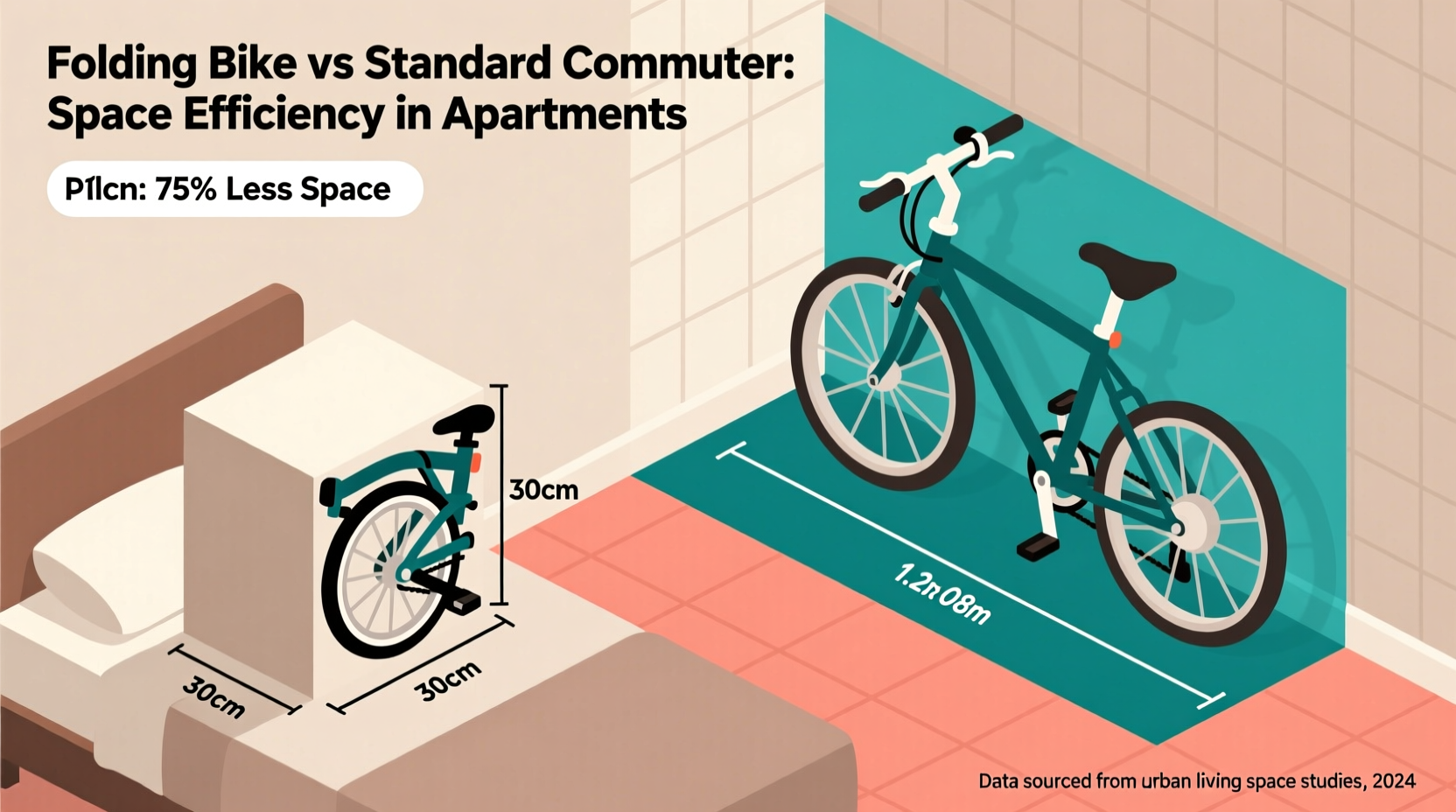
The most obvious distinction lies in storage. A standard commuter bike typically measures between 55 to 65 inches in length and 20 to 24 inches in width, with a height of around 36 to 40 inches when upright. Even when leaned against a wall, it occupies a noticeable footprint—equivalent to a narrow closet or half a bedroom corner. In studio apartments or micro-lofts under 500 square feet, this can be a dealbreaker.
Folding bikes, by design, collapse into a fraction of that size. Most models reduce to roughly 30 x 24 x 14 inches after folding—about the size of a large suitcase. This allows them to fit under beds, behind doors, in closets, or even in vertical storage racks. Some ultra-compact versions are small enough to store in overhead cabinets or beneath desks.
Tip: Measure your intended storage area before purchasing—some folding bikes still require clearance for folded hinges and protruding wheels.However, space savings aren’t automatic. Folding requires time and effort. If you're rushing to leave for work or returning late at night, the extra two to three minutes needed to fold and unfold may discourage consistent use. Additionally, frequent folding can wear out hinge mechanisms over time, especially on lower-end models.
Performance and Ride Quality Comparison
While folding bikes win in storage, they often compromise on ride dynamics. Smaller wheels (typically 16” or 20” vs. 26”–28” on commuters) mean less momentum, increased rolling resistance, and a bumpier ride on uneven pavement. This affects both speed and comfort, particularly on longer commutes exceeding five miles.
Standard commuter bikes are built for endurance and efficiency. With larger tires, better suspension (even if minimal), and optimized frame geometry, they offer smoother handling, improved traction, and higher top speeds. For riders prioritizing performance, the standard bike remains unmatched.
That said, modern folding bikes have closed the gap significantly. High-end models like the Brompton or Tern Verge come with multi-speed drivetrains, suspension forks, and pneumatic tires that mimic the feel of full-sized bikes. These upgrades enhance usability but come at a premium price—often starting at $1,200 and reaching up to $2,500.
“Urban cycling isn’t just about transport—it’s about integration with lifestyle. A bike that fits your apartment is more likely to be used regularly.” — Lena Park, Urban Mobility Consultant, Copenhagenize Design Co.
Storage Scenarios: Real-Life Applications
To understand the real-world impact, consider a few common apartment layouts:
- Studio Apartment (350 sq ft): A standard bike dominates the visual field and limits furniture arrangement. A folding model can be stored under a Murphy bed or inside a wardrobe, freeing up floor space during the day.
- One-Bedroom with Balcony (550 sq ft): Outdoor storage becomes viable, but exposure to weather increases maintenance needs. A folding bike can be brought indoors quickly during rain, reducing corrosion risk.
- Shared Living Space: In roommate situations, personal space is negotiated. A folding bike signals consideration—it can be tucked away, minimizing conflict over shared hallways or living areas.
Mini Case Study: Sarah in Brooklyn
Sarah lives in a converted warehouse loft in Williamsburg, Brooklyn. Her apartment is 480 square feet with an open-plan layout. Initially, she bought a sleek steel-frame commuter bike, storing it beside the front door. But guests had to sidestep it constantly, and moving furniture became a weekly obstacle course.
After six months, she switched to a mid-range folding bike. Though slightly slower on her 7-mile commute, she regained usable floor space. She now stores the folded bike in a custom cabinet beneath her desk—completely out of sight. “It’s not the fastest ride,” she says, “but I actually enjoy having my apartment back.”
Detailed Feature Comparison
| Feature | Folding Bike | Standard Commuter Bike |
|---|---|---|
| Average Folded Size | 30 x 24 x 14 in | N/A (does not fold) |
| Unfolded Weight | 22–28 lbs | 24–30 lbs |
| Wheel Size | 16”–20” | 26”–28” |
| Assembly Time (Fold/Unfold) | 2–4 minutes | Instant |
| Indoor Storage Flexibility | High (under bed, closet, etc.) | Low to moderate (wall/ceiling mounts needed) |
| Ride Comfort | Moderate (bumpier on rough roads) | High (stable, absorbs vibration) |
| Price Range (USD) | $600–$2,500 | $400–$1,800 |
| Durability (Hinge Wear) | Moderate (depends on build quality) | High (fewer moving parts) |
Note that while folding bikes tend to be pricier due to complex engineering, their value increases in space-constrained environments. Conversely, standard bikes offer better dollar-per-mile performance for those with adequate storage.
Practical Tips for Maximizing Bike Storage
Whether you choose folding or standard, smart storage practices make a difference. Here’s how to optimize either option:
Tip: Lubricate folding hinges every 3–6 months to prevent stiffness and rust, especially in humid climates.Checklist: Space-Smart Bike Ownership
- Measure all potential storage zones (closets, under furniture, entryway).
- Test-fold the bike in-store or via video demo before buying.
- Install wall hooks or ceiling pulleys if keeping a standard bike.
- Use non-marking wheel cradles to protect floors and walls.
- Keep cleaning supplies nearby to maintain hygiene and prevent dirt buildup indoors.
- Consider a cover or drape to blend the bike into your décor.
- Label quick-release levers for faster folding/unfolding.
Portability Beyond the Apartment
The advantage of folding bikes extends beyond home storage—they integrate seamlessly with multimodal transit. Need to hop on a train, bus, or subway during peak hours? A folded bike avoids the stigma and logistical hassle of bringing a full-sized bicycle onboard. Many transit agencies allow folded bikes at all times, even when full bikes are restricted.
This flexibility supports hybrid commutes. Imagine cycling five blocks to the station, folding your bike, riding the train downtown, then unfolding for the final mile. It reduces total travel time and eliminates last-mile parking stress. In cities like London, Tokyo, and New York, this pattern is increasingly common among professionals who live near—but not directly adjacent to—transit hubs.
Standard bikes, meanwhile, rely on external infrastructure: secure bike racks, indoor bike rooms, or paid storage lockers. These aren’t always available, and waiting outside in the rain for a rack to free up defeats the purpose of efficient commuting.
Step-by-Step: Choosing the Right Bike for Your Space
Follow this decision timeline to match your lifestyle with the optimal solution:
- Week 1: Audit Your Space
Walk through your apartment and identify where a bike could go. Is there unused vertical space? Can you repurpose a corner? - Week 2: Map Your Commute
Track your typical route. How many miles? What’s the road quality? Are there hills or frequent stops? - Week 3: Evaluate Transit Needs
Do you combine biking with trains or buses? Will you need to carry the bike up stairs? - Week 4: Set a Budget
Determine how much you’re willing to spend, factoring in accessories like locks, lights, and storage gear. - Week 5: Test Ride Both Types
Visit local shops. Try unfolding and folding models. Sit on both types to assess comfort. - Final Decision
If space is extremely tight or transit integration matters, lean toward folding. If ride quality and simplicity are top priorities—and you have room—go standard.
Frequently Asked Questions
Can a folding bike really replace a standard commuter?
Yes, for most urban commutes under 8 miles. Modern folding bikes handle city terrain well and offer sufficient speed and durability. However, they may not suit aggressive riders or those prioritizing maximum efficiency.
Are folding bikes harder to maintain?
Slightly. The hinge mechanism, folding joints, and smaller components require occasional attention. But routine checks—like lubricating pivot points and checking bolt tightness—take only minutes per month. Overall maintenance is comparable to standard bikes if done consistently.
Do folding bikes hold resale value?
High-quality brands like Brompton and Dahon retain strong resale value, often selling for 60–75% of original price after two years with proper care. Lower-tier models depreciate faster, similar to budget commuter bikes.
Conclusion: Prioritize Integration Over Isolation
The question isn't simply about cubic inches saved—it's about how well the bike integrates into your daily life. A standard commuter might perform better on the road, but if it turns your apartment into a garage, its utility diminishes. On the other hand, a folding bike that disappears into a closet encourages regular use, promotes cleanliness, and respects shared spaces.
In densely populated cities where living areas shrink and rents rise, spatial intelligence matters as much as mechanical efficiency. The bike that fits your apartment is the one you’ll actually ride. And the one you ride consistently is the one that delivers real value—health benefits, cost savings, and environmental impact included.
💬 Have you made the switch from a standard to a folding bike—or vice versa? Share your experience below. Your insights could help someone else reclaim their space and rediscover the joy of urban cycling.








