
For city dwellers navigating congested streets and last-mile transit gaps, choosing the right micro-mobility option can transform daily life. Folding bikes and electric scooters have both surged in popularity as compact, eco-friendly solutions for short urban trips—typically under five kilometers. But which one truly delivers a better experience? The answer isn’t universal; it depends on your commute pattern, storage space, physical ability, budget, and local infrastructure. This guide dives deep into performance, practicality, safety, and long-term value to help you decide between a folding bike and an e-scooter for your daily urban journey.
Portability and Storage: Fitting Into City Life
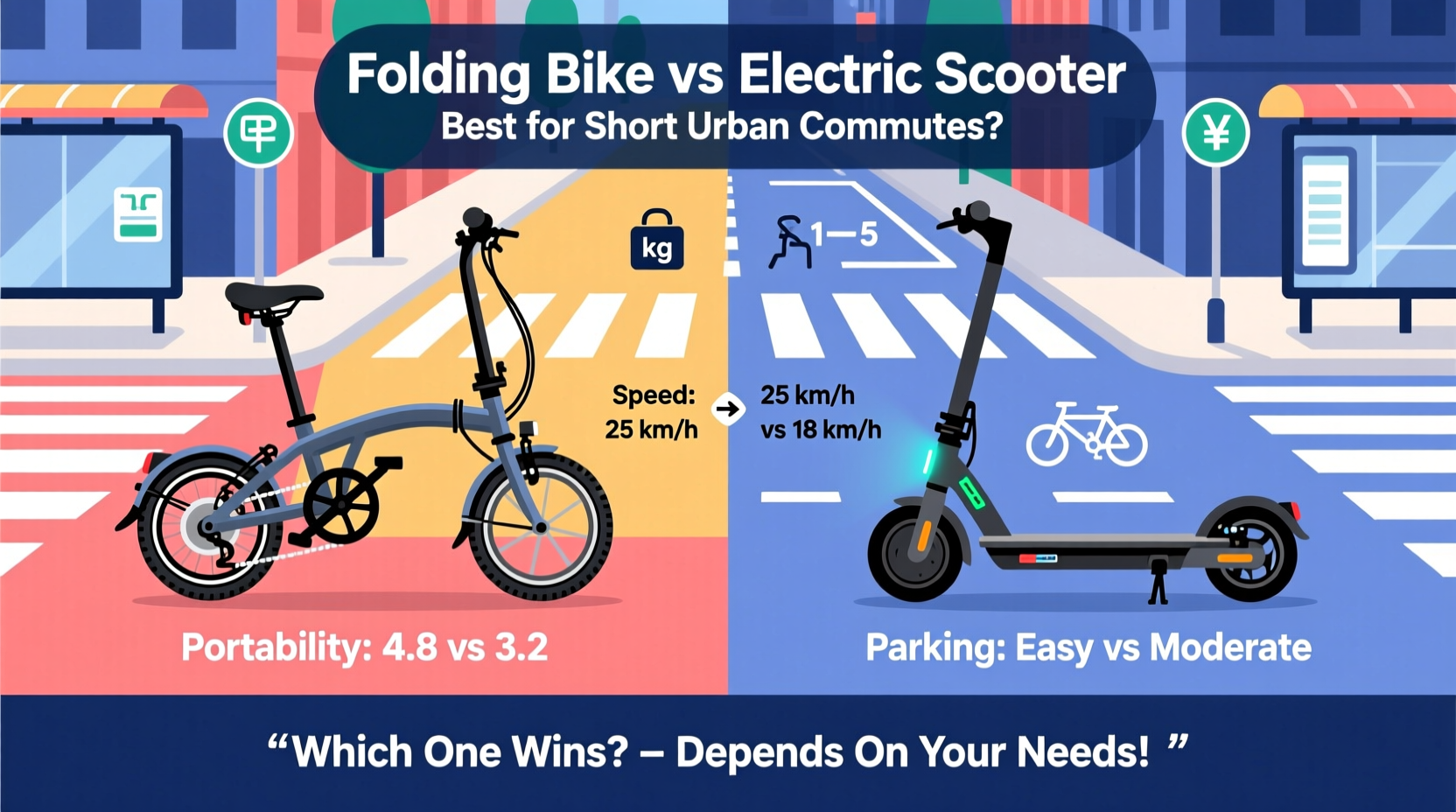
In dense urban environments where living spaces are tight and public transit is part of the route, portability matters more than raw speed. Both folding bikes and e-scooters offer compact designs, but they differ significantly in weight, foldability, and ease of carrying.
Folding bikes typically weigh between 10–15 kg (22–33 lbs), depending on materials and drivetrain. High-end models like the Brompton or Tern use lightweight alloys and refined hinge mechanisms, allowing them to fold into a package roughly the size of a large suitcase. Once folded, they can be rolled on wheels or carried with a shoulder strap. They’re ideal for commuters who take trains or buses, as many subway systems allow folded bikes during peak hours.
Electric scooters, by contrast, are generally lighter—often between 10–12 kg (22–26 lbs)—and collapse in seconds with a single latch. Their slim profile makes them easier to stash under a desk, in a closet, or beside a bed. However, most e-scooters lack wheels for rolling when folded, meaning you’ll carry the full weight up stairs or through stations.
Tip: If you frequently climb multiple flights of stairs or ride crowded subways, prioritize weight over features. A scooter under 12 kg may save energy over time.Speed, Range, and Real-World Performance
When evaluating performance, consider not just top speed but consistency across terrain, rider effort, and battery reliability.
Folding bikes rely primarily on human power, though some models now include electric assist (e-folding bikes). A standard folding bike averages 15–18 km/h (9–11 mph) with moderate pedaling. On hills or against headwinds, speed drops unless you're physically fit. E-folding bikes boost this to 25 km/h (15.5 mph) with pedal assistance, but at a much higher price—often $2,000+.
Electric scooters, meanwhile, typically cruise at 20–25 km/h (12–15 mph) with minimal effort. Most offer ranges of 25–40 km per charge, sufficient for daily commutes. Acceleration is instant, making them responsive at traffic lights. However, range varies dramatically based on rider weight, terrain, and temperature. Cold weather can reduce battery efficiency by up to 30%.
On rough pavement or cobblestones, scooters often feel less stable due to small wheels (usually 8–10 inches). Folding bikes, with larger wheels (16–20 inches), absorb bumps better and maintain momentum more efficiently.
“Urban mobility isn’t about peak speed—it’s about door-to-door efficiency. A scooter might be faster on flat ground, but a folding bike handles varied surfaces with more confidence.” — Dr. Lena Patel, Urban Transport Researcher at MIT Mobility Lab
Cost Comparison: Upfront and Long-Term Expenses
Purchase price is just the beginning. Maintenance, charging, and lifespan all influence total ownership cost.
| Feature | Folding Bike (Non-Electric) | Electric Scooter |
|---|---|---|
| Average Purchase Price | $500–$1,500 | $400–$900 |
| Maintenance Frequency | Low (chain, tires, brakes) | High (tires, brakes, battery) |
| Annual Maintenance Cost | $50–$100 | $150–$300 |
| Battery Replacement | N/A | $150–$300 (every 2–3 years) |
| Lifespan | 7–10+ years | 2–4 years (with heavy use) |
| Charging Cost (Monthly) | $0 | $1–$2 |
Folding bikes win on longevity and simplicity. With basic care, a quality model lasts a decade or more. Chains and brake pads wear out, but parts are widely available and inexpensive. Electric scooters, however, depend on lithium-ion batteries that degrade over time. After 500 charge cycles, capacity often drops below 80%, reducing range. Replacement batteries are costly and sometimes proprietary.
Safety and Legal Considerations
Safety should never be secondary. Both options carry risks, especially in cities with poor cycling infrastructure.
Folding bikes operate under standard bicycle laws. Riders are expected to use lights at night, follow traffic signals, and ideally wear helmets. Because they’re heavier than road bikes, stopping distances may be longer, especially with drum or coaster brakes. However, their larger wheels provide better traction and stability on wet roads.
E-scooters face stricter regulations in many cities. Some require registration, helmet use, or prohibit sidewalk riding. Speed limits are often capped at 25 km/h. Smaller wheels increase vulnerability to potholes and debris—hitting a curb at speed can cause loss of control. According to a 2022 study by the National Highway Traffic Safety Administration, e-scooter riders are 2.3 times more likely to suffer head injuries than cyclists, largely due to lower stability and delayed adoption of protective gear.
Tip: Always check your city’s micro-mobility laws before purchasing. Some areas ban personal scooters on sidewalks or require third-party insurance.Real-World Example: Commuting in Berlin
Take the case of Jonas, a software developer in Berlin who commutes 3.5 km from Neukölln to Mitte. His route includes a U-Bahn ride with two flights of stairs and stretches of uneven bike paths.
Initially, he bought a $700 e-scooter. It was fast and easy to fold, but after six months, the rear tire punctured twice, and the battery degraded noticeably in winter. Carrying it up station stairs left him winded. He switched to a Brompton folding bike with mudguards and a dynamo light system. Though it required more effort uphill, it handled rain and cobblestones reliably. He could roll it onto the train and even pedal without breaking a sweat using moderate gears. After two years, maintenance costs totaled under $80. “The scooter felt futuristic,” he said, “but the bike just works, every day.”
Step-by-Step Guide: Choosing What’s Right for You
Follow this decision framework to identify the best fit for your lifestyle:
- Map Your Route: Use Google Maps to check distance, elevation, and bike/scooter path availability. Steep hills favor e-assist or scooters; bumpy roads favor folding bikes.
- Assess Transit Integration: Will you carry your device onto trains or buses? Check weight limits and folding dimensions allowed by your transit agency.
- Test Ride Both Options: Visit a local dealer. Note how quickly each folds, how balanced it feels when carried, and how confident you feel braking.
- Calculate Total Cost of Ownership: Include purchase price, estimated maintenance, and potential battery replacement over 5 years.
- Check Local Laws: Confirm whether scooters are legal on sidewalks, if helmets are required, and if bikes must have lights.
- Consider Weather Patterns: In rainy climates, folding bikes with full fenders and hub gears outperform scooters with exposed electronics.
- Evaluate Storage Space: Measure your apartment entryway, office corner, or car trunk. Ensure the folded size fits comfortably.
Checklist: Before You Buy
- ✅ Measure your storage space and compare with product dimensions when folded
- ✅ Confirm local regulations on speed, helmet use, and sidewalk riding
- ✅ Test ride both options if possible—or rent first
- ✅ For scooters: check if the battery is replaceable and how much it costs
- ✅ For bikes: ensure the gearing suits your terrain (e.g., 6-speed or higher for hills)
- ✅ Verify warranty coverage (especially for scooter motors and batteries)
- ✅ Budget for essential accessories: lock, lights, helmet, and possibly a cover
Frequently Asked Questions
Can I bring a folding bike or e-scooter on public transit?
Most metro systems allow folding bikes at all times, provided they are fully collapsed and not blocking aisles. E-scooter policies vary: some cities permit them only outside peak hours, while others ban personal scooters entirely. Always check with your local transit authority.
Which requires more maintenance?
Electric scooters generally require more upkeep. Brake pads, tires, and electronic components wear faster than those on mechanical folding bikes. Battery degradation is inevitable, whereas a well-maintained bike chain can last thousands of kilometers.
Are folding bikes slower than electric scooters?
Not necessarily. On flat terrain, a fit rider can match or exceed a scooter’s average speed. However, scooters accelerate faster and demand less physical effort, making them feel quicker in stop-and-go traffic. For riders with limited stamina or steep routes, scooters offer a clear advantage.
The Verdict: Which Is Better?
There’s no one-size-fits-all answer—but there is a right choice for your specific needs.
If you value durability, low operating costs, and versatility across weather and terrain, a folding bike is likely the superior long-term investment. It doubles as exercise equipment, rarely breaks down, and integrates seamlessly with public transport. Upgrading to a model with internal gears and puncture-resistant tires enhances reliability without sacrificing portability.
If your priority is speed with minimal effort, your commute is flat, and you have reliable indoor storage and charging, an electric scooter offers unmatched convenience. Just be prepared for higher maintenance, shorter lifespan, and greater sensitivity to weather and road conditions.
Hybrid users exist too: some keep a scooter for weekdays and a folding bike for weekend errands or backup. Others opt for an e-folding bike—a premium solution blending pedal power with electric assist, though at a steep price.
“The best urban vehicle isn’t the fastest or flashiest—it’s the one you actually use, consistently and safely.” — Carlos Mendez, Founder of Urban Wheels Collective
Conclusion: Make Mobility Work for You
Your daily commute shouldn’t drain your energy or wallet. Whether you choose a folding bike or an electric scooter, the goal is sustainable, stress-free movement through the city. Weigh the trade-offs honestly: your physical comfort, budget, storage constraints, and local environment will guide the best decision. Don’t chase trends—chase functionality. Test, research, and plan ahead. Once you find the right fit, you might just rediscover your city, one smooth ride at a time.
🚀 Ready to upgrade your commute? Start by mapping your route, then visit a local dealer to test models in person. Share your experience or ask questions in the comments—your insight could help another urban traveler choose wisely.








